Quick Verdict: The 2025 EQS Sedan Redefines Electric Luxury Cruising
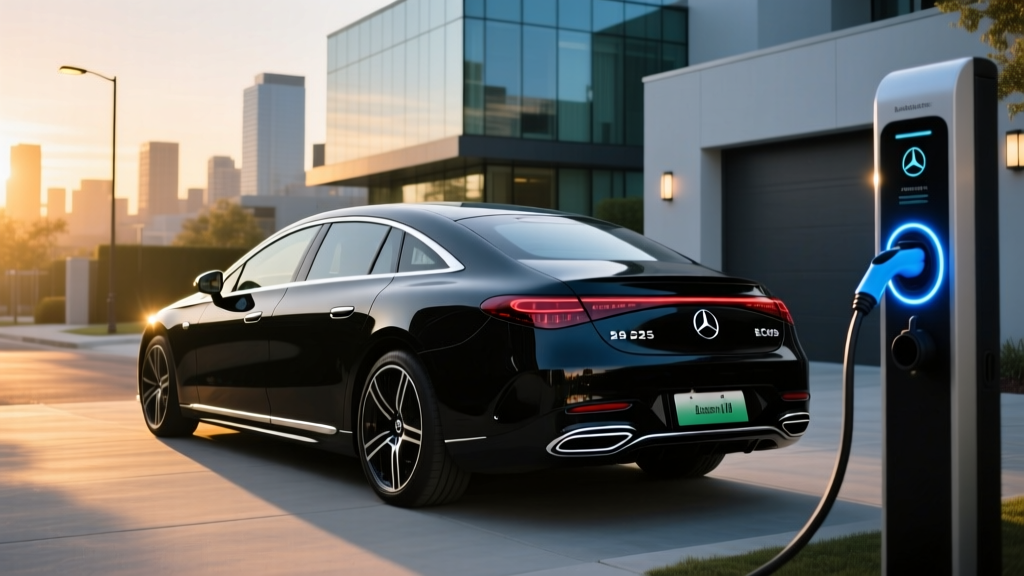
The 2025 Mercedes-Benz EQS sedan returns with a meaningful battery upgrade, pushing usable capacity to 118 kWh and EPA-estimated range as high as 390 miles in the EQS 450+ trim. For a full-size luxury EV that weighs over 5,600 pounds, that efficiency figure is genuinely impressive. But the EQS has always been more about wafting silently down the interstate than chasing lap times — and the 2025 model doubles down on that identity with a refreshed interior, updated MBUX infotainment, and standard heat pump technology that helps preserve range in cold climates.
Starting at $104,400 before destination, the 2025 EQS sedan is not an impulse purchase. Federal tax credit eligibility is complicated at this price point. And while the real-world range is excellent, the charging curve taper above 80% and the sheer mass of the vehicle mean fast-charging stops take longer than lighter competitors. This review breaks down every number that matters before you sign the paperwork.
Range, Battery & Efficiency: What the EPA Says vs. the Real World
EPA estimate: 390 miles (EQS 450+), 371 miles (EQS 450 4MATIC), 330 miles (EQS 580 4MATIC)
Real-world highway (70-80 mph, 65°F+): Expect 310–340 miles in the 450+; roughly 290–310 in the 450 4MATIC
Cold-weather (below 32°F, highway): Plan for 240–280 miles depending on cabin heating demands — the standard heat pump helps, but physics wins at extreme temperatures
City/regenerative driving: Can approach or slightly exceed EPA numbers thanks to aggressive regen and low-speed efficiency
Mercedes-Benz increased the EQS battery pack from the original 107.8 kWh to a 118 kWh usable capacity for the 2025 model year, using NMC (nickel manganese cobalt) chemistry. This is a significant bump — roughly 10% more energy storage — and it shows in the EPA figures. The EQS 450+ with rear-wheel drive achieves an EPA-estimated 97 MPGe combined, translating to approximately 34 kWh per 100 miles. That is remarkable for a 5,600-pound sedan.
The all-wheel-drive 450 4MATIC drops slightly to 93 MPGe combined, while the performance-oriented EQS 580 4MATIC — with its 536 horsepower dual-motor setup — lands at 87 MPGe. According to fueleconomy.gov, these figures place the EQS 450+ among the most efficient luxury EVs in its class, trailing only the Tesla Model S Long Range and the Lucid Air Pure in raw efficiency per mile.
| Spec | EQS 450+ | EQS 450 4MATIC | EQS 580 4MATIC |
|---|---|---|---|
| EPA Range | 390 mi | 371 mi | 330 mi |
| Battery (usable) | 118 kWh (NMC) | 118 kWh (NMC) | 118 kWh (NMC) |
| Drivetrain | RWD | AWD (dual-motor) | AWD (dual-motor) |
| Horsepower | 355 hp | 355 hp | 536 hp |
| 0-60 mph | 5.9 sec | 5.3 sec | 4.1 sec |
| MPGe (combined) | 97 MPGe | 93 MPGe | 87 MPGe |
| DC Fast Charge (peak) | 200 kW | 200 kW | 200 kW |
| 10-80% DC Time | ~31 min | ~31 min | ~31 min |
| Level 2 Charge Rate | 9.6 kW | 9.6 kW | 9.6 kW |
| Base MSRP | $104,400 | $107,400 | $125,950 |
Charging Speed: DC Fast, Level 2, and the Curve Reality
The 2025 EQS supports a peak DC fast-charge rate of 200 kW via its CCS1 connector (NACS adapter available through Mercedes-Benz for Tesla Supercharger access). At a 350 kW Electrify America or comparable station, you can expect the following charging behavior:
| Charging Level | Power (kW) | Miles Added per Hour | Notes |
|---|---|---|---|
| Level 1 (120V household) | ~1.4 kW | ~3-4 mi/hr | Emergency/trickle only — a full charge takes 80+ hours |
| Level 2 (240V home, 40A circuit) | 9.6 kW | ~27-30 mi/hr | Full charge from 10% in ~11 hours; ideal for overnight |
| DC Fast (peak) | 200 kW | ~550+ mi/hr (at peak) | Peak rate sustained roughly 10-50% SoC; tapers significantly above 80% |
| DC Fast (10-80%) | Avg ~145 kW | — | ~31 minutes on a 350 kW-capable station |
Here is what the spec sheet does not tell you: the EQS charging curve is front-loaded. You will see close to 200 kW between roughly 10% and 40% state of charge, then the rate steps down progressively. By 80% SoC, you are pulling maybe 50-60 kW. By 90%, it drops below 30 kW. This is typical thermal management behavior for a large NMC pack, but it means charging from 80-100% at a DC station is painfully slow and expensive. The practical road-trip strategy is to charge from 10-80% in about 31 minutes, then move on.
For home charging, the onboard 9.6 kW AC charger means a dedicated Level 2 wall connector on a 50-amp circuit (240V) will replenish the 118 kWh pack from near-empty in roughly 12-13 hours. Most owners who plug in nightly will never need the full duration — a typical 40-mile daily commute uses about 12-14 kWh, which replenishes in under two hours on Level 2.
Performance and Driving Dynamics
The EQS was never designed to challenge a Porsche Taycan in the canyons. Its 5,600-5,800 pound curb weight is always present through transitions, and the standard air suspension prioritizes isolation over feedback. That said, the power delivery is effortless.
The EQS 450+ sends 355 horsepower to the rear wheels, reaching 60 mph in 5.9 seconds — adequate for merging and passing but hardly thrilling. The 450 4MATIC adds a front motor for all-wheel grip and the same 355 hp, cutting the 0-60 to 5.3 seconds thanks to improved traction off the line. The EQS 580 4MATIC is the performance play: 536 hp, 4.1 seconds to 60, and a noticeable surge of authority at any speed. All trims feature a single-speed reduction gear — no multi-speed transmission — and regenerative braking with multiple levels adjustable via steering-wheel paddles.
The available rear-axle steering (up to 10 degrees) is a worthwhile option that shrinks the turning circle to a compact-car-like 35.4 feet, making parking this 207-inch-long sedan far more manageable than its dimensions suggest.
Interior, Cargo, and Technology
The cabin is where the EQS justifies its six-figure price. The optional MBUX Hyperscreen — a 56-inch curved glass panel spanning the entire dashboard — returns for 2025 with improved haptic feedback and faster processing. Standard equipment includes a 12.8-inch central OLED touchscreen, 12.3-inch digital instrument cluster, and a 12.3-inch passenger display. Wireless Apple CarPlay and Android Auto are standard, along with a Burmester 3D surround sound system with Dolby Atmos.
Passenger space is generous for a sedan:
- Front legroom: 41.7 inches
- Rear legroom: 41.1 inches — limousine-level space that rivals long-wheelbase ICE sedans
- Front headroom: 40.4 inches
- Rear headroom: 38.2 inches (slightly compromised by the aerodynamic roofline)
Cargo volume stands at 22.0 cubic feet in the trunk, aided by a wide-opening liftback design. There is no frunk (front trunk) — the space under the hood houses HVAC components and power electronics. The trunk can swallow four full-size rolling suitcases with room to spare, a practical advantage over the Tesla Model S and Lucid Air, both of which have smaller rear cargo areas despite offering frunks.
On the driver-assistance front, the EQS comes standard with Active Distance Assist DISTRONIC (adaptive cruise), Active Steering Assist (lane centering), and Active Lane Change Assist. This is an SAE Level 2 system — the driver must keep hands on or near the wheel and remain fully engaged. Mercedes-Benz offers DRIVE PILOT as a Level 3 system in select markets, but availability in the US remains extremely limited and geofenced to specific highway sections in Nevada and California at speeds under 40 mph.
Pricing, Trims, and Federal Tax Credit Eligibility
| Trim | Base MSRP | As-Tested (typical options) | §30D Federal Credit |
|---|---|---|---|
| EQS 450+ | $104,400 | $112,000–$120,000 | Not eligible (exceeds MSRP cap) |
| EQS 450 4MATIC | $107,400 | $115,000–$125,000 | Not eligible (exceeds MSRP cap) |
| EQS 580 4MATIC | $125,950 | $135,000–$148,000 | Not eligible (exceeds MSRP cap) |
Under current IRS §30D Clean Vehicle Credit rules, the federal EV tax credit of up to $7,500 applies only to new sedans with an MSRP at or below $55,000. Every 2025 EQS sedan trim starts well above that threshold, making none of them eligible for the federal purchase credit. This is a dealbreaker for some buyers counting on the incentive, though at this price point, most EQS buyers are less dependent on the credit.
State and local incentives may still apply — California's CVRP program, Colorado's state credit, and various utility rebates can offset $1,000–$5,000 depending on your jurisdiction. Check your state energy office and local utility for current programs. Lease customers should also ask dealers about whether Mercedes-Benz Financial passes through any commercial clean vehicle credit (§45W) savings as a lease incentive, which is not subject to the same MSRP caps.
Ownership Costs: Warranty, Insurance, and Long-Term Value
Mercedes-Benz backs the 2025 EQS with the following warranty coverage:
- New vehicle limited warranty: 4 years / 50,000 miles
- High-voltage battery warranty: 8 years / 100,000 miles (capacity retention threshold: 70% of original capacity)
- Powertrain (e-motors, reduction gear): 8 years / 100,000 miles
- Corrosion perforation: 4 years / 50,000 miles
- Roadside assistance: 4 years / 50,000 miles
The 8-year/100,000-mile battery warranty with a 70% retention floor is industry-standard and matches BMW, Audi, and Tesla. However, Mercedes-Benz does not offer a free scheduled maintenance plan comparable to BMW's or Hyundai's — expect to pay for cabin air filter replacements, brake fluid checks, and tire rotations out of pocket. Maintenance costs are lower than a comparable S-Class (no oil changes, fewer moving parts), but tire replacement on the available 21-inch AMG wheels can run $1,600–$2,400 for a set of four EV-rated tires.
Insurance premiums for the EQS tend to run 15-25% higher than a gas-powered S-Class, reflecting the vehicle's repair costs, high-voltage components, and luxury parts pricing. Get a quote before purchasing — annual premiums of $3,500–$5,500 are common depending on your driving record and location.
Pros and Cons: The Honest Scorecard
- Class-leading EPA range (390 mi in 450+)
- Extremely quiet, refined ride quality with standard air suspension
- Massive rear-seat legroom (41.1 in) — genuine chauffeur-level comfort
- Large 22 cu-ft liftback trunk — practical for a luxury sedan
- Standard heat pump for better cold-weather efficiency
- MBUX Hyperscreen is visually stunning and increasingly responsive
- 200 kW DC fast charging is competitive for the segment
- No federal §30D tax credit — every trim exceeds the $55,000 sedan MSRP cap
- Charging curve tapers heavily above 80% — 80-100% is very slow
- Heavy curb weight (5,600+ lbs) hurts tire wear and handling agility
- No frunk — lost cargo opportunity
- Rear headroom slightly tight for tall passengers due to roofline
- Insurance premiums significantly above average
- Hyperscreen is a $8,000+ option and can be distracting
- DRIVE PILOT Level 3 availability remains extremely limited in the US
Who Should Buy the 2025 EQS Sedan?
Buy the EQS 450 4MATIC if: You live in a region with rain or snow and need all-wheel-drive confidence. The 19-mile range penalty is modest for the added traction.
Buy the EQS 580 4MATIC if: You want genuine performance-sedan acceleration (4.1 sec 0-60) and do not mind sacrificing 60 miles of range for the privilege.
Look elsewhere if: Federal tax credit eligibility is essential to your purchase math (consider the BMW i5, Tesla Model S, or Mercedes-Benz EQE sedan instead), you want a sportier driving experience (Porsche Taycan, Lucid Air), or you need three rows of seating (Kia EV9, Rivian R1S).
Frequently Asked Questions
What is the real-world range of the 2025 EQS sedan?
In mixed driving at moderate temperatures, expect 330–360 miles from the EQS 450+ on a full charge. Highway driving at 75-80 mph reduces this to roughly 310–340 miles. In sub-freezing winter conditions, plan for 240–280 miles. The standard heat pump helps, but cabin heating and battery thermal management still draw significant energy in extreme cold.
How fast does the 2025 EQS charge at home and on the road?
On a Level 2 home charger (240V, 9.6 kW), the EQS adds roughly 27-30 miles of range per hour, with a full charge taking about 12-13 hours from near-empty. On a DC fast charger rated at 350 kW, the EQS peaks at 200 kW and charges from 10-80% in approximately 31 minutes. Charging above 80% slows dramatically — avoid it on road trips unless you have time to spare.
Does the 2025 EQS qualify for the federal EV tax credit?
No. Under current IRS §30D rules, the federal clean vehicle credit for sedans is limited to vehicles with an MSRP of $55,000 or less. Every 2025 EQS trim starts above $104,000, disqualifying it entirely. State incentives and utility rebates may still apply. Lease customers should inquire about potential pass-through of commercial credit savings.
How does the EQS compare to the Tesla Model S and Lucid Air?
The EPA data shows the EQS 450+ at 390 miles of range, trailing the Lucid Air Pure (419 mi) but exceeding the Tesla Model S Long Range (359 mi). The EQS wins on rear-seat comfort and trunk practicality; the Model S wins on performance (3.1 sec 0-60) and Supercharger network convenience; the Lucid Air wins on efficiency and range. The EQS is the comfort-first choice among the three.
Is the MBUX Hyperscreen worth the upgrade cost?
The Hyperscreen is visually impressive and integrates climate controls, navigation, and media into a single sweeping display. However, at over $8,000 as part of a package, it is a significant expense. Some drivers find the passenger-screen animations distracting, and the touch-capacitive climate controls lack the tactile precision of physical buttons. If you prefer a cleaner dashboard and do not need the passenger display, the standard 12.8-inch central screen is perfectly functional.
What is the battery warranty and expected longevity?
Mercedes-Benz warranties the high-voltage battery for 8 years or 100,000 miles, guaranteeing at least 70% of original capacity. Real-world degradation data from earlier EQS models (2022-2024) suggests roughly 5-8% capacity loss over the first 60,000 miles with normal charging habits. NMC chemistry generally holds up well with moderate DC fast-charging use and avoiding prolonged storage at 100% SoC. Battery replacement, if ever needed outside warranty, is estimated at $20,000–$30,000 based on current Mercedes-Benz parts pricing.
Can I charge the EQS at Tesla Superchargers?
Mercedes-Benz offers a NACS adapter that allows CCS-equipped EQS vehicles to access the Tesla Supercharger network (V3 and V4 stalls). Check with your dealer for adapter availability and compatibility with your specific model year. Charging speed at Superchargers will be limited to the stall's output (typically 150-250 kW at V3/V4) and the EQS's 200 kW peak acceptance rate.