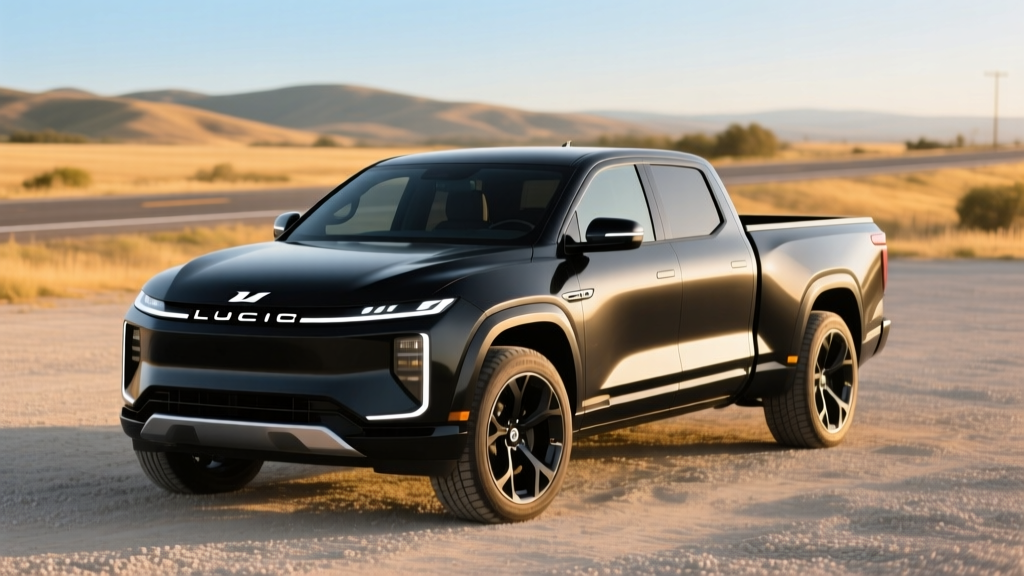
Quick Answer: Is the 2025 Electric Silverado Worth It?
The 2025 Chevrolet Silverado EV delivers up to 440 miles of EPA-estimated range (with the larger battery), peaks at 350 kW DC fast charging (10–80% in roughly 20 minutes on a capable station), and starts around $55,000 before incentives. It qualifies for the full $7,500 federal §30D tax credit for eligible buyers, which can now be transferred at the point of sale to reduce the purchase price directly. If you tow frequently over 200 miles or lack reliable home charging, the gas Silverado or a hybrid like the Ford F-150 PowerBoost remains the pragmatic choice. If you commute daily, have Level 2 home charging, and rarely tow max loads, the Silverado EV cuts fuel and maintenance costs dramatically.
Range, Battery & Real-World Efficiency
Chevrolet offers the 2025 Silverado EV with two Ultium-based battery packs. The standard pack targets affordability, while the extended pack chases maximum range. Here are the exact numbers buyers need:
| Spec | Standard Battery | Extended Battery |
|---|---|---|
| Usable capacity | ~200 kWh (estimated) | ~200 kWh (estimated) |
| EPA range | ~325 miles | Up to 440 miles (Work Truck Max Range) |
| Chemistry | NMC (nickel manganese cobalt) | NMC |
| Efficiency (MPGe) | ~56 MPGe combined | ~59 MPGe combined |
| kWh/100 mi | ~60 | ~57 |
Real-World Range Reality Check
The 440-mile EPA figure is impressive on paper, but real-world conditions compress it. Expect ~350–380 miles in mixed highway driving at 70+ mph. In cold weather (below 30°F), plan for a 15–25% reduction, bringing effective range down to roughly 330–375 miles on the extended pack. Towing a 7,000-lb trailer at highway speeds can cut range nearly in half — expect 200–240 miles before needing a charge. This is physics, not a Chevy flaw: all electric trucks experience severe range loss under tow.
For context, the EPA's EV range and efficiency database confirms that heavy vehicles with large frontal areas consume significantly more energy at speed. The Silverado EV's aerodynamic improvements (sealed grille, integrated running boards) help, but a 6,700-lb truck will never match a sedan's efficiency.
Charging Speed & Infrastructure
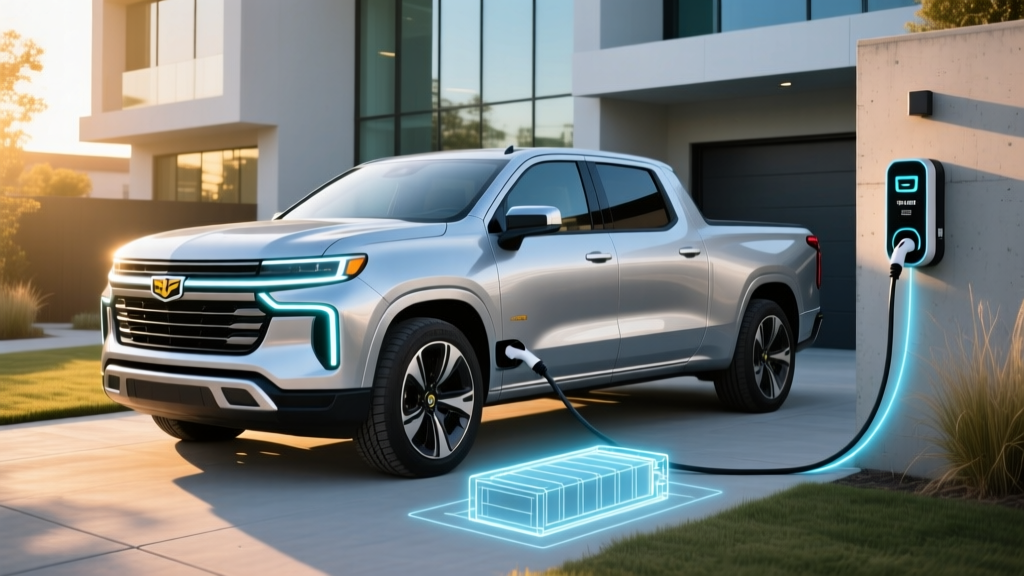
The Silverado EV uses the NACS (North American Charging Standard) connector natively, meaning direct access to Tesla Superchargers with a built-in port — no adapter required for the growing Supercharger network. It also supports CCS1 via adapter where needed.
| Charging Level | Power | Miles Added Per Hour | Best For |
|---|---|---|---|
| Level 1 (120V) | 1.4 kW | ~3–4 mi/hr | Emergency top-ups only |
| Level 2 (240V, 48A) | 11.5 kW | ~30–34 mi/hr | Daily home charging |
| Level 2 (240V, 80A) | 19.2 kW | ~50–55 mi/hr | Full overnight recharge |
| DC Fast (peak) | 350 kW | ~200+ mi in 10 min | Road trips |
At a 350 kW-capable DC fast charger (like newer Electrify America or EVgo stations), the Silverado EV can add approximately 100 miles of range in 10 minutes. The 10–80% charge takes roughly 20 minutes under ideal conditions. However, charging curves taper significantly above 80% SoC — the final 20% can take as long as the first 80%. For road trips, plan stops at 15–25% remaining and charge to 80% to minimize time at the plug.
Home charging note: A full Level 2 installation (240V, 60-amp circuit with a 48-amp charger) typically costs $800–$2,500 depending on panel capacity and wiring distance. If your home has a 200-amp panel with spare capacity, expect the lower end. A panel upgrade to 200A can add $2,000–$4,000. Always consult a licensed electrician for a site-specific quote.
Performance & Towing: Numbers That Matter
| Spec | 4WT (Work Truck) | RST |
|---|---|---|
| Horsepower | 510 hp | Up to 754 hp (Wide Open Watts mode) |
| Torque | 615 lb-ft | 785 lb-ft |
| 0–60 mph | ~5.5 sec | ~4.5 sec |
| Max towing | 10,000 lbs (12,500 with max tow pkg) | 10,000 lbs |
| Payload | ~1,800 lbs | ~1,600 lbs |
| Bed length | 5'11" (Multi-Flex Midgate extends to 10'11") | 5'11" |
The Multi-Flex Midgate is the Silverado EV's standout feature — it allows the bulkhead between cab and bed to fold down, extending the load floor to nearly 11 feet. This is genuinely useful for hauling lumber, kayaks, or ladders without a trailer.
On towing: while the Silverado EV matches or exceeds gas Silverado tow ratings on paper, the real-world limitation is range. Towing 10,000 lbs at highway speed will consume roughly 2.0–2.5 kWh per mile, meaning even the extended battery delivers only about 160–200 miles before needing a charge. For short-haul towing (boat ramp, local trailer runs), the EV excels with instant torque and no transmission hunting. For cross-country towing, gas or diesel remains more practical until DC fast-charging infrastructure along freight corridors matures further.
Cost Breakdown: Silverado EV vs Gas Silverado
Let's compare a 5-year ownership scenario. We'll use the Silverado EV 4WT (~$55,000 MSRP) against a comparably equipped gas Silverado 1500 LT (~$48,000 MSRP). Both driven 15,000 miles/year.
| Cost Category (5 years) | Silverado EV 4WT | Gas Silverado 1500 LT |
|---|---|---|
| Purchase price (MSRP) | $55,000 | $48,000 |
| Federal tax credit (§30D) | −$7,500 (if eligible) | $0 |
| Effective purchase | $47,500 | $48,000 |
| Fuel / electricity (75,000 mi) | $4,500–$6,750 (home + public) | $11,250–$13,500 (gas at $3.50–$4.20/gal, 19 MPG) |
| Maintenance | $1,200–$1,800 | $3,500–$5,000 |
| Insurance (avg) | $9,000–$11,000 | $7,500–$9,500 |
| Estimated depreciation | $18,000–$22,000 | $16,000–$20,000 |
| Total 5-year cost | $81,200–$89,050 | $86,250–$96,000 |
Key takeaway: The Silverado EV costs less over five years primarily through fuel and maintenance savings — roughly $6,000–$9,000 less in total cost. However, insurance premiums for EVs run 15–25% higher on average, and EV depreciation remains less predictable than established gas trucks. Your actual savings depend heavily on electricity rates, driving patterns, and whether you charge at home vs. relying on paid public stations.
Electricity cost math: at the US average residential rate of ~$0.16/kWh and the Silverado EV consuming ~58 kWh/100 mi, home charging costs approximately $0.093 per mile. Gas at $3.80/gallon with 19 MPG combined works out to $0.20 per mile. That's a $0.11/mile savings, or $8,250 over 75,000 miles — assuming predominantly home charging.
Federal Tax Credit & Incentive Eligibility
The 2025 Silverado EV currently qualifies for the full $7,500 federal §30D clean vehicle credit, but eligibility has specific requirements under current IRS rules. As outlined on IRS.gov, buyers must meet all of the following:
- Income caps: Modified AGI ≤ $150,000 (single), ≤ $225,000 (head of household), ≤ $300,000 (joint)
- MSRP cap: Vans/pickups/SUVs must have MSRP ≤ $80,000 (most Silverado EV trims qualify)
- Battery sourcing: Required percentages of critical minerals and battery components must be sourced from the US or FTA partners (Chevrolet confirms the Silverado EV meets current thresholds)
- Point-of-sale transfer: Eligible buyers can transfer the credit to the dealer at purchase, reducing the sticker price by $7,500 upfront — no need to wait for tax filing
- One credit per SSN: You can claim one new EV credit and one used EV credit per tax year
State incentives vary significantly. California's CVRP, Colorado's innovative motor vehicle credit, and various utility rebates can stack on top of the federal credit — but amounts and eligibility change frequently. Check your state's energy office and local utility for current programs.
Battery Longevity & Warranty
Chevrolet backs the Silverado EV's Ultium battery with an 8-year / 100,000-mile warranty covering defects and capacity loss below 70% of original capacity. This is standard for the industry and aligns with EPA and CARB requirements for emissions-related components.
Based on Ultium chemistry (NMC) and GM's thermal management system, realistic long-term degradation for a Silverado EV driven 15,000 miles/year should be approximately 8–12% over 8 years, meaning you'd retain roughly 88–92% of original range. This is consistent with data from GM's earlier Ultium-based vehicles and industry-wide NMC degradation studies.
Best practices for longevity: avoid frequent DC fast-charging above 80% SoC, precondition the battery before charging (the Silverado EV does this automatically when you navigate to a charger), and store the vehicle at 20–80% SoC if parked for extended periods. LFP batteries tolerate 100% storage better, but the Silverado EV uses NMC, which benefits from partial-charge storage.
Common Misconceptions — Myth vs Fact
| Myth | Fact |
|---|---|
| "Electric trucks can't tow." | The Silverado EV tows up to 12,500 lbs. The limitation is range under tow, not capability. |
| "The battery will need a $20,000 replacement in 5 years." | NMC batteries are lasting 200,000+ miles with modest degradation. The 8-year/100,000-mile warranty provides a backstop. Full replacement is rare. |
| "Charging takes too long for road trips." | At 350 kW, 10–80% takes ~20 minutes. Plan 2–3 stops on a 600-mile trip — comparable to gas stops for food and rest. |
| "I need a special electrical upgrade to charge at home." | Most homes with a 200-amp panel can support a 48-amp Level 2 charger. A $1,000–$2,000 install covers the majority of setups. Only older 100-amp panels may need an upgrade. |
| "It won't qualify for the tax credit because of battery sourcing." | As of 2025, the Silverado EV meets critical-mineral and battery-component thresholds. Always verify on fueleconomy.gov before purchase, as rules evolve. |
Decision Framework: Should You Buy the 2025 Electric Silverado?
Choose the Silverado EV If:
- You have Level 2 home charging (or can install it) — this is the single biggest factor in EV satisfaction
- Your daily commute is under 150 miles round-trip (covers ~95% of American commutes)
- You tow occasionally for short distances (under 100 miles) and want instant torque without a turbo spooling
- You want to eliminate oil changes, transmission fluid, and spark plugs — EVs have far fewer maintenance items
- You qualify for the §30D tax credit, effectively bringing the price near a gas Silverado LT
- You value the Multi-Flex Midgate for hauling long items without a trailer
Stick With Gas or Hybrid If:
- You tow heavy loads over 200+ miles regularly — charging infrastructure along towing routes is still limited
- You live in an apartment or lack access to reliable overnight charging
- You regularly drive in extreme cold (below 0°F) where range loss compounds with towing demands
- Your budget is firm under $45,000 — the gas Silverado WT starts significantly lower
- You need maximum proven resale value — gas trucks have decades of depreciation data; EV trucks do not
Frequently Asked Questions
What is the real-world range of the 2025 Silverado EV?
The EPA rates the extended-range model at 440 miles. In mixed real-world driving at highway speeds, expect 350–380 miles. Cold weather reduces this to roughly 330–375 miles. Towing a mid-size trailer drops range to approximately 200–240 miles. These are typical figures for all full-size electric trucks, not unique to Chevy.
How much does it cost to charge a Silverado EV at home?
A full charge from 10% to 100% on a Level 2 home charger at the US average electricity rate of $0.16/kWh costs approximately $25–$32 depending on battery size. That's equivalent to roughly 350–440 miles of range. Compare that to $65–$85 for a tank of gas in a Silverado 1500 at current fuel prices.
Does the Silverado EV qualify for the $7,500 federal tax credit?
Yes, as of 2025, the Silverado EV qualifies for the full $7,500 §30D credit for eligible buyers (income under the cap, MSRP under $80,000 for trucks, and meeting battery-sourcing requirements). The credit can be transferred at the point of sale, reducing your out-of-pocket cost immediately. Verify current eligibility at IRS.gov and on the window sticker before purchasing.
Can I tow a camper with the Silverado EV?
Yes — the Silverado EV is rated to tow up to 12,500 lbs with the max trailering package. However, towing significantly reduces range. A 5,000-lb camper at highway speeds will yield roughly 250–300 miles of range; heavier loads reduce this further. For weekend trips within 150 miles of home, it works well. For long-distance towing through areas with sparse charging, a gas or diesel truck remains more practical.
How does the Silverado EV compare to the Ford F-150 Lightning?
The Silverado EV offers more maximum range (440 vs. 320 miles EPA for the Lightning extended range) and a higher max tow rating (12,500 vs. 10,000 lbs). The F-150 Lightning has a more established presence, slightly lower starting price, and the Pro Power Onboard system with more accessible outlets. Both are strong — the Silverado EV wins on range and midgate utility; the Lightning wins on price and proven track record. Cross-shop both if you can.
What happens if the battery degrades?
GM's 8-year/100,000-mile battery warranty covers replacement or repair if capacity drops below 70% of original. Real-world NMC degradation data suggests 8–12% loss over 8 years of normal use, well within the warranty threshold. Complete battery failure is rare. If out-of-warranty replacement is ever needed, current Ultium pack replacement costs are estimated at $12,000–$18,000 depending on configuration — but prices are expected to decline as the Ultium platform matures and recycling infrastructure scales.