Quick Answer: Is There a 2025 Dodge Challenger EV?
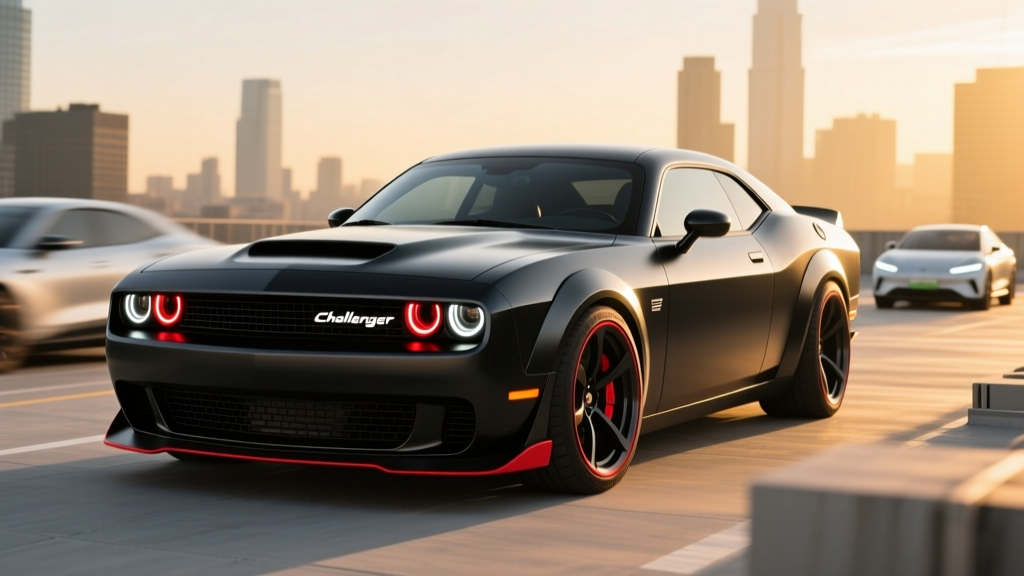
No. As of 2026, Dodge has not announced a standalone electric Challenger. The Challenger nameplate was officially retired after the 2023 model year, with Dodge pivoting its electric muscle-car strategy to the Dodge Charger Daytona EV — a two-door coupe built on the STLA Large platform. If you're searching for a "2025 Dodge Challenger EV," the closest reality is the Charger Daytona, which began deliveries in late 2024 for the 2025 model year. Any future Challenger-branded EV would be a separate announcement that has not materialized.
What Dodge Actually Offers: The Charger Daytona EV
Dodge's electric muscle-car ambitions are channeled entirely through the Charger Daytona, available in two primary trims for the 2025 model year:
| Spec | Charger Daytona R/T | Charger Daytona Scat Pack |
|---|---|---|
| Powertrain | Dual-motor AWD | Dual-motor AWD |
| Horsepower | 496 hp (with Direct Connection Stage 1) | 670 hp (with Direct Connection Stage 2) |
| 0–60 mph | 4.7 sec (est.) | 3.3 sec (est.) |
| Battery (usable) | ~92 kWh, NMC | ~92 kWh, NMC |
| EPA Range (est.) | ~317 miles | ~260 miles |
| Peak DC Fast Charge | ~175 kW | ~175 kW |
| 10–80% DC Charge | ~27 min (est.) | ~27 min (est.) |
| Level 2 Charging | 11 kW onboard | 11 kW onboard |
| Base MSRP | ~$59,595 | ~$73,590 |
| Drivetrain | AWD standard | AWD standard |
Note: EPA range and pricing figures reflect Dodge's preliminary and published estimates. Final EPA certification values may differ. The Scat Pack's lower range results from its higher-output motor calibration and standard performance tires.
Real-World Range Expectations
The R/T's estimated 317-mile EPA sticker is optimistic for real-world highway driving. Expect 250–280 miles at sustained 70–80 mph, dropping to 200–230 miles in sub-freezing temperatures due to cabin heating demand and reduced battery efficiency. The Scat Pack's performance tuning yields roughly 210–230 miles highway, 170–190 miles in cold weather. Dodge uses an NMC (nickel manganese cobalt) chemistry pack, which offers strong energy density but is more temperature-sensitive than LFP alternatives.
Why There's No Challenger EV (And Why That Matters)
Dodge discontinued the third-generation Challenger after 2023, alongside the Charger sedan, as Stellantis transitioned to the STLA Large platform. The Challenger's iconic long-hood, two-door coupe proportions were closely associated with the HEMI V8 era. Rather than stretch the nameplate onto an EV architecture immediately, Dodge consolidated its electric muscle identity under the Charger Daytona badge.
This decision has practical implications for buyers:
- No Challenger EV exists to buy, order, or reserve as of early 2026.
- The Charger Daytona is the functional equivalent — a two-door electric coupe with muscle-car branding and a "Fratzonic" exhaust sound system.
- If Dodge revives the Challenger name for an EV, it would likely be a 2027+ model year announcement, meaning deliveries wouldn't begin until late 2027 at the earliest.
Charger Daytona vs. Gas Challenger: Cost and Performance Comparison
For buyers who cross-shopped the final V8 Challengers and are now considering the Charger Daytona, here's how the economics stack up:
| Factor | 2023 Challenger R/T (5.7L HEMI V8) | 2025 Charger Daytona R/T (EV) |
|---|---|---|
| Base MSRP (when available) | ~$43,595 | ~$59,595 |
| Horsepower | 375 hp | 496 hp |
| 0–60 mph | 5.2 sec | 4.7 sec (est.) |
| EPA Combined | 19 MPG | ~98 MPGe (est.) |
| Fuel/Energy Cost per Mile | ~$0.18 (at $3.40/gal) | ~$0.05 (at $0.14/kWh national avg.) |
| Annual Fuel/Energy (15k mi) | ~$2,700 | ~$750 |
| Oil Changes per Year | 2 (~$120 total) | None |
| Federal Tax Credit (§30D) | $0 | Up to $7,500 (eligibility varies) |
| 5-Year Fuel/Energy Savings | Baseline | ~$9,750 savings (before credit) |
The EV carries a $16,000 higher upfront cost, but the five-year energy savings nearly close that gap before factoring in the federal tax credit. After the credit, the effective price premium drops to roughly $8,500, which the ongoing fuel savings repay within 4–5 years for a 15,000-mile-per-year driver.
Federal Tax Credit: Does the Charger Daytona Qualify?
The IRS §30D Clean Vehicle Credit offers up to $7,500 for qualifying new EVs, but eligibility depends on multiple factors that change annually:
- MSRP Cap: The vehicle must have an MSRP at or below $55,000 for sedans/coupes. The Charger Daytona R/T (~$59,595) and Scat Pack (~$73,590) both exceed this cap, meaning they likely do not qualify for the new-vehicle credit as currently structured.
- Buyer Income Limits: AGI must not exceed $150,000 (single), $225,000 (head of household), or $300,000 (joint).
- Battery Sourcing: Critical minerals and battery components must meet phased-in domestic/FtA-partner sourcing thresholds that tighten each year through 2029.
- Point-of-Sale Transfer: If eligible, the credit can be transferred to the dealer at purchase, reducing the out-of-pocket price immediately.
Given the MSRP cap, most Charger Daytona trims will not qualify for the $7,500 federal credit. Buyers should verify current-year rules on fueleconomy.gov and consult a tax professional before relying on credit eligibility in purchase decisions.
Charging the Charger Daytona: Home and Public Infrastructure
| Level | Power | Miles Added per Hour | Use Case |
|---|---|---|---|
| Level 1 (120V) | ~1.4 kW | ~4–5 mi/hr | Emergency / overnight trickle |
| Level 2 (240V) | 11 kW (max onboard) | ~35–40 mi/hr | Home daily charging |
| DC Fast Charge | ~175 kW peak | ~150+ mi in 10 min (peak) | Road trips |
kW vs. kWh reminder: kW (kilowatts) measures the rate of charging — how fast energy flows. kWh (kilowatt-hours) measures the battery's capacity — how much energy it stores. The Charger Daytona's ~92 kWh battery charged at 11 kW (Level 2) takes roughly 8.5 hours from 10% to full.
Home Charging Reality
A Level 2 home charger is strongly recommended for any EV in this class. Expect the following for installation:
| Component | Cost Range |
|---|---|
| Level 2 Charger (hardware) | $400–$750 |
| Electrician (240V/50A circuit) | $800–$2,500 |
| Permit & inspection | $100–$300 |
| Panel upgrade (if needed) | $1,500–$4,000 |
| Total (no panel upgrade) | $1,300–$3,550 |
If your home electrical panel is already at or near capacity (common in older homes with 100A service), a panel upgrade to 200A can add significant cost. Get a quote from a licensed electrician before committing to an EV purchase if you're unsure of your panel's headroom.
Public Charging and Road Trips
The Charger Daytona uses the CCS1 connector (as of the 2025 model year). Dodge has not confirmed NACS adoption for the STLA Large platform, though Stellantis has signaled future NACS compatibility across its lineup. For now, CCS1 gives you access to Electrify America, EVgo, and other CCS networks. Peak charging at ~175 kW means a 10–80% session takes roughly 27 minutes under ideal conditions, though charge-curve taper above 80% extends sessions significantly — plan for 35–40 minutes if you need to charge past 90%.
Ownership Costs: 5-Year Breakdown
| Category | Charger Daytona R/T (EV) | 2023 Challenger R/T (Gas) |
|---|---|---|
| Purchase Price (MSRP) | $59,595 | $43,595 |
| Federal Tax Credit | $0 (MSRP exceeds cap) | $0 |
| Energy/Fuel (75,000 mi) | ~$3,750 | ~$13,500 |
| Maintenance (5 yr) | ~$1,200 | ~$3,500 |
| Insurance (5 yr avg.) | ~$12,000 | ~$9,500 |
| Depreciation (est.) | ~$28,000 | ~$18,000 |
| Total 5-Year Cost | ~$104,545 | ~$88,095 |
The EV saves roughly $12,050 in fuel and maintenance over five years but loses ground on higher insurance premiums (performance EVs carry elevated rates), steeper depreciation (new EV platforms depreciate faster than established muscle-car nameplates), and the upfront price gap. Total cost of ownership favors the gas Challenger over a five-year horizon unless you drive significantly more than 15,000 miles annually or electricity costs in your region are well below the national average.
Common Misconceptions About the "Challenger EV"
| Myth | Fact |
|---|---|
| "The 2025 Dodge Challenger EV is available to order." | No Challenger EV exists. The electric muscle car is the Charger Daytona. |
| "It qualifies for the full $7,500 tax credit." | Both trims exceed the $55,000 MSRP cap for sedans/coupes under §30D. |
| "EVs are cheaper to own in every scenario." | Higher upfront cost, insurance, and depreciation can outweigh fuel savings for moderate-mileage drivers. |
| "The Fratzonic exhaust sound is real engine noise." | It's a synthesized audio system played through exterior and interior speakers — an EV has no exhaust. |
| "DC fast charging is always 175 kW." | Peak rate applies only at optimal SoC and temperature; sustained average is lower, and charging slows significantly above 80%. |
Decision Framework: Should You Wait for a Challenger EV or Buy Now?
Choose the Charger Daytona if:
- You want an electric two-door muscle car today and accept that it wears a Charger badge.
- You have reliable Level 2 home charging access and drive under 300 miles per day.
- You prioritize instant torque, AWD traction, and lower per-mile energy costs over V8 nostalgia.
- You're comfortable with a ~$60,000+ purchase price and understand the tax credit likely won't apply.
Wait or look elsewhere if:
- You specifically want a Challenger-branded EV — no timeline has been announced, and it may never happen.
- You lack home charging access and rely exclusively on public infrastructure in a charging-desert region.
- Your budget is under $45,000 — consider the used EV market or a PHEV as a bridge.
- You want the longest possible range — the Scat Pack's ~260-mile EPA estimate is below segment leaders like the Hyundai Ioniq 6 (361 mi) or Tesla Model 3 Long Range (341 mi).
First-Time EV Buyer Essentials
If the Charger Daytona is your entry into electric ownership, prepare for these realities:
- Preconditioning matters. Use the vehicle's scheduled departure feature to warm the battery before DC fast charging in cold weather — this can cut 10–80% charge times by 5–10 minutes.
- Tire wear accelerates. EVs are heavier and deliver instant torque. Expect tire replacement every 25,000–35,000 miles on a performance-tuned AWD coupe.
- Insurance is higher. Get quotes before purchasing — EV performance coupes can carry premiums 25–40% above comparable gas models.
- Battery warranty: Stellantis typically offers 8 years/100,000 miles on the high-voltage battery, covering capacity loss below 70% of original. Verify exact terms at purchase.
- Route planning is required for road trips. Use apps like A Better Routeplanner or PlugShare to identify CCS-compatible DC fast chargers along your route, especially in rural corridors.
Frequently Asked Questions
Will Dodge ever make a Challenger EV?
Dodge has not announced a Challenger-branded EV. The company retired the Challenger nameplate after 2023 and is using the Charger Daytona as its electric muscle-car offering. A future Challenger EV is possible but has no confirmed timeline.
How fast does the Charger Daytona charge at home?
On a Level 2 (240V) charger at its maximum 11 kW onboard rate, the ~92 kWh battery charges from 10% to full in approximately 8–9 hours, adding roughly 35–40 miles of range per hour.
Does the Charger Daytona use CCS or NACS?
The 2025 model year Charger Daytona uses the CCS1 connector. Stellantis has indicated future NACS adoption across its lineup, but the 2025 Charger Daytona was not built with the Tesla-style NACS port.
What's the real highway range?
The R/T's estimated 317-mile EPA range drops to roughly 250–280 miles at sustained highway speeds (70–80 mph). In cold weather (below 32°F), expect 200–230 miles. The Scat Pack delivers approximately 210–230 miles highway, 170–190 miles cold.
Can I tow with the Charger Daytona?
Dodge has not published an official towing capacity for the Charger Daytona. As a two-door performance coupe, it is not designed for towing duty — if you need towing capability, consider the Charger Daytona four-door variant (announced for future model years) or an electric SUV.
Is the Charger Daytona eligible for any state incentives?
State-level rebates and incentives vary by jurisdiction and change frequently. Check your state's energy office or AFDC incentive database for current programs. Some states offer rebates independent of the federal MSRP cap.