The Quick Answer for Silverado EV Shoppers
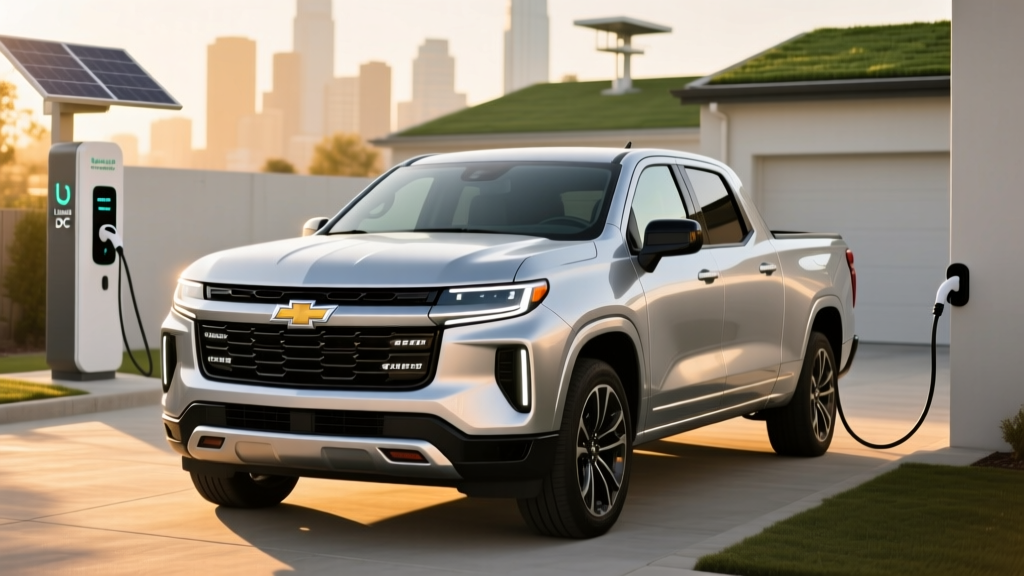
If you've been admiring 2025 Chevy EV truck wallpaper online and wondering whether the Silverado EV actually lives up to those cinematic renders, here's the reality: the 2025 Chevrolet Silverado EV delivers up to 450 miles of EPA-estimated range on the 4WT Extended Range trim (with the 4WT Max Range pushing an estimated 492 miles), charges at a peak 350 kW on DC fast chargers (adding roughly 100 miles in ~10 minutes), and starts around $57,900 before any federal incentives. Compared to a gas Silverado 1500 getting roughly 20 MPG combined, the EV version can save a high-mileage driver $1,500–$2,500 annually on fuel alone — but only if you have reliable home Level 2 charging and your utility rates stay under $0.18/kWh. Without home charging access, the economics narrow considerably.
Real Specs Behind the Renders: Range, Battery, and Performance
The Silverado EV rides on GM's Ultium platform and is offered across several configurations for the 2025 model year. Here are the numbers that matter far more than any hero shot:
| Spec | 4WT Standard Range | 4WT Extended Range | RST (Est.) |
|---|---|---|---|
| EPA Range | ~380 mi | ~450 mi | ~400 mi |
| Battery (usable, kWh) | ~200 kWh (est.) | ~240 kWh (est.) | ~215 kWh (est.) |
| Chemistry | NMC (Ultium) | NMC (Ultium) | NMC (Ultium) |
| Peak DC Charge Rate | 350 kW | 350 kW | 350 kW |
| 10–80% DC Fast Charge | ~30 min | ~35 min | ~30 min |
| Level 2 Charge Rate | 19.2 kW | 19.2 kW | 19.2 kW |
| Horsepower | 510 hp | 510 hp | 664 hp (RST) |
| 0–60 mph | ~5.5 sec | ~5.5 sec | ~4.5 sec |
| Max Towing | 10,000 lbs | 10,000 lbs | 10,000 lbs (12,500 w/ package) |
| Starting MSRP | $57,900 | $69,900 | ~$87,000 (RST First Edition) |
Real-World Range Reality Check
The 450-mile EPA figure is impressive, but expect ~350–380 miles at sustained 75 mph highway speeds, and potentially ~280–310 miles in sub-30°F weather with cabin heating. Towing a 7,000-lb trailer can cut range by 40–50%, dropping effective range to roughly 200–230 miles before you need a charger. Source: fueleconomy.gov EV range methodology and independent EV towing tests.
Silverado EV vs. Gas Silverado 1500: Cost Comparison That Matters
The renders don't show you the fuel pump. Let's compare the Silverado EV 4WT against a comparably equipped gas Silverado 1500 LTZ (5.3L V8, 4WD) over 5 years and 75,000 miles:
| Cost Category | Silverado EV 4WT | Gas Silverado 1500 LTZ |
|---|---|---|
| Base MSRP | $57,900 | $52,800 |
| Estimated Federal Tax Credit (§30D) | Up to $7,500* | $0 |
| Effective Purchase Price | $50,400 | $52,800 |
| Fuel/Energy (75k mi) | $3,940 (home charging @ $0.14/kWh) | $13,125 (20 MPG @ $3.50/gal) |
| Maintenance (est.) | $1,200 | $3,500 |
| Insurance (5-yr est.) | $9,500 | $7,800 |
| Total 5-Year Cost | $65,040 | $77,225 |
*The §30D federal tax credit has income caps ($150k single / $300k joint), MSRP caps ($80,000 for trucks/vans/SUVs), and battery-sourcing requirements that change annually. The Silverado EV qualifies as of the current IRS guidance — verify at IRS.gov before purchasing. Point-of-sale transfer is available, reducing your dealer price directly.
The EV saves roughly $12,000 over five years for a driver who charges primarily at home. However, insurance runs 15–25% higher on the Silverado EV due to repair costs and battery replacement risk. If you rely entirely on public DC fast charging at $0.40–$0.55/kWh, your 5-year energy cost jumps to roughly $10,000–$13,000, nearly erasing the fuel savings advantage.
Charging Infrastructure: What the Brochures Won't Tell You
The Silverado EV's 350 kW peak charge rate is class-leading, but peak is not sustained. Here's what charging actually looks like across levels:
| Level | Power (kW) | Miles Added/Hour | Full Charge Time (200 kWh) | Where |
|---|---|---|---|---|
| Level 1 (120V) | 1.4 kW | ~3 mi/hr | ~140+ hours | Standard outlet |
| Level 2 (240V, 48A) | 11.5 kW | ~28 mi/hr | ~17 hours | Home (standard EVSE) |
| Level 2 (240V, 80A) | 19.2 kW | ~47 mi/hr | ~10.5 hours | Home (upgraded EVSE + 100A circuit) |
| DC Fast Charge | 350 kW (peak) | ~850 mi/hr (peak) | 10–80% in ~30 min | Public CCS/NACS stations |
Home Charging Installation Costs
To unlock the Silverado EV's 19.2 kW Level 2 capability, you need a 100-amp dedicated circuit and a hardwired EVSE rated for 80 amps. Installation costs break down as follows:
| Item | Cost Range | Notes |
|---|---|---|
| 80A EVSE (hardwired) | $600–$1,200 | ChargePoint Home Flex, Emporia, Wallbox |
| Electrical panel upgrade (if needed) | $1,500–$4,000 | Required if existing panel is 100A or maxed out |
| Wiring + conduit (50–100 ft run) | $800–$2,500 | Varies by distance from panel to garage |
| Permit + inspection | $100–$400 | Varies by municipality |
| Electrician labor | $1,000–$3,000 | Licensed electrician, varies by region |
| Total (no panel upgrade) | $2,500–$7,100 | |
| Total (with panel upgrade) | $4,000–$11,100 |
Most Silverado EV buyers will need a 200-amp service panel minimum. If your home has an older 100-amp panel, budget for the upgrade — it's the single biggest variable in home charging cost. Always get a quote from a licensed electrician before committing to the vehicle.
The Silverado EV uses the CCS1 connector for DC fast charging on early builds, with GM transitioning to NACS (Tesla-style) for subsequent production. GM provides Supercharger access via an adapter. Confirm which connector your specific VIN ships with.
Common Misconceptions About the Silverado EV
| Myth | Fact |
|---|---|
| "It can tow just like a gas truck." | Max towing is 10,000–12,500 lbs, but towing at capacity cuts range by 40–50%. Plan charging stops every 150–200 miles when towing heavy. |
| "The 450-mile range means I'll never need to charge on road trips." | Real-world highway range at 75 mph is closer to 350–380 miles. Cold weather drops this further. You'll still plan charging stops on long trips. |
| "350 kW charging means a full charge in 30 minutes." | 350 kW is peak, sustained only briefly between ~10–30% SoC. The charge curve tapers significantly above 80%. A 10–80% session takes ~30 minutes; 10–100% can take 50+. |
| "The battery will need replacing in 5 years." | GM warranties the Ultium battery for 8 years / 100,000 miles with a capacity retention threshold of ~70%. Industry data shows NMC packs typically retain 85–90% at 100k miles under normal use. |
| "I'll get the $7,500 tax credit automatically." | You must meet income caps, the truck must be under the $80k MSRP cap, and battery sourcing requirements must be satisfied. Always verify current-year eligibility at IRS.gov. |
Who Should Buy the Silverado EV (and Who Shouldn't)
Decision Framework
Buy the Silverado EV if:
- You have home Level 2 charging (or can install it) and drive 30+ miles daily
- You want a work truck with low operating costs and 510+ hp for job-site confidence
- Your typical towing is under 7,000 lbs and within a 150-mile radius
- You qualify for the §30D tax credit (income under $150k single / $300k joint)
- You value the Multi-Flex Midgate and 9+ feet of bed length with the midgate open
Stick with a gas or hybrid Silverado if:
- You tow over 8,000 lbs regularly and cover long distances between stops
- You live in an apartment or lack access to any Level 2 charging
- Your daily driving is under 15 miles (the fuel savings won't offset the higher purchase price)
- You operate in extreme cold (-20°F or below) where range loss exceeds 35%
- You need a sub-$45,000 truck — the Silverado EV starts near $58,000
Consider a PHEV alternative (like the upcoming Silverado PHEV or a competitor) if:
- You want electric commuting but gas flexibility for long towing trips
- You can't install home charging but want some electric-only range for errands
First-Time EV Truck Buyer Checklist
If the Silverado EV is your first electric vehicle, here's what you need to verify before signing:
- Electrical panel capacity: Get an electrician to confirm your panel can handle an 80A circuit. This determines whether you'll pay $3,000 or $8,000 for home charging.
- Utility rate plan: Check if your utility offers time-of-use (TOU) rates. Charging overnight at $0.08–$0.12/kWh dramatically improves economics vs. peak rates of $0.25+.
- Commute + driving pattern audit: Track your actual weekly mileage for one month. If it's under 100 miles/week, the fuel savings may not justify the EV premium.
- Tax credit pre-qualification: Use the IRS clean vehicle credit tool and confirm the specific VIN's battery sourcing compliance at the point of sale.
- Insurance quote: Get a binding insurance quote before purchase. Silverado EV premiums run $1,800–$2,400/year in most states — 15–25% above the gas equivalent.
- Public charging map: Pull up PlugShare or the EVgo/Electrify America apps and verify there are 150+ kW DC chargers along your most common road-trip routes.
- Test the charge curve: On your test drive, ask the dealer to demonstrate a DC fast-charge session. Watch how the kW rate changes as SoC climbs — this is real-world education no spec sheet provides.
Battery Longevity and Warranty
The Silverado EV's Ultium NMC battery is covered by GM's 8-year / 100,000-mile warranty, guaranteeing the pack retains above approximately 70% of original capacity. For a 450-mile-range truck, that means even at the warranty threshold, you'd still have roughly 315 miles of usable range.
NMC chemistry provides high energy density (essential for a truck needing 200+ kWh), but it's more sensitive to sustained 100% SoC storage and extreme heat. Best practices:
- Set daily charge limit to 80–90% for routine use
- Only charge to 100% when you need full range for a trip
- Use preconditioning before DC fast charging to protect the pack and maximize charge speed
- Avoid leaving the truck at 100% SoC for extended periods in hot climates
Replacement cost for an Ultium pack of this size, out of warranty, is estimated at $25,000–$35,000 based on current GM service data — a figure that should factor into long-term ownership planning beyond the warranty period.
Frequently Asked Questions
Is the 2025 Silverado EV actually available to order?
Yes. The 4WT fleet-oriented trims began delivery in late 2024, and the consumer RST trim followed. Availability varies by dealer. Check GM's Build & Buy tool for current allocation status. The higher-volume LT and Trail Boss trims are expected for the 2026 model year at lower price points (estimated starting around $50,000–$55,000).
Can I use Tesla Superchargers with the Silverado EV?
GM has secured Supercharger network access for its EVs. Depending on your build date, your Silverado EV will either ship with a NACS port or a CCS port with a GM-provided NACS adapter. Either way, Supercharger access is available — confirm adapter inclusion with your dealer.
How does the Silverado EV compare to the Ford F-150 Lightning?
The Silverado EV offers more maximum range (450 vs. 320 miles EPA for the Lightning Extended Range), higher peak charge speed (350 kW vs. ~150 kW sustained on Lightning), and the innovative Multi-Flex Midgate. The F-150 Lightning starts significantly lower (~$55,000 base), has a more conventional truck layout that some buyers prefer, and has been on sale longer with more proven real-world data. Both are strong — the Silverado wins on range and charge speed; the Lightning wins on price and familiarity. See fueleconomy.gov for side-by-side EPA data.
What happens if I need to tow long distance?
Plan conservatively. Towing 7,000+ lbs at highway speed reduces range to roughly 200–230 miles. Map DC fast chargers every 150 miles along your route. Charging while towing adds time — expect 35–45 minute stops. For frequent heavy towing over 300 miles, a diesel or gas truck remains the more practical tool.
Does the Silverado EV qualify for the full $7,500 tax credit?
As of current IRS guidance, the Silverado EV (assembled in the U.S.) qualifies for up to $7,500 under §30D, subject to buyer income caps ($150k single / $300k joint modified AGI), the $80,000 MSRP cap for trucks, and critical-mineral/battery-component sourcing rules that tighten annually. The credit can be transferred to the dealer at point of sale, reducing your purchase price directly. Always confirm with your tax professional and check the latest IRS guidance at IRS.gov.
What's the real cost per mile to drive the Silverado EV?
At a national average electricity rate of $0.16/kWh and an efficiency of roughly 2.0 kWh/mile (a large, heavy truck), you're looking at about $0.032/mile on home charging. Compare that to a gas Silverado at 20 MPG and $3.50/gallon: $0.175/mile. That's a $0.14/mile savings, which adds up to $2,100 over 15,000 miles annually. Public DC fast charging at $0.48/kWh raises EV cost to ~$0.096/mile — still cheaper than gas, but the gap narrows substantially.