Quick Answer: Are 2025 Chevy Electric Vehicles Worth It?
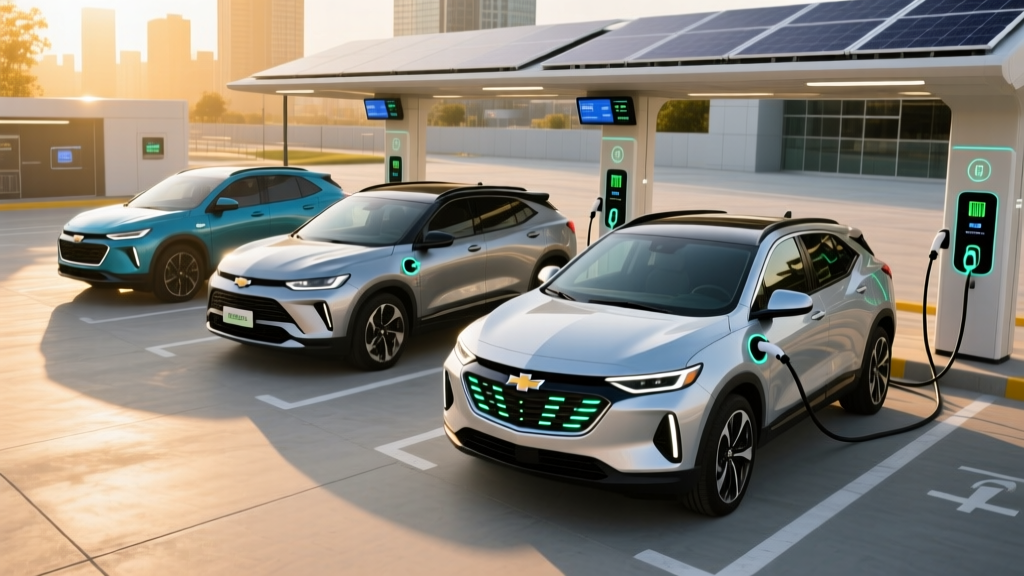
Chevrolet's 2025 EV lineup includes three core models: the Equinox EV (319 mi EPA, from ~$33,600), the Blazer EV (up to 324 mi EPA, from ~$44,600), and the Silverado EV (up to 440 mi EPA, from ~$55,900). All use GM's Ultium platform with NMC lithium-ion batteries and CCS/NACS-compatible charging. The Equinox EV is the standout value play — it undercuts most rivals on price while delivering competitive range. Whether any of these make financial sense depends on your home charging access, annual mileage, and §30D tax credit eligibility. Buyers who can charge at home and drive 10,000+ miles/year will see the strongest total-cost-of-ownership advantage over gas equivalents.
2025 Chevy EV Lineup: Specs at a Glance
Chevrolet simplified its electric strategy for 2025 after the Bolt EV/EUV was discontinued (a next-gen Bolt on the updated Ultium platform is expected for 2026). Here's exactly what you can buy right now, with hard numbers:
| Spec | 2025 Equinox EV | 2025 Blazer EV | 2025 Silverado EV |
|---|---|---|---|
| EPA Range (max) | 319 mi | 324 mi | 440 mi (WTB) |
| Battery (usable, est.) | ~85 kWh, NMC | ~102 kWh, NMC | ~200 kWh, NMC |
| Max DC Fast Charge | 150 kW | 190 kW | 350 kW |
| 10–80% DCFC Time | ~33 min | ~27 min | ~20 min |
| Level 2 Rate (kW) | 11.5 kW | 11.5 kW | 19.2 kW (avail.) |
| Horsepower (max AWD) | 288 hp | 557 hp (SS) | 754 hp (4WT) |
| 0–60 mph (est.) | ~7.5 s | ~3.4 s (SS) | ~4.5 s (4WT) |
| Starting MSRP | ~$33,600 | ~$44,600 | ~$55,900 (WTB) |
| Battery Warranty | 8 yr / 100k mi | 8 yr / 100k mi | 8 yr / 100k mi |
Real-world range caveat: EPA estimates assume mixed driving at moderate temperatures. Expect 10–20% range reduction on sustained highway driving above 70 mph, and 15–30% loss in sub-freezing conditions. The Equinox EV 3RS with its 319-mile EPA rating will realistically deliver 260–280 miles on a highway road trip in fair weather and potentially 220–240 miles in winter. The Silverado EV's massive battery gives it a bigger real-world buffer, but its aerodynamic profile means highway efficiency drops sharply above 65 mph.
EV vs Gas: What You Actually Save (or Spend)
The most common question from Chevy shoppers: does going electric save money compared to the gas Equinox, Blazer, or Silverado? The answer depends on three variables — your local electricity rate, annual mileage, and whether you qualify for federal or state incentives.
| Cost Factor | 2025 Equinox EV (3RS AWD) | 2025 Equinox Gas (RS AWD) |
|---|---|---|
| Base MSRP | ~$43,400 | ~$34,900 |
| After §30D Credit (if eligible) | ~$35,900 | N/A |
| Fuel/Energy Cost per Mile | ~$0.04 (home) / ~$0.12 (DCFC) | ~$0.14 (gas, $3.50/gal, 25 MPG) |
| Annual Fuel (12k mi/yr) | ~$480 home / ~$1,440 DCFC | ~$1,680 |
| Maintenance (annual est.) | ~$200–350 | ~$600–900 |
| 5-Year Fuel + Maint. Total | ~$3,400–$8,950 | ~$11,400–$12,900 |
Source: Efficiency figures from fueleconomy.gov. Electricity cost based on $0.16/kWh national average; gas based on $3.50/gal. Your mileage will literally vary.
The key insight: The EV's advantage is almost entirely dependent on home charging. If you rely primarily on DC fast charging (at $0.35–0.50/kWh at networks like Electrify America or EVgo), your per-mile cost nearly matches gas. Home charging at off-peak utility rates ($0.08–0.16/kWh) is where the 70% fuel savings materialize. Buyers without reliable Level 2 home charging access should run their local numbers carefully before committing.
Federal Tax Credit: Do You Qualify?
The §30D federal EV tax credit can reduce your effective purchase price by up to $7,500 — and as of 2024, it can be transferred to the dealer at point of sale as an instant rebate rather than waiting for tax season. But eligibility is not automatic. Here's the checklist for 2025 model-year purchases:
- MSRP Cap: SUVs and trucks must be under $80,000; sedans under $55,000. All three Chevy EVs qualify on MSRP.
- Income Cap: Modified AGI must not exceed $150,000 (single), $225,000 (head of household), or $300,000 (joint filers).
- Battery Sourcing: Increasing percentages of battery minerals must come from the U.S. or FTA-partner countries. The credit phases in $3,750 increments based on critical-mineral and battery-component requirements. Check IRS qualified vehicle list for current eligibility — it changes as supply chains shift.
- Point-of-Sale Transfer: You can elect to transfer the credit to the dealer, reducing your purchase price directly. You must still meet income requirements, and if your tax liability ends up below the credit amount, you may owe the difference at filing.
Critical caveat: Battery sourcing requirements tighten each year. A model that qualifies for the full $7,500 in early 2025 could see partial eligibility later as rules evolve. Always verify on IRS.gov or consult a tax professional before relying on the credit in your budget. State incentives (like Colorado's $5,000 credit or California's CVRP) stack on top but have their own rules.
Charging Reality: Home Setup, Public Networks, and the NACS Transition
GM began transitioning its EVs to the NACS (Tesla) charging port starting with 2025 models. This is significant: NACS adapters unlock access to Tesla's Supercharger network (17,000+ stalls in North America), which is widely regarded as the most reliable DCFC network. For 2025 Chevy EVs, expect CCS ports on early-production units and NACS on later builds — confirm with your dealer.
| Charging Level | Power (kW) | Miles Added per Hour | Typical Use Case |
|---|---|---|---|
| Level 1 (120V) | ~1.4 kW | 3–5 mi/hr | Overnight trickle; emergency top-ups |
| Level 2 (240V, 48A) | 11.5 kW | 30–40 mi/hr | Home daily charging; full overnight refill |
| DC Fast (150–350 kW) | Peak rated | 150–300+ mi in 20 min | Road trips; rapid top-ups |
Home Level 2 Installation Costs
Budgeting for a home charger is non-negotiable for EV ownership. Here's what to expect:
| Component | Cost Range | Notes |
|---|---|---|
| Level 2 Charger (hardware) | $300–$700 | ChargePoint Home Flex, Emporia, Wallbox |
| Electrician (240V/50A circuit) | $800–$2,500 | Depends on panel proximity and conduit run |
| Electrical Panel Upgrade (if needed) | $1,500–$4,000 | Required if you have a 100A panel or no spare slots |
| Permit & Inspection | $100–$400 | Varies by municipality |
| Total (typical install) | $1,200–$3,600 | Without panel upgrade: $1,200–$3,200 |
Real-world charging tip: The Equinox EV's 150 kW DC fast-charging peak sounds modest next to the Silverado EV's 350 kW, but sustained charging matters more than peak. The Equinox holds close to its peak rate from 10–60% SoC before tapering, making its 10–80% time of ~33 minutes competitive for road-trip stops. The Silverado EV's 200 kWh battery means even at 350 kW, a full 10–80% charge moves a massive amount of energy — useful for towing scenarios where range drops by 30–50%.
Common EV Misconceptions — Fact-Checked
| Myth | Fact (with data) |
|---|---|
| "EV batteries need replacing every few years." | GM's Ultium batteries carry an 8-year/100,000-mile warranty against defects and excessive degradation (below 60% capacity). Real-world data from earlier GM EVs shows ~5–10% degradation over 100k miles. Full replacement (if ever needed out of warranty) runs $8,000–$18,000 depending on pack size. |
| "You can't take an EV on a road trip." | The Equinox EV's 319-mile range plus 33-minute DCFC stops make 500-mile trips practical with one charging stop. The Silverado EV's 440-mile range can cover most single-day drives without stopping. Planning apps like A Better Routeplanner handle routing automatically. |
| "EVs are worse in cold weather." | Range does drop 15–30% in freezing temps due to battery chemistry and cabin heating. But preconditioning (warming the battery while plugged in) mitigates charging-speed loss, and EVs start instantly in cold — no cranking a frozen engine. Heated seats/steering wheel use far less energy than cabin air heating. |
| "Charging takes too long." | Home Level 2 charging happens while you sleep — 8–10 hours refills any Chevy EV from empty. DCFC stops on road trips average 20–35 minutes. Most owners report spending less total time "refueling" than with gas because daily charging is passive. |
| "EVs cost more to insure." | Often true: EV insurance premiums run 10–25% higher than gas equivalents due to higher repair costs and parts pricing. Shop quotes from GEICO, Progressive, and State Farm before purchasing — differences can be $200–$600/year. |
Decision Framework: Which 2025 Chevy EV (If Any) Is Right for You?
Choose the Equinox EV if: You want the best value proposition in Chevy's lineup, commute under 60 miles daily, have home charging, and want an EPA range above 300 miles without spending over $45k. The 3LT trim at ~$33,600 (before incentives) is one of the most affordable 300+ mile EVs on the market.
Choose the Blazer EV if: You need more interior space and cargo room than the Equinox, want available performance (the SS trim hits 557 hp), and are willing to pay a premium for a sportier driving experience. Best for families who take occasional road trips and value quick DCFC speeds.
Choose the Silverado EV if: You need truck utility — towing (up to 10,000 lbs on WTB), a large bed, and maximum range. The 440-mile EPA rating (Work Truck Max Range) is class-leading for pickups. Be aware that towing heavy loads cuts range by 30–50%, and the starting price near $56k climbs quickly with options.
Choose a gas or hybrid Chevy instead if: You lack home charging access and your area has sparse DCFC infrastructure, you regularly drive 400+ miles in remote areas, or your budget is strictly under $30k and you can't wait for incentives. The gas Equinox AWD at ~$30k with 26 MPG combined is a rational choice for apartment dwellers without charging options.
5-Year Total Cost of Ownership: Equinox EV vs Equinox Gas
| Category | Equinox EV 3RS AWD | Equinox Gas RS AWD |
|---|---|---|
| Purchase Price (after $7,500 credit) | ~$35,900 | ~$34,900 |
| Fuel/Energy (5 yr, 60k mi) | ~$2,400 (home) / $7,200 (DCFC) | ~$8,400 |
| Maintenance (5 yr) | ~$1,500 | ~$4,000 |
| Insurance (5 yr, est.) | ~$9,500 | ~$7,800 |
| Depreciation (est. 5 yr) | ~$16,000 | ~$14,500 |
| Estimated 5-Year Total | ~$65,300 (home) / $70,100 (DCFC) | ~$69,600 |
The EV wins on operating costs but pays a penalty on insurance and potentially depreciation (EV resale values have been volatile as prices drop and new models flood the market). Home charging is the decisive factor — it swings the 5-year total by ~$4,800 compared to DCFC-only ownership. Data adapted from fueleconomy.gov EV comparisons and AAA Your Driving Costs 2024.
First-Time EV Buyer Checklist
If this is your first electric vehicle, here's what you need to verify before signing:
- Home charging feasibility: Do you have a garage or driveway where a 240V outlet can be installed? Get an electrician quote before purchasing.
- Electrical panel capacity: A 200A panel with spare breaker slots is ideal. A 100A panel likely needs an upgrade ($1,500–$4,000).
- Utility rate plan: Many utilities offer time-of-use (TOU) plans with off-peak rates as low as $0.06–0.10/kWh overnight. Enroll before your first charge.
- Tax credit eligibility: Confirm your income, the vehicle's MSRP, and current battery-sourcing status on IRS.gov.
- Insurance quotes: Get binding quotes for the specific EV trim before purchase — premiums vary significantly by model.
- Public charging map: Check PlugShare or the Chevy app for DCFC stations along your common routes. NACS adapter access to Superchargers is a major plus for 2025 models.
- Winter plan: If you live where temperatures regularly drop below 30°F, plan for 20%+ range reduction and use preconditioning while plugged in.
Frequently Asked Questions
What happened to the Chevy Bolt EV?
The Bolt EV and EUV were discontinued after the 2023 model year. GM is developing a next-generation Bolt on an updated Ultium platform, expected for the 2026 model year. Until then, the Equinox EV at ~$33,600 is Chevy's most affordable new EV option.
Can I charge a 2025 Chevy EV at a Tesla Supercharger?
Yes — GM's NACS adoption means 2025 Chevy EVs with the NACS port can access Tesla Superchargers natively. Models with the CCS port will need GM's approved adapter. Check your specific vehicle's port type with the dealer, as the transition is rolling out across production.
How long will the Ultium battery last?
GM warranties the battery for 8 years/100,000 miles against defects and capacity loss below 60%. Based on degradation data from earlier GM EVs and industry NMC chemistry benchmarks, expect 85–92% capacity retention at 100,000 miles under normal use. Avoid frequent DCFC sessions to 100% SoC and regular deep discharges to 0% for optimal longevity.
Is the Silverado EV practical for daily commuting?
It depends on your priorities. The 440-mile range means you'll charge at home once every few days even with a long commute. But its size (233+ inches long) makes parking and urban maneuvering challenging, and efficiency drops significantly at highway speeds. If you don't need truck capability daily, the Equinox or Blazer EV is more practical for commuting.
Do Chevy EVs qualify for the $7,500 federal tax credit?
Eligibility varies by model, trim, and current battery-sourcing rules. The Equinox EV, Blazer EV, and Silverado EV have appeared on the IRS qualified list, but the credit amount ($3,750 or $7,500) depends on whether the vehicle meets both critical-mineral and battery-component thresholds. Always verify current status on the IRS qualified vehicles page before purchase.