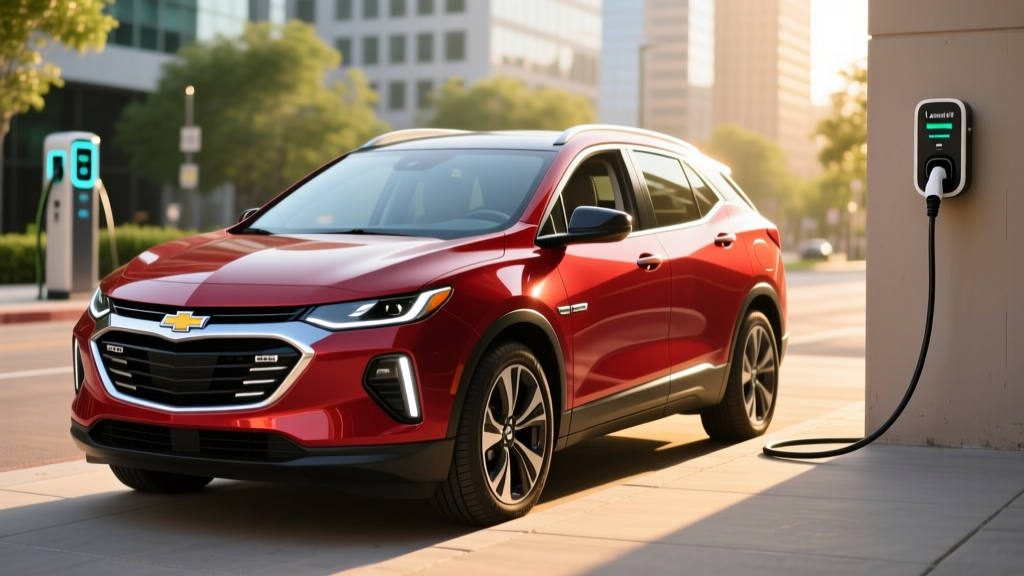
The 2025 Chevy Equinox EV is General Motors' play for mainstream electric adoption — a compact crossover that undercuts most rivals on price while delivering over 300 miles of EPA-estimated range. Built on GM's Ultium platform with a lithium iron phosphate (LFP) battery, it targets buyers who want a practical, no-drama EV without paying luxury premiums. We've analyzed the specs, charging behavior, and ownership math to see if it delivers.
Quick Verdict: Who Should Buy the 2025 Chevy Equinox EV?
The Equinox EV is best for suburban commuters and small families who can charge at home and want a sub-$35,000 (before incentives) electric crossover with genuine long-range capability. It's not the fastest-charging or most exciting EV in its class, but its LFP battery chemistry, roomy cabin, and available federal tax credit make it one of the most financially sensible EVs on the market for 2025. If you need a tow rig, prioritize road-trip charging speed, or want cutting-edge driver assists, look elsewhere.
Range, Battery & Efficiency: Real Numbers Beyond the Sticker
The 2025 Equinox EV uses an 85 kWh (usable capacity) LFP battery pack. LFP chemistry trades some energy density for superior longevity and thermal stability — these cells tolerate repeated 100% charging better than NMC packs, which matters for daily commuters who want to maximize range without babying the battery.
- EPA Estimated: 319 miles (FWD LT/RS trims, 19-inch wheels)
- AWD trims: 285–307 miles EPA (varies by wheel size)
- Real-World Highway (70 mph): Expect ~260–280 miles in mild weather
- Cold Weather (below 30°F): Range can drop 20–30%, yielding ~200–240 miles on AWD models
- City/Stop-and-Go: Often matches or slightly exceeds EPA thanks to regenerative braking
The Equinox EV's aerodynamic profile (for a crossover) and standard heat pump help mitigate cold-weather losses, but LFP cells are slightly more resistant to cold-weather charging than NMC, so preconditioning is essential before DC fast charging in winter.
Efficiency is rated at 97 MPGe combined (FWD), translating to roughly 34 kWh per 100 miles. That's midpack for the segment — the Hyundai Ioniq 5 RWD achieves 114 MPGe, while the Ford Mustang Mach-E Select comes in around 101 MPGe. The Equinox EV prioritizes range through a larger battery rather than efficiency optimization.
| Spec | FWD (LT/RS) | AWD (RS/Launch) |
|---|---|---|
| EPA Range | 319 mi | 285–307 mi |
| Battery (usable) | 85 kWh (LFP) | 85 kWh (LFP) |
| Horsepower | 213 hp | 288 hp |
| 0–60 mph | ~8.0 sec | ~5.9 sec |
| Drivetrain | Single-motor FWD | Dual-motor AWD |
| MPGe (combined) | 97 MPGe | 90 MPGe |
| Towing Capacity | Not rated | Not rated |
Charging Speed: DC Fast, Level 2 & What to Expect
Charging is where the Equinox EV shows its value-oriented positioning. The DC fast-charging peak is 150 kW, which is adequate but trails the 175–235 kW peaks of rivals like the Ioniq 5 and Tesla Model Y. GM quotes a 10–80% charge time of approximately 33 minutes on a 150 kW+ charger.
The charge curve matters more than the peak number. The Equinox EV sustains roughly 120–140 kW through the 10–50% state of charge (SoC) window before tapering. Above 80%, expect charging to slow significantly — typical of LFP packs, which also make it harder for the BMS to estimate SoC precisely without periodic full charges. GM recommends charging to 100% at least once a month for LFP calibration.
| Charging Level | Power | Speed / Time |
|---|---|---|
| Level 1 (120V household) | ~1.4 kW | ~4 mi/hr added |
| Level 2 (240V, 48A home) | 11.5 kW | ~34 mi/hr added; 0–100% in ~9 hrs |
| DC Fast Charge (peak) | 150 kW | 10–80% in ~33 min |
The Equinox EV comes with a CCS1 connector as standard. However, GM has committed to the NACS (Tesla-style) connector for future models and offers adapters for current CCS vehicles to access Tesla Superchargers. As of 2025, Equinox EV owners can use a GM-approved NACS adapter to access Tesla's Supercharger network — a significant range-extending advantage for road trips.
Home charging setup: The onboard 11.5 kW Level 2 charger means a standard 48-amp Level 2 home station (on a 60-amp circuit) will fully replenish the battery overnight. If your electrical panel requires an upgrade to support a 60-amp dedicated circuit, budget $1,500–$3,000 for the electrician work, plus $500–$800 for a quality Level 2 EVSE like the ChargePoint Home Flex or Emporia Vue.
Performance & Driving Impressions
The FWD Equinox EV produces 213 hp and 236 lb-ft of torque — adequate for commuting and merging but not quick by EV standards. The 0–60 mph time of roughly 8.0 seconds places it behind the Mach-E Select (6.1s RWD) and Ioniq 5 (7.4s RWD).
The AWD dual-motor variant bumps output to 288 hp and 341 lb-ft, dropping 0–60 to approximately 5.9 seconds. That's genuinely quick for a family crossover and makes highway passing effortless.
Ride quality leans toward comfort over sportiness. The suspension soaks up potholes and expansion joints well, and the cabin remains quiet at highway speeds. Steering is light and numb — this is a commuter appliance, not a canyon carver. Regenerative braking offers multiple levels via steering-wheel paddles, and one-pedal driving is available and well-calibrated for city traffic.
Interior, Cargo & Technology
The cabin uses a mix of soft-touch and hard plastics that's par for the class at this price point. The standout feature is the standard 17.7-inch diagonal infotainment touchscreen running Google Built-In — meaning Google Maps, Google Assistant, and Play Store apps are native. Wireless Apple CarPlay and Android Auto are also standard.
A 11.0-inch digital instrument cluster sits behind the steering wheel, displaying range, navigation, and driver-assist info clearly.
Passenger and cargo dimensions:
- Front legroom: 41.4 inches
- Rear legroom: 37.8 inches
- Cargo (behind rear seats): 26.4 cu ft
- Cargo (rear seats folded): 57.2 cu ft
- Frunk (front trunk): Not available — the Ultium platform packaging leaves no under-hood storage
The lack of a frunk is a notable omission versus the Mach-E (4.7 cu ft) and Ioniq 5 (0.85 cu ft), though the Equinox EV's rear cargo area is competitive. Rear seat space is generous for two adults, and the flat floor (no transmission tunnel) makes the middle seat usable for short trips.
Driver assistance (SAE Level 2): The Equinox EV comes with Chevy's Super Cruise availability on higher trims — GM's hands-free highway driving system that works on over 750,000 miles of mapped roads in North America. This is a Level 2 system requiring driver attention (eyes on road monitored via camera). It's one of the best highway-assist systems available and a genuine differentiator versus rivals. Lower trims include Chevy Safety Assist with automatic emergency braking, lane-keeping, and adaptive cruise control.
Pricing, Trims & Federal Tax Credit Eligibility
The 2025 Equinox EV lineup starts aggressively, making it one of the most affordable 300+ mile EVs available.
| Trim | Drivetrain | MSRP | Est. After §30D Credit* |
|---|---|---|---|
| LT 2LT (FWD) | FWD | $33,600 | ~$26,100 |
| RS (FWD) | FWD | $38,400 | ~$30,900 |
| RS (AWD) | AWD | $41,900 | ~$34,400 |
| Launch Edition (AWD) | AWD | $43,400 | ~$35,900 |
*Federal tax credit amounts depend on individual eligibility. Destination charges (~$1,395) not included in MSRP above.
The Equinox EV qualifies for the IRS §30D Clean Vehicle Credit, but eligibility depends on several factors that change periodically:
- MSRP cap: Must be under $80,000 for SUVs/crossovers — all Equinox EV trims qualify
- Buyer income cap: Adjusted gross income must not exceed $150,000 (single), $225,000 (head of household), or $300,000 (married filing jointly)
- Battery sourcing: Critical minerals and battery components must meet phased percentage thresholds from US or FTA-partner countries — verify current-year compliance on IRS.gov before purchasing
- Point-of-sale transfer: As of 2024+, buyers can transfer the credit to the dealer for an immediate price reduction at purchase rather than waiting for tax filing
- Assembly: Must be assembled in North America — the Equinox EV is built in Ramos Arizpe, Mexico (verify current eligibility as sourcing rules tighten)
Critical caveat: The North American final-assembly requirement has been a moving target for the Mexico-built Equinox EV. GM has worked to ensure compliance through battery and component sourcing, but buyers should verify the specific VIN's eligibility using the DOE's qualified vehicle list on fueleconomy.gov before committing. Consult a tax professional for your specific situation.
Warranty & Long-Term Ownership
GM backs the Equinox EV with competitive warranty coverage:
- Battery & propulsion system: 8 years / 100,000 miles (whichever comes first)
- Battery capacity retention: GM warrants the battery will retain at least 70% of original capacity during the warranty period
- Bumper-to-bumper: 3 years / 36,000 miles
- Corrosion: 6 years / 100,000 miles
The LFP chemistry should outlast NMC packs in calendar life and cycle life — published research suggests LFP cells can endure 3,000+ full cycles before reaching 80% capacity, versus ~1,500–2,000 for typical NMC. In practical terms, that's well over 300,000 miles of driving before significant degradation. For most owners, the battery will outlast the vehicle.
Insurance costs: Expect premiums 15–25% higher than an equivalent gas Equinox, based on industry averages for EVs. Get quotes before purchasing — the savings gap between EV and gas ownership narrows if insurance is significantly higher in your area.
How It Compares: Equinox EV vs. Key Rivals
| Spec | Chevy Equinox EV LT | Hyundai Ioniq 5 SE | Ford Mustang Mach-E Select | Tesla Model Y (Long Range) |
|---|---|---|---|---|
| Base MSRP | $33,600 | $42,900 | $39,995 | $44,990 |
| EPA Range | 319 mi | 303 mi | 250 mi (RWD Std Range) | 320 mi |
| Peak DC Charging | 150 kW | 235 kW | 150 kW | 250 kW |
| 10–80% DCFC Time | ~33 min | ~18 min | ~37 min | ~25 min |
| 0–60 mph (base) | 8.0 sec | 7.4 sec | 6.1 sec | 5.0 sec |
| Cargo (rear seats up) | 26.4 cu ft | 27.2 cu ft | 29.7 cu ft | 30.2 cu ft |
| Battery Chemistry | LFP | NMC | LFP (Std Range) | NMC |
- Budget is your primary concern and you want a 300+ mile EV under $35K
- You charge primarily at home and DC fast-charge only occasionally
- You value LFP battery longevity for long-term ownership (8+ years)
- You want Super Cruise for highway commuting
- Ioniq 5: You road-trip frequently and need 18-minute 10–80% charging
- Model Y: You want Supercharger-native access, more cargo space, or faster performance
- Mach-E: You want sportier handling and more cargo room (but accept less range in the base trim)
Pros, Cons & Bottom Line
- 319-mile EPA range at a $33,600 starting price is exceptional value
- LFP battery offers superior longevity and 100% daily charging tolerance
- Standard 17.7-inch infotainment with Google Built-In
- Available Super Cruise (best-in-class hands-free highway assist)
- Spacious rear seat with 37.8 inches of legroom
- Federal tax credit eligible (verify VIN sourcing compliance)
- 150 kW peak DC charging is slow vs. Ioniq 5 (235 kW) and Model Y (250 kW)
- No front trunk (frunk) for extra storage
- FWD base model is leisurely (8.0 sec 0–60)
- Mexico assembly creates tax-credit eligibility uncertainty as sourcing rules evolve
- Rear cargo space trails Mach-E and Model Y
- No NACS port native — requires adapter for Tesla Superchargers
Frequently Asked Questions
What is the real-world range of the 2025 Chevy Equinox EV?
The FWD Equinox EV is EPA-rated at 319 miles. In real-world highway driving at 70 mph in mild weather, expect 260–280 miles. In cold weather (below 30°F), range can drop to 200–240 miles for AWD models. City driving with regenerative braking often matches or exceeds the EPA estimate.
How fast does the Equinox EV charge at home and on the road?
On a 48-amp Level 2 home charger (11.5 kW), the Equinox EV adds about 34 miles of range per hour, reaching a full charge in roughly 9 hours. On DC fast chargers, it peaks at 150 kW and charges from 10–80% in approximately 33 minutes. It uses a CCS1 connector but can access Tesla Superchargers via a GM-approved NACS adapter.
How much does the Equinox EV cost after the federal tax credit?
If you qualify for the full $7,500 §30D credit, the base LT FWD drops from $33,600 to approximately $26,100 — making it one of the cheapest 300+ mile EVs available. However, eligibility depends on your income (under $150K single / $300K joint), the vehicle's battery-sourcing compliance, and North American assembly verification. Always check your VIN on fueleconomy.gov and consult a tax professional.
Does the Equinox EV qualify for the federal EV tax credit?
It can, but it depends on the specific VIN and current IRS sourcing rules. The Equinox EV is assembled in Mexico, which has complicated eligibility under the §30D North American final-assembly requirement. GM has structured battery and component sourcing to aim for compliance, but rules have shifted frequently. Verify at IRS.gov and the DOE's fueleconomy.gov qualified vehicle list before purchase.
Is the Equinox EV worth buying versus the Ioniq 5 or Model Y?
If your priority is lowest purchase price and longest range for daily commuting, the Equinox EV is hard to beat at ~$26K after incentives. If you road-trip frequently, the Ioniq 5's 18-minute DC fast charging and the Model Y's native Supercharger access are significant advantages worth the higher price. For most suburban commuters who charge at home 90% of the time, the Equinox EV's value proposition is compelling.
How long will the LFP battery last?
LFP batteries typically endure 3,000+ charge cycles before dropping to 80% capacity — equivalent to over 300,000 miles for the Equinox EV. GM warrants the battery for 8 years / 100,000 miles with at least 70% capacity retention. Real-world data from other LFP-equipped EVs (Tesla Model 3 RWD, BYD models) suggests these packs often exceed 200,000 miles with minimal degradation.