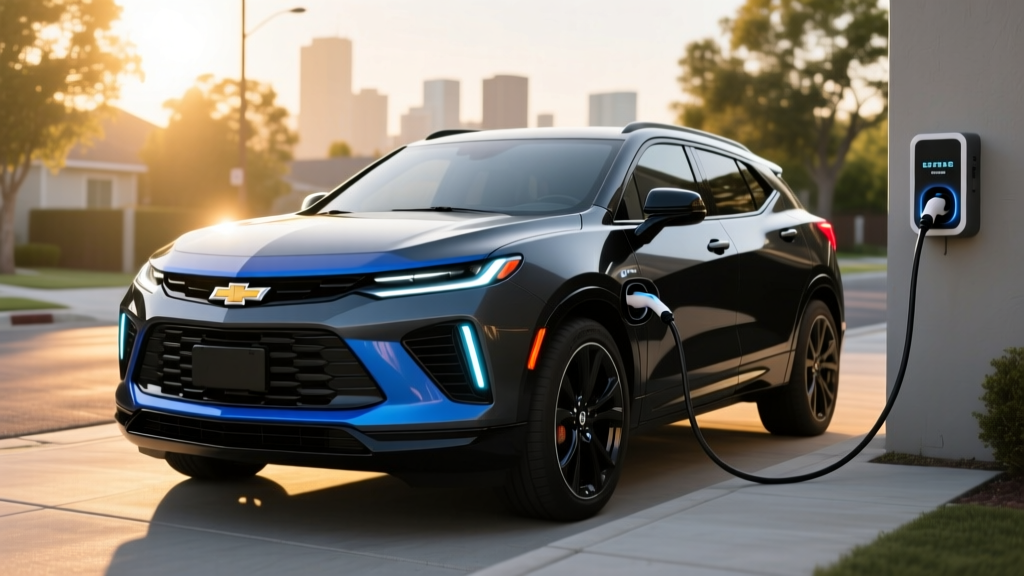
The Quick Answer: Is the 2025 Chevy Blazer SS EV Worth It?
The 2025 Chevy Blazer SS EV delivers 557 horsepower, an EPA-estimated 303 miles of range, and a starting MSRP of approximately $65,900 (including destination). It's one of the quickest midsize electric SUVs on the market, hitting 0-60 mph in roughly 4.0 seconds. However, real-world highway range drops closer to 250-270 miles, and DC fast charging tops out at 190 kW — adequate but not class-leading. For buyers with home Level 2 charging access who prioritize acceleration and style over maximum efficiency, it's a compelling choice. For budget-focused shoppers, the non-SS 2LT trim (starting ~$44,600) offers better value with up to 324 miles of range.
Range, Battery, and Real-World Efficiency
The 2025 Blazer EV rides on GM's Ultium platform and packs a usable battery capacity of approximately 102 kWh (NMC chemistry). The SS trim, equipped with all-wheel drive and the largest battery option, earns an EPA-estimated 303 miles of range. That's the headline number, but experienced EV owners know the sticker is just the starting point.
EPA Estimated Range: 303 miles (Blazer EV SS AWD)
Real-World Expectations:
- Mixed city/highway (moderate temps): ~270-285 miles
- Sustained highway driving at 70-75 mph: ~250-265 miles
- Cold weather (below 32°F): ~210-240 miles (15-30% loss depending on cabin heating use)
The Blazer SS's dual-motor AWD system and 22-inch wheel option on higher trims increase rolling resistance and reduce efficiency compared to the single-motor RSRWD trims. The heat pump, standard on most trims, helps mitigate cold-weather losses but doesn't eliminate them.
Efficiency lands around 87-89 MPGe combined depending on trim, per fueleconomy.gov. That translates to roughly 2.3-2.5 kWh per mile driven — slightly thirstier than efficiency-focused rivals like the Hyundai Ioniq 5 but in line with performance-oriented midsize EV SUVs.
Charging Speeds and Infrastructure
Charging is where the Blazer EV's Ultium architecture shows both its strengths and its limitations relative to 800V competitors.
| Charging Level | Power / Voltage | Charge Time | Miles Added Per Hour |
|---|---|---|---|
| Level 1 (120V household) | ~1.4 kW | 72+ hours (0-100%) | ~3-4 miles/hr |
| Level 2 (240V home/public) | 11.5 kW (max onboard) | ~10 hours (0-100%) | ~33 miles/hr |
| DC Fast Charging | Up to 190 kW peak | ~34 min (10-80%) | ~250+ miles in 30 min (peak) |
The 190 kW peak DC charge rate means you'll see strong pull from 10% to roughly 50% State of Charge (SoC), after which the charge curve tapers significantly. Expect sustained rates around 120-140 kW through the middle of the curve, dropping below 80 kW past 70% SoC. This is typical for a 400V architecture but falls short of 800V vehicles like the Hyundai Ioniq 5 or Kia EV6, which can sustain higher rates longer and achieve 10-80% in roughly 18 minutes.
For home charging, the 11.5 kW onboard charger is competitive. A 48-amp Level 2 home station (hardwired on a 60-amp circuit) will replenish the Blazer SS's battery overnight — roughly 10 hours from empty. Most daily drivers adding 40-80 miles per day will only need 2-3 hours of Level 2 charging nightly.
The Blazer EV ships with a NACS (North American Charging Standard) connector for 2025, granting native access to Tesla's Supercharger network — a significant infrastructure advantage over CCS-only vehicles. For older CCS stations, an adapter is available.
Performance and Driving Dynamics
The SS badge isn't just marketing here. The dual-motor AWD powertrain produces 557 horsepower and 648 lb-ft of torque, launching the Blazer SS to 60 mph in approximately 4.0 seconds. That's sports-sedan territory in a 5,400-pound SUV.
| Specification | 2025 Blazer EV SS | 2025 Blazer EV 2LT (RWD) |
|---|---|---|
| Horsepower | 557 hp | 340 hp |
| 0-60 mph | ~4.0 seconds | ~7.6 seconds |
| Drivetrain | AWD (dual motor) | RWD (single motor) |
| EPA Range | 303 miles | 324 miles |
| Battery (usable) | ~102 kWh (NMC) | ~102 kWh (NMC) |
| Max DC Charge Rate | 190 kW | 190 kW |
| Base MSRP | ~$65,900 | ~$44,600 |
GM's Super Cruise hands-free driving system is available on the Blazer EV, operating on over 750,000 miles of compatible roads in North America. Note that Super Cruise is an SAE Level 2 driver-assistance system — you must remain attentive, and the system monitors your eyes via an infrared camera on the steering column. It is not self-driving.
SAE Level 2 — Driver Assistance, Not Autonomy: Super Cruise, like Tesla Autopilot and Ford BlueCruise, requires continuous driver supervision. You are legally and operationally responsible for the vehicle at all times. True driverless operation (SAE Level 4) is currently limited to geofenced robotaxi services like Waymo in select cities.
Cost Breakdown: Purchase, Charging, and Ownership
The sticker price tells only part of the story. Let's run the numbers on what owning a Blazer EV SS actually costs compared to a similarly equipped gas-powered midsize SUV like the Chevrolet Blazer (ICE) or Ford Explorer.
| Cost Category | 2025 Blazer EV SS | 2025 Gas SUV (AWD, ~25 MPG) |
|---|---|---|
| Base MSRP | $65,900 | $45,000 |
| Federal Tax Credit (§30D) | Up to $7,500* | $0 |
| Effective Purchase Price | ~$58,400 | $45,000 |
| Annual Fuel/Energy (12,000 mi) | ~$650-$900** | ~$1,800-$2,200 |
| Annual Maintenance | ~$200-$350 | ~$600-$900 |
| 5-Year Fuel + Maintenance | ~$4,250-$6,250 | ~$12,000-$15,500 |
| Estimated Insurance (annual avg) | ~$2,400-$2,800 | ~$1,800-$2,200 |
*Federal §30D credit eligibility depends on buyer income (AGI caps: $150K single / $300K joint), MSRP limits ($80K for SUVs), battery sourcing requirements, and point-of-sale transfer rules. Verify current eligibility at IRS.gov.
**Home charging at $0.14/kWh average yields ~$650/yr; public DC fast charging at $0.40/kWh yields ~$1,800+/yr. Most owners charge 80%+ at home.
Home Charging Installation Costs
If you're installing a Level 2 home charger, budget for the following:
| Component | Typical Cost Range |
|---|---|
| Level 2 Charger (48A, hardwired) | $400 - $700 |
| Electrician Labor (standard install) | $500 - $1,500 |
| Electrical Permit | $50 - $200 |
| Panel Upgrade (if needed, 200A) | $1,500 - $3,500 |
| Total (no panel upgrade) | $950 - $2,400 |
Homes with existing 200-amp panels and a garage within 30-50 feet of the panel typically fall in the lower range. Older homes with 100-amp service may require a panel upgrade, pushing total costs to $2,500-$5,000. Always get a quote from a licensed electrician before committing.
Blazer EV vs. Gas and Hybrid Alternatives
The Blazer EV SS competes in a crowded midsize SUV segment. Here's how it stacks up against gas and hybrid rivals on key ownership metrics:
| Metric | Blazer EV SS | Toyota Highlander Hybrid | Gas Midsize SUV (AWD) |
|---|---|---|---|
| Starting Price | ~$65,900 | ~$42,000 | ~$45,000 |
| EPA Range / MPG | 303 mi / 87 MPGe | ~35 MPG combined | ~24 MPG combined |
| Cost per Mile (fuel/energy) | $0.05-$0.08 | $0.10-$0.12 | $0.15-$0.19 |
| 0-60 mph | ~4.0 sec | ~7.8 sec | ~6.5 sec |
| 5-Year Fuel Cost (12K mi/yr) | ~$3,250-$4,500 | ~$6,000-$7,200 | ~$9,000-$11,000 |
| Tax Credit Eligible | Yes (up to $7,500) | No (HEV) | No |
The Highlander Hybrid offers lower upfront cost and zero charging infrastructure requirements, making it pragmatic for apartment dwellers or those without home charging access. The Blazer EV SS wins decisively on performance, per-mile energy cost, and available tax incentives — but demands a higher entry price and reliable charging access.
Common Misconceptions About the Blazer EV
| Myth | Fact |
|---|---|
| "EV batteries need replacing every 5 years" | GM warranties the Ultium battery for 8 years/100,000 miles with a 70% capacity retention threshold. Real-world degradation data from similar Ultium/NMC packs suggests 10-15% loss over 150,000+ miles with normal use. |
| "You can't road-trip an EV" | With NACS access to 20,000+ Tesla Superchargers and 303 miles of range, the Blazer EV SS can cover major US corridors with one 20-30 minute charge stop every 3-4 hours — comparable to gas-car rest stops. |
| "EVs are worse in cold weather" | Range drops 15-30% in freezing temps, but the Blazer EV's heat pump and battery preconditioning mitigate this. Remote preconditioning while plugged in preserves range and warms the cabin before departure. |
| "The $7,500 tax credit applies to everyone" | Eligibility requires meeting AGI income caps, MSRP limits ($80K for SUVs), and battery critical-mineral sourcing rules that change annually. Always verify at IRS.gov before purchasing. |
| "Charging takes hours on road trips" | DC fast charging adds ~200 miles in 20-25 minutes at 150-190 kW stations. Plan stops around meals or restroom breaks and the downtime largely disappears. |
Who Should Buy the Blazer EV SS — and Who Shouldn't
Buy the Blazer EV SS if:
- You have reliable home Level 2 charging (garage or driveway with 240V access)
- You want sports-car acceleration in a family SUV (557 hp, 4.0-sec 0-60)
- Your daily commute is under 100 miles round-trip, with occasional 250-300 mile road trips
- You value NACS/Supercharger access for hassle-free long-distance travel
- You qualify for the full or partial §30D federal tax credit, reducing effective price by up to $7,500
Consider an alternative if:
- You live in an apartment or lack home charging access and rely solely on public infrastructure
- You regularly drive 350+ miles in a single stretch in cold-weather conditions
- Your budget is under $50,000 — the 2LT trim ($44,600) or a hybrid like the Highlander may fit better
- Maximum charging speed is a priority — 800V rivals like the Ioniq 5 or EV6 charge 10-80% roughly 15 minutes faster
- You need three rows of seating — the Blazer EV is strictly a two-row, five-passenger SUV
Frequently Asked Questions
Does the 2025 Blazer EV SS qualify for the $7,500 federal tax credit?
Potentially, yes. The Blazer EV SS's MSRP (~$65,900) falls under the $80,000 SUV cap. However, your adjusted gross income must not exceed $150,000 (single) or $300,000 (joint filing), and the vehicle must meet evolving battery critical-mineral and component sourcing requirements. The credit can now be transferred at the point of sale, reducing your purchase price upfront. Always confirm current-year eligibility at IRS.gov and consult a tax professional.
What is the real-world range of the Blazer EV SS on a road trip?
Expect 250-270 miles at highway speeds (70-75 mph) in moderate temperatures. In winter conditions, that drops to approximately 210-240 miles. Preconditioning the battery before DC fast charging (automatic when a charger is set as your navigation destination) helps maintain charge speed and overall trip efficiency.
How does the Blazer EV SS compare to the Tesla Model Y Performance?
The Model Y Performance starts around $52,000, offers ~285 miles of EPA range, and hits 0-60 in ~3.5 seconds. It charges faster on Tesla's proprietary network (up to 250 kW) and benefits from a more mature software ecosystem. The Blazer SS counters with a more traditional SUV interior, a larger battery, slightly more range, and GM's Super Cruise for hands-free highway driving. Both now share the NACS connector, so Supercharger access is no longer a Tesla-exclusive advantage.
What maintenance does the Blazer EV require?
Minimal compared to gas vehicles. Expect tire rotations every 5,000-7,500 miles (EVs wear tires faster due to instant torque and heavier weight), cabin air filter replacement annually, brake fluid checks every 2 years, and windshield washer fluid. Regenerative braking significantly reduces brake pad wear — many EV owners report original brake pads lasting 100,000+ miles. Annual maintenance costs typically run $200-$350.
Is the Blazer EV SS good in snow and winter conditions?
The dual-motor AWD system provides excellent traction, and the low center of gravity (battery pack mounted under the floor) enhances stability. The heat pump efficiently warms the cabin without the extreme range penalty of resistive heating. Pair with quality winter tires, and the Blazer SS is a capable winter vehicle — just budget for 20-25% range reduction in sustained sub-freezing temperatures.
What's the battery warranty on the Blazer EV?
GM covers the Ultium battery pack for 8 years or 100,000 miles (whichever comes first) against defects and capacity loss below 70% of original capacity. The electric drivetrain components carry the same 8-year/100,000-mile warranty. The limited vehicle warranty is 3 years/36,000 miles bumper-to-bumper.