Quick Verdict: A Heavyweight With Legitimate Long-Range Credentials
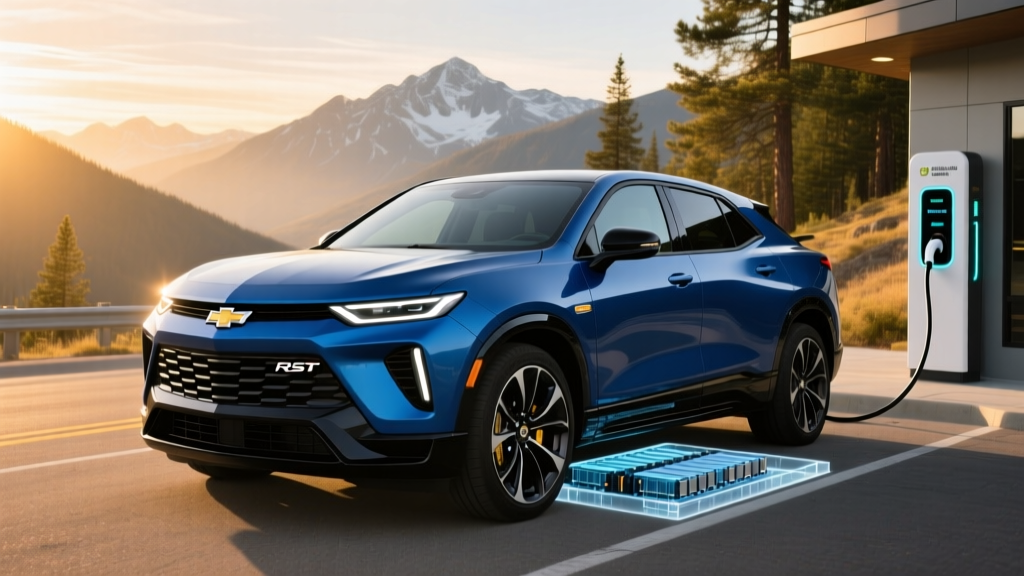
The 2025 Chevrolet Silverado EV RST is the range-topping, launch-edition trim of GM's full-size electric pickup, built on the Ultium platform and aimed squarely at buyers who need serious towing, massive range, and flagship tech. With an EPA-estimated 440 miles of range from a ~200 kWh NMC battery pack, the RST posts one of the longest range figures of any production EV sold in the United States. But at a starting MSRP of $87,300, and with a curb weight approaching 8,800 pounds, this truck trades affordability and agility for brute capability and endurance. If you're a heavy-mileage truck buyer with home charging access and towing on your list, the RST demands a close look. If you're cross-shopping the Ford F-150 Lightning or Rivian R1T on budget, you'll want to read the trade-offs below.
Range and Efficiency: 440 Miles on Paper, Less on the Highway
Real-World Expectation: Plan for ~340–370 miles on sustained highway driving at 70–75 mph. In cold weather (below 30°F), expect a further 15–25% reduction, bringing usable highway range to roughly 270–310 miles. City and mixed driving with regenerative braking will track much closer to the EPA sticker.
The Silverado EV RST carries a EPA-estimated 440 miles of combined range — a remarkable figure made possible by an enormous battery pack and a relatively efficient dual-motor drivetrain for a vehicle of this mass. Efficiency is rated at approximately 53 MPGe combined, which translates to roughly 63 kWh per 100 miles. That's thirsty by EV standards but competitive for a full-size, body-on-frame-equivalent electric truck.
The critical context here is the battery. The RST uses an NMC (nickel manganese cobalt) lithium-ion pack with approximately 200 kWh of usable capacity. NMC chemistry offers higher energy density than LFP (lithium iron phosphate), which is how GM fits this much energy into the Ultium skateboard. The trade-off is that NMC cells degrade slightly faster over time and prefer not to sit at 100% state of charge for extended periods — so daily charging to 80% is the recommended practice unless you're heading out on a long trip.
For context, the lower-trim Silverado EV WT (Work Truck) with the smaller battery pack is EPA-rated at around 240 miles. The RST's 440-mile figure is exclusive to the large-pack configuration, which is standard on RST and optional on WT.
Battery and Charging: 350 kW Peak, But Mind the Curve
| Metric | Value |
|---|---|
| Battery Chemistry | NMC (Nickel Manganese Cobalt) |
| Usable Battery Capacity | ~200 kWh |
| Max DC Fast-Charge Rate | 350 kW (peak) |
| DC Fast-Charge 10–80% Time | ~45 minutes (est.) |
| Level 2 Home Charge Rate | 19.2 kW (80A) |
| Level 2 Miles Added Per Hour | ~30–34 mi/hr at 19.2 kW |
| Charge Port | CCS1 (NACS adapter available) |
The Silverado EV RST supports up to 350 kW peak DC fast-charging on compatible 800-volt architecture stations — among the fastest peak rates available in any production electric truck. However, peak rate is not sustained rate. The charge curve tapers meaningfully above 50% state of charge, and you'll see speeds drop to roughly 150 kW by the time you hit 65–70% SoC, then further to under 80 kW above 80%. This is standard behavior for large NMC packs protecting cell longevity, but it means the full 350 kW figure applies only to the early portion of the charge session.
On a 350 kW-capable Electrify America or EVgo station with proper preconditioning (the RST will precondition the battery automatically when you navigate to a charger via the infotainment system), a 10–80% session takes approximately 45 minutes. That's slower than a Hyundai Ioniq 5's ~18-minute 10–80% time, but the Ioniq 5 is adding roughly 240 miles in that window. The RST, with its massive battery, is adding roughly 280–300 miles in its 45-minute window — more absolute range, just at a slower relative pace.
At home, the RST supports Level 2 charging at up to 19.2 kW on a hardwired 80-amp circuit. This requires a dedicated 100-amp breaker and professional installation by a licensed electrician — most residential panels will need an evaluation, and a panel upgrade from 100A to 200A service may be necessary. At 19.2 kW, you'll recover roughly 30–34 miles of range per hour, meaning a full 0–100% charge takes roughly 10–12 hours. On a more common 48-amp Level 2 circuit (11.5 kW), expect about 18–20 miles per hour and a full charge in roughly 18–20 hours.
Performance and Drivetrain: 664 HP and a 5.5-Second Sprint
| Metric | Value |
|---|---|
| Drivetrain | Dual-motor AWD (eAWD) |
| Horsepower | 664 hp (Wide Open Watts mode) |
| Torque | 780 lb-ft |
| 0–60 mph | ~4.5 seconds |
| Max Towing Capacity | 10,000 lbs (est. with max trailering pkg) |
| Payload Capacity | ~1,300 lbs |
| Curb Weight | ~8,800 lbs |
In Wide Open Watts mode — Chevy's launch-control-style maximum-output setting — the RST delivers 664 horsepower and 780 lb-ft of torque through its dual-motor all-wheel-drive system. The result is a 0–60 mph time of approximately 4.5 seconds, which is startling for a vehicle that weighs nearly four and a half tons. For comparison, the Rivian R1T dual-motor posts a 0–60 in about 4.5 seconds as well, while the Ford F-150 Lightning Extended Range clocks in around 4.0 seconds with its 580 hp.
The eAWD system provides independent torque vectoring front and rear, which helps with traction in snow, mud, and on boat ramps. Off-road capability is adequate for fire roads and trail access, though the RST is not positioned as a hardcore off-roader — that role may fall to a future Trail Boss variant. Ground clearance is approximately 10.5 inches, and the air suspension (standard on RST) allows ride-height adjustment for highway efficiency or obstacle clearance.
Towing is where the Silverado EV platform shows its truck roots. With the available max trailering package, the RST is expected to tow up to 10,000 pounds. However, towing at or near maximum capacity will reduce range dramatically — expect a 40–50% range reduction when towing heavy loads at highway speed, bringing effective range to roughly 200–250 miles between charges. This is a physics reality for all electric trucks, not unique to Chevy.
Interior, Tech, and Cargo: Flagship Cabin With Practical Utility
The RST interior is the most upscale cabin Chevy currently offers in a truck. A 17.7-inch diagonal infotainment touchscreen dominates the dash, running GM's latest Ultifi software platform with Google Built-In (Google Maps, Google Assistant, and Play Store apps native to the vehicle). A secondary 11-inch digital instrument cluster sits behind the steering wheel, and an available head-up display projects speed and navigation onto the windshield.
Driver assistance comes via Chevy's Super Cruise — a Level 2 hands-free driving system on pre-mapped divided highways. Super Cruise is not self-driving; the driver must remain attentive, and a camera monitors eye gaze. As of 2025, Super Cruise covers over 750,000 miles of compatible roads in North America. It's one of the most polished Level 2 systems available, rivaling Ford's BlueCruise in highway comfort.
Cargo capacity is generous. The 5-foot-11-inch bed (shorter than a traditional full-size truck bed) offers 59 cubic feet of volume. The Multi-Flex Midgate — a fold-down partition between bed and cabin — extends effective load length to over 9 feet with the tailgate down, letting you haul lumber or kayaks without a trailer. The front trunk (e-trunk or "frunk") provides approximately 10.5 cubic feet of lockable, weather-sealed storage — enough for tools, charging cables, or a weekend's worth of groceries.
Passenger space is competitive with full-size crew-cab trucks. Rear-seat legroom measures approximately 43 inches, and the flat floor (no transmission tunnel) makes the middle seat genuinely usable for a third adult. Seat comfort on long drives is excellent, with available ventilated and massaging front seats on the RST.
Pricing, Trims, and Federal Tax Credit Eligibility
| Trim | Base MSRP | As-Tested (Typical) | Est. After §30D Credit |
|---|---|---|---|
| Silverado EV 4WT (Standard Range) | ~$55,000 | $60,000–$68,000 | $52,500–$60,500 |
| Silverado EV 4WT (Max Range) | ~$73,000 | $78,000–$84,000 | $70,500–$76,500 |
| Silverado EV RST (First Edition) | $87,300 | $90,000–$106,000 | $79,800–$98,500 |
The 2025 Silverado EV RST First Edition starts at $87,300 before destination charges. Fully loaded with available packages — including the max trailering package, premium audio, and advanced Super Cruise subscription — an as-tested RST can climb past $100,000.
Federal tax credit eligibility under IRS §30D requires careful evaluation. The Silverado EV qualifies as a light-duty truck, which carries an $80,000 MSRP cap under current rules. The RST First Edition at $87,300 exceeds that cap and is therefore not eligible for the $7,500 federal clean vehicle credit at its base MSRP. However, if Chevrolet introduces a lower-priced RST variant or the buyer negotiates a price that falls under the cap (unlikely at launch), eligibility could change. The WT trims, starting at $55,000–$73,000, fall within the MSRP cap and may qualify, subject to:
- Buyer income caps: Modified AGI must not exceed $150,000 (single), $225,000 (head of household), or $300,000 (joint filers)
- MSRP cap: $80,000 for trucks, vans, and SUVs; $55,000 for sedans
- Battery sourcing: Critical minerals and battery components must meet phased percentage thresholds from US or FTA-partner countries
- Point-of-sale transfer: Eligible buyers can transfer the credit to the dealer at purchase, reducing the purchase price upfront
- Assembly: Vehicle must undergo final assembly in North America (the Silverado EV is built at GM's Factory ZERO in Michigan)
Always verify current-year eligibility on IRS.gov and consult a tax professional before relying on the credit for your purchase decision. Rules and sourcing requirements have changed annually since 2023.
Warranty, Ownership Costs, and Long-Term Outlook
Chevrolet backs the Silverado EV's battery and drive unit with an 8-year / 100,000-mile limited warranty, with a capacity retention threshold of 70% — meaning GM guarantees the battery will hold at least 70% of its original capacity within that window. The bumper-to-bumper warranty covers 3 years / 36,000 miles, and the powertrain warranty (non-battery components) covers 5 years / 60,000 miles.
Electric truck insurance tends to run 15–25% higher than equivalent gas trucks, driven by higher repair costs, parts pricing, and the vehicle's high MSRP. Budget roughly $2,500–$3,500 annually for comprehensive coverage on an RST, though rates vary significantly by state, driving record, and insurer.
Charging costs depend heavily on your setup. Home charging at the national average electricity rate of ~$0.16/kWh means a full 200 kWh charge costs approximately $32 — yielding a per-mile fuel cost of roughly $0.07. At public DC fast chargers averaging $0.40–$0.50/kWh, a 10–80% session (roughly 140 kWh added) costs $56–$70. For buyers who can charge at home overnight, the Silverado EV's per-mile energy cost is roughly one-third that of a gas Silverado 1500 getting 20 MPG at $3.50/gallon.
Who Should Buy the Silverado EV RST — And Who Shouldn't
- You need maximum EV range in a full-size truck (440 mi EPA is class-leading)
- You tow regularly but within a 200–250-mile radius of home
- You have access to reliable Level 2 home charging (ideally 19.2 kW / 80A)
- You want flagship tech — Super Cruise, massive screen, air suspension
- Budget above $85,000 is comfortable for your truck purchase
- You need a truck primarily for sub-$60,000 budget (consider Silverado EV WT or F-150 Lightning Pro)
- You frequently tow long-distance beyond 250 miles (range drops sharply under load)
- You lack home charging and rely entirely on public infrastructure
- You want a shorter, more maneuverable truck bed for tight urban parking
- Federal tax credit eligibility is a dealbreaker (RST MSRP exceeds the $80K cap)
Pros and Cons at a Glance
- Class-leading 440-mile EPA range
- 664 hp / 4.5-sec 0–60 — genuinely quick for a full-size truck
- 350 kW peak DC charging on 800V architecture
- Super Cruise hands-free driving on 750K+ miles of highway
- Multi-Flex Midgate for extended cargo length
- 10,000-lb max towing capacity
- Spacious crew-cab interior with flat rear floor
- Large, lockable frunk (10.5 cu ft)
- $87,300+ MSRP exceeds §30D tax credit cap
- ~8,800-lb curb weight affects tire wear and efficiency
- Real-world highway range ~340–370 mi, much less when towing
- 45-minute 10–80% DC charge is long vs. lighter EVs
- 5'11" bed is shorter than traditional 6.5' truck beds
- Requires 80A home circuit for fastest Level 2 charging
- Insurance premiums significantly above gas trucks
Frequently Asked Questions
What is the real-world range of the 2025 Silverado EV RST?
The EPA rates it at 440 miles combined. In real-world highway driving at 70–75 mph, expect approximately 340–370 miles. In cold weather below 30°F, highway range can drop to 270–310 miles. City driving with regenerative braking will be closer to the EPA figure.
How fast does the Silverado EV RST charge?
On a 350 kW DC fast charger, it peaks at 350 kW and completes a 10–80% session in approximately 45 minutes. At home on a 19.2 kW (80-amp) Level 2 charger, it adds roughly 30–34 miles per hour, with a full charge taking 10–12 hours.
Does the Silverado EV RST qualify for the $7,500 federal tax credit?
The RST First Edition at $87,300 MSRP exceeds the $80,000 MSRP cap for trucks under IRS §30D, making it ineligible at its base price. Lower-priced WT trims starting at $55,000–$73,000 may qualify, subject to income limits, battery sourcing rules, and North American assembly requirements. Always verify on IRS.gov.
How does it compare to the Ford F-150 Lightning and Rivian R1T?
The F-150 Lightning Extended Range offers ~320 miles EPA, 580 hp, and starts around $70,000 for the Lariat — making it more affordable and tax-credit-eligible. The Rivian R1T Dual-Motor offers ~352 miles, a more adventure-oriented platform, and starts around $73,000. The RST wins on raw range and peak horsepower but costs significantly more and misses the tax credit.
Can the Silverado EV RST power my home during an outage?
Chevrolet has announced V2H (vehicle-to-home) capability for the Silverado EV platform using the GM Energy PowerUp charger, but availability depends on specific equipment and dealer installation. Confirm V2H support with your dealer before relying on this feature.
What is the battery warranty?
GM covers the battery and drive unit for 8 years or 100,000 miles, whichever comes first, with a guaranteed minimum capacity retention of 70%.