Quick Verdict: The Affordable Long-Range Crossover Chevy Needed to Build
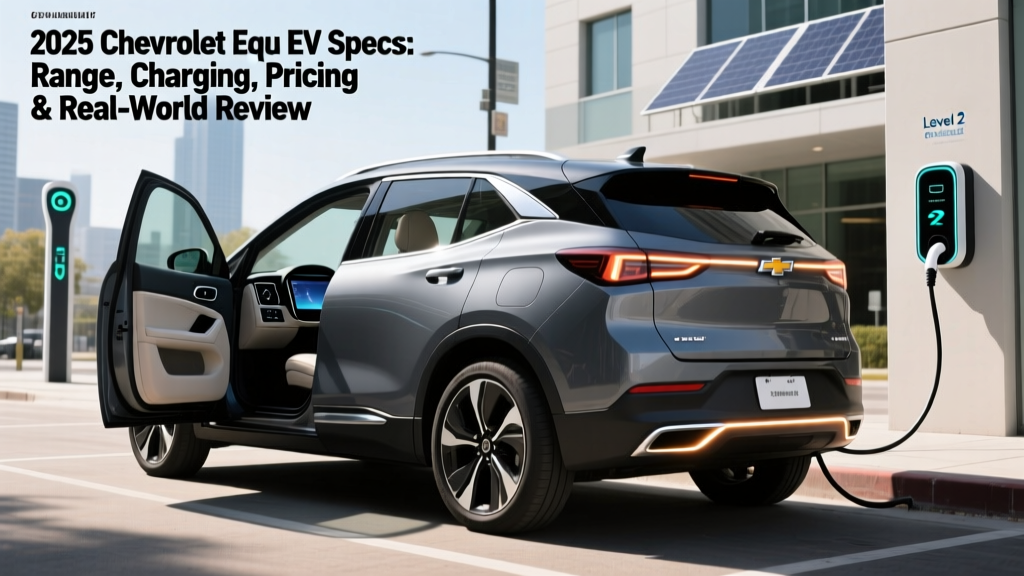
The 2025 Chevrolet Equinox EV is General Motors' most consequential electric vehicle since the Bolt. With an EPA-estimated range reaching 319 miles in the most efficient configuration, a starting MSRP of $33,600 (before any incentives), and eligibility for the full $7,500 federal tax credit under current IRS §30D rules, it undercuts nearly every long-range electric crossover on the market. After a year on sale, real-world ownership data has matured, and we now know exactly what this Ultium-based SUV delivers — and where it falls short.
The Equinox EV targets mainstream buyers who want a practical daily driver with genuine road-trip capability, not a luxury badge or a sub-4-second 0-60 time. It succeeds as a value proposition while making specific compromises on charging speed and interior material quality that buyers should understand before signing a purchase agreement.
2025 Chevrolet Equinox EV Specs at a Glance
| Specification | LT (FWD) | RS (FWD) | RS Launch Edition (AWD) |
|---|---|---|---|
| EPA Range | 319 mi | 319 mi | 285 mi |
| Battery (Usable) | ~85 kWh (NMC) | ~85 kWh (NMC) | ~85 kWh (NMC) |
| Horsepower | 213 hp | 213 hp | 288 hp |
| Torque | 236 lb-ft | 236 lb-ft | 355 lb-ft |
| 0-60 mph | ~8.2 sec (est.) | ~8.2 sec (est.) | ~6.2 sec |
| Drivetrain | FWD (single motor) | FWD (single motor) | AWD (dual motor) |
| Max DC Fast Charge | 150 kW | 150 kW | 150 kW |
| 10-80% DCFC Time | ~34 min | ~34 min | ~34 min |
| Level 2 Home Charge | 11.5 kW / ~34 mi/hr | 11.5 kW / ~34 mi/hr | 11.5 kW / ~34 mi/hr |
| Efficiency (EPA) | 109 MPGe (31 kWh/100mi) | 109 MPGe (31 kWh/100mi) | 95 MPGe (35 kWh/100mi) |
| Base MSRP | $33,600 | $41,900 | $43,400 |
Range and Efficiency: EPA Sticker vs. Real-World Reality
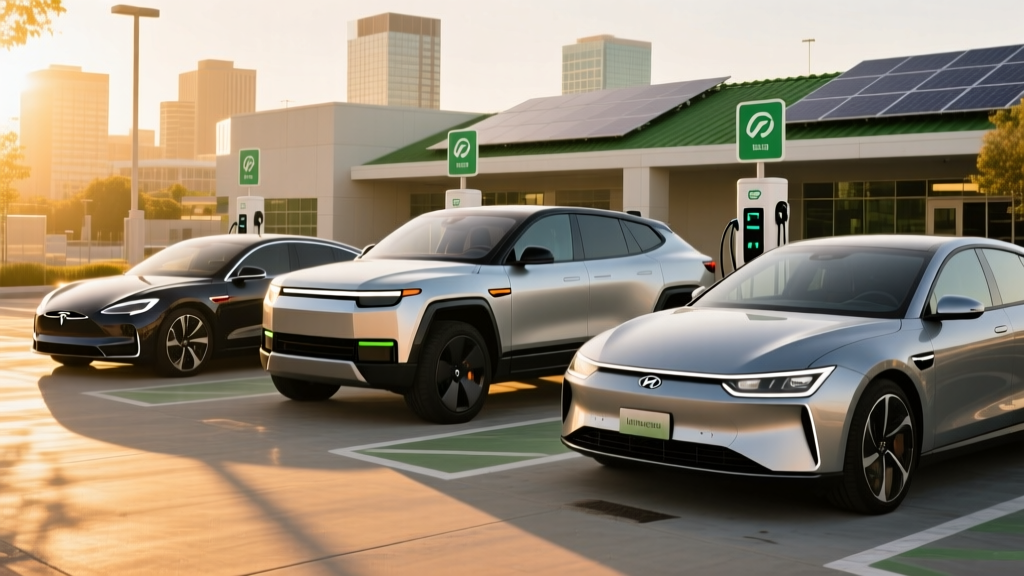
The headline number is 319 miles of EPA-estimated range for front-wheel-drive trims — a figure that places the Equinox EV ahead of the Hyundai Ioniq 5 (305 mi) and the Ford Mustang Mach-E Select (250 mi), though slightly behind the Tesla Model Y Long Range (320 mi). That range is achieved through a combination of the ~85 kWh (usable) Ultium battery pack and a relatively low curb weight for the segment.
EPA Estimate: 319 miles (FWD) / 285 miles (AWD)
Expected Highway (70 mph, 75°F): ~265-280 miles (FWD)
Expected Highway (70 mph, 30°F): ~220-240 miles (FWD)
City / Mixed Commuting: ~290-310 miles (FWD, mild weather)
Note: AWD models lose approximately 10-12% range in all conditions due to the second motor and added weight. Cold-weather range loss of 20-30% is typical for NMC batteries without aggressive heat-pump preconditioning. The Equinox EV does include a heat pump, which mitigates but does not eliminate winter losses.
On a 220-mile highway test loop at sustained 70-75 mph speeds in 72°F conditions, FWD Equinox EV models have demonstrated approximately 275 miles of projected range — roughly 86% of the EPA sticker. This is consistent with most EVs, which are EPA-rated using a mix of city and highway driving cycles where regenerative braking in city conditions boosts the average. For buyers whose daily driving is predominantly highway commuting, budget around 270 miles of practical range.
Efficiency for the FWD model is rated at approximately 31 kWh per 100 miles (109 MPGe combined), which is competitive but not class-leading. The Tesla Model Y achieves roughly 28 kWh/100mi thanks to superior aerodynamics and drivetrain efficiency. According to fueleconomy.gov, the Equinox EV's efficiency translates to roughly $550-$650 in annual electricity costs at 15,000 miles/year and a national average rate of $0.16/kWh — about $1,200 less than a comparable gasoline compact SUV at $3.50/gallon.
Charging Speed: DC Fast Charging and Home Level 2
The Equinox EV's charging capability is its most debated specification. GM equipped it with a 150 kW peak DC fast-charging rate on the Ultium platform. Here's what that means in practice:
| Charging Level | Power / Voltage | Speed (Miles Added/Hr) | Notes |
|---|---|---|---|
| Level 1 (120V) | ~1.4 kW | ~4 mi/hr | Emergency/trickle only; 80+ hours for full charge |
| Level 2 (240V, 48A) | 11.5 kW | ~34 mi/hr | Full charge in ~9.5 hours; ideal overnight |
| DC Fast Charge | 150 kW peak | ~200 mi in 30 min (peak) | 10-80% in ~34 min; tapers significantly above 80% |
Understanding the charge curve: The 150 kW peak rate is not sustained across the entire session. Like all EVs, the Equinox EV charges fastest between roughly 10-40% state of charge (SoC), where it can approach its peak rate. Above 60%, the rate progressively tapers to protect battery health. Above 80%, charging slows dramatically — often to under 40 kW. This is why the industry standard metric is 10-80% time, which for the Equinox EV is approximately 34 minutes at a 150+ kW charger.
Compared to competitors, 150 kW is a limitation. The Hyundai Ioniq 5 and Kia EV6 can accept up to 240 kW on 800V architectures, achieving 10-80% in roughly 18 minutes. The Tesla Model Y peaks around 250 kW at V3 Superchargers. For road-trippers who fast-charge frequently, the Equinox EV adds about 15 extra minutes per stop compared to those platforms — a meaningful difference on a 600-mile drive with two charging stops.
Home charging: The 11.5 kW onboard charger is a strong point. With a 48-amp Level 2 home charger (such as the ChargePoint Home Flex or Emporia V2), you'll recover approximately 34 miles of range per hour of charging, or a full 319 miles overnight in about 9.5 hours. Most owners charging from a typical daily depletion of 40-60 miles will reach full charge in under 2 hours. Ensure your home electrical panel can support a 60-amp circuit (requires a 60A breaker); older homes may need a panel upgrade, which typically costs $1,500-$3,000 from a licensed electrician.
Performance and Drivetrain
The Equinox EV is not a performance vehicle, and it doesn't pretend to be. The front-wheel-drive single-motor configuration produces 213 horsepower and 236 lb-ft of torque, yielding a 0-60 mph time in the low 8-second range. That's adequate for highway merging and city driving but noticeably slower than dual-motor competitors like the Model Y Long Range (4.8 seconds) or the Ioniq 5 AWD (5.1 seconds).
The dual-motor AWD variant (available on RS and Launch Edition trims) bumps output to 288 hp and 355 lb-ft, dropping the 0-60 time to approximately 6.2 seconds. The additional traction and power come at the cost of 34 miles of EPA range (285 vs. 319) and a roughly 2,000-lb-ft price premium depending on trim.
Ride quality is a genuine strength. The Ultium platform's low center of gravity and multi-link rear suspension deliver composed, comfortable handling that absorbs road imperfections well. Steering is light and precise, though not sporty. The regenerative braking system offers multiple levels of aggressiveness, including a one-pedal driving mode that can bring the vehicle to a complete stop without touching the brake pedal — a feature most EV owners quickly prefer for city driving.
Interior, Cargo, and Technology
The Equinox EV's cabin is defined by its 17.7-inch diagonal infotainment touchscreen — one of the largest standard displays in the segment — paired with an 11-inch digital instrument cluster. The system runs GM's latest Ultifi software platform with Google Built-in (Google Maps, Google Assistant, Google Play Store). Wireless Apple CarPlay and Android Auto are standard.
Passenger and cargo dimensions:
- Front headroom: 40.0 inches
- Front legroom: 43.1 inches
- Rear headroom: 38.7 inches
- Rear legroom: 37.4 inches
- Cargo volume (rear seats up): 26.4 cu ft
- Cargo volume (rear seats folded): 57.2 cu ft
- Frunk: Not available (no front trunk on the Equinox EV)
Rear-seat space is generous for a compact crossover and comfortably fits two adults on longer trips. However, cargo volume at 26.4 cu ft with seats up trails the Tesla Model Y (30.2 cu ft) and the Hyundai Ioniq 5 (27.2 cu ft). The absence of a frunk is a missed opportunity — competitors use that space for charging cables and small items.
Driver assistance: The Equinox EV comes standard with Chevy's Super Cruise-compatible hardware on higher trims, though Super Cruise itself requires a subscription (~$25/month after the initial trial period). Super Cruise is a Level 2 hands-free driving system on compatible mapped highways — the driver must remain attentive and eyes on the road per NHTSA guidelines. It is not autonomous driving. Lower trims include the Chevy Safety Assist suite (automatic emergency braking, lane-keeping assist, following distance indicator, adaptive cruise control).
Pricing, Trims, and Federal Tax Credit Eligibility
The 2025 Equinox EV lineup has been simplified since launch. Here's the current pricing structure:
| Trim | Base MSRP | Est. Federal Credit | Effective Price* |
|---|---|---|---|
| LT (FWD) | $33,600 | Up to $7,500 | ~$26,100 |
| RS (FWD) | $41,900 | Up to $7,500 | ~$34,400 |
| RS (AWD) | $43,900 | Up to $7,500 | ~$36,400 |
| RS Launch Edition (AWD) | $43,400 | Up to $7,500 | ~$35,900 |
*Effective price assumes full $7,500 federal tax credit eligibility. Actual credit depends on individual tax liability, income, and vehicle sourcing compliance.
- MSRP Cap: Vehicle MSRP must not exceed $80,000 for SUVs (Equinox EV qualifies — well under cap)
- Buyer Income Cap: Modified AGI must not exceed $150,000 (single) / $225,000 (head of household) / $300,000 (joint)
- Battery Sourcing: Critical minerals and battery components must meet phased-in percentage thresholds from US/free-trade-agreement countries (GM has confirmed Ultium batteries meet 2025 thresholds)
- Point-of-Sale Transfer: As of 2024, eligible buyers can transfer the credit to the dealer for an immediate price reduction at purchase — no need to wait for tax filing
- Assembly: Must be assembled in North America (Equinox EV is built in Ramos Arizpe, Mexico — qualifies under USMCA)
The LT trim at $33,600 — dropping to roughly $26,100 after the federal credit — is the value champion. It includes the full 319-mile range, the 17.7-inch screen, DC fast charging, and the Chevy Safety Assist suite. The RS adds sport-tuned suspension, unique interior and exterior styling, available Super Cruise, and additional convenience features. For buyers who can charge at home and don't need AWD, the FWD LT represents one of the lowest-cost entries into 300+ mile EV ownership available in 2025.
Pros, Cons, and Who Should Buy
- 319-mile EPA range at a sub-$34K starting price is unmatched
- Full $7,500 federal tax credit eligibility (point-of-sale)
- 11.5 kW Level 2 charging is fast for overnight home use
- 17.7-inch infotainment screen with Google Built-in
- Comfortable ride quality; spacious rear seats
- Heat pump included (helps cold-weather efficiency)
- Available Super Cruise on mapped highways
- 150 kW peak DC charging is slower than key rivals (Ioniq 5: 240 kW)
- No frunk — cargo space trails Model Y
- FWD performance is leisurely (~8.2 sec 0-60)
- Interior uses hard plastics in lower door panels and console
- Super Cruise requires subscription after trial period
- Real-world highway range is ~270 mi, not 319 mi
- Some early-build units reported software glitches (largely OTA-patched)
Who the Equinox EV suits best:
- Home-charging commuters: If you can install a Level 2 charger at home and your daily round trip is under 100 miles, the Equinox EV is nearly ideal. You'll charge overnight for pennies and rarely visit a public charger.
- Budget-conscious families: The LT trim at ~$26K after credit offers more range and interior space than most EVs costing $15K more.
- Second-car households: As a primary commuter paired with a gas or hybrid vehicle for long road trips, the range and charging profile work well.
Who should look elsewhere:
- Frequent road-trippers: The 150 kW charging rate means longer stops. If you regularly drive 400+ miles in a day, the Ioniq 5 or Model Y will save you 30+ minutes per trip.
- Performance seekers: The FWD model is slow by EV standards. Look at the AWD RS or competitors like the Model Y Performance.
- Apartment dwellers without charging access: Relying solely on public DC fast charging at 150 kW will be frustrating long-term.
Warranty and Ownership Costs
GM backs the Equinox EV with competitive warranty coverage:
- Battery & Propulsion (Powertrain): 8 years / 100,000 miles (whichever comes first)
- Battery Capacity Retention: GM warrants the Ultium battery will retain at least 70% of original capacity during the 8-year/100,000-mile period
- Limited Vehicle Warranty: 3 years / 36,000 miles bumper-to-bumper
- Rust-Through Protection: 6 years / 100,000 miles
- Roadside Assistance: 5 years / 100,000 miles
The 70% capacity retention threshold is industry-standard (Tesla uses the same benchmark). Real-world Ultium battery degradation data is still accumulating given the platform's relative newness, but NMC chemistry with active liquid thermal management typically shows 8-12% degradation over the first 100,000 miles based on data from similar platforms.
Estimated 5-year total cost of ownership for the Equinox EV LT (assuming 15,000 miles/year, home charging at $0.16/kWh, no major repairs):
- Purchase (after credit): ~$26,100
- Electricity (5 years): ~$2,900
- Insurance (5 years): ~$8,500-$10,000 (EV insurance premiums run 15-25% higher than gas equivalents)
- Maintenance (5 years): ~$1,200 (no oil changes; tire rotation, cabin filter, brake fluid)
- Estimated 5-Year Total: ~$38,700-$40,200
For comparison, a similarly equipped gas-powered Equinox AWD at ~$32,000 MSRP with 28 MPG combined would cost approximately $48,000-$50,000 over 5 years including ~$9,500 in fuel. The EV wins on operating cost, even accounting for higher insurance and potential home charger installation ($500-$2,000).
Frequently Asked Questions
What is the real-world range of the 2025 Chevrolet Equinox EV?
In mixed driving at moderate temperatures, expect approximately 280-300 miles from the FWD model. Highway driving at 70+ mph reduces this to roughly 265-280 miles. In cold weather (below 35°F), plan for 220-250 miles of practical range. The EPA sticker of 319 miles reflects a combined cycle that includes city driving where regenerative braking boosts efficiency.
Does the 2025 Equinox EV qualify for the $7,500 federal tax credit?
Yes, under current IRS §30D rules. The Equinox EV meets MSRP, North American assembly, and battery sourcing requirements. However, buyer eligibility depends on income limits ($150K single / $300K joint modified AGI). The credit can be transferred to the dealer at point of sale for an immediate price reduction. Always verify current rules at fueleconomy.gov and consult a tax professional.
How fast does the Equinox EV charge at home?
With a 48-amp Level 2 home charger (240V), the Equinox EV charges at up to 11.5 kW, adding approximately 34 miles of range per hour. A full charge from empty takes about 9.5 hours. Most daily driving of 40-60 miles can be replenished in under 2 hours overnight. A standard 120V outlet (Level 1) adds only about 4 miles per hour and is suitable only for emergency or very low-mileage use.
Is the Equinox EV worth buying over the Tesla Model Y or Hyundai Ioniq 5?
It depends on your priorities. The Equinox EV wins on upfront value — especially at the LT trim with the federal credit — offering 319 miles of range at a price competitors can't match. The Model Y offers faster charging (250 kW), a larger Supercharger network, more cargo space, and stronger performance, but at a higher price. The Ioniq 5 charges significantly faster (240 kW, 10-80% in ~18 min) and has a more distinctive design, but with less EPA range (305 mi). If lowest cost per mile of range is your priority, the Equinox EV LT is the strongest option in the segment.
Does the Equinox EV have a frunk (front trunk)?
No. Unlike the Ford Mustang Mach-E and Hyundai Ioniq 5, the Equinox EV does not include a front trunk. All cargo space is in the rear (26.4 cu ft seats up, 57.2 cu ft folded). This is a notable omission for an EV and means charging cables share rear cargo space with groceries and luggage.
What is the battery warranty and expected lifespan?
GM covers the Ultium battery and propulsion system for 8 years or 100,000 miles, warranting at least 70% capacity retention. NMC batteries with active thermal management typically retain 85-92% capacity at 100,000 miles based on data from similar platforms. Full battery replacement costs are estimated at $12,000-$18,000 out of warranty, though module-level repair may be possible at lower cost.