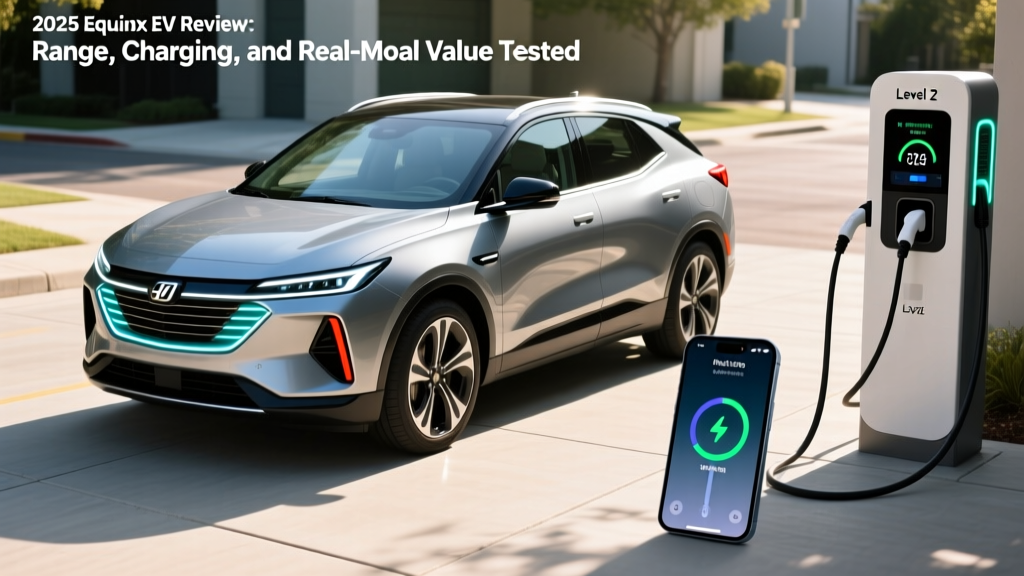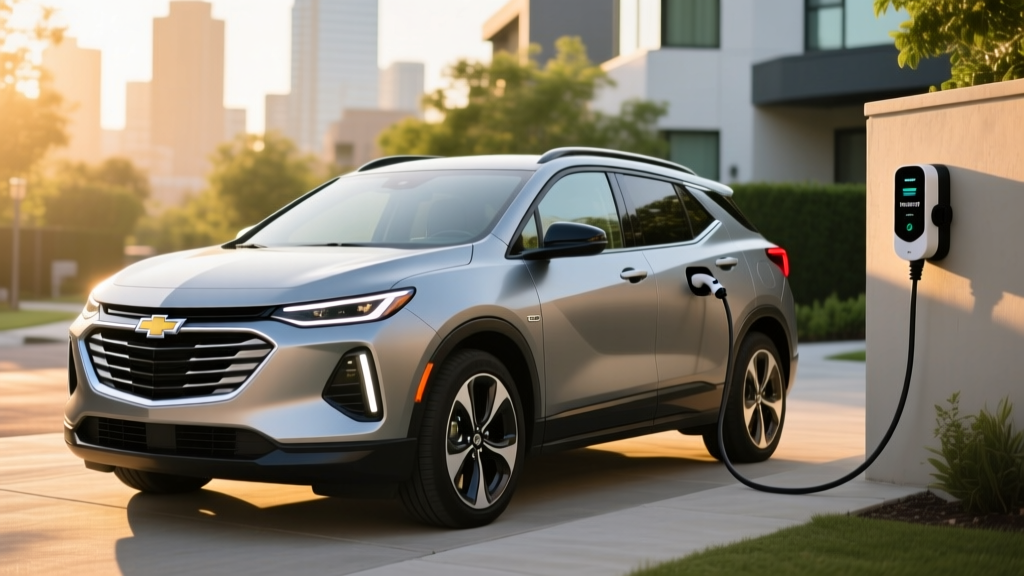
The compact electric SUV segment is crowded, but the 2025 Chevrolet Equinox EV LT undercuts nearly every rival on price while delivering over 300 miles of EPA-estimated range. Built on GM's Ultium platform, this is the volume trim — the one most buyers will actually cross-shop against the Tesla Model Y, Hyundai Ioniq 5, and Ford Mustang Mach-E. After spending time with the Equinox EV LT's specs, charging behavior, and daily-driving ergonomics, here's the data-driven breakdown you need before signing a purchase agreement.
2025 Chevrolet Equinox EV LT at a Glance
| Spec | 2025 Equinox EV LT (FWD) | 2025 Equinox EV LT (AWD/eAWD) |
|---|---|---|
| EPA Range | 319 miles | 285 miles |
| Battery (usable) | ~85 kWh, NMC (Ultium) | |
| DC Fast Charge (peak) | 170 kW | |
| 10–80% DC Charge Time | ~42 minutes | |
| Level 2 Home Charging | 11.5 kW (~34 mi/hr) | |
| Horsepower | 213 hp | 288 hp |
| 0–60 mph | ~8.4 sec | ~7.5 sec |
| EPA Efficiency | ~109 MPGe (3.0 kWh/mi) | ~97 MPGe (3.4 kWh/mi) |
| Cargo (behind rear seats) | 26.4 cu ft | |
| Cargo (rear seats folded) | 57.2 cu ft | |
| Base MSRP | $33,600 | $36,900 |
| Battery Warranty | 8 years / 100,000 miles | |
Range: The 319-Mile Promise vs. Real-World Reality
Real-World Expectation: 255–285 miles highway at 70 mph; 210–240 miles in sub-30°F winter conditions. The FWD LT's efficiency advantage comes from its single-motor layout and lower curb weight. If you regularly drive above 75 mph or live in cold climates, budget for 20–30% range reduction from the EPA number.
The 319-mile EPA figure for the FWD Equinox EV LT is genuinely competitive — it beats the base Model Y Long Range's ~320 miles when you factor in the Chevy's lower starting price. But EPA testing favors mixed city/highway cycles with moderate climate-control use. In sustained highway driving, the Ultium platform's aerodynamic profile (the Equinox EV is boxier than the Ioniq 5) and NMC chemistry's efficiency curve mean you'll see closer to 3.2–3.5 kWh/mile at 70 mph, translating to roughly 255–285 miles before you need to plug in.
Cold weather is the bigger equalizer. Like all NMC-based EVs without a dedicated heat pump standard on every trim (GM offers one but availability varies by package), the Equinox EV LT can lose 25–35% range in sustained sub-freezing temperatures. Preconditioning the battery while plugged in — using the myChevrolet app to warm the cabin and pack before departure — mitigates some of this loss, but winter commuters in the Upper Midwest should plan around 210–240 miles of practical range.
For context, the EPA's fueleconomy.gov listing confirms the 319-mile combined figure for the FWD LT, with slightly higher city efficiency than highway — typical for EVs where regenerative braking recaptures energy in stop-and-go traffic.
Charging Speed: 170 kW Peak, but Watch the Curve
| Charging Level | Power (kW) | Speed (mi/hr added) | Notes |
|---|---|---|---|
| Level 1 (120V) | ~1.4 kW | ~4 mi/hr | Emergency / overnight trickle only |
| Level 2 (240V, 48A) | 11.5 kW | ~34 mi/hr | Full charge in ~8.5 hours |
| DC Fast Charge | 170 kW peak | ~190 mi/hr at peak | 10–80% in ~42 min; tapers sharply above 80% |
The Equinox EV LT's 170 kW peak DC fast-charge rate is the most common criticism among spec-sheet shoppers. Rivals like the Hyundai Ioniq 5 (peaking at ~240 kW on 800V architecture) and the Tesla Model Y (~250 kW at V3 Superchargers) charge noticeably faster in ideal conditions. But peak kW tells only part of the story.
GM's Ultium platform sustains a relatively flat charge curve between 10% and roughly 55% state of charge, holding near that 170 kW peak before tapering. The 10–80% time of approximately 42 minutes is competitive with the Ford Mustang Mach-E (which peaks at ~150 kW but also takes ~40–45 minutes for the same window). Where the Equinox EV falls behind is the 80–100% top-off — the charge rate drops steeply above 80%, adding 15–20 minutes if you insist on a full pack. For road-trip planning, the practical move is to charge to 80% and go.
At home, the 11.5 kW Level 2 onboard charger is a strong point. Connected to a 48-amp, 240V hardwired station (or the available dual-level portable cord on a 240V outlet), you'll add roughly 34 miles of range per hour, fully replenishing the ~85 kWh pack in about 8.5 hours overnight. This is faster than some competitors limited to 7.2 or 9.6 kW onboard chargers, and it means most owners will wake up to a full battery every morning without needing a 60-amp circuit upgrade.
Performance and Driving Impressions
The FWD Equinox EV LT's 213 horsepower and 236 lb-ft of torque from its single front motor deliver adequate but not thrilling acceleration — the ~8.4-second 0–60 mph time puts it in the same bracket as the base Toyota RAV4 Hybrid. Instant torque off the line makes it feel quicker in city driving than the numbers suggest, but highway merging and passing require a deliberate right foot.
The eAWD variant (dual-motor, 288 hp, 332 lb-ft) drops the 0–60 time to roughly 7.5 seconds and adds confident traction in rain and light snow. The trade-off is 34 fewer miles of EPA range (285 vs. 319) and a $3,300 price premium. For most buyers in temperate climates, the FWD LT's efficiency advantage and lower cost make it the smarter spec-sheet pick.
Ride quality is a highlight. The Ultium platform's low center of gravity (the battery pack sits beneath the floor) gives the Equinox EV a planted, composed feel that outclasses the softer, more floaty suspension tuning of the gas Equinox. Regenerative braking offers multiple levels via steering-wheel paddles, including a one-pedal-driving mode that brings the vehicle to a complete stop — useful in traffic and a range-extending tool on hilly routes.
Interior, Tech, and Daily Livability
The Equinox EV LT's cabin is dominated by a 17.7-inch diagonal infotainment touchscreen running GM's Google Built-in interface — the same system found in the Blazer EV and Silverado EV. It includes Google Maps navigation, Google Assistant voice control, and access to the Play Store for apps like Spotify and Audible. Wireless Apple CarPlay and Android Auto are standard, and the 11-inch digital driver cluster is clear and customizable.
Standard driver-assist features under the Chevy Safety Assist umbrella include automatic emergency braking with pedestrian detection, forward collision alert, lane keep assist with lane departure warning, following distance indicator, and IntelliBeam automatic high beams. Adaptive cruise control is available on higher trims or as a package option. Super Cruise — GM's hands-free Level 2 highway driving system — is not available on the LT trim; it's reserved for the RS and Launch Edition trims and requires a subscription after the initial trial period.
Passenger space is generous: 41.2 inches of front legroom and 37.8 inches of rear legroom accommodate adults comfortably on longer trips. Cargo capacity at 26.4 cu ft behind the rear seats and 57.2 cu ft with the 60/40 split rear seats folded is competitive with the compact SUV class, though it trails the Tesla Model Y's 30.2 / 72.1 cu ft. There is no front trunk (frunk) — GM opted for a traditional under-hood layout housing HVAC and power electronics.
Pricing, Tax Credits, and Total Cost
| Trim | Base MSRP | Est. §30D Credit* | Effective Price |
|---|---|---|---|
| LT FWD | $33,600 | Up to $7,500 | ~$26,100 |
| LT eAWD | $36,900 | Up to $7,500 | ~$29,400 |
| RS FWD | $41,900 | Up to $7,500 | ~$34,400 |
*Federal tax credit eligibility under IRS §30D depends on multiple factors that change periodically:
- MSRP cap: SUVs must be priced at or below $80,000 — all Equinox EV trims qualify.
- Buyer income cap: Adjusted gross income must not exceed $150,000 (single), $225,000 (head of household), or $300,000 (joint). These thresholds are not indexed for inflation as of 2025.
- Battery sourcing: The $7,500 credit splits into two $3,750 halves — one for critical-mineral sourcing and one for battery-component manufacturing. GM has worked to onshore Ultium battery production (cells from Ultium Cells LLC in Ohio and Tennessee), but the exact credit amount available for any given VIN depends on the current-year sourcing percentages published by the Treasury. Verify with your dealer and a tax professional before relying on the full $7,500.
- Point-of-sale transfer: Since 2024, eligible buyers can transfer the credit to the dealer at purchase, reducing the out-of-pocket price directly rather than waiting for a tax refund.
At an effective price near $26,100 for the FWD LT (assuming full credit eligibility), the Equinox EV LT becomes one of the most affordable 300+ mile EVs on the market. For comparison, the Tesla Model Y Long Range starts at ~$44,990 before any credit, and the Hyundai Ioniq 5 SE Standard Range begins around $42,400.
Ownership Costs and Warranty
GM backs the Equinox EV's battery and electric powertrain with an 8-year/100,000-mile limited warranty — standard for the industry and consistent with federal emissions-component warranty requirements. The vehicle limited warranty is 3 years/36,000 miles bumper-to-bumper. Battery degradation on the Ultium NMC platform is expected to be moderate; GM warrants that the pack will retain at least 60% of its original capacity during the warranty period, though real-world Ultium data from the Cadillac Lyriq and GMC Hummer EV suggests retention closer to 90%+ at 100,000 miles under normal use.
Charging costs at home (at the US average of ~$0.16/kWh) work out to roughly $13.60 for a full 85 kWh charge, or about $0.05 per mile — compared to $0.12–$0.15 per mile for a 30 MPG gas SUV at $3.50/gallon. Public DC fast charging is more expensive (typically $0.35–$0.50/kWh at networks like Electrify America), bringing road-trip fueling costs closer to gasoline parity, but the majority of EV charging happens at home.
Insurance premiums for the Equinox EV are generally 10–15% higher than for the gas Equinox, reflecting higher repair costs and EV-specific liability assessments. Get quotes from your carrier before purchase to budget accurately.
Pros, Cons, and the Verdict
Pros
- 319-mile EPA range at a sub-$34K starting price — exceptional value
- 11.5 kW Level 2 onboard charger — faster overnight replenishment than many rivals
- Spacious cabin with class-leading rear legroom
- Google Built-in infotainment with large 17.7-inch display
- Point-of-sale tax credit transfer can drop effective price below $27K
- Composed ride quality from low-center-of-gravity Ultium platform
Cons
- 170 kW peak DC charge rate is slower than Ioniq 5 and Model Y
- No front trunk (frunk) — missed cargo opportunity
- FWD performance is adequate, not exciting (~8.4 sec 0–60)
- Super Cruise not available on LT trim
- Cargo space trails Model Y by ~4 cu ft behind rear seats
- Cold-weather range loss significant without standard heat pump on all configs
Look elsewhere if: You frequently road-trip 400+ miles and need 20-minute DC fast-charge stops (consider the Ioniq 5 or Model Y), you want hands-free highway driving (Super Cruise requires RS trim or higher), or you need maximum cargo volume for family hauling.
Frequently Asked Questions
What is the real-world range of the 2025 Chevrolet Equinox EV LT?
The FWD LT is EPA-rated at 319 miles. In real-world highway driving at 70 mph, expect 255–285 miles. In sustained sub-freezing temperatures, plan for 210–240 miles. The eAWD LT is rated at 285 miles EPA with proportionally lower real-world figures.
How fast does the Equinox EV LT charge?
DC fast charging peaks at 170 kW, delivering a 10–80% charge in approximately 42 minutes. At home on a 240V Level 2 station, the 11.5 kW onboard charger adds about 34 miles of range per hour, fully charging the pack in roughly 8.5 hours.
Does the 2025 Equinox EV qualify for the federal EV tax credit?
It is eligible under IRS §30D, but the exact amount (up to $7,500) depends on battery-sourcing compliance percentages, your adjusted gross income (capped at $150K single / $300K joint), and the vehicle's MSRP (must be under $80K for SUVs — all trims qualify). Confirm eligibility with your dealer and a tax professional for your specific VIN and tax year.
How much does the Equinox EV LT cost after tax credits?
The FWD LT starts at $33,600. If you qualify for the full $7,500 federal credit via point-of-sale transfer, the effective price drops to approximately $26,100 — before any state or utility incentives. The eAWD LT at $36,900 drops to roughly $29,400 with the full credit.
Is the Equinox EV LT worth buying vs. the Tesla Model Y or Ioniq 5?
If price and range-per-dollar are your top priorities, the Equinox EV LT wins decisively — it offers 319 miles for ~$26K effective. The Model Y offers faster charging, more cargo space, and a Supercharger network advantage, but starts ~$11K higher. The Ioniq 5 charges faster (800V architecture) and has more distinctive styling, but also costs more. The Equinox EV LT is the budget-conscious, range-focused pick.
What is the battery warranty on the Equinox EV?
GM provides an 8-year/100,000-mile limited warranty on the battery pack and electric drive components, with a capacity-retention threshold of at least 60% of original capacity during the warranty period.