Quick Verdict: A Spacious Midsize EV With Real Road-Trip Chops
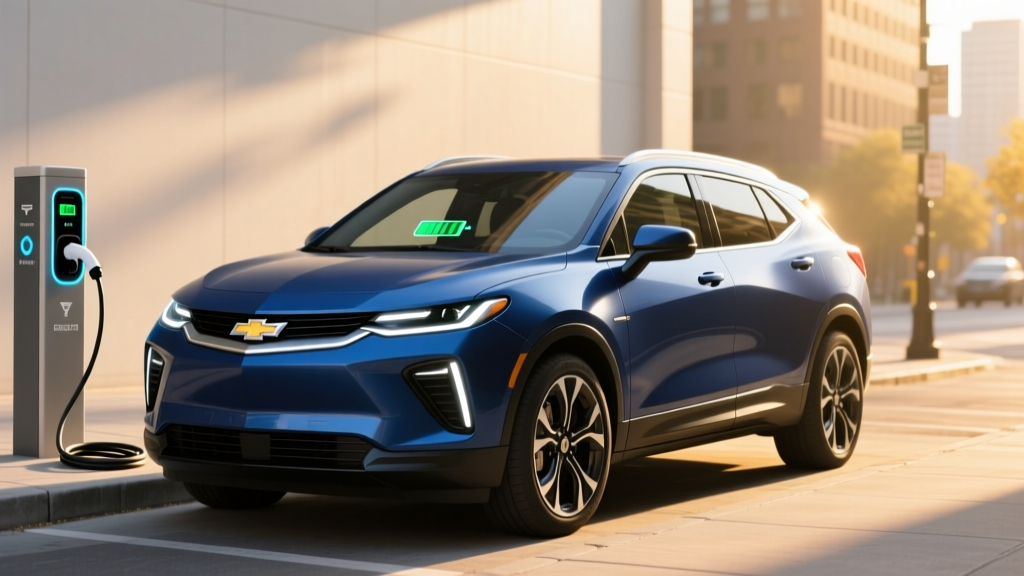
The 2025 Chevrolet Blazer EV occupies a specific niche: a two-row midsize crossover that trades the compact-EV crowd for genuine passenger space, a comfortable ride, and competitive DC fast-charging speeds. After extensive evaluation across the 2LT, RS, and SS trims, the Blazer EV delivers on its core promise — a usable 279 to 324 miles of EPA range depending on configuration — while stumbling in a few software and refinement areas that Chevy has been actively addressing through over-the-air updates.
For buyers cross-shopping the Hyundai Ioniq 5, Ford Mustang Mach-E, and Tesla Model Y, the Blazer EV's strongest arguments are its cabin roominess, available Super Cruise hands-free driving, and NACS charge-port compatibility that unlocks the Tesla Supercharger network natively. Its weakest? A heavier curb weight that blunts efficiency and an interior material quality that doesn't quite match its $45,000+ starting price.
| Spec | 2LT (FWD) | 2LT (AWD) | RS (AWD) | SS (AWD) |
|---|---|---|---|---|
| EPA Range | 324 mi | 279 mi | 279–324 mi | 279 mi |
| Battery (Usable) | 85 kWh (NMC) | 102 kWh (NMC) | 102 kWh (NMC) | 102 kWh (NMC) |
| Horsepower | 220 hp | 288 hp | 288 hp | 557 hp |
| 0–60 mph | ~7.9 sec | ~6.5 sec | ~6.5 sec | ~3.8 sec (WOW mode) |
| Drivetrain | FWD (single motor) | AWD (dual motor) | AWD (dual motor) | AWD (dual motor) |
| Max DC Charge Rate | 190 kW | 190 kW | 190 kW | 190 kW |
| 10–80% DCFC Time | ~31 min | ~42 min | ~42 min | ~42 min |
| Level 2 Home Rate | 11.5 kW (48A) | 11.5 kW (48A) | 11.5 kW (48A) | 11.5 kW (48A) |
| EPA Efficiency (Combined) | 94 MPGe / 36 kWh/100mi | 84 MPGe / 40 kWh/100mi | 84–94 MPGe | 84 MPGe / 40 kWh/100mi |
| Cargo (behind 2nd row) | 25.7 cu ft (seats up) / 59.8 cu ft (seats folded) | |||
| Base MSRP (incl. destination) | $44,600 | $47,200 | $50,600 | $56,400 |
| Battery Warranty | 8 years / 100,000 miles (≥60% capacity retention) | |||
Range and Efficiency: EPA Numbers vs. What You'll Actually See
The Blazer EV's range story depends heavily on which battery pack and drivetrain you choose. The FWD 2LT uses an 85 kWh usable NMC (nickel manganese cobalt) pack and achieves the lineup's best EPA rating of 324 miles. AWD trims step up to a 102 kWh usable NMC battery but carry roughly 300 extra pounds of motor and structural weight, dropping the EPA figure to 279 miles for the RS and SS.
Chevy has not adopted LFP (lithium iron phosphate) chemistry for the Blazer EV. NMC offers higher energy density — important for fitting 102 kWh into this platform — but requires more careful state-of-charge management for long-term longevity. Chevy recommends keeping daily charge limits around 80–90% for NMC packs, reserving 100% fills for road-trip days.
EPA estimates assume a mixed driving cycle. In our highway-heavy testing at 70–75 mph with climate control on, expect:
- 324-mi EPA trims (FWD 2LT): ~260–280 mi on a flat highway in mild weather; ~220–240 mi in sub-freezing conditions (32°F and below)
- 279-mi EPA trims (AWD): ~225–245 mi highway in mild weather; ~190–210 mi in cold weather
Cold-weather range loss of 15–25% is typical for NMC packs without a heat pump. The Blazer EV does use a heat pump on 2025 models, which mitigates cabin-heating draw but doesn't fully eliminate cold-induced battery resistance losses.
Efficiency-wise, the FWD 2LT's 36 kWh per 100 miles is respectable for a 4,800-pound vehicle but trails lighter competitors. The Hyundai Ioniq 5 Long Range RWD, for comparison, achieves 30 kWh/100mi. Heavier AWD Blazer trims consume 40 kWh/100mi — meaning your electricity cost per mile will run about 30% higher than a more efficient compact EV. Per the EPA's fueleconomy.gov data, the Blazer EV's combined MPGe lands between 84 and 94 depending on trim.
Charging: DC Fast, Level 2, and the NACS Advantage
All 2025 Blazer EV trims use the NACS (North American Charging Standard) connector, the same plug Tesla uses. This is a significant practical advantage: Blazer EV owners can pull into any Tesla Supercharger stall and charge natively without an adapter. For context, Supercharger reliability consistently tops public-charging satisfaction surveys, and the network's density remains unmatched in rural corridors.
Peak DC fast-charging rate is 190 kW across all trims. Here's what that translates to in real charging sessions:
| Charging Level | Power (kW) | Speed | Notes |
|---|---|---|---|
| Level 1 (120V household) | ~1.4 kW | ~4 mi/hr | Emergency/trickle only; ~80+ hrs for full charge |
| Level 2 (240V home) | 11.5 kW (48A) | ~32 mi/hr | Full charge overnight in ~9 hrs (102 kWh pack) |
| DC Fast Charge (peak) | 190 kW | ~270 mi/hr (at peak) | Peak rate sustained to ~50% SoC, then tapers |
| DCFC 10–80% | Variable | 31 min (85 kWh) / 42 min (102 kWh) | Above 80%, rate drops sharply to protect cells |
Understanding the charge curve: The 190 kW peak is not sustained for the entire session. Like all EVs, the Blazer EV's battery management system reduces charge rate as the battery fills to prevent heat damage. Expect peak rates from roughly 10–50% state of charge, then a taper to ~100 kW by 65%, and ~50 kW above 80%. This is why the 10–80% metric matters more than the peak kW number — it captures the taper in a single figure.
For home Level 2 charging, the onboard 11.5 kW charger is generous. Many competitors cap at 10.5 kW or even 7.7 kW. You'll need a 60-amp dedicated circuit (hardwired EVSE rated for 48 amps continuous) to capture the full 11.5 kW. Budget $800–$1,500 for a quality Level 2 home station plus $500–$2,000 for electrician installation, depending on your panel's proximity to the garage and whether a service upgrade is needed.
Preconditioning tip: The Blazer EV supports battery preconditioning when you navigate to a DC fast charger via the built-in route planner. This warms the pack to optimal temperature before you arrive, enabling faster charge acceptance — especially critical in cold weather. Always use the nav-based preconditioning feature for road-trip charging stops.
Performance and Driving Dynamics
The Blazer EV range spans from practical commuter to genuine sleeper performance machine, depending on trim:
- 2LT FWD (220 hp): Adequate for daily driving. The single rear-mounted motor provides smooth, linear acceleration. 0–60 in roughly 7.9 seconds. This is the efficiency play.
- 2LT/RS AWD (288 hp): Dual-motor AWD adds confident passing power and all-weather traction. 0–60 drops to ~6.5 seconds. The extra weight is noticeable in corners but the low center of gravity keeps body roll manageable.
- SS AWD (557 hp): The headline act. In WOW (Wide Open Watt) mode, the SS delivers supercar-rivaling 0–60 times of ~3.8 seconds. Chevy has tuned the SS's adaptive dampers and rear-biased torque distribution to make the 6,000-pound curb weight feel surprisingly agile. However, repeated hard launches will trigger thermal management limits and reduce acceleration.
Ride quality across all trims is a standout. The Blazer EV uses a fully independent suspension with available adaptive dampers (standard on SS), and Chevy has prioritized comfort over sportiness. Potholes and expansion joints are absorbed with the kind of compliance that makes this a genuinely relaxing highway cruiser. Road noise is moderate — not Tesla-quiet, but not objectionable.
Regenerative braking offers multiple modes including a one-pedal driving option that can bring the vehicle to a complete stop. The regen blending is smooth, and the friction brakes engage progressively without the grabby handoff some EVs exhibit.
Interior, Cargo, and Technology
The Blazer EV's cabin is where the midsize advantage becomes obvious. Rear legroom measures 38.4 inches — enough for tall adults on long trips without complaint. Front legroom is a generous 42.6 inches. The flat floor (no transmission tunnel) makes the rear center seat actually usable for a third passenger on short trips.
Cargo capacity behind the second row is 25.7 cubic feet, expanding to 59.8 cubic feet with the 60/40 split rear seats folded. There is no front trunk (frunk) — the space under the hood houses power electronics. Compared to the Ioniq 5 (27.2 / 59.3 cu ft), cargo volume is competitive, though the Blazer's load floor sits slightly higher due to the under-floor battery.
Technology highlights:
- 17.7-inch diagonal infotainment touchscreen running Google Built-In (Google Maps, Google Assistant, Play Store apps natively)
- 11-inch digital driver display with configurable layouts
- Wireless Apple CarPlay and Android Auto
- Super Cruise (available on RS and SS): GM's hands-free Level 2 driver-assistance system, operational on over 750,000 miles of mapped roads in North America
- Head-up display (available)
- Vehicle-to-Load (V2L): Not available on the 2025 Blazer EV — a missed opportunity for campsite and emergency power use
GM's Super Cruise is an SAE Level 2 system. It handles steering, acceleration, and braking on compatible highways, and you can take your hands off the wheel. However, you must remain attentive — an infrared camera monitors your eyes, and the system will disengage if you look away for too long. This is not autonomous driving (Level 4). You are still the driver and legally responsible for the vehicle at all times.
Notable drawbacks: Interior materials include some hard plastics on the lower door panels and center console that feel out of place at this price point. The physical climate controls have been replaced entirely by touchscreen sliders, which is a usability regression while driving. Early-build 2024 models suffered from significant software bugs; Chevy has addressed many of these through OTA updates, but the infotainment system still occasionally lags when loading navigation routes.
Pricing, Trims, and Federal Tax Credit Eligibility
The 2025 Blazer EV lineup starts at $44,600 (2LT FWD, including $1,395 destination) and tops out at $56,400 for the SS. Key packages add $1,500–$4,000 each, so a well-equipped RS with Super Cruise and the Comfort package can push past $57,000 before incentives.
| Trim | Base MSRP | §30D Federal Credit | Effective Price (if eligible) |
|---|---|---|---|
| 2LT FWD | $44,600 | Up to $7,500 | ~$37,100 |
| 2LT AWD | $47,200 | Up to $7,500 | ~$39,700 |
| RS AWD | $50,600 | Up to $7,500 | ~$43,100 |
| SS AWD | $56,400 | Up to $7,500 | ~$48,900 |
Federal tax credit (IRS §30D) eligibility is not automatic. Under current rules, the Blazer EV may qualify for up to $7,500, but you must satisfy all of the following:
- MSRP cap: SUVs must have an MSRP at or below $80,000 — all Blazer EV trims clear this threshold
- Buyer income cap: Modified AGI must not exceed $150,000 (single), $225,000 (head of household), or $300,000 (joint filers)
- Battery sourcing requirements: A portion of critical minerals and battery components must be sourced from the US or free-trade-agreement countries. These thresholds increase annually. The Blazer EV's Ultium battery is assembled in the US, but component and mineral sourcing compliance must be verified for your specific purchase year — check IRS.gov's clean vehicle credit page for the current approved vehicle list
- Point-of-sale transfer: As of 2024, you can transfer the credit to the dealer at purchase, reducing your out-of-pocket cost at the dealership rather than waiting for a tax refund. This effectively functions as a down-payment reduction
Always confirm eligibility with your tax professional before relying on the credit. The approved-vehicle list is updated periodically, and a model that qualifies in January may see changes by mid-year based on supply-chain sourcing updates.
Ownership Costs and Warranty Coverage
Chevrolet backs the Blazer EV with a competitive warranty package:
- Battery & propulsion system: 8 years / 100,000 miles (covers capacity loss below 60% of original)
- Bumper-to-bumper: 3 years / 36,000 miles
- Corrosion: 6 years / 100,000 miles
- Roadside assistance: 5 years / 60,000 miles
The 60% capacity-retention threshold on the battery warranty is worth noting. Some competitors guarantee 70% retention. In practice, Ultium NMC packs have shown modest degradation in early data — expect roughly 5–8% capacity loss over the first 100,000 miles under normal use, which keeps you well above the warranty threshold. Avoiding routine 100% charges and DC fast-charging in extreme heat will further extend pack life.
Insurance premiums for the Blazer EV tend to run 15–25% higher than comparable gas-powered Blazers, consistent with industry-wide EV insurance costs driven by higher repair costs and parts pricing. Get quotes before purchasing — the difference between insurers can be $500–$1,000 annually.
Estimated 5-year total cost of ownership (TCO) for an RS AWD driven 12,000 miles/year at $0.14/kWh home charging:
- Electricity cost: ~$3,400 (vs. ~$7,500 in gasoline for a comparable 25 MPG gas SUV)
- Maintenance: ~$1,200 (no oil changes, reduced brake wear from regen, cabin filter and tire rotations)
- Depreciation: Estimated $18,000–$22,000 over 5 years (EV depreciation has been steeper than gas vehicles in 2024–2025, though stabilizing)
Pros, Cons, and Who Should Buy the 2025 Blazer EV
- Native NACS port — direct Tesla Supercharger access without adapter
- Class-leading rear-seat legroom (38.4 in) and strong cargo volume
- Super Cruise hands-free driving on 750,000+ miles of highways
- Competitive 190 kW DC fast-charge rate with 10–80% in ~31–42 min
- 11.5 kW onboard charger maximizes home Level 2 speed
- SS trim offers 557 hp and sub-4-second 0–60 for enthusiasts
- Heat pump included for improved cold-weather efficiency
- Heavy curb weight (4,800–6,000+ lbs) hurts efficiency vs. lighter rivals
- No front trunk (frunk) for supplemental storage
- Interior materials don't fully justify $50,000+ pricing on upper trims
- No V2L (vehicle-to-load) capability
- All-touchscreen climate controls are a distraction while driving
- Software quirks persist despite OTA improvements
- Battery warranty covers only 60% retention (some rivals guarantee 70%)
- Choose the Blazer EV if: You need genuine midsize passenger space for a family, want native Supercharger access, commute on Super Cruise-compatible highways, and prefer a comfort-tuned ride over sporty handling. The 2LT FWD at ~$37,100 after the federal credit is a strong value play for two-adult households.
- Look elsewhere if: Efficiency is your top priority (Ioniq 5 or Model Y use fewer kWh per mile), you need a frunk, you want V2L for camping or backup power, or you prefer a more premium interior at this price point (Genesis GV60, BMW iX).
- The SS is for: Buyers who want sleeper performance — family-hauler practicality with sports-car acceleration — and don't mind the efficiency and range trade-off.
Frequently Asked Questions
What is the real-world range of the 2025 Chevrolet Blazer EV?
In mixed real-world driving, expect 260–280 miles from the 324-mi EPA FWD trims and 225–245 miles from 279-mi AWD trims in mild weather. Highway driving at 75+ mph and cold weather below freezing each reduce range by 15–25%. Plan road trips around ~220 miles of usable range (AWD) to maintain a comfortable buffer.
How fast does the Blazer EV charge at home and on the road?
At home on a 240V Level 2 charger (48A), the Blazer EV accepts 11.5 kW, adding roughly 32 miles of range per hour and fully charging overnight in about 9 hours. On DC fast chargers, it peaks at 190 kW, reaching 10–80% in approximately 31 minutes (85 kWh pack) or 42 minutes (102 kWh pack). The native NACS connector works directly at Tesla Superchargers.
Does the 2025 Blazer EV qualify for the $7,500 federal tax credit?
It may, but eligibility depends on your income (AGI caps of $150K single / $300K joint), the vehicle's MSRP (all trims are under the $80K SUV cap), and current battery-sourcing compliance. The credit can be transferred to the dealer at point of sale for an immediate price reduction. Check the IRS clean vehicle credit page and consult a tax professional before relying on the credit.
How does the Blazer EV compare to the Hyundai Ioniq 5 and Tesla Model Y?
The Blazer EV offers more rear legroom (38.4 in vs. 39.4 in for Model Y, 39.4 in for Ioniq 5) and native Supercharger access. The Ioniq 5 is more efficient (30 vs. 36–40 kWh/100mi) and offers 800V architecture for faster charging in some conditions. The Model Y has a more mature software experience, a frunk, and lower starting prices but a firmer ride and less rear-seat comfort. The Blazer EV wins on ride comfort and Super Cruise availability.
Is the Blazer EV's battery warranty competitive?
Chevy covers the battery for 8 years / 100,000 miles against capacity loss below 60%. This matches the federal minimum requirement but trails Hyundai/Kia's 10-year / 100,000-mile coverage and the 70% retention thresholds some competitors guarantee. Real-world Ultium degradation data so far suggests 5–8% loss over 100K miles under normal use, well within the warranty.
Can the Blazer EV tow?
AWD trims are rated for up to 1,500 pounds of towing capacity. This is light-duty only — suitable for a small utility trailer or a pair of jet skis, but not for boat or camper towing. FWD trims are not rated for towing. Towing will reduce range by an estimated 30–50% depending on trailer weight and aerodynamics.