Quick Verdict: The Blazer EV RS Is a Cruiser, Not a Track Star
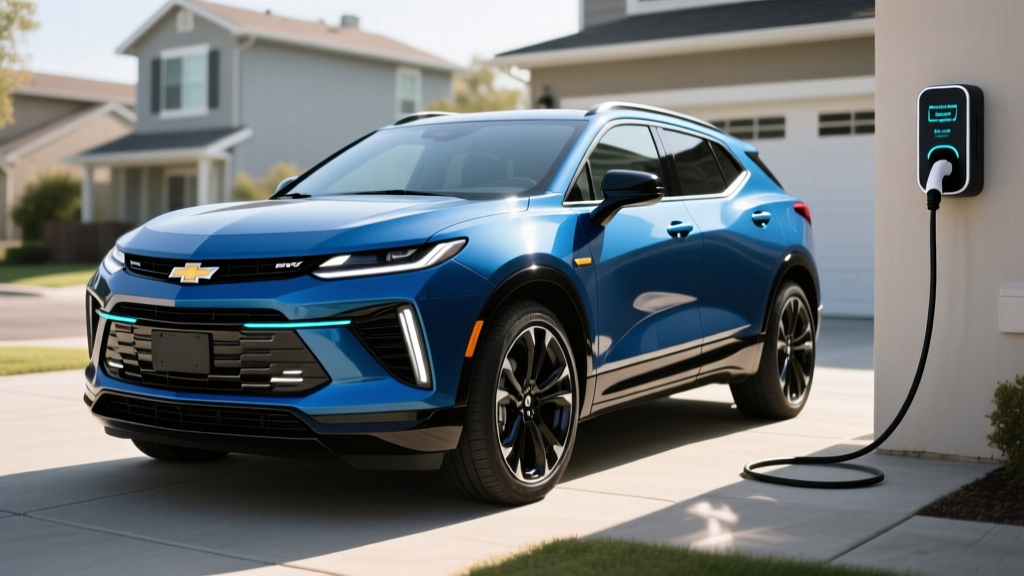
Chevrolet's midsize electric SUV finally hit its stride for the 2025 model year after a turbulent launch. The Blazer EV RS sits at the top of the lineup, offering sport-tuned suspension, dual-motor all-wheel drive, and a 102 kWh usable battery that delivers up to 324 miles of EPA-estimated range. It is not the quickest-charging SUV in its class, and its infotainment software still shows rough edges, but as a daily driver with genuine road-trip capability, the RS trim makes a compelling case — especially if you qualify for the federal tax credit.
| Spec | RS AWD (Dual Motor) | RS RWD |
|---|---|---|
| EPA Range | 279 mi | 324 mi |
| Usable Battery | 102 kWh (NMC) | 102 kWh (NMC) |
| Horsepower | 288 hp (557 hp SS variant) | 340 hp |
| 0–60 mph | ~6.2 sec (AWD) | ~6.8 sec |
| Max DC Fast Charge | 190 kW | 190 kW |
| 10–80% DC Time | ~30 min | ~30 min |
| Level 2 Charge Rate | 11.5 kW (~31 mi/hr) | 11.5 kW (~31 mi/hr) |
| EPA Efficiency | 87 MPGe (39 kWh/100 mi) | 95 MPGe (35 kWh/100 mi) |
| Drivetrain | Dual-motor AWD | Rear-wheel drive |
| Base MSRP | $56,595 | $54,595 |
Source: fueleconomy.gov and Chevrolet official specifications. Prices exclude destination.
Real-World Range: What the EPA Sticker Doesn't Tell You
EPA Estimate: 279 mi (RS AWD) / 324 mi (RS RWD)
Real-World Expectation: ~240–260 mi highway (AWD); ~280–300 mi mixed driving. Subtract 15–25% in freezing temperatures.
The Blazer EV RS AWD's 279-mile EPA rating reflects a combined cycle. On a 70-mph highway loop in moderate temperatures (65–75°F), expect to see between 240 and 260 miles before the battery indicator hits zero. The RWD variant, with its lower curb weight and single motor, stretches closer to 280–300 miles in similar conditions.
Cold weather is the real range equalizer. In sub-30°F conditions, the NMC battery loses efficiency to cabin heating and internal resistance. Plan for 200–220 miles of usable highway range in winter for the AWD model. The Blazer EV uses a heat pump for climate efficiency, which mitigates some of this loss compared to resistive-only heating, but it does not eliminate it.
One ownership insight: the Blazer EV's range estimator (the "guess-o-meter") tends to be conservative after preconditioning. If you precondition the battery while plugged in — which Chevrolet's app allows you to schedule — your first 20 miles of driving will pull from grid energy rather than the pack, effectively extending your usable range on road trips.
Charging Speed: Adequate but Not Class-Leading
| Charging Level | Power / Rate | Speed | Notes |
|---|---|---|---|
| Level 1 (120V) | ~1.4 kW | ~4 mi/hr | Emergency/trickle only |
| Level 2 (240V, 48A) | 11.5 kW | ~31 mi/hr | Full charge in ~10 hrs |
| DC Fast Charge | 190 kW peak | 10–80% in ~30 min | Tapers sharply above 80% |
The Blazer EV RS peaks at 190 kW on a DC fast charger. That is respectable for a 102 kWh pack (roughly a 1.9C charge rate), but it falls behind rivals like the Hyundai Ioniq 5 (240 kW peak, 10–80% in ~18 minutes) and the Kia EV6 (239 kW). On a 350 kW Electrify America or Tesla Supercharger stall, you will see the Blazer sustain roughly 150–170 kW between 10% and 50% state of charge, then taper to 80–100 kW through 70%, and drop below 50 kW past 80%.
The 10–80% charge time of approximately 30 minutes is practical for road-trip rest stops, but if you regularly drive 300+ mile routes, you will notice the difference versus faster-charging competitors. Plan one 30-minute stop for a 500-mile trip rather than expecting 20-minute dashes.
At home, the onboard 11.5 kW charger is a strong point. On a 48-amp Level 2 circuit (hardwired, 60-amp breaker), you will add roughly 31 miles of range per hour, meaning an overnight charge from 20% to full takes about 8–9 hours. Chevrolet includes a dual-level charging cord with the vehicle that can plug into a NEMA 14-50 outlet at up to 7.7 kW (Level 2) or a standard 120V outlet (Level 1). For the best home experience, budget for a dedicated 48A wall connector installed by a licensed electrician.
Performance and Driving Dynamics
The RS AWD pairs a front induction motor with a rear permanent-magnet motor for a combined 288 horsepower and 355 lb-ft of torque. That yields a 0–60 mph time around 6.2 seconds — brisk for a 5,300-pound SUV but not thrilling by EV standards. The RS RWD bumps output to 340 hp from its single rear motor, trading traction for a slightly higher efficiency rating.
If you want serious acceleration, the Blazer EV SS (a separate, higher-priced trim) delivers 557 hp and a sub-4-second 0–60 time. But the RS is tuned for comfort: the sport-tuned suspension firms up the ride without being harsh, and the steering is weighted appropriately for highway cruising. Regenerative braking offers a one-pedal driving mode with adjustable levels via steering-wheel paddles.
Notable driving drawback: the Blazer EV's brake pedal feel is inconsistent at the transition point between regenerative and friction braking. This is common in EVs but more noticeable here than in competitors like the Ford Mustang Mach-E or Tesla Model Y. Expect a learning curve in stop-and-go traffic.
Interior, Cargo, and Technology
The Blazer EV cabin is spacious and practical. Front passengers enjoy 43.2 inches of legroom, with 38.2 inches in the rear — competitive with the segment. Cargo volume behind the second row measures 25.5 cubic feet, expanding to 59.4 cubic feet with the rear seats folded. There is no front trunk (frunk); Chevrolet uses that space for HVAC and power electronics.
The centerpiece is a 17.7-inch diagonal infotainment touchscreen running Google Built-In, which includes native Google Maps navigation, Google Assistant, and access to the Play Store for apps. A 11-inch digital instrument cluster faces the driver. Wireless Apple CarPlay and Android Auto are standard.
Standout tech features:
- Super Cruise availability (on select trims with map coverage on 750,000+ miles of compatible roads — SAE Level 2, requires driver attention)
- Vehicle-to-load (V2L) capability via an available adapter, letting you power tools or appliances from the battery
- Over-the-air updates for powertrain calibration and infotainment
- Elevation Mode: raises ride height by ~1 inch for rough-road clearance
Super Cruise is SAE Level 2, not self-driving. You must keep your eyes on the road. The system monitors driver attention via an infrared camera and will disengage if you look away for more than a few seconds. Hands-free operation is permitted only on pre-mapped divided highways.
Notable drawbacks: Early Blazer EV owners reported infotainment glitches including screen freezes and phone-pairing failures. Chevrolet issued multiple over-the-air and dealer-applied software updates through 2024–2025 that addressed most issues, but the system still lacks the polish of Tesla's or Hyundai's interfaces. Physical climate controls are absent — all HVAC adjustments route through the touchscreen, which frustrates some drivers.
Pricing, Trims, and Federal Tax Credit Eligibility
| Trim | Base MSRP | Max §30D Credit | Effective Price (if eligible) |
|---|---|---|---|
| 2LT RWD | $44,695 | Up to $7,500 | ~$37,195 |
| RS RWD | $54,595 | Up to $7,500 | ~$47,095 |
| RS AWD | $56,595 | Up to $7,500 | ~$49,095 |
| SS AWD | $65,995 | Up to $7,500 | ~$58,495 |
Destination charge ($1,395) not included. As-tested RS AWD with premium packages: ~$60,500.
IRS §30D Federal Tax Credit Requirements (2025 tax year):
- MSRP Cap: SUVs must have a base MSRP ≤ $80,000 — all Blazer EV trims qualify.
- Buyer Income Cap: Modified AGI ≤ $300,000 (married filing jointly), ≤ $225,000 (head of household), ≤ $150,000 (single).
- Battery Sourcing: Partial credit ($3,750) requires critical-minerals compliance; full $7,500 requires both critical-minerals and battery-component sourcing thresholds. Sourcing rules tighten annually — verify current-year compliance on the fueleconomy.gov credit lookup or IRS.gov.
- Point-of-Sale Transfer: You may transfer the credit to the dealer at purchase to reduce the upfront price rather than claiming it on your tax return.
- Tax Liability: The credit is non-refundable — you must owe at least the credit amount in federal income tax to benefit (unless transferred at point of sale).
As of early 2025, the Blazer EV qualifies for the full $7,500 credit for eligible buyers, but battery-sourcing requirements shift throughout the year based on supply-chain changes. Always confirm the VIN-specific credit amount with your dealer and cross-reference the IRS clean vehicle credit portal before finalizing a purchase.
Warranty and Long-Term Battery Outlook
Chevrolet backs the Blazer EV with a comprehensive warranty package:
- Battery & Propulsion: 8 years / 100,000 miles (whichever comes first)
- Bumper-to-Bumper: 3 years / 36,000 miles
- Corrosion: 6 years / 100,000 miles
- Battery Capacity Retention: Chevrolet warrants that the battery will retain at least 70% of original capacity during the 8-year/100,000-mile warranty period
The 102 kWh NMC (nickel manganese cobalt) battery pack is liquid-cooled with active thermal management. NMC chemistry offers higher energy density than LFP, which is how Chevrolet fits 324 miles of range into a midsize SUV footprint, but it is more sensitive to sustained high state-of-charge and extreme heat. Best practice for longevity: charge to 80% daily, use 100% only for road trips, and precondition in extreme temperatures.
Based on data from GM's Ultium-platform vehicles (Cadillac Lyriq, GMC Hummer EV) now accumulating 2–3 years of real-world mileage, degradation appears to be in the 3–6% range over the first 30,000 miles — well within the 70% warranty threshold. A full battery replacement out of warranty would likely cost $12,000–$18,000 based on current Ultium pack pricing, though this figure should decline as production scales.
Who Should Buy the 2025 Blazer EV RS?
Choose the Blazer EV RS if:
- You want a midsize electric SUV with 270+ miles of real-world range and comfortable highway manners
- You have Level 2 home charging and primarily drive under 250 miles round-trip
- You value V2L capability for camping or job-site power
- You qualify for the $7,500 federal credit, bringing the effective price below $50,000
Look elsewhere if:
- You need the fastest possible DC charging for frequent 400+ mile road trips (consider Hyundai Ioniq 5 or Kia EV6)
- You want a front trunk for extra cargo
- You prefer physical buttons for climate and audio controls
- You need third-row seating (the Blazer EV is strictly two-row)
Pros and Cons
Pros
- 324-mile EPA range (RWD) is among the best in the midsize electric SUV class
- Spacious cabin with competitive cargo volume (25.5 / 59.4 cu ft)
- 11.5 kW Level 2 onboard charger enables fast overnight replenishment
- Super Cruise hands-free driving on 750k+ miles of mapped highways
- V2L capability adds practical utility
- Full $7,500 tax credit eligibility (as of early 2025, verify VIN)
Cons
- 190 kW peak DC charging trails Hyundai/Kia rivals by 50+ kW
- No front trunk (frunk)
- Infotainment software still less polished than competitors
- Inconsistent brake pedal feel at regen-to-friction transition
- No physical climate controls
- AWD range drops to 279 mi EPA — noticeable gap vs RWD
Frequently Asked Questions
What is the real-world range of the 2025 Chevrolet Blazer EV RS?
Expect 240–260 miles on the highway for the AWD model and 280–300 miles for the RWD in moderate temperatures. In freezing weather, subtract 15–25%, bringing AWD highway range down to roughly 200–220 miles.
How fast does the Blazer EV RS charge at home and on the road?
At home on a 48A Level 2 charger, the Blazer EV RS adds approximately 31 miles of range per hour (11.5 kW), fully charging overnight in about 10 hours. On a DC fast charger, it peaks at 190 kW and charges from 10% to 80% in approximately 30 minutes.
How much does the Blazer EV RS cost after the federal tax credit?
The RS RWD starts at $54,595 and the RS AWD at $56,595. If you qualify for the full $7,500 IRS §30D credit (subject to income, MSRP, and battery-sourcing rules), the effective price drops to approximately $47,095 (RWD) or $49,095 (AWD).
Is the Blazer EV RS worth buying over the Tesla Model Y or Ford Mustang Mach-E?
The Blazer EV RS wins on interior space, ride comfort, and V2L utility. The Tesla Model Y charges faster on its Supercharger network and has a more mature software ecosystem. The Mustang Mach-E offers sharper driving dynamics but less range. If highway comfort and cabin room matter most, the Blazer RS is the stronger pick; if charging speed or software polish is your priority, shop the alternatives.
Does the 2025 Blazer EV qualify for the $7,500 federal EV tax credit?
As of early 2025, the Blazer EV qualifies for the full $7,500 credit for eligible buyers. Eligibility depends on your modified adjusted gross income (≤$300k joint / ≤$150k single), the vehicle's MSRP (all trims fall under the $80k SUV cap), and battery-sourcing compliance. You can transfer the credit to the dealer at point of sale. Verify VIN-specific eligibility at fueleconomy.gov.
What is the battery warranty on the Blazer EV?
Chevrolet covers the battery and propulsion system for 8 years or 100,000 miles, warranting at least 70% capacity retention over that period.