Quick Verdict: The Blazer EV Finds Its Lane in 2025
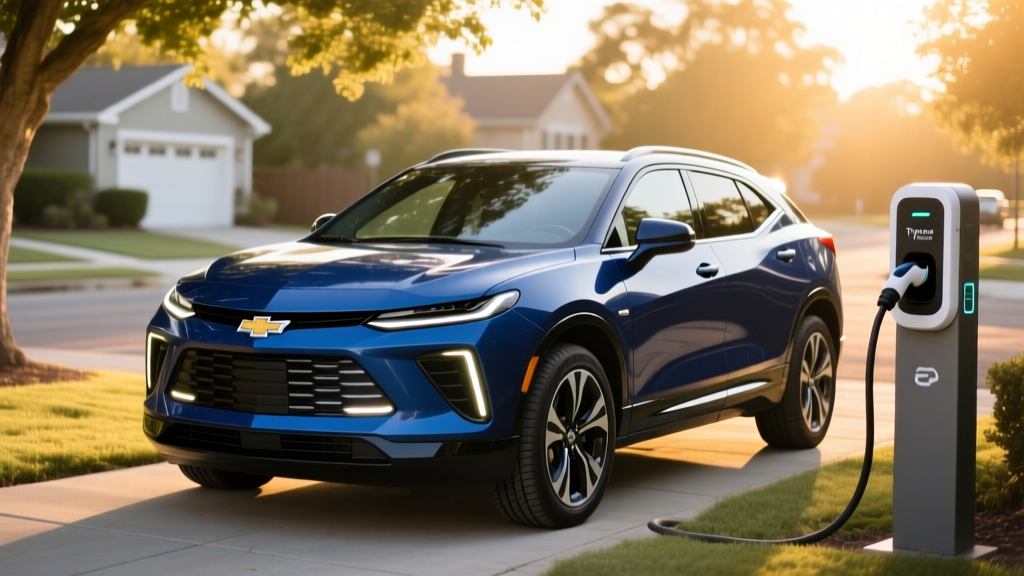
After a rocky 2024 launch plagued by software recalls and quality holds, the 2025 Chevrolet Blazer EV enters the midsize electric SUV segment with updated infotainment, expanded trim availability, and a clearer value proposition. Built on GM's Ultium platform, it offers up to 324 miles of EPA-estimated range, a spacious cabin, and competitive DC fast-charging speeds — though it faces stiff competition from the Hyundai Ioniq 5, Ford Mustang Mach-E, and Tesla Model Y.
The 2025 Blazer EV is best understood as a comfort-oriented family hauler rather than a performance machine. Its ride quality, interior space, and straightforward controls make it a strong daily driver, while its charging speed and range cover most road-trip scenarios. The biggest question for buyers is whether its pricing — starting at $44,600 before incentives — delivers enough value once the federal tax credit is factored in.
| Spec | 2LT (FWD) | 2LT (AWD) | RS (AWD) | SS (AWD) |
|---|---|---|---|---|
| EPA Range | 312 mi | 279 mi | 283 mi | 294 mi |
| Battery (usable) | 102 kWh (NMC) | 102 kWh (NMC) | 102 kWh (NMC) | 102 kWh (NMC) |
| Horsepower | 220 hp | 293 hp | 293 hp | 615 hp |
| 0-60 mph | ~8.5 sec | ~6.5 sec | ~6.5 sec | ~3.4 sec |
| Max DC Charge | 190 kW | 190 kW | 190 kW | 190 kW |
| 10-80% DC Time | ~34 min | ~34 min | ~34 min | ~34 min |
| Level 2 Rate | 11.5 kW | 11.5 kW | 11.5 kW | 11.5 kW |
| MPGe (combined) | 92 MPGe | 87 MPGe | 87 MPGe | 84 MPGe |
| Base MSRP | $44,600 | $47,600 | $51,900 | $60,900 |
Range and Efficiency: EPA Numbers vs. Real-World Reality
EPA Estimate: 279–324 miles depending on trim and drivetrain.
Real-World Expectation: Plan for 240–280 miles on highway road trips (70+ mph), and 200–240 miles in sub-freezing winter conditions. The FWD 2LT is the range champion at 312 miles EPA, while the dual-motor AWD trims sacrifice 30–40 miles for traction and power.
The Blazer EV's 102 kWh usable battery pack uses NMC (nickel-manganese-cobalt) chemistry, which prioritizes energy density over the longer cycle life of LFP cells. In EPA testing, the FWD 2LT achieves 92 MPGe combined (roughly 36 kWh/100 mi), which is competitive but trails the Hyundai Ioniq 5 Long Range's 114 MPGe.
On a 250-mile highway loop at 72 mph in moderate temperatures, expect the Blazer EV AWD to consume roughly 40–43 kWh/100 mi, yielding approximately 240–260 miles before needing a charge. Cold weather (below 32°F) reduces range by 15–25% depending on cabin heating use — the Blazer EV uses a resistive PTC heater rather than a more efficient heat pump, which is a notable efficiency drawback versus competitors like the Ioniq 5 and Model Y that include heat pumps as standard.
The efficiency gap matters most on road trips and in cold climates. If you live in the northern US and regularly drive in winter, budget for a meaningful range reduction and plan charging stops accordingly.
Charging Speed: Home, Public, and the Curve Reality
| Charging Level | Power | Speed (approx.) | Notes |
|---|---|---|---|
| Level 1 (120V) | 1.4 kW | ~4 mi/hr | Emergency/trickle only |
| Level 2 (240V, 48A) | 11.5 kW | ~33 mi/hr | Full charge in ~10 hr |
| DC Fast Charge | 190 kW peak | 10-80% in ~34 min | Tapers significantly above 80% |
The Blazer EV peaks at 190 kW on DC fast chargers, which is adequate but not class-leading. The Hyundai Ioniq 5 reaches 240 kW (10-80% in ~18 minutes), and the Tesla Model Y can accept up to 250 kW. The Blazer EV's charge curve is relatively flat from 10% to roughly 55% SoC, then tapers progressively — expect sustained rates around 120–140 kW in the mid-range before dropping below 80 kW past 70%.
For home charging, the 11.5 kW onboard charger is a strong point. On a 48-amp Level 2 circuit (hardwired, 60-amp breaker), you'll add roughly 33 miles of range per hour, meaning a near-empty battery reaches full overnight in about 10 hours. A standard 32-amp Level 2 unit (common for portable chargers and lower-cost installs) delivers about 7.7 kW, adding roughly 22 miles per hour.
Home install reality: Budget $800–$2,500 for a professional Level 2 installation depending on panel proximity and whether your electrical panel needs an upgrade. Homes with 100-amp panels may require a $1,500–$3,000 panel upgrade to support a 60-amp circuit. Always get a quote from a licensed electrician before purchasing equipment.
The Blazer EV uses the CCS1 connector for DC fast charging and J1772 for Level 2. GM has committed to NACS (Tesla-style) adoption for future models, but the 2025 Blazer EV ships with CCS1. Adapters for Tesla Supercharger access (NACS-to-CCS) are available from third-party manufacturers, though compatibility and charge-rate limitations vary.
Performance and Driving Impressions
The 2025 Blazer EV lineup offers four distinct powertrain configurations:
- 2LT FWD: 220 hp single rear motor — adequate for commuting, 0-60 in roughly 8.5 seconds
- 2LT/RS AWD: 293 hp dual-motor — confident highway merging, 0-60 in ~6.5 seconds
- SS AWD: 615 hp dual-motor with WOW (Wide Open Watts) mode — 0-60 in ~3.4 seconds, rivaling performance SUVs
The SS trim's performance is genuinely quick, but it comes at a $60,900 starting price and reduced range. For most buyers, the AWD 2LT or RS offers the best balance of power and practicality. The ride is tuned for comfort — it absorbs highway imperfections well and keeps cabin noise low, though the steering lacks the precision of the Mustang Mach-E or Model Y.
Regenerative braking offers multiple levels adjustable through steering-wheel paddles, and one-pedal driving mode is available for around-town efficiency. The system is smooth and predictable, though it doesn't quite bring the vehicle to a complete stop without brake-pedal input at very low speeds.
Interior, Cargo, and Technology
The Blazer EV's cabin is one of its strongest attributes. Passenger space is generous, with 43.1 inches of front legroom and 38.4 inches in the rear — competitive with the segment. The 17.7-inch diagonal infotainment touchscreen dominates the dashboard, paired with an 11-inch digital instrument cluster. Physical climate controls are retained, a welcome decision for drivers who dislike menu-diving.
Cargo volume: 25.5 cubic feet behind the second row, expanding to 58.6 cubic feet with the rear seats folded. There is no front trunk (frunk), which is a missed opportunity for additional sealed storage — a feature the Mach-E and Ioniq 5 both offer.
The 2025 model year brings an updated Google Built-in infotainment system with native Google Maps navigation, Google Assistant, and access to the Play Store. Wireless Apple CarPlay and Android Auto are standard. The system is a significant improvement over the 2024 launch software, which suffered from slow response times and bugs that prompted GM's quality hold.
Driver assistance: The Blazer EV comes with Chevy's Super Cruise capability on the RS and SS trims (subscription required after the initial trial period). Super Cruise is an SAE Level 2 system — it handles steering, acceleration, and braking on mapped divided highways, but the driver must remain attentive and keep eyes on the road. It is not self-driving. On compatible roads, it's one of the best hands-free systems available, with smooth lane changes and reliable driver monitoring via an infrared camera.
Important: Super Cruise is a Level 2 driver-assist system. It requires continuous driver supervision. It does not handle construction zones, unmapped roads, or adverse weather autonomously. You are legally and practically responsible for the vehicle at all times.
Pricing, Trims, and Federal Tax Credit Eligibility
| Trim | Base MSRP | Destination | Max §30D Credit* | Effective Price* |
|---|---|---|---|---|
| 2LT FWD | $44,600 | $1,395 | Up to $7,500 | ~$38,495 |
| 2LT AWD | $47,600 | $1,395 | Up to $7,500 | ~$41,495 |
| RS AWD | $51,900 | $1,395 | Up to $7,500 | ~$45,795 |
| SS AWD | $60,900 | $1,395 | Up to $7,500 | ~$54,795 |
*Effective price assumes full $7,500 §30D credit eligibility. Actual credit depends on battery sourcing, buyer income, and MSRP caps. See IRS guidelines.
Federal tax credit eligibility for the Blazer EV is nuanced. Under IRS §30D rules, the full $7,500 credit requires the vehicle to meet critical-mineral and battery-component sourcing thresholds, which have tightened annually since 2023. As of the 2025 tax year:
- MSRP cap: SUVs must be priced at or below $80,000 — all Blazer EV trims qualify.
- Income cap: Modified adjusted gross income must not exceed $150,000 (single), $225,000 (head of household), or $300,000 (joint filers).
- Battery sourcing: The percentage of critical minerals and battery components that must be sourced from the US or FTA partners increases each year. GM's Ultium batteries are assembled in the US (Spring Hill, TN and Orion, MI), but cell-level mineral sourcing determines the exact credit amount. Some Blazer EV configurations may qualify for only $3,750 (half-credit) depending on the model year's sourcing compliance.
- Point-of-sale transfer: As of 2024, buyers can transfer the credit to the dealer at purchase, reducing the upfront cost rather than waiting for a tax refund.
Before purchasing, verify the specific VIN's credit eligibility on fueleconomy.gov and consult a tax professional. Rules change, and the credit amount can differ by build date and battery batch.
Warranty and Long-Term Ownership
Chevrolet provides the following coverage for the 2025 Blazer EV:
- Battery & propulsion warranty: 8 years / 100,000 miles (whichever comes first), covering defects and capacity loss below a specified threshold (typically 60–70% of original capacity, per GM's EV warranty terms).
- Bumper-to-bumper: 3 years / 36,000 miles
- Powertrain (non-battery): 5 years / 60,000 miles
- Roadside assistance: 5 years / 60,000 miles
The 8-year/100,000-mile battery warranty is standard for the industry and provides reasonable peace of mind. NMC chemistry typically degrades 10–15% over the first 100,000 miles under normal use, with the rate slowing significantly thereafter. To maximize battery longevity, avoid routinely charging to 100% or letting the pack sit below 10% for extended periods — GM's battery management system includes a buffer, but good charging habits still matter.
Insurance costs for the Blazer EV run 10–20% higher than comparable gas-powered midsize SUVs, consistent with the EV segment. Get quotes before purchasing — rates vary significantly by insurer, driving record, and location.
Pros
- Up to 324 miles EPA range (FWD 2LT)
- Spacious cabin with 43.1" front legroom
- Super Cruise hands-free driving on mapped highways
- 11.5 kW Level 2 charging (fast home refill)
- SS trim offers 615 hp / 3.4-sec 0-60 performance
- Physical climate controls retained
- All trims under $80K MSRP cap for tax credit
Cons
- No heat pump — cold-weather range loss is significant
- 190 kW peak DC charging trails Ioniq 5 (240 kW) and Model Y (250 kW)
- No front trunk (frunk)
- Efficiency (MPGe) lags top competitors
- 2024 launch quality issues may affect resale perception
- Super Cruise requires ongoing subscription
- CCS1 connector as NACS transition creates adapter dependency
Who Should Buy the 2025 Blazer EV?
Choose the Blazer EV if:
- You want a comfortable, quiet midsize EV SUV with strong passenger space
- Most of your driving is within 200 miles round-trip and you can charge at home
- You value Super Cruise for frequent highway commuting
- You prefer a traditional SUV design over the Ioniq 5's retro-futuristic look
Look elsewhere if:
- You live in a cold climate and need maximum winter range (the Ioniq 5's heat pump helps significantly)
- Road-trip charging speed is your top priority (Ioniq 5 or Model Y charge faster)
- You want a frunk for gear storage
- You need maximum efficiency per kWh (Ioniq 5 and Model Y lead the segment)
The Blazer EV competes most directly with the Hyundai Ioniq 5 (better efficiency and faster charging, less cargo space), the Ford Mustang Mach-E (sportier handling, slightly less rear room), and the Tesla Model Y (best charging network access and efficiency, polarizing interior). Against these rivals, the Blazer EV's advantages are its ride comfort, cabin space, and Super Cruise — its disadvantages are charging speed and cold-weather efficiency.
Frequently Asked Questions
What is the real-world range of the 2025 Chevrolet Blazer EV?
The EPA rates the Blazer EV between 279 and 324 miles depending on trim. In real-world highway driving at 70+ mph, expect 240–280 miles from the AWD trims and 270–300 miles from the FWD 2LT. In cold weather (below freezing), subtract 15–25% due to the lack of a heat pump — plan for 200–240 miles on winter road trips.
How fast does the Blazer EV charge at home and on the road?
On a 48-amp Level 2 home charger (11.5 kW), the Blazer EV adds about 33 miles per hour and charges fully in roughly 10 hours. On DC fast chargers, it peaks at 190 kW and reaches 10-80% in approximately 34 minutes, though the charge rate tapers significantly above 80% SoC.
Does the 2025 Blazer EV qualify for the $7,500 federal tax credit?
It may qualify for the full $7,500, half ($3,750), or none depending on battery-component and critical-mineral sourcing for the specific build. All trims are under the $80,000 SUV MSRP cap, and income limits apply ($150K single / $300K joint). Verify the VIN on fueleconomy.gov and consult a tax professional before relying on the credit.
How does the Blazer EV compare to the Tesla Model Y and Hyundai Ioniq 5?
The Blazer EV offers more rear-seat legroom and a more comfortable ride than both. The Ioniq 5 charges faster (240 kW vs. 190 kW) and is more efficient (114 vs. 87–92 MPGe). The Model Y has access to the Supercharger network natively, offers better efficiency, and has a frunk. The Blazer EV's Super Cruise is a differentiator for highway commuters.
Is the Blazer EV good for towing?
The AWD Blazer EV is rated to tow up to 1,500 pounds with the available towing package — adequate for a small utility trailer or a pair of dirt bikes, but not sufficient for a boat or camper. Towing significantly reduces range; expect a 30–50% range reduction depending on trailer weight and speed.
What connector does the Blazer EV use?
The 2025 Blazer EV uses the CCS1 connector for DC fast charging and J1772 for Level 2 AC charging. It does not natively use the NACS (Tesla) connector. Third-party CCS-to-NACS adapters exist for Tesla Supercharger access, but verify compatibility and expect potential charge-rate limitations.