Quick Answer: Is the 2025 Cadillac Escalade IQ Worth It?
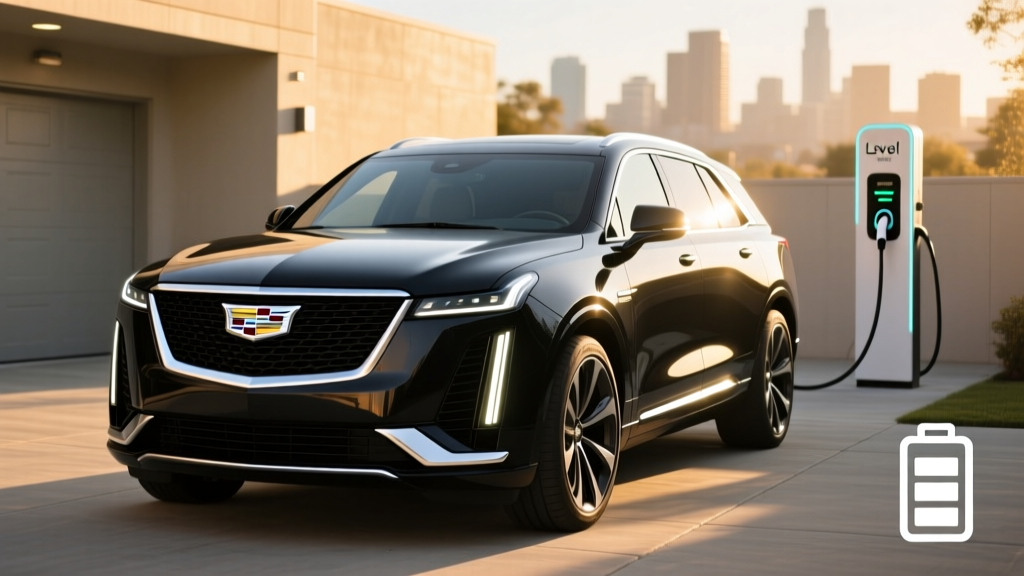
The 2025 Cadillac Escalade IQ (Cadillac's electric Escalade) offers an EPA-estimated 460 miles of range, 200 kW DC fast charging (10-80% in ~35 minutes), and 750 hp starting at $129,990. Real-world highway range drops to ~370-400 miles, and cold weather can reduce that further by 15-25%. You'll save $1,800-$2,500 annually on fuel vs. the gas Escalade, but home Level 2 charging installation adds $1,200-$3,000 upfront. The federal §30D tax credit is unlikely due to battery sourcing requirements and the $80,000 SUV MSRP cap.
Range Reality: EPA vs. Real-World Driving
The 2025 Cadillac Escalade IQ comes equipped with a massive 200 kWh usable Ultium battery (NMC chemistry) that delivers an EPA-estimated 460 miles of range in Luxury and Sport trims. That's the highest EPA range of any production EV sold in the US as of 2026.
Real-World Range Expectations
| Driving Scenario | Expected Range | Notes |
|---|---|---|
| EPA Combined | 460 miles | Official sticker estimate |
| Highway (70-75 mph) | 370-400 miles | Aerodynamic drag reduces efficiency ~15% |
| City/Suburban | 440-470 miles | Regen braking recovers energy |
| Cold Weather (20°F) | 345-390 miles | Battery heating + cabin HVAC draw |
| Towing (5,000 lb trailer) | 230-280 miles | Expect 40-50% range reduction |
The Escalade IQ's efficiency comes in around 435 Wh/mile, which is typical for a 9,000-pound luxury SUV. For context, the Tesla Model X achieves ~320 Wh/mile but weighs 1,500 pounds less. If you live in a cold climate (Minnesota, Maine, Colorado mountains), plan for 350-380 miles of usable winter range and precondition the battery before fast charging.
Charging Speed & Infrastructure
The Escalade IQ uses the North American Charging Standard (NACS) port, giving you native access to Tesla Superchargers (17,000+ locations) plus Electrify America, EVgo, and other networks. Peak DC fast charging hits 200 kW, but sustained rates matter more:
Charging Speeds for 2025 Escalade IQ
| Charging Level | Power (kW) | Miles Added Per Hour | Time 10-80% |
|---|---|---|---|
| Level 1 (120V outlet) | 1.4 kW | 3-4 miles | Not practical (5+ days) |
| Level 2 (240V home) | 11.5 kW | 27-30 miles | ~17 hours |
| Level 2 (48A public) | 11.5 kW | 27-30 miles | ~17 hours |
| DC Fast (peak) | 200 kW | 460+ miles | ~35 minutes |
| DC Fast (sustained avg) | 140-160 kW | 320-370 miles | Actual average rate |
Charging curve reality: The Escalade IQ peaks at 200 kW only between 10-30% state of charge. From 30-60%, expect 160-180 kW; from 60-80%, it tapers to 100-120 kW to protect battery health. That 35-minute 10-80% time assumes optimal battery temperature (preconditioning enabled) and a 350 kW-capable charger.
Home charging setup: With a 200 kWh battery, Level 2 charging is mandatory. A 48-amp Level 2 charger on a 60-amp circuit adds ~28 miles per hour, meaning an overnight charge (10 hours) restores ~280 miles—enough for most daily driving. Installation costs $1,200-$3,000 depending on panel capacity and run length. Homes with 100-amp service may need a $2,000-$4,000 panel upgrade to support a 60-amp EV circuit.
Cost Breakdown: Escalade IQ vs. Gas Escalade
The 2025 Escalade IQ starts at $129,990 (Luxury trim) and reaches $149,990 for the Sport Platinum. The gas-powered 2025 Escalade starts at $83,895 and tops out around $155,000 for the V-Series. Here's how ownership costs compare over 5 years and 75,000 miles:
5-Year Ownership Cost: Electric vs. Gas Escalade
| Cost Category | Escalade IQ (Electric) | Gas Escalade (6.2L V8) | Difference |
|---|---|---|---|
| Purchase Price (base) | $129,990 | $83,895 | +$46,095 (IQ) |
| Federal Tax Credit | $0 (exceeds MSRP cap) | $0 | — |
| Fuel/Energy (75k miles) | $4,500 (home charging) | $18,750 (14 mpg, $3.50/gal) | -$14,250 (IQ saves) |
| Maintenance | $2,800 | $6,500 | -$3,700 (IQ saves) |
| Insurance (avg) | $18,500 | $15,200 | +$3,300 (IQ) |
| Depreciation (est.) | $52,000 | $38,000 | +$14,000 (IQ) |
| Total 5-Year Cost | $207,790 | $162,345 | +$45,445 (IQ) |
Key takeaways:
- The Escalade IQ saves ~$18,000 in fuel and maintenance over 5 years
- Higher purchase price and insurance premiums offset most savings
- Depreciation is steeper on luxury EVs (50-60% over 5 years vs. 40-45% for gas)
- Break-even vs. gas Escalade requires 8-10 years or 120,000+ miles
- Home charging at $0.14/kWh assumes 200 kWh × $0.14 × 250 charges/year
If you charge primarily at public DC fast chargers ($0.40-$0.55/kWh), your 5-year fuel cost jumps to $10,000-$13,000, erasing most of the electric advantage. The Escalade IQ makes financial sense only if you have reliable home charging and drive 15,000+ miles annually.
Performance & Driving Experience
The Escalade IQ's dual-motor AWD system produces 750 hp and 785 lb-ft of torque in Velocity Max mode (standard on Sport trims, optional on Luxury). That translates to a 0-60 mph time of under 5.0 seconds—faster than the gas Escalade V's 6.2L supercharged V8 (682 hp, 4.4 seconds to 60).
Real-world driving impressions:
- Ride quality: Air suspension with Magnetic Ride Control delivers a compliant, isolated ride. The 9,000-pound mass is well-controlled, but you feel the weight in corners.
- Regen braking: One-pedal driving mode is smooth and predictable. You can modulate regen strength via steering wheel paddles.
- Towing: 8,000-pound max towing capacity (vs. 8,200 for gas Escalade). Expect range to drop 40-50% when towing.
- Noise: Whisper-quiet at highway speeds. No V8 rumble, but Cadillac pipes in subtle synthetic acceleration sounds.
Tax Credit & Incentive Reality
The 2025 Escalade IQ does not qualify for the federal §30D tax credit due to multiple disqualifying factors:
Why the Escalade IQ Misses the $7,500 Credit
- MSRP cap: §30D limits SUVs to $80,000 MSRP; the IQ starts at $129,990
- Buyer income cap: AGI limits ($300k joint, $225k head of household, $150k single) exclude most buyers in this price range
- Battery sourcing: Ultium batteries use globally sourced lithium and cobalt; 2025 models likely don't meet the 80% critical minerals threshold
- Final assembly: US-assembled (Spring Hill, TN), so this requirement is met
State incentives may apply: California, Colorado, and a few other states offer $2,000-$5,000 rebates for EVs over $80,000, but these programs have income caps and funding limitations. Check your state's energy office or AFDC incentive database for current programs.
Common Misconceptions vs. Facts
Escalade IQ Myths Debunked
| Myth | Fact |
|---|---|
| "460 miles means I can drive 460 miles before charging" | Real-world highway range is 370-400 miles; plan stops at 300-320 miles for comfort |
| "It charges as fast as a Tesla" | Tesla Model X peaks at 250 kW; Escalade IQ peaks at 200 kW (slower) |
| "No maintenance means no costs" | Tires ($1,200-$1,800 every 25k miles), cabin air filters, brake fluid, and coolant still require service |
| "I can charge on a regular outlet" | Level 1 (120V) adds 3-4 miles/hour—impractical for a 200 kWh battery |
| "Battery will need replacement in 5 years" | GM's Ultium warranty covers 8 years/100,000 miles with 70% capacity retention; real-world degradation is ~1-2% per year |
| "Self-driving capability" | Super Cruise is SAE Level 2—you must remain attentive and keep hands near the wheel |
Decision Framework: Should You Buy the Escalade IQ?
Choose the Escalade IQ If:
- You have home Level 2 charging (or can install it for $1,200-$3,000)
- You drive 15,000+ miles per year (fuel savings offset higher purchase price)
- You want the quietest, smoothest full-size luxury SUV experience
- You value instant torque and 750 hp over V8 sound and tradition
- You live in a region with reliable public charging infrastructure (West Coast, Northeast, major metros)
- You plan to keep the vehicle 6+ years
Choose the Gas Escalade If:
- You lack home charging access and rely on street parking or apartments
- You tow frequently (5,000+ lbs) and need predictable range
- You live in a charging desert (rural Midwest, Mountain West)
- You want lower upfront cost ($46,000 less than IQ)
- You prefer the sound and character of a V8 engine
- You plan to sell or trade in under 5 years (depreciation is steeper on EVs)
Consider a Hybrid Alternative If:
- You want some electric driving but can't commit to full EV (no PHEV Escalade exists, but the BMW X7 xDrive40i or Mercedes GLS 580 offer mild-hybrid efficiency)
- You drive 20,000+ miles annually with frequent long road trips
FAQ: 2025 Cadillac Escalade IQ Ownership
How long does the Escalade IQ battery last?
GM warranties the Ultium battery for 8 years or 100,000 miles, whichever comes first, with coverage if capacity drops below 70%. Real-world data from similar Ultium vehicles (GMC Hummer EV, Chevrolet Silverado EV) suggests 1-2% annual degradation under normal use. Expect 85-90% capacity retention at 100,000 miles. Battery replacement (if needed post-warranty) would cost $25,000-$35,000 based on current Ultium pricing, though costs are declining.
Can I tow with the Escalade IQ?
Yes, the Escalade IQ has an 8,000-pound max towing rating (slightly less than the gas Escalade's 8,200 lbs). However, towing cuts range dramatically—expect 230-280 miles from a full charge when pulling a 5,000-pound trailer. Plan charging stops every 200 miles when towing. The IQ includes ProGrade trailering tech with hitch guidance and trailer camera integration.
Does Super Cruise make it self-driving?
No. Super Cruise is an SAE Level 2 driver-assistance system that allows hands-free driving on 400,000+ miles of mapped highways, but you must remain attentive. The driver monitoring system uses a camera to track eye gaze and will issue warnings if you look away from the road. You cannot sleep, read, or use a phone. Super Cruise is not autonomous—it's an advanced cruise control with lane centering.
What's the real cost to charge at home?
At the US average electricity rate of $0.14/kWh (per EIA data), a full 200 kWh charge costs $28 and delivers ~400 real-world miles. That's $0.07 per mile, compared to $0.25 per mile for the gas Escalade (14 mpg at $3.50/gallon). Over 15,000 miles annually, you'll spend $1,050 on electricity vs. $3,750 on gasoline—a $2,700 annual savings.
Is the Escalade IQ reliable?
It's too early for long-term reliability data (first deliveries occurred in late 2024). GM's Ultium platform has shown solid performance in the GMC Hummer EV and Cadillac Lyriq, with few major battery or motor failures reported. However, early Lyriq models had software glitches and build-quality issues that required dealer visits. Expect first-year IQ models to have similar teething problems. J.D. Power and Consumer Reports reliability ratings will emerge in 2026-2027.
What happens if I run out of charge?
The Escalade IQ includes 3 years of OnStar roadside assistance with tow-to-charger service (up to 50 miles). The navigation system proactively warns you if your route exceeds available range and suggests charging stops. Unlike a gas car, you can't walk to a station with a jerry can—but you also have 460 miles of buffer before that scenario. AAA and other roadside services now offer mobile EV charging in major metros.
How does cold weather affect the Escalade IQ?
In temperatures below 32°F, expect 15-25% range reduction due to battery resistance and cabin heating demands. At 20°F, a 460-mile EPA range drops to 345-390 miles. The IQ includes a heat pump (standard) that improves cold-weather efficiency vs. resistive heating. Preconditioning the battery while plugged in (via the Cadillac app) restores ~10% of lost range and enables faster DC charging. If you live in sub-zero climates, a heated garage is ideal.
Can I use Tesla Superchargers?
Yes. The 2025 Escalade IQ has a native NACS port, so you can plug directly into Tesla Superchargers without an adapter. Cadillac provides access to Tesla's network through the myCadillac app, which handles authentication and payment. As of 2026, there are 17,000+ Supercharger stalls in the US, many capable of 250 kW (though the IQ peaks at 200 kW).
Sources: Cadillac official specifications, EPA fueleconomy.gov, IRS §30D tax credit guidance, EIA electricity pricing data.