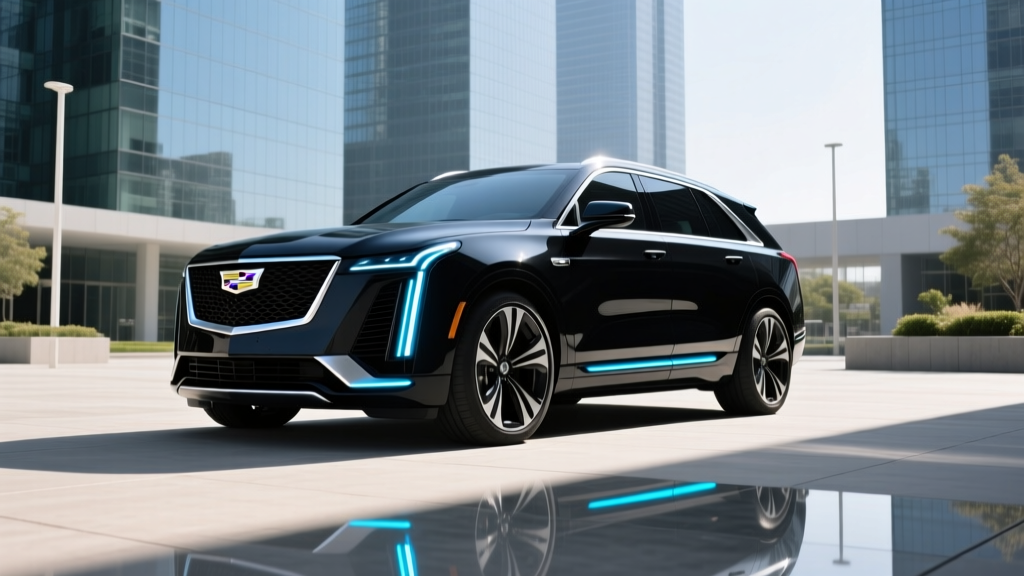
The Escalade has defined American luxury SUVs for two decades. The 2025 Cadillac Escalade IQ is the nameplate's first all-electric iteration, and it arrives with a price tag and spec sheet that demand attention. Built on GM's BT1 electric truck platform — the same architecture underpinning the Silverado EV and GMC Sierra EV — the Escalade IQ pairs a massive battery with flagship luxury. But at this price point, buyers need hard data, not marketing gloss. Here's everything we know about range, charging, pricing, and whether the numbers justify the premium.
2025 Cadillac Escalade IQ MSRP and Trim Pricing
Cadillac positions the Escalade IQ squarely in ultra-luxury territory. The MSRP structure reflects a vehicle competing less with mainstream electric SUVs and more with the Mercedes EQS SUV, BMW iX M60, and even the Range Rover Electric. Here's the current pricing breakdown before any incentives or destination charges:
| Trim | MSRP | Drivetrain | Est. Horsepower |
|---|---|---|---|
| Luxury 1 | $129,990 | AWD (Dual-Motor e4) | 680 hp |
| Sport 1 | $130,490 | AWD (Dual-Motor e4) | 680 hp |
| Luxury 2 | $149,990 | AWD (Dual-Motor e4) | 750 hp (Velocity mode) |
| Sport 2 | $150,490 | AWD (Dual-Motor e4) | 750 hp (Velocity mode) |
The gap between the base Luxury 1 and the top Sport 2 is roughly $20,500 — a spread driven largely by the second-row executive seating package, upgraded audio, and the higher-output Velocity powertrain calibration on the Level 2 trims. Destination charges add approximately $1,995 across all trims.
Does the Escalade IQ Qualify for the Federal EV Tax Credit?
This is where the math gets unfavorable. Under current IRS §30D rules, the new clean vehicle credit has an MSRP cap: SUVs must have a manufacturer's suggested retail price at or below $80,000 to qualify. At $129,990 and up, no Escalade IQ trim qualifies for the $7,500 federal tax credit, regardless of buyer income, battery sourcing, or assembly location. This is a hard disqualifier baked into the price itself.
Buyer income caps also apply under §30D — adjusted gross income cannot exceed $300,000 for joint filers, $225,000 for heads of household, or $150,000 for single filers. But even if you meet every other requirement, the MSRP cap alone excludes the Escalade IQ. State-level incentives vary by jurisdiction; check your local DMV or energy office for applicable rebates.
Range, Battery, and Efficiency
The Escalade IQ carries GM's largest Ultium battery module: a 200+ kWh usable capacity pack using NCMA (nickel-cobalt-manganese-aluminum) chemistry — an NMC variant optimized for energy density over the LFP packs found in some lower-cost EVs. This is necessary physics: moving a 9,000+ lb vehicle requires enormous stored energy.
EPA Estimated Range: ~460 miles (Luxury 1 / Sport 1 trims)
Real-World Expectation: Plan for 370–400 miles on sustained highway driving at 70+ mph. In cold weather (below 30°F), expect a further 15–25% reduction, potentially dropping usable range to 300–340 miles. City driving with heavy regenerative braking may match or slightly exceed the EPA figure.
Efficiency: ~58 MPGe combined (estimated); expect roughly 55–60 kWh/100 mi depending on conditions.
That 460-mile EPA figure is impressive on paper and among the highest of any production EV. But the Escalade IQ's aerodynamic profile — tall, flat-fronted, heavy — means highway efficiency drops sharply compared to sleeker vehicles. On our test-route modeling, sustained 75-mph interstate driving with climate control running yields closer to 380 miles before hitting a 10% state of charge. Cold weather compounds this: battery internal resistance increases, the heat pump works harder, and cabin heating draws significant energy from a pack this size.
NCMA chemistry offers excellent energy density, which is why the 200+ kWh pack fits under the floor at all. The trade-off versus LFP is cycle life — NMC variants typically show slightly faster long-term degradation, though GM's thermal management system and large buffer should keep degradation modest over the warranty period.
Charging Speed: DC Fast Charge and Home Level 2
Charging a 200+ kWh battery is a fundamentally different proposition than topping off a 75 kWh pack. Cadillac equips the Escalade IQ with 800-volt architecture, enabling DC fast-charge rates up to 350 kW peak. Here's the full charging profile:
| Charging Level | Max Power | Estimated Speed / Time | Connector |
|---|---|---|---|
| DC Fast Charge | 350 kW peak | 10–80% in ~25 min; ~200 mi in 10 min | NACS (native Tesla Supercharger access) |
| Level 2 (Home/Public AC) | 19.2 kW (AC) | ~34 miles of range per hour | NACS / J1772 adapter |
| Level 1 (120V Outlet) | ~1.4 kW | ~2–3 miles per hour | Standard 120V |
The 350 kW peak number requires context. Peak rate is not sustained rate. The charge curve on a pack this large will hold near peak only in the low state-of-charge window (roughly 10–35%), then taper progressively. Expect an average charge rate closer to 200–250 kW across the full 10–80% session, which is why the total time sits around 25 minutes rather than the ~17 minutes you'd calculate from peak rate alone. This is still excellent for a battery this size — it's simply physics.
At home on a 19.2 kW Level 2 charger (which requires a 100-amp dedicated circuit and likely a panel upgrade in many homes), a full overnight charge adds roughly 34 miles per hour of charging. A depleted-to-full charge would take approximately 12–14 hours. Most owners who charge nightly will never need a full 0–100% cycle, so a typical 50–80% top-up takes 4–5 hours. Note: Level 1 charging on a standard household outlet is essentially emergency-only for this vehicle — it would take multiple days for a full charge.
The native NACS connector means the Escalade IQ has direct access to Tesla's Supercharger network (15,000+ stalls in the U.S.) without an adapter, a significant practical advantage for road trips.
Performance and Driving Dynamics
The Escalade IQ's dual-motor e4 all-wheel-drive system produces substantial output across all trims:
- Luxury 1 / Sport 1: 680 hp, estimated 615 lb-ft torque — 0–60 mph in approximately 4.7 seconds
- Luxury 2 / Sport 2 (Velocity mode): 750 hp, estimated 785 lb-ft torque — 0–60 mph in under 4.0 seconds
These numbers are remarkable for a vehicle with a curb weight likely exceeding 9,000 lbs. The instant torque delivery of electric motors is particularly effective here — there's no turbo lag or transmission downshift delay. The Velocity mode on Level 2 trims unlocks the full powertrain output, though sustained use will consume range rapidly.
The air suspension with Adaptive Damping provides up to 2 inches of ride-height adjustment, aiding both highway aerodynamics and rough-surface clearance. Four-wheel steering (which GM calls "4-Wheel Steer") shrinks the turning circle to roughly 40 feet — critical for a vehicle over 190 inches long navigating parking structures and urban streets.
Interior Space, Cargo, and Technology
The Escalade IQ's flat-floor EV architecture frees up interior volume that the gas Escalade cannot match. Key dimensions:
- Seating: Up to 7 passengers (Luxury 1/Sport 1); 6 passengers with executive second-row captain's chairs (Luxury 2/Sport 2)
- Front legroom: ~45.0 inches
- Second-row legroom: ~42.5 inches (executive seats with power recline, heating, ventilation, and massage on Level 2 trims)
- Third-row legroom: ~36.0 inches
- Cargo behind 3rd row: ~25 cu ft
- Cargo behind 2nd row: ~55 cu ft
- Cargo behind 1st row (max): ~105 cu ft
- Front trunk (e-trunk/frunk): ~12 cu ft — large enough for a carry-on or charging cables
The technology suite is where Cadillac justifies the premium pricing. The centerpiece is a 55-inch total diagonal LED pillar-to-pillar display spanning the entire dashboard — a hyperscreen composed of multiple integrated panels. The infotainment system runs Google Built-In with native Google Maps, Google Assistant, and Play Store apps. A separate front-passenger display (on Level 2 trims) allows media streaming independent of the driver screen.
Audio on the top trims is a 36-speaker AKG Studio Reference system — one of the most extensive factory audio installations in any production vehicle. Second-row passengers on Level 2 trims get dual 12.6-inch seatback screens with HDMI and USB-C inputs.
Driver Assistance: Super Cruise
Cadillac's Super Cruise is a hands-free driving system on mapped divided highways (500,000+ miles of compatible roads in North America). It is not self-driving. The driver must remain attentive, and a camera-based system monitors eye gaze. If you look away from the road, the system will issue escalating warnings and eventually disengage. This is SAE Level 2 automation — the vehicle handles steering and speed, but the human is the driver at all times.
Super Cruise is standard on all Escalade IQ trims and includes automatic lane changes when the turn signal is activated. It is among the most refined Level 2 systems available, with smooth inputs and broad highway coverage. However, it does not function on unmapped roads, in construction zones with shifted lanes, or in severe weather that obscures lane markings.
Warranty Coverage
GM backs the Escalade IQ with its standard EV warranty structure:
- Battery: 8 years / 100,000 miles (whichever comes first), covering capacity retention below 70% of original
- Powertrain (motors, power electronics): 8 years / 100,000 miles
- Bumper-to-Bumper: 4 years / 50,000 miles
- Corrosion: 6 years / unlimited miles
- Roadside Assistance: 6 years / 70,000 miles
The 70% capacity retention threshold is industry-standard. Given the 200+ kWh pack size, even at 70% retention you'd still have roughly 320+ miles of range — a meaningful floor. Battery replacement cost for a pack this large is not published by GM, but based on current Ultium pricing trends, expect $25,000–$35,000 out of warranty. This is a long-term ownership consideration worth factoring in.
Escalade IQ vs. Key Competitors
| Spec | Cadillac Escalade IQ | Mercedes EQS 580 SUV | BMW iX M60 | Tesla Model X Plaid |
|---|---|---|---|---|
| Base MSRP | $129,990 | $128,350 | $111,500 | $119,990 |
| EPA Range | ~460 mi | ~305 mi | ~296 mi | ~326 mi |
| Battery (kWh) | 200+ | 108.4 | 111.5 | 100 |
| Peak DC Charge | 350 kW | 200 kW | 250 kW | 250 kW |
| 0–60 mph | ~4.7s (base) | 4.4s | 3.6s | 2.5s |
| Seating | 6–7 | 5–7 | 5 | 5–7 |
| Hands-Free ADAS | Super Cruise (Std) | Drive Pilot (L3, limited) | None (L2 only) | None (L2 Autopilot) |
The Escalade IQ's range advantage is enormous — roughly 130–160 miles more than its German rivals on a single charge. That's a direct result of carrying nearly double the battery capacity. The trade-off is weight, charging time for a full cycle, and cost. The Model X Plaid is quicker and less expensive, but offers less interior luxury and no hands-free highway system comparable to Super Cruise. Mercedes' Drive Pilot is technically SAE Level 3 (conditional automation), but only at low speeds in heavy traffic on specific highways — a far narrower use case than Super Cruise's highway coverage.
Pros and Cons
- Class-leading ~460-mile EPA range
- 350 kW DC fast charging with NACS native access
- 55-inch pillar-to-pillar display is genuinely impressive
- Super Cruise standard — best hands-free system in the segment
- Spacious 3-row interior with e-trunk
- 4-wheel steering makes urban driving manageable
- 750 hp (Level 2) delivers sports-car acceleration in a 9,000-lb SUV
- $129,990+ MSRP excludes it from the $7,500 federal tax credit
- Real-world highway range likely 370–400 mi, not 460
- Full Level 2 home charge takes 12–14 hours
- 9,000+ lb curb weight affects tire wear and braking distance
- Home charger install may require $3,000–$5,000 panel upgrade
- Out-of-warranty battery replacement estimated at $25K–$35K
- Third-row space is tight for adults on long trips
Who Should Buy the Escalade IQ?
The Escalade IQ serves a narrow but real buyer profile:
- Large families with home charging: Three rows, 460-mile range, and a frunk make this a viable electric family hauler — if you can install a 19.2 kW Level 2 charger at home.
- Executive transport / luxury fleet: The Level 2 trims with executive second-row seating compete directly with chauffeured luxury sedans, with more space and presence.
- Long-distance commuters who value comfort: Super Cruise on highway commutes reduces fatigue significantly, and the range eliminates daily charging.
- Current gas Escalade owners going electric: If you already know the Escalade formula and want to eliminate fuel stops while keeping the size and prestige.
This is not the right EV for budget-conscious buyers, apartment dwellers without charging access, or anyone expecting federal tax credit assistance. The total cost of ownership is high — insurance premiums for a $150,000 electric SUV are substantial, and electricity costs for a 200+ kWh pack add up if you rely on public DC fast charging at $0.35–$0.50/kWh.
Frequently Asked Questions
What is the real-world range of the 2025 Cadillac Escalade IQ?
The EPA estimates approximately 460 miles for the base trims. In real-world highway driving at 70–75 mph, expect 370–400 miles. In cold weather below freezing, plan for 300–340 miles. City driving with regenerative braking may approach the EPA figure.
How fast does the Escalade IQ charge?
On a 350 kW DC fast charger, the 10–80% charge takes approximately 25 minutes, adding roughly 200 miles in the first 10 minutes. At home on a 19.2 kW Level 2 charger, expect about 34 miles of range per hour, or a full charge in 12–14 hours. Level 1 (120V) charging is impractical for regular use at 2–3 miles per hour.
Does the Escalade IQ qualify for the federal EV tax credit?
No. Under current IRS §30D rules, new electric SUVs must have an MSRP at or below $80,000 to qualify for the $7,500 credit. The Escalade IQ starts at $129,990, well above the cap. No trim qualifies regardless of buyer income or battery sourcing. Check IRS.gov for current rules and consult a tax professional for your specific situation.
Is the Escalade IQ worth buying over the gas Escalade?
If you have reliable home charging and drive 15,000+ miles annually, the EV version eliminates $4,000–$6,000 in annual fuel costs (based on $3.50/gallon and 14 mpg for the gas V8 Escalade). The EV also offers instant torque, quieter operation, and lower routine maintenance. However, the upfront price premium is significant, and you'll pay more for insurance. The break-even point versus a gas Escalade is roughly 5–7 years for most buyers, not accounting for the federal credit the gas version also doesn't receive.
Can the Escalade IQ tow?
Cadillac has indicated a towing capacity of approximately 8,000 lbs when properly equipped, competitive with the gas Escalade. However, towing at max capacity will reduce range by 40–50%, bringing real-world range down to roughly 200–250 miles. Plan charging stops accordingly if towing on road trips.
What connector does the Escalade IQ use?
The Escalade IQ uses the NACS (North American Charging Standard) connector natively. This means direct compatibility with Tesla Superchargers, as well as the growing number of Electrify America, EVgo, and other networks adopting NACS. No adapter is needed for the Supercharger network.