Quick Verdict: The Budget EV That Punches Above Its Price
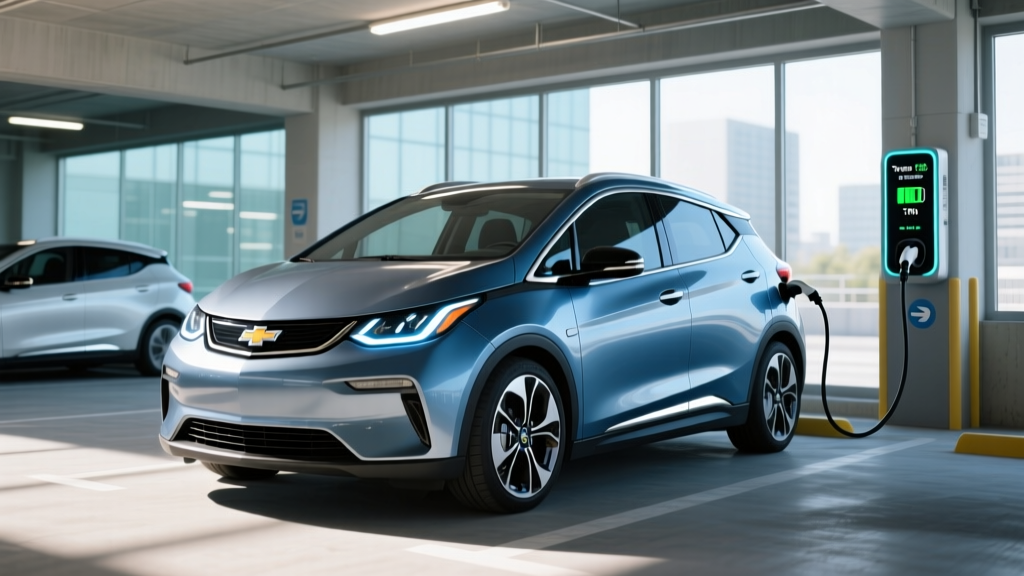
The 2025 Chevrolet Bolt EV returns after a brief hiatus with a refreshed battery, a CCS-to-NACS adapter solution, and an aggressive starting price that undercuts nearly every battery-electric competitor on the market. At an MSRP starting under $29,000, it remains the cheapest new EV with over 250 miles of EPA-rated range you can buy in the United States. But value pricing comes with trade-offs — notably slow DC fast charging and a compact footprint that limits cargo versatility. This review breaks down the real-world numbers that matter before you sign a purchase agreement.
| Spec | 2025 Chevrolet Bolt EV (2LT) |
|---|---|
| EPA Range | 259 miles |
| Battery (usable) | ~65 kWh, NMC lithium-ion |
| Peak DC Fast Charge | ~55 kW (CCS1 via adapter) |
| 10–80% DCFC Time | ~60 minutes (estimated) |
| Level 2 Home Charging | 11.5 kW onboard charger (~39 mi/hr) |
| Motor Output | 200 hp / 266 lb-ft torque |
| 0–60 mph | ~6.5 seconds |
| Drivetrain | FWD (single motor, front axle) |
| EPA Efficiency | 120 MPGe combined (28 kWh/100 mi) |
| Cargo Volume | 16.3 cu ft (rear seats up) / 54.6 cu ft (folded) |
| Rear Legroom | 36.0 inches |
| Base MSRP (2LT) | $28,785 (incl. destination) |
| Battery/Powertrain Warranty | 8 years / 100,000 miles |
Range and Efficiency: EPA vs. the Real World
The 2025 Bolt EV carries an EPA-estimated 259 miles of combined range on a full charge, a figure carried over from the prior-generation Ultium-refreshed pack. That number is derived from the EPA's standard city/highway test cycle and represents mixed driving.
- City / suburban commuting: 260–280 mi — regenerative braking recaptures energy in stop-and-go traffic, and the Bolt's efficiency shines at lower speeds.
- Sustained highway (70–75 mph): 210–235 mi — aerodynamic drag reduces efficiency; expect roughly 3.5–3.8 mi/kWh versus the EPA-rated ~4.2 mi/kWh combined.
- Cold weather (below 32°F): 170–200 mi — the Bolt EV lacks a dedicated heat pump, relying on resistive cabin heating that draws heavily from the traction battery. Preconditioning while plugged in mitigates some loss.
The Bolt's 65 kWh (usable) NMC (nickel manganese cobalt) battery pack sits low in the chassis. NMC chemistry offers higher energy density than LFP, which is how Chevy fits this much capacity into a subcompact platform. However, NMC cells are more sensitive to sustained high state-of-charge storage — daily charging to 80% and avoiding long-term 100% storage will maximize longevity.
Efficiency is rated at 120 MPGe combined, or approximately 28 kWh per 100 miles. That is competitive with the Hyundai Kona Electric (120 MPGe) and slightly behind the Nissan Leaf SV Plus (111 MPGe combined — lower is worse for kWh/100mi, but the Leaf is heavier). In practical terms, charging at the national average electricity rate of ~$0.16/kWh means roughly $4.48 per 100 miles — about one-third the cost of a 30-MPG gas car at $3.50/gallon.
Charging: The Bolt's Biggest Compromise
Charging speed is the single most important spec for road-trip viability, and this is where the 2025 Bolt EV shows its budget roots. The peak DC fast-charge rate tops out at approximately 55 kW via the CCS1 connector (with GM's provided NACS adapter for Tesla Supercharger access on non-Tesla stalls, or via the growing open Supercharger network).
| Charging Level | Power (kW) | Speed (miles of range added per hour) | Notes |
|---|---|---|---|
| Level 1 (120V household) | ~1.4 kW | ~4 mi/hr | Emergency/trickle only — ~65 hours for full charge |
| Level 2 (240V, 48A home charger) | 11.5 kW | ~39 mi/hr | Full charge in ~6 hours; ideal for overnight |
| DC Fast Charge (CCS1) | Peak ~55 kW | ~150–170 mi/hr at peak | 10–80% in ~60 min; tapers significantly above 60% |
To put the DC fast-charge limitation in context: a Hyundai Ioniq 5 or Tesla Model Y can accept 150–250 kW on compatible chargers, completing a 10–80% session in 18–25 minutes. The Bolt's ~60-minute 10–80% session means road trips require longer stops — plan for a meal break rather than a quick stretch. The charge curve also tapers hard above 60% state of charge, meaning the final 20% (60–80%) takes disproportionately longer than the initial ramp.
For home charging, the 11.5 kW onboard charger is actually a strong point. Many competitors in this price range (including older Nissan Leaf models) cap at 6.6 kW or 7.2 kW. With a properly installed Level 2 home charger on a 60-amp circuit (48-amp continuous), the Bolt replenishes its full battery in about six hours — plug in at 10 PM, wake up at 6 AM with a full pack every day.
Home charging installation cost: Expect $800–$2,000 for a quality Level 2 station (e.g., ChargePoint Home Flex or Emporia Level 2) plus electrician labor, assuming your panel has capacity. Older homes with 100-amp service may need a panel upgrade ($1,500–$3,000 additional). Always consult a licensed electrician for final specs.
Performance and Driving Dynamics
The 2025 Bolt EV uses a single permanent-magnet front motor producing 200 horsepower and 266 lb-ft of torque. That torque is available from 0 RPM, which gives the Bolt an eager feel around town — the 0–60 mph time of approximately 6.5 seconds is quicker than most gas-powered subcompacts and adequate for highway merging.
Driving dynamics are competent rather than thrilling. The low battery placement gives it a low center of gravity, and body roll is well-controlled for a tall hatchback. The steering is light and numb, which suits commuting but won't satisfy enthusiasts. One-pedal driving mode (activated via a steering-wheel paddle) provides aggressive regenerative braking that can bring the car to a full stop without touching the friction brakes — a feature regular EV owners quickly come to prefer.
Ride quality is firm over sharp bumps, a consequence of the heavy battery pack requiring stiffer spring rates. Road noise is noticeable at highway speeds — Chevy added some sound deadening for 2025, but the Bolt is not a quiet cruiser on par with the VW ID.4 or Ioniq 5.
Interior, Tech, and Daily Usability
The cabin uses hard plastics throughout — an expected compromise at this price point. The 10.2-inch touchscreen infotainment system runs GM's latest software with wireless Apple CarPlay and Android Auto, a built-in Wi-Fi hotspot, and native navigation on higher trims. The digital instrument cluster is an 8-inch display with customizable range and efficiency readouts.
Driver assistance (SAE Level 2): Chevy Safety Assist is standard and includes automatic emergency braking with pedestrian detection, lane-keep assist, following-distance indicator, and IntelliBeam automatic high beams. Adaptive cruise control is available on the 2LT trim. Note: these are Level 2 driver-assist features per SAE classification — the driver must remain fully engaged with hands on the wheel and eyes on the road at all times. This is not autonomous or "self-driving" capability.
Cargo space measures 16.3 cubic feet behind the rear seats, expanding to 54.6 cubic feet with the 60/40 split rear bench folded. That's adequate for weekly groceries and a couple of suitcases but falls short of crossover competitors like the Kona Electric (25.5 cu ft rear up) or the ID.4 (30.3 cu ft). Rear-seat legroom at 36.0 inches is tight for adults on longer trips — a six-foot passenger behind a six-foot driver will find knees brushing the seatback.
A notable omission: there is no front trunk (frunk). The space under the hood houses the motor and power electronics, so all cargo must go in the rear hatch area.
Pricing, Trims, and Federal Tax Credit Eligibility
The 2025 Bolt EV is offered in a single well-equipped trim:
| Trim | MSRP (incl. destination) | Est. Price After §30D Credit* |
|---|---|---|
| 2LT | $28,785 | ~$21,285 |
*Assumes full $7,500 federal credit eligibility. Actual credit depends on battery sourcing, buyer income, and tax liability. See IRS rules below.
Standard equipment on the 2LT includes heated front seats, heated steering wheel, wireless phone charging, a 6-speaker audio system, and 17-inch aluminum wheels. A fully loaded example with no options to add (the Bolt is not heavily customizable) lands right at that $28,785 figure — making it one of the most transparent pricing structures in the EV market.
Does the 2025 Bolt EV Qualify for the Federal §30D Tax Credit?
The Bolt EV is assembled in Orion Township, Michigan, which satisfies the North American final-assembly requirement. However, the full $7,500 federal tax credit under IRS §30D depends on several factors that shift periodically:
- MSRP cap: The Bolt EV's $28,785 price is well under the $55,000 cap for cars (and $80,000 for SUVs/trucks). ✅
- Buyer income limits: Modified AGI must not exceed $150,000 (single), $225,000 (head of household), or $300,000 (joint). Check your tax situation. ⚠️
- Critical minerals requirement ($3,750 portion): A percentage of critical minerals must be sourced from the US or a free-trade-agreement partner. This threshold increases annually — verify current-year compliance on the fueleconomy.gov credit lookup. ⚠️
- Battery component sourcing ($3,750 portion): Battery components must be manufactured or assembled in North America at specified thresholds. GM's Ultium-based supply chain has been ramping domestic production, but specific model-year compliance varies. ⚠️
- Tax liability: The credit is non-refundable — you must owe at least $7,500 in federal income tax to capture the full amount (or use the point-of-sale transfer option available from 2024 onward). ⚠️
Bottom line: The Bolt EV's price and assembly location make it a strong candidate, but the battery-sourcing requirements are the wildcard. Always verify current-year eligibility on fueleconomy.gov and consult a tax professional before relying on the credit in your purchase decision. The point-of-sale transfer option (where the dealer applies the credit as a price reduction at purchase) simplifies the process if the vehicle qualifies.
Ownership Costs and Warranty
Chevrolet covers the Bolt EV's battery and powertrain with an 8-year / 100,000-mile warranty, guaranteeing the battery will retain a minimum level of capacity (typically above 60% state of health, though exact retention threshold should be confirmed in your purchase documentation). The limited bumper-to-bumper warranty is 3 years / 36,000 miles.
Long-term battery degradation data from the prior-generation Bolt (which used a different LG-sourced pack) showed approximately 8–12% capacity loss over 100,000 miles under normal use. The 2025's Ultium-architecture NMC pack is newer, so multi-year data is still accumulating. Best practices for longevity: avoid frequent DC fast charging, don't store at 100% SoC for extended periods, and use preconditioning in cold weather.
Insurance costs for the Bolt EV tend to run 10–20% higher than a comparable gas-powered subcompact, which is typical for EVs due to higher repair costs after collision. Expect annual premiums in the $1,400–$1,800 range depending on your profile and state.
Maintenance is minimal: no oil changes, no spark plugs, no transmission fluid. Budget for cabin air filter replacement (~$30–$50 annually), brake fluid checks every 2 years, and tire rotation every 7,500 miles. The regenerative braking system significantly extends brake pad life — many EV owners report original pads lasting 80,000+ miles.
Pros, Cons, and Who Should Buy
- Lowest MSRP for a 250+ mile EV in the US market
- Strong 11.5 kW Level 2 onboard charger for fast home replenishment
- Eager torque delivery and one-pedal driving make it an excellent commuter
- Standard wireless CarPlay/Android Auto and Chevy Safety Assist suite
- US-assembled with strong tax-credit potential
- Low running costs — ~$4.50 per 100 miles on average electricity
- DC fast charging capped at ~55 kW — 60-minute 10–80% sessions limit road-trip practicality
- Tight rear-seat legroom and modest cargo space vs. crossover rivals
- No heat pump — significant cold-weather range loss
- Hard-plastic interior feels budget-tier
- No frunk (front trunk) for additional storage
- FWD only — no AWD option for snow-belt buyers
Who the 2025 Bolt EV Suits Best
Ideal buyer: A single person or couple with home Level 2 charging access who primarily commutes 30–80 miles round-trip and wants the lowest possible entry price into EV ownership. The Bolt excels as a daily driver that rarely needs public charging.
Look elsewhere if: You take frequent road trips over 200 miles (the slow DC charging becomes frustrating), you regularly carry rear-seat passengers, you live in a region with harsh winters and no garage charging, or you need AWD capability.
How It Compares to Key Competitors
| Spec | 2025 Chevy Bolt EV | 2025 Hyundai Kona Electric | 2025 Nissan Leaf SV Plus |
|---|---|---|---|
| EPA Range | 259 mi | 261 mi | 212 mi |
| Battery (usable) | ~65 kWh NMC | ~64.8 kWh NMC | ~60 kWh NMC |
| DC Fast Charge Peak | ~55 kW | ~100 kW | ~100 kW (CHAdeMO) |
| Level 2 Onboard | 11.5 kW | 10.9 kW | 7.2 kW |
| 0–60 mph | ~6.5 sec | ~7.5 sec | ~6.9 sec |
| Base MSRP | $28,785 | $34,085 | $37,285 |
| Connector | CCS1 (NACS adapter) | CCS1 (NACS adapter) | CHAdeMO |
The Kona Electric charges roughly twice as fast on DC and offers more cargo space, but costs $5,300 more. The Nissan Leaf uses the aging CHAdeMO connector (increasingly unsupported at new public stations) and has less range. The Bolt's value proposition is clear: if you can live with slow road-trip charging, nothing else touches its price-per-mile-of-range ratio.
Frequently Asked Questions
What is the real-world range of the 2025 Bolt EV?
The EPA rates it at 259 miles combined. In real-world highway driving at 70–75 mph, expect 210–235 miles. In freezing temperatures without a heat pump, range can drop to 170–200 miles. City commuters using regenerative braking often match or slightly exceed the EPA figure.
How fast does the Bolt EV charge at home and on the road?
At home on a Level 2 (240V, 48A) charger, the Bolt's 11.5 kW onboard charger adds about 39 miles of range per hour, fully recharging in roughly 6 hours. On DC fast chargers, it peaks at approximately 55 kW, taking about 60 minutes for a 10–80% session — significantly slower than competitors like the Ioniq 5 or Model Y.
Does the 2025 Bolt EV qualify for the $7,500 federal tax credit?
It is a strong candidate — it's assembled in Michigan (meeting North American final-assembly rules) and priced well under the MSRP cap. However, full $7,500 eligibility depends on meeting current-year critical-mineral and battery-component sourcing requirements under IRS §30D, plus buyer income limits. Always verify on fueleconomy.gov and consult a tax professional.
Is the 2025 Bolt EV worth buying over the Kona Electric or other rivals?
If your priority is lowest purchase price and you primarily drive locally with home charging, the Bolt is the clear value winner at $5,000+ less than comparable alternatives. If you road-trip frequently or need more cargo and passenger space, the Kona Electric's faster DC charging (100 kW) and roomier cabin justify its premium.
How long will the Bolt EV battery last?
Chevrolet warrants the battery for 8 years / 100,000 miles with a minimum capacity-retention threshold. Prior-generation Bolt data suggests 8–12% degradation over 100,000 miles with normal use. Following best practices (avoiding frequent DCFC, not storing at 100% SoC, preconditioning in cold) should maximize pack longevity well beyond 150,000 miles.
Can I use Tesla Superchargers with the 2025 Bolt EV?
GM has been opening Supercharger access to non-Tesla EVs via an authorized NACS adapter. The Bolt EV uses a CCS1 port, and GM provides or approves an adapter for Supercharger network access. Confirm adapter availability and compatibility with your dealer at purchase, as network access policies continue to evolve.