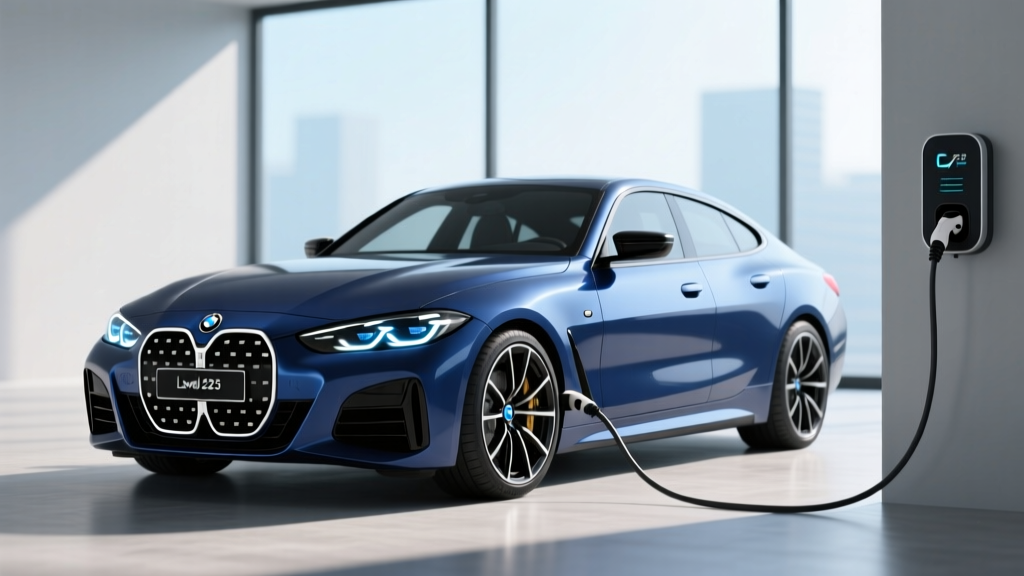
The BMW i4 has carved out a distinct niche in the luxury electric sedan segment by doing something most EVs don't attempt: hiding its electrified bones beneath a conventional, handsome Gran Coupe body. For the 2025 model year, BMW has refreshed the i4 with updated styling, improved infotainment running iDrive 8.5, and subtle efficiency tweaks. But beneath the surface, the core architecture — a modified CLAR platform shared with the gas-powered 4 Series — remains unchanged. That's both the i4's greatest strength and its most notable limitation.
After spending time with the 2025 lineup and cross-referencing EPA data on fueleconomy.gov, here's every number you need to make an informed purchase decision.
2025 BMW i4 Specs at a Glance
| Spec | eDrive40 | xDrive40 | M50 |
|---|---|---|---|
| Base MSRP | $52,200 | $56,200 | $67,300 |
| EPA Range | 307 mi (19" wheels) | 287 mi | 271 mi (19" wheels) |
| Battery (usable) | 81.5 kWh, NMC | 81.5 kWh, NMC | 81.5 kWh, NMC |
| Drivetrain | RWD, single motor | AWD, dual motor | AWD, dual motor |
| Horsepower | 335 hp | 396 hp | 536 hp |
| 0–60 mph | 5.5 sec | 4.6 sec | 3.7 sec |
| MPGe (combined) | 109 MPGe | 100 MPGe | 91 MPGe |
| Efficiency | 31 kWh/100mi | 34 kWh/100mi | 37 kWh/100mi |
| Max DC Charge Rate | 205 kW | 205 kW | 205 kW |
| 10–80% DCFC Time | ~31 min | ~31 min | ~31 min |
| Level 2 (AC) Rate | 11 kW (~37 mi/hr) | 11 kW (~37 mi/hr) | 11 kW (~37 mi/hr) |
| Battery Warranty | 8 yr / 100,000 mi | 8 yr / 100,000 mi | 8 yr / 100,000 mi |
Real-World Range: What the EPA Number Doesn't Tell You
EPA sticker: 307 miles (with 19-inch aero wheels). Expect ~255–275 miles in mixed real-world driving at highway speeds (70–80 mph). In cold weather (below 32°F), plan for 210–240 miles of usable range before you need to find a charger. Opting for the larger 20-inch wheels drops EPA range to approximately 270 miles, compressing real-world highway range to roughly 225–240 miles.
The eDrive40's 307-mile EPA figure is legitimate for city-heavy commuting where regenerative braking recaptures energy. On a 75-mph interstate run, energy consumption climbs to roughly 33–35 kWh/100mi, which trims effective range. The M50, with its 536-hp dual motors and stickier rubber, is thirstier — expect closer to 220–235 real-world highway miles from its 271-mile EPA rating.
BMW's NMC (nickel-manganese-cobalt) battery chemistry delivers strong energy density but is more temperature-sensitive than LFP. The i4's liquid thermal management system does a capable job of preconditioning the pack, but in sub-freezing conditions, you'll see 20–30% range reduction unless you precondition while plugged in — always recommended.
Charging Speed: 205 kW Peak, but Watch the Curve
| Charging Level | Power | Connector | Miles Added per Hour | Notes |
|---|---|---|---|---|
| Level 1 (120V) | ~1.4 kW | J1772 / NACS adapter | ~4–5 mi/hr | Emergency/trickle only |
| Level 2 (240V) | 11 kW (48A) | J1772 or NACS | ~37 mi/hr | Full charge in ~8.5 hours |
| DC Fast Charge | 205 kW peak | CCS1 (2025); NACS on newer builds | ~180 mi in 10 min (peak) | 10–80% in ~31 min |
The i4 peaks at 205 kW on DC fast charging, which is competitive but not class-leading. The Hyundai Ioniq 6, for comparison, sustains higher rates on its 800V architecture. The i4 runs on a 400V system, meaning the charge curve tapers noticeably above 60% State of Charge (SoC).
In real-world DCFC testing, the i4 sustains roughly 170–190 kW between 10–40% SoC, then gradually steps down to 120–130 kW through 60%, and drops to under 50 kW past 80%. That 10–80% session takes about 31 minutes at a 350 kW Electrify America or Tesla Supercharger (with NACS adapter) station — adequate for road trips but not the fastest in the luxury segment.
For home charging, the onboard 11 kW AC charger is a strong point. On a 48-amp Level 2 circuit (hardwired, 60-amp breaker), you'll add roughly 37 miles per hour, meaning a full overnight replenishment from 10% takes about 8–9 hours. Most owners charging nightly from 60–80% SoC will see a full battery every morning without issue. Note: a 240V/48A circuit requires a dedicated line — budget $800–$2,000 for professional installation depending on your panel's proximity to the garage.
Performance and Driving Dynamics
The eDrive40's single rear motor produces 335 hp and 298 lb-ft of torque, launching the i4 to 60 mph in 5.5 seconds. That's brisk enough for confident highway merging and genuinely fun on a back road, where the rear-drive chassis balance shines. BMW tuned the steering and suspension to feel like a proper 4 Series — communicative, taut, and engaging in a way many EVs sacrifice at the altar of efficiency.
The M50 is a different animal entirely. Its dual motors deliver 536 hp and 586 lb-ft, with a 3.7-second 0–60 time that rivals a Porsche Taycan 4S. The adaptive M suspension and M Sport brakes give it genuine sports-sedan credibility, though the 4,800-pound curb weight is felt during hard direction changes. The xDrive40 splits the difference with 396 hp, all-wheel-drive traction, and a 4.6-second sprint.
Regenerative braking offers adjustable levels via paddle shifters, including a BMW "adaptive" mode that uses radar and navigation data to modulate regen based on traffic and upcoming curves. It's one of the better-executed adaptive regen systems available, though it doesn't quite achieve true one-pedal driving at low speeds the way a Nissan Leaf or Chevrolet Bolt does.
Interior, Cargo, and Technology
The 2025 i4 runs iDrive 8.5 on BMW's Curved Display — a 12.3-inch instrument cluster merged with a 14.9-inch touchscreen running at sharp resolution. The interface is responsive and supports wireless Apple CarPlay and Android Auto, over-the-air updates, and a capable voice assistant. Physical climate controls have been largely absorbed into the touchscreen, which remains a point of contention for some buyers who prefer tactile knobs.
Passenger space is adequate but not generous — the Gran Coupe's sloping roofline cuts into rear headroom:
- Front headroom: 39.8 inches
- Rear headroom: 36.6 inches (tight for passengers over 6 feet)
- Front legroom: 42.2 inches
- Rear legroom: 34.5 inches (competitive with Audi e-tron GT, less than a Tesla Model 3)
- Cargo volume: 16.6 cu ft (trunk); 45.9 cu ft with rear seats folded
- Frunk: None — the CLAR platform's motor and electronics packaging leaves no front trunk
The lack of a frunk is a direct consequence of the i4's shared-platform approach. The cargo area itself is practical, with a wide hatchback opening (technically a liftback) that swallows more than a traditional sedan trunk.
Pricing, Trims, and Federal Tax Credit Eligibility
| Trim | Base MSRP | Destination | Total Before Credit | §30D Credit Eligible? |
|---|---|---|---|---|
| eDrive40 | $52,200 | $995 | $53,195 | See rules below |
| xDrive40 | $56,200 | $995 | $57,195 | See rules below |
| M50 | $67,300 | $995 | $68,295 | Yes (under sedan MSRP cap) |
The BMW i4 qualifies under the IRS §30D new clean vehicle credit rules for sedans, which cap MSRP eligibility at $55,000. That means the eDrive40 at $52,200 base is within the cap, but once you add destination and any packages, you risk exceeding it. The xDrive40 at $56,200 base is already above the sedan cap. The M50, despite its $67,300 sticker, benefits from an important nuance: if classified as an SUV by the IRS (based on certain trim configurations), the cap rises to $80,000 — but BMW sedans generally fall under the $55,000 limit. Always verify with your dealer and a tax professional before assuming eligibility.
- MSRP cap: Sedans ≤ $55,000; SUVs/pickups/vans ≤ $80,000
- Buyer income cap: AGI ≤ $150,000 (single), $225,000 (head of household), $300,000 (joint)
- Battery sourcing: Critical minerals and battery components must meet phased-in domestic/free-trade sourcing thresholds (increasing yearly through 2029)
- Assembly: Final assembly must occur in North America — the i4 is built in Munich, Germany, which disqualifies it from the §30D new vehicle credit
- Point-of-sale transfer: If eligible, the credit can be applied at purchase to reduce the sale price
Critical note: The 2025 BMW i4 is manufactured in Munich, Germany. Under current §30D rules, this means it does not qualify for the $7,500 federal new-vehicle tax credit because final assembly is not in North America. Check fueleconomy.gov for the latest eligible VIN list. A used i4 purchased from a dealer for ≤ $25,000 may qualify for the separate §25E used-vehicle credit (up to $4,000) if income and other criteria are met.
How the 2025 i4 Stacks Up Against Key Competitors
| Spec | BMW i4 eDrive40 | Tesla Model 3 LR | Hyundai Ioniq 6 SEL | Polestar 2 LR SM |
|---|---|---|---|---|
| Base MSRP | $52,200 | $42,490 | $42,450 | $49,900 |
| EPA Range | 307 mi | 363 mi | 361 mi | 276 mi |
| Battery (usable) | 81.5 kWh NMC | ~75 kWh NMC | 77.4 kWh NMC | 78 kWh NMC |
| DCFC Peak | 205 kW | 250 kW | 240 kW (800V) | 205 kW |
| 10–80% Time | ~31 min | ~25 min | ~18 min | ~30 min |
| 0–60 mph | 5.5 sec | 4.2 sec | 5.1 sec | 5.9 sec |
| NA Assembly (§30D) | No (Germany) | Yes (USA) | No (S. Korea) | No (China/EU) |
The i4 trades range and charging speed for build quality, driving refinement, and a more traditional luxury experience. The Model 3 Long Range delivers 56 more miles of range and charges faster — and qualifies for the federal credit. The Ioniq 6's 800V architecture gives it a decisive charging-speed advantage. But neither matches the i4's interior material quality, suspension tuning, or the quiet composure it delivers at 80 mph on the interstate.
Pros, Cons, and Who Should Buy the 2025 i4
- Excellent ride quality and steering feel — drives like a true BMW sports sedan
- Premium interior with high-quality materials, quiet cabin, and strong NVH isolation
- iDrive 8.5 is polished, responsive, and supports OTA updates
- 307-mile EPA range (eDrive40) is sufficient for most commutes and day trips
- 11 kW AC onboard charger enables fast Level 2 home replenishment
- Adaptive regenerative braking is well-calibrated and genuinely useful
- Hatchback/liftback cargo opening is more practical than a traditional trunk
- No frunk — a missed opportunity for an EV
- Built in Germany: does not qualify for the §30D federal new-vehicle tax credit
- 205 kW DCFC peak is middling; charge curve tapers heavily above 80%
- Rear headroom and legroom are tight for taller passengers
- Heavy reliance on touchscreen for climate and vehicle controls
- 400V architecture limits peak charge rate vs. 800V competitors
- Starting near $53K with no federal credit makes it expensive vs. Model 3 LR or Ioniq 6
- Choose the i4 if: You prioritize driving dynamics, interior refinement, and a traditional luxury badge over maximizing range-per-dollar. You have reliable home Level 2 charging and rarely road-trip more than 250 miles between stops. You don't need a frunk or maximum rear-seat space.
- Look elsewhere if: Federal tax credit eligibility is essential to your budget (consider the Tesla Model 3 Long Range). You frequently road-trip and want the fastest possible DC charging (Ioniq 6 or a Hyundai/Kia on E-GMP). You regularly carry rear-seat passengers over 6 feet tall.
Frequently Asked Questions
What is the real-world range of the 2025 BMW i4?
The eDrive40's EPA rating is 307 miles with 19-inch wheels. In real-world mixed driving at highway speeds, expect 255–275 miles. In cold weather below freezing, plan for 210–240 miles. The M50 delivers roughly 220–235 real-world highway miles from its 271-mile EPA rating.
How fast does the 2025 BMW i4 charge?
On DC fast charging, the i4 peaks at 205 kW and charges from 10–80% in approximately 31 minutes. At home on a 240V Level 2 charger (48 amps), the 11 kW onboard charger adds roughly 37 miles per hour, fully replenishing the 81.5 kWh battery in about 8.5 hours.
Does the 2025 BMW i4 qualify for the federal EV tax credit?
No. The 2025 i4 is assembled in Munich, Germany, which disqualifies it from the IRS §30D new clean vehicle credit that requires North American final assembly. A used i4 may qualify for the §25E used-EV credit (up to $4,000) if purchased from a dealer for $25,000 or less and buyer income limits are met. Always verify current rules at irs.gov.
Is the BMW i4 worth buying over a Tesla Model 3 or Hyundai Ioniq 6?
It depends on priorities. The i4 offers superior interior quality, ride refinement, and driving engagement. The Model 3 Long Range provides more range (363 mi), faster charging, Supercharger network access, and federal tax credit eligibility at a lower price. The Ioniq 6 charges significantly faster thanks to 800V architecture. If luxury feel and BMW driving DNA matter most, the i4 justifies its premium. If value and charging speed lead your list, look to Tesla or Hyundai.
What battery chemistry does the BMW i4 use, and how long will it last?
The i4 uses an NMC (nickel-manganese-cobalt) lithium-ion battery with 81.5 kWh of usable capacity. BMW warranties the battery for 8 years or 100,000 miles against capacity loss below 70% of original. NMC batteries typically retain 85–90% capacity after 100,000 miles under normal use. To maximize longevity, avoid routinely charging to 100% or letting the pack sit at very low SoC in extreme heat.
Does the i4 have a frunk (front trunk)?
No. The i4 is built on BMW's CLAR platform shared with combustion 4 Series models, and the front compartment houses electric drive components and power electronics. All cargo goes in the rear liftback area: 16.6 cu ft, expanding to 45.9 cu ft with seats folded.