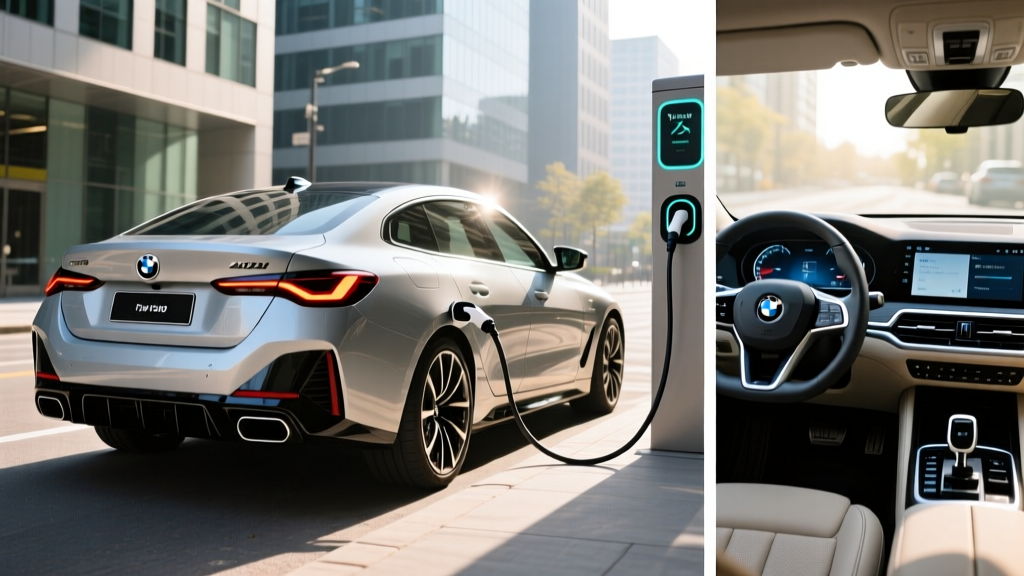
The BMW i4 M50 occupies a rare position in the electric vehicle market: a luxury sport sedan that prioritizes driving dynamics over maximum range. Built on BMW's flexible CLAR platform alongside its gasoline-powered 4 Series Gran Coupe siblings, the i4 M50 is the performance flagship of the i4 lineup, trading some efficiency for all-wheel-drive grip and dual-motor thrust. For 2025, BMW refreshed the i4 with updated styling, a revised Curved Display running iDrive 8.5, and minor equipment shuffles — but the powertrain and 81.5 kWh battery remain carryover. The question for buyers is whether 536 horsepower and BMW's chassis tuning justify an EPA-estimated 245 miles of range in a segment where rivals like the Tesla Model 3 Performance and Hyundai Ioniq 6 push past 300 miles.
Range, Efficiency, and the Real-World Reality Check
The 2025 BMW i4 M50 carries an EPA-estimated range of 245 miles on its standard 19-inch wheels. Opt for the available 20-inch M wheels and that figure drops, as larger wheels with stickier summer rubber increase rolling resistance. Efficiency is rated at 97 MPGe combined, which translates to roughly 34 kWh per 100 miles — respectable for a 4,800-pound dual-motor AWD performance sedan, but noticeably thirstier than single-motor rivals.
EPA Sticker: 245 miles (eDrive40: 301 mi)
Highway driving (75 mph sustained): Expect ~210–225 miles
Cold weather (below 32°F, cabin heat on): Expect ~175–195 miles
Mixed commuting (city + suburban regen): ~240–255 miles possible
The i4 M50's heat pump helps mitigate winter losses compared to EVs without one, but the dual-motor drivetrain and heavy curb weight work against it on long highway runs. Drivers who primarily commute in moderate climates will see numbers close to the EPA sticker; road-trippers in winter should plan charging stops around a 180-mile practical range.
The battery pack is an 81.5 kWh usable (approximately 83.9 kWh gross) lithium-ion unit using NMC (nickel-manganese-cobalt) chemistry. BMW packages the cells low in the chassis floor for a low center of gravity, though the CLAR platform's shared architecture means the battery isn't as structurally integrated as a dedicated EV skateboard like Hyundai's E-GMP or Tesla's structural pack.
Charging Speed: DC Fast, Level 2, and the Charge Curve
The i4 M50 supports DC fast charging at a peak rate of 205 kW via its CCS1 connector. BMW quotes a 10–80% charge time of approximately 31 minutes under ideal conditions. In practice, the charge curve is reasonably aggressive through the mid-SoC range — you'll see sustained rates above 150 kW between roughly 20% and 55% — but taper becomes noticeable past 70%, and the final push from 80–100% adds significant time. Plan to unplug at 80% at public chargers to keep stops efficient.
| Charging Level | Max Power | Speed / Time | Connector |
|---|---|---|---|
| Level 1 (120V household) | ~1.4 kW | ~3–4 mi/hr | J1772 |
| Level 2 (240V home/public) | 11 kW (48A) | ~25–28 mi/hr; full charge ~8.5 hrs | J1772 |
| DC Fast Charge | 205 kW peak | 10–80% in ~31 min | CCS1 |
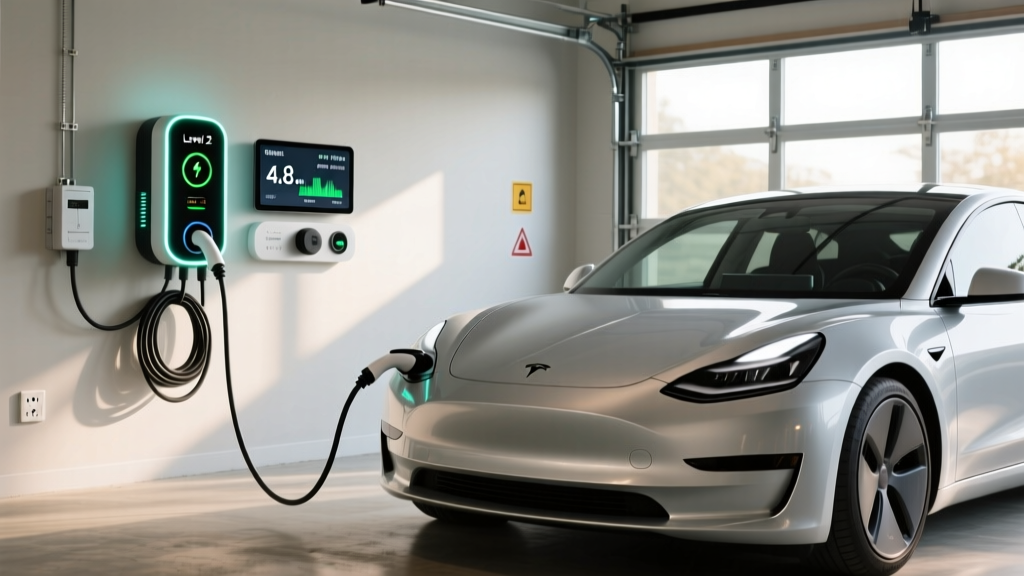
For home charging, the i4 M50's onboard charger accepts up to 11 kW on a 48-amp Level 2 circuit (hardwired or NEMA 14-50 with appropriate derating). This means a full overnight charge from near-empty takes about 8–9 hours — easily handled during sleep hours. BMW includes the Flexible Fast Charger cable with the vehicle, which handles both Level 1 and Level 2 (at reduced amperage on a standard 240V outlet). For the full 11 kW rate, a dedicated wallbox like the BMW Wallbox or a third-party unit (ChargePoint Home Flex, Emporia Level 2) on a 60-amp circuit is recommended. Budget $800–$2,000 for professional installation depending on your panel capacity and conduit run, per industry installation estimates.
Performance: 536 HP, Dual Motors, and BMW's Chassis DNA
The M50 variant pairs a rear-mounted 335-hp motor with a front-mounted 255-hp motor for a combined system output of 536 horsepower and 586 lb-ft of torque. BMW quotes a 0–60 mph time of 3.7 seconds, and independent testing has confirmed figures in the 3.5–3.8 second range depending on surface and launch conditions. The xDrive all-wheel-drive system is rear-biased, and BMW's M division tuning is evident in the steering weight, adaptive damping, and the way torque vectoring manages the car's substantial 4,863-pound curb weight through corners.
Compared to the single-motor i4 eDrive40 (335 hp, 0–60 in 5.5 seconds, RWD), the M50 trades roughly 56 miles of EPA range for nearly 200 additional horsepower and all-weather capability. The i4 M50 also includes M Sport brakes, an M-specific adaptive suspension, and a simulated engine sound (IconicSounds Electric, composed by Hans Zimmer) that can be toggled off for silent cruising.
| Spec | Value |
|---|---|
| EPA Range | 245 miles (19" wheels) |
| Battery (usable / gross) | 81.5 kWh / ~83.9 kWh, NMC |
| Drivetrain | Dual-motor AWD (xDrive) |
| Horsepower / Torque | 536 hp / 586 lb-ft |
| 0–60 mph | 3.7 seconds |
| Efficiency | 97 MPGe combined / ~34 kWh/100mi |
| DC Fast Charge (peak) | 205 kW, 10–80% in ~31 min |
| Level 2 Charge Rate | 11 kW (48A) |
| Cargo Volume | 16.6 cu ft (trunk), 45.6 cu ft (seats folded) |
| Rear Legroom | 33.1 inches |
| Curb Weight | ~4,863 lbs |
| Base MSRP | $69,700 (incl. destination) |
| Battery/Powertrain Warranty | 8 yr / 100,000 mi |
Interior, Tech, and Daily Livability
The 2025 i4's cabin is anchored by BMW's Curved Display, which merges a 12.3-inch digital instrument cluster and a 14.9-inch infotainment touchscreen under a single glass panel running iDrive 8.5. The system supports wireless Apple CarPlay and Android Auto, over-the-air updates, and BMW's Intelligent Personal Assistant voice control. A head-up display, Harman Kardon surround sound, and a heated steering wheel are included or available depending on packages.
The Gran Coupe's liftback design gives it a practical advantage over conventional sedans: the trunk opens to reveal 16.6 cubic feet of cargo space — more than a 3 Series sedan — expanding to 45.6 cu ft with the 40/20/40 rear seats folded. There's no frunk; the CLAR platform's front end houses auxiliary electronics and the drive motor.
On the driver-assistance front, the i4 M50 comes with Active Driving Assistant, which includes adaptive cruise control with stop-and-go, lane-keeping assist, and front collision warning with automatic emergency braking. This is an SAE Level 2 system — the driver must remain engaged and supervise at all times. BMW's optional Driving Assistance Professional Package adds Highway Assistant (hands-off steering at up to 85 mph on divided highways, with eyes-off capability under specific conditions, monitored by a cabin camera). This is still Level 2, not autonomous driving.
Notable drawbacks: the rear seat is snug for adults over six feet tall (33.1 inches of legroom trails rivals like the Hyundai Ioniq 6), and the center rear passenger contends with a prominent floor hump — a CLAR-platform compromise from sharing architecture with ICE models. The regenerative braking feel in adaptive mode can be inconsistent compared to the predictable one-pedal driving available in maximum-regen mode.
Pricing, Trims, and Federal Tax Credit Eligibility
The 2025 BMW i4 M50 starts at $69,700 including destination. Our test vehicle, equipped with the Premium Package, Driving Assistance Professional, M Sport Package Pro, and 20-inch wheels, landed at approximately $78,400.
| Trim | MSRP | §30D Credit Eligible? |
|---|---|---|
| i4 eDrive40 | $57,900 | No — assembled in Germany; battery sourcing does not meet §30D critical-mineral requirements |
| i4 M50 | $69,700 | No — same sourcing/assembly limitations |
Tax credit reality: Under current IRS §30D rules, the i4 M50 does not qualify for the federal $7,500 new clean vehicle credit. The vehicle is assembled in Munich, Germany, and its battery components and critical minerals do not meet the domestic-sourcing thresholds required by the Inflation Reduction Act. Additionally, the $55,000 MSRP cap for sedans (the i4 is classified as a sedan) would disqualify the M50 on price alone. Buyers may find relief through state or local incentives, BMW's occasional lease bonuses (which can pass through the commercial clean vehicle credit as a lease rebate), or dealer discounts — but the federal purchase credit is off the table. Always consult a tax professional for your specific situation.
Pros, Cons, and the Verdict
Pros
- Class-leading driving dynamics and steering feel among electric sedans
- 536 hp with composed AWD delivery — fast without being tail-happy
- Liftback cargo versatility (16.6 cu ft) exceeds traditional sedans
- 11 kW onboard AC charger — faster home charging than many rivals limited to 7.2–9.6 kW
- iDrive 8.5 with physical iDrive controller — less touchscreen-dependent than competitors
- Strong build quality and cabin materials at the price point
Cons
- 245-mile EPA range trails key rivals (Ioniq 6: 361 mi, Model 3 LR: 341 mi)
- No federal §30D tax credit eligibility — assembled in Germany, battery sourcing non-compliant
- Rear seat legroom (33.1") is tight for adults; center floor hump from shared platform
- No frunk — lost opportunity for additional storage
- Adaptive regen can feel inconsistent vs. dedicated EV platforms with blended braking
- 205 kW peak DC charge rate is adequate but lags 800V rivals at 250–350 kW
Who Should Buy the 2025 BMW i4 M50?
The i4 M50 is best suited for the driving-enthusiast commuter who values chassis feedback, premium cabin quality, and BMW brand cachet over maximum range. If your daily routine involves a sub-100-mile round-trip commute with home Level 2 charging, and you take occasional weekend drives on back roads, this car delivers an experience that few EVs at this price can match dynamically. It also works as a luxury daily driver in four-season climates where AWD traction matters.
It is not the right choice if: you frequently road-trip more than 250 miles between charging stops (the range and charging speed will frustrate), you need generous rear-seat space for adults, or you're counting on the $7,500 federal tax credit to make the math work. Families needing three-across rear seating or frequent airport cargo runs should look at the iX or a crossover. Budget-conscious buyers who prioritize range-per-dollar will find the Hyundai Ioniq 6 or Tesla Model 3 Long Range far more practical.
Competitor Check: i4 M50 vs. the Field
| Spec | BMW i4 M50 | Tesla Model 3 Perf. | Hyundai Ioniq 6 LTD |
|---|---|---|---|
| EPA Range | 245 mi | 315 mi | 270 mi (20" wheels) |
| 0–60 mph | 3.7 sec | 2.9 sec | 5.1 sec |
| HP | 536 | 510 | 320 |
| DC Fast Peak | 205 kW | 250 kW | 240 kW (800V) |
| Base MSRP | $69,700 | $54,990 | $52,600 |
| §30D Credit | No | Partial/Variable | No (Korea-built) |
The Tesla is faster, cheaper, and goes farther — but can't match BMW's interior quality or steering feel. The Ioniq 6 is the efficiency and value champion with its 800V architecture enabling 10–80% in 18 minutes, but it's a grand tourer, not a sport sedan. The i4 M50's lane is narrow but deep: premium driving experience, moderate range, high price.
Warranty and Long-Term Ownership
BMW covers the i4 M50's high-voltage battery and electric drivetrain for 8 years or 100,000 miles, whichever comes first — the industry standard mandated for EV components. The battery warranty guarantees against capacity loss below 70% of original capacity during the coverage period. The basic vehicle warranty runs 4 years/50,000 miles, and BMW includes 3 years/36,000 miles of complimentary scheduled maintenance (which for an EV is minimal — cabin air filter, brake fluid, tire rotation).
NMC batteries in vehicles with active liquid thermal management (like the i4) have shown degradation rates of approximately 8–12% over the first 100,000 miles based on fleet data from similar BMW EV platforms. BMW's battery management system includes a buffer above and below the stated 81.5 kWh usable capacity to protect longevity. Expecting 85–90% state of health at 100,000 miles is reasonable under normal use patterns (avoiding habitual 100% charges and DC fast-charge-only routines).
Frequently Asked Questions
What is the real-world range of the 2025 BMW i4 M50?
In mixed driving at moderate temperatures (50–75°F), owners report 225–250 miles on a full charge. Sustained highway driving at 75+ mph drops this to roughly 210–225 miles. In freezing weather with cabin heating, plan for 175–195 miles. The heat pump helps, but the dual-motor drivetrain's energy consumption is the primary range limiter compared to the single-motor eDrive40.
How fast does the i4 M50 charge at home and on the road?
On a 48-amp Level 2 home charger (240V), the i4 M50 accepts up to 11 kW, adding roughly 25–28 miles of range per hour and fully recharging in about 8.5 hours. On a DC fast charger, it peaks at 205 kW and charges from 10–80% in approximately 31 minutes. The charge curve tapers noticeably above 70% SoC, so limiting fast-charge sessions to 80% keeps stops efficient.
Does the 2025 BMW i4 M50 qualify for the federal EV tax credit?
No. Under current IRS §30D rules, the i4 M50 fails multiple eligibility criteria: it is assembled in Germany (not North America), its battery critical minerals and components do not meet domestic-sourcing thresholds, and its $69,700 MSRP exceeds the $55,000 sedan cap. However, leasing through BMW Financial may allow the dealer to pass through the commercial clean vehicle credit (§45W) as a lease incentive — check current BMW lease offers for details. Always verify with a tax professional and the IRS clean vehicle credit page.
Is the BMW i4 M50 worth buying over a Tesla Model 3 Performance?
It depends on your priorities. If driving dynamics, cabin materials, physical controls, and brand prestige matter more than range-per-dollar, the i4 M50 delivers an experience the Model 3 can't match. If you want maximum range, Supercharger network access, faster straight-line acceleration, and a lower price, the Tesla wins on paper. Test-drive both — the steering feel difference alone is a deciding factor for many buyers.
What are the biggest drawbacks of the i4 M50?
The three most-cited owner complaints: (1) range is modest for the price — 245 miles EPA means frequent stops on road trips, (2) no federal tax credit makes the effective cost higher than rivals, and (3) the rear seat is tight for adults, with a floor hump that compromises the center position. The lack of a frunk also means less total storage than dedicated-EV platforms offer.
Does the i4 M50 have one-pedal driving?
Yes, but with a caveat. BMW offers a maximum-regen mode (B mode) that enables one-pedal driving in most city and suburban conditions. However, the car does not come to a complete stop and hold without brake application in all scenarios — you may need to use the brake pedal at very low speeds or on inclines. Adaptive regen mode modulates braking based on traffic and navigation data but can feel less predictable than B mode.
Sources: EPA Fuel Economy — 2025 BMW i4, BMW Group Press Club USA, IRS §30D Clean Vehicle Credit. Specifications reflect 2025 model year as published. Pricing and credit eligibility subject to change; verify with dealer and tax professional.