2025 BMW i4 Electric Vehicle Review: The Electric Gran Coupé That Punches Above Its Weight
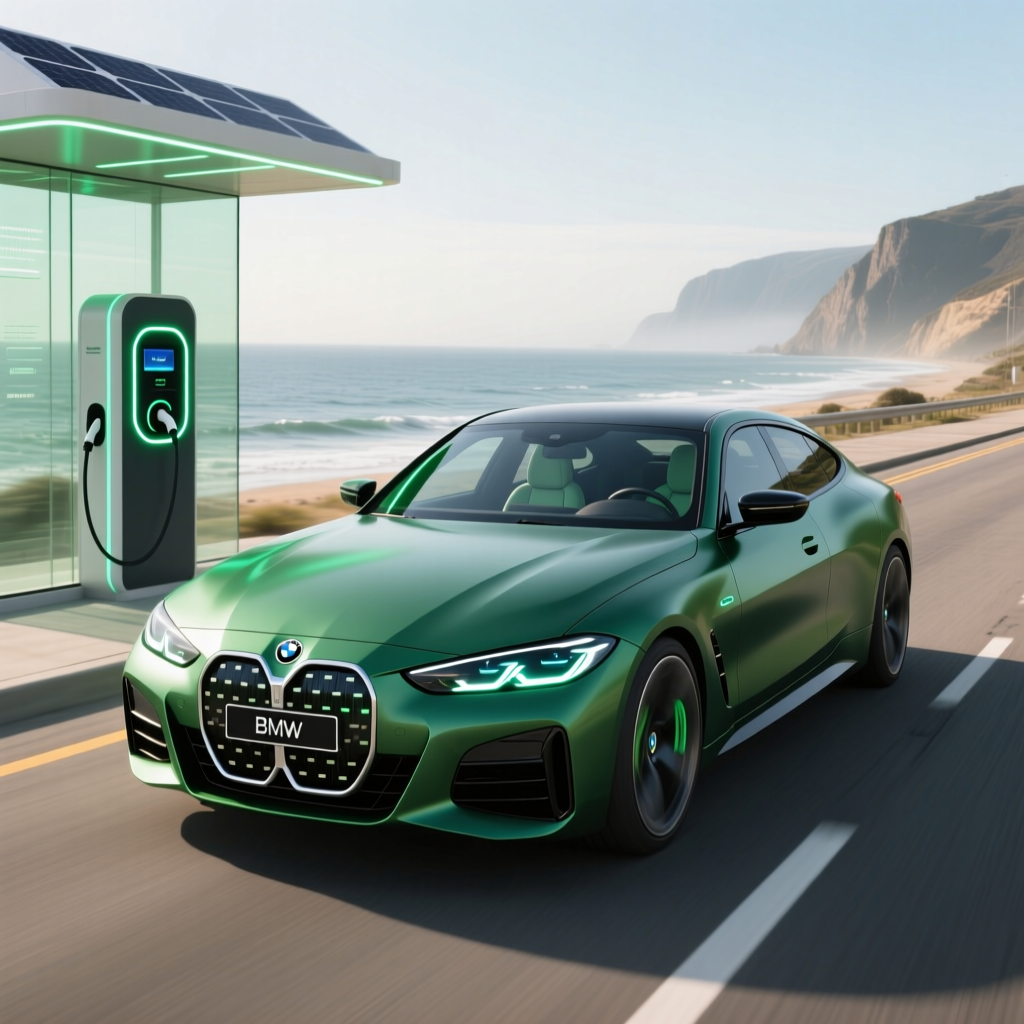
The BMW i4 has established itself as one of the most compelling electric vehicles on the market, blending the brand's legendary driving dynamics with zero-emission propulsion. Built on BMW's flexible CLAR platform, the i4 is essentially the electric twin of the 4 Series Gran Coupé — and that's precisely what makes it so appealing. It doesn't try to reinvent the wheel. Instead, it delivers a familiar, premium driving experience with a battery-electric heart.
In this comprehensive review, we examine every facet of the 2025 BMW i4 lineup — from the entry-level eDrive40 to the performance-oriented M50 — covering real-world range, charging capabilities, interior technology, driving dynamics, and total ownership costs. Whether you're cross-shopping against the Tesla Model 3, Hyundai Ioniq 6, or the best luxury electric sedans, this review will help you decide if the i4 deserves a spot in your garage.
For a broader look at how the i4 stacks up, check out our BMW i4 vs Tesla Model 3 comparison and our curated list of the best electric vehicles available today.
Vehicle Overview: The BMW i4 Lineup at a Glance
The 2025 BMW i4 is offered in three primary trims, each catering to different priorities — efficiency, balance, or outright performance:
- i4 eDrive35: The accessible entry point with single-motor rear-wheel drive, offering a compelling blend of range and value.
- i4 eDrive40: The sweet spot of the lineup, delivering extended range with a more powerful single rear motor.
- i4 M50: The dual-motor, all-wheel-drive performance variant tuned by BMW's M division, producing up to 536 horsepower.
All variants share the same sleek Gran Coupé body style with a fastback roofline, a spacious liftgate, and BMW's latest iDrive infotainment architecture. The i4 rides on a 112.2-inch wheelbase and measures 188.3 inches overall, placing it squarely in the compact luxury sedan segment. BMW has equipped the i4 with adaptive M suspension across most trims, ensuring that ride quality and handling remain a priority regardless of which variant you choose.
Under the skin, the i4 uses BMW's fifth-generation eDrive technology, featuring electrically excited synchronous motors (EESM) rather than permanent magnet designs. This engineering choice eliminates the need for rare-earth materials and allows BMW to precisely control motor output. The battery pack is a lithium-ion unit with a net usable capacity that varies by trim — approximately 70.2 kWh in the eDrive35 and 81.5 kWh in the eDrive40 and M50.
Real-World Range and Efficiency
Range anxiety remains one of the biggest barriers to EV adoption, and the BMW i4 addresses it head-on with competitive EPA-estimated ratings across the lineup. According to EPA ratings, the i4 delivers the following range estimates:
- i4 eDrive35: Up to 263 miles (EPA estimated) with 18-inch wheels; slightly less with larger wheel options.
- i4 eDrive40: Up to 307 miles (EPA estimated) with 19-inch wheels — the range champion of the family.
- i4 M50: Up to 271 miles (EPA estimated) with 19-inch wheels, trading some efficiency for substantially more power.
Independent testing by outlets such as Edmunds has shown that the i4 eDrive40 can exceed its EPA rating in mixed driving conditions, achieving approximately 318 miles on a full charge in moderate temperatures. This is a testament to BMW's efficient powertrain calibration and aerodynamic design, which achieves a drag coefficient of just 0.25.
In real-world highway testing at sustained speeds of 70–75 mph, expect range to drop to roughly 240–270 miles depending on ambient temperature, tire choice, and driving style. Cold weather performance is aided by a standard heat pump system, which helps preserve battery capacity during winter months — an advantage over competitors that charge extra for this feature.
Efficiency ratings hover around 3.0–3.5 miles per kWh depending on the variant, placing the i4 in the upper tier of luxury electric sedans. For comparison, the Tesla Model 3 Long Range achieves slightly better efficiency thanks to its lighter curb weight, while the Mercedes-Benz EQB and Audi Q4 e-tron fall behind in this metric. If range is your top priority, explore our longest-range electric vehicles roundup.
Charging Speed and Infrastructure
The BMW i4 supports DC fast charging at up to 205 kW for the eDrive40 and M50 variants, while the eDrive35 peaks at approximately 180 kW. BMW claims a 10–80% state of charge can be achieved in about 31 minutes under optimal conditions at a compatible charger. In practice, charging speeds taper significantly past 80%, as is typical with lithium-ion battery management systems.
On Level 2 AC charging, the i4 supports up to 11 kW via its onboard charger, meaning a full charge from empty takes roughly 8–9.5 hours depending on the battery size. This makes the i4 well-suited for overnight home charging on a 240-volt wallbox installation.
One area where the i4 falls short of some competitors is its lack of an 800-volt architecture. Vehicles like the Hyundai Ioniq 6 and Porsche Taycan use 800V systems that enable faster peak charging speeds — the Ioniq 6, for instance, can add 100 miles of range in under five minutes at a 350 kW charger. The i4's 400V system is perfectly adequate for most use cases but doesn't quite match the bleeding-edge charging performance of those rivals.
BMW provides new i4 owners with complimentary charging through partnerships with networks like Electrify America, typically offering two years of free 30-minute charging sessions. The built-in navigation system includes intelligent route planning that preconditions the battery for optimal charging speeds when a DC fast charger is set as the destination — a feature that significantly improves real-world charging experiences.
The i4 uses the CCS1 charging standard in North America, with a NACS adapter available for access to Tesla's Supercharger network. This adapter compatibility is increasingly important as the industry shifts toward the North American Charging Standard. Learn more about the charging landscape in our guide to EV charging infrastructure and home charging setups.
Interior Design, Comfort, and Technology
Step inside the BMW i4 and you're greeted by a cabin that balances modern minimalism with the brand's traditional driver-focused layout. The centerpiece is BMW's Curved Display, which combines a 12.3-inch digital instrument cluster and a 14.9-inch touchscreen into a single, elegantly curved glass panel oriented toward the driver.
The i4 runs BMW's iDrive 8.5 operating system, which brings a redesigned home screen with widget-based customization, improved voice recognition via the BMW Intelligent Personal Assistant, and wireless Apple CarPlay and Android Auto integration. The system is responsive, visually polished, and logically organized, though some users may miss the physical iDrive controller knob that has been reduced in prominence in favor of touch inputs.
Material quality is where the i4 truly distinguishes itself from mainstream EV competitors. Soft-touch surfaces, available Vernasca leather upholstery, open-pore wood trim, and aluminum accents create an ambiance that feels genuinely premium. The optional M Sport package adds sport seats with enhanced bolstering, an M leather steering wheel, and unique interior trim elements.
Front-seat comfort is excellent, with power-adjustable seats offering heating as standard and ventilation as an option. Rear-seat space is adequate for two adults on shorter trips, though the sloping roofline does compromise headroom for taller passengers. The 47 cubic feet of cargo space with the rear seats folded is generous for the segment, thanks to the liftback design — significantly more than a traditional trunk would offer.
The Harman Kardon surround sound system, available as part of the Premium package, delivers rich, detailed audio across 17 speakers. For audiophiles, this is one of the better factory sound systems in the luxury EV segment. Ambient lighting with over 40 color combinations adds to the cabin's upscale atmosphere during evening drives.
On the driver-assistance front, the i4 comes standard with BMW's Active Driving Assistant, which includes forward collision warning, automatic emergency braking, lane departure warning, and blind-spot monitoring. The optional Driving Assistance Professional package adds adaptive cruise control with stop-and-go functionality, lane-keeping assist, and evasive steering aid — bringing the i4 close to Level 2+ autonomy. Explore more tech-forward picks in our best electric SUVs and sedans list.
Driving Dynamics and Performance
This is where the BMW i4 truly earns its roundel badge. While many EVs prioritize straight-line acceleration over handling finesse, the i4 delivers the kind of balanced, engaging driving experience that has defined BMW for decades.
i4 eDrive35: With 281 horsepower and 295 lb-ft of torque from its single rear motor, the eDrive35 sprints from 0 to 60 mph in approximately 5.8 seconds. It's quick enough for confident highway merging and daily driving, though it lacks the urgency of its more powerful siblings.
i4 eDrive40: Producing 335 horsepower and 317 lb-ft of torque, the eDrive40 reaches 60 mph in about 5.5 seconds. The additional power is noticeable, particularly in the mid-range, and the single-motor rear-drive layout preserves the classic BMW driving feel with neutral handling and progressive breakaway characteristics.
i4 M50: The performance flagship generates 536 horsepower and 586 lb-ft of torque via its dual-motor all-wheel-drive system. BMW claims a 0–60 mph time of just 3.7 seconds — a figure that independent testing has confirmed and occasionally beaten. The M50 features M-specific suspension tuning, M Sport brakes, and a synthetic engine sound called IconicSounds Electric, composed in collaboration with film score legend Hans Zimmer.
Ride quality across the lineup is impressive. The adaptive M suspension absorbs road imperfections with composure, while maintaining enough firmness to communicate road surface changes to the driver. The steering is precise and well-weighted, though it lacks some of the feedback found in BMW's traditional hydraulic systems. The low center of gravity — courtesy of the floor-mounted battery pack — keeps body roll minimal through corners, and the i4 feels planted and confident at speed.
The i4 M50, in particular, is a revelation. It manages to be both a comfortable daily driver and a genuinely thrilling performance machine. The all-wheel-drive system provides excellent traction in adverse weather, and the M-tuned chassis delivers sharp turn-in and balanced handling that invites spirited driving on back roads. For more performance-oriented options, see our fastest electric vehicles comparison.
Regenerative braking is adjustable through multiple modes, including an adaptive setting that uses radar and navigation data to modulate regen intensity based on traffic and upcoming road conditions. This one-pedal driving capability is smooth and intuitive, reducing brake wear and improving efficiency in stop-and-go traffic.
Ownership Costs and Value Proposition
The BMW i4's pricing positions it competitively within the luxury electric sedan segment. Starting prices (before destination charges and incentives) are approximately:
- i4 eDrive35: Starting around $52,200
- i4 eDrive40: Starting around $57,900
- i4 M50: Starting around $67,900
These prices place the i4 in direct competition with the Tesla Model 3 Performance, the Polestar 2, and the Genesis Electrified G80. However, the i4's premium interior materials and BMW brand cachet justify a slight premium over some rivals.
Federal tax incentives may apply depending on current legislation and your personal tax situation. Many states also offer additional rebates, HOV lane access, and reduced registration fees for electric vehicles. Be sure to consult a tax professional and check your state's EV incentive programs for the most current information.
Maintenance costs for the i4 are significantly lower than those of a comparable gasoline-powered 4 Series. Without an internal combustion engine, there are no oil changes, spark plugs, timing belts, or exhaust system repairs to worry about. Brake pad life is extended thanks to regenerative braking, with many EV owners reporting brake pad longevity exceeding 100,000 miles.
BMW provides a 4-year/50,000-mile limited warranty and an 8-year/100,000-mile battery warranty, which covers the high-voltage battery against defects and excessive capacity degradation (below 70% of original capacity). This battery warranty is in line with industry standards and provides peace of mind for long-term ownership.
Insurance costs tend to be slightly higher than comparable gasoline vehicles due to the i4's higher purchase price and the specialized nature of EV repairs. However, as EV adoption grows and repair networks expand, insurance premiums are expected to normalize. Shopping around with EV-friendly insurers can yield meaningful savings.
Charging costs vary widely depending on your electricity rates and charging habits. Home charging at an average rate of $0.14 per kWh yields a cost of approximately $11–$12 for a full charge on the eDrive40 — a fraction of what a gasoline equivalent would cost. Public DC fast charging is more expensive, typically ranging from $0.30 to $0.50 per kWh, but still often undercuts gasoline on a per-mile basis. For a full breakdown, read our guide on total EV ownership costs.
Key Specifications Comparison Table
| Specification | i4 eDrive35 | i4 eDrive40 | i4 M50 |
|---|---|---|---|
| Drivetrain | Rear-Wheel Drive | Rear-Wheel Drive | All-Wheel Drive (xDrive) |
| Motor Type | Single EESM | Single EESM | Dual EESM |
| Horsepower | 281 hp | 335 hp | 536 hp |
| Torque | 295 lb-ft | 317 lb-ft | 586 lb-ft |
| 0–60 mph | 5.8 seconds | 5.5 seconds | 3.7 seconds |
| Battery (Net Usable) | 70.2 kWh | 81.5 kWh | 81.5 kWh |
| EPA Range (Est.) | Up to 263 miles | Up to 307 miles | Up to 271 miles |
| Max DC Fast Charge | 180 kW | 205 kW | 205 kW |
| 10–80% Charge Time | ~32 minutes | ~31 minutes | ~31 minutes |
| AC Charging (Level 2) | Up to 11 kW | Up to 11 kW | Up to 11 kW |
| Starting Price (MSRP) | ~$52,200 | ~$57,900 | ~$67,900 |
| Cargo Volume (rear seats folded) | 47 cu ft | 47 cu ft | 47 cu ft |
| Drag Coefficient | 0.25 | 0.25 | 0.26 |
| Battery Warranty | 8 yr / 100,000 mi | 8 yr / 100,000 mi | 8 yr / 100,000 mi |
Pros and Cons
Pros
- Exceptional driving dynamics: The i4 handles with the precision and balance expected of a BMW, outperforming most EV competitors in the handling department.
- Premium interior quality: High-grade materials, excellent build quality, and a driver-focused cockpit create a genuinely luxurious environment.
- Competitive range: The eDrive40's 307-mile EPA estimate is strong for the segment, and real-world results often exceed this figure.
- Practical liftback design: The Gran Coupé hatchback offers more cargo versatility than a traditional sedan trunk.
- Standard heat pump: Efficient cabin heating preserves range in cold weather without an upcharge.
- Strong resale value: BMW's brand reputation and the i4's desirability support strong long-term value retention.
- Excellent infotainment: iDrive 8.5 is one of the most polished and intuitive EV infotainment systems available.
Cons
- Rear headroom is tight: The sloping roofline compromises headroom for taller rear-seat passengers.
- 400V architecture: Charging speeds, while good, don't match 800V competitors like the Hyundai Ioniq 6 or Porsche Taycan.
- Reduced physical controls: The shift toward touch-based inputs and fewer physical buttons may frustrate some drivers.
- Price escalation with options: Adding packages and standalone options can push the i4's price well above $70,000, especially in M50 trim.
- Artificial engine sound is polarizing: The IconicSounds Electric feature in the M50 is divisive — some love it, others find it gimmicky.
- No frunk: Unlike some EV competitors, the i4 does not offer a front trunk for additional storage.
Frequently Asked Questions
Is the BMW i4 a good electric vehicle for daily commuting?
Absolutely. The BMW i4 excels as a daily commuter thanks to its comfortable ride, quiet cabin, intuitive technology, and ample range. The eDrive40's 307-mile EPA-estimated range means most drivers will only need to charge once or twice per week, even with longer commutes. The regenerative braking system makes stop-and-go traffic less fatiguing, and the i4's compact dimensions make it easy to maneuver in urban environments. If your commute involves highway driving, the adaptive cruise control and lane-keeping assist reduce driver fatigue significantly.
How does the BMW i4 compare to the Tesla Model 3?
The BMW i4 and Tesla Model 3 appeal to somewhat different buyer priorities. The i4 offers a more premium interior, superior build quality, and more engaging driving dynamics. The Model 3 counters with better efficiency, access to the Supercharger network natively, a more minimalist tech-forward approach, and generally lower starting prices. In terms of range, both vehicles are competitive, though the Model 3 Long Range edges slightly ahead on EPA estimates. Ultimately, the i4 is the better choice for buyers who value traditional luxury and driving engagement, while the Model 3 suits those who prioritize software innovation and charging convenience. Read our detailed BMW i4 vs Tesla Model 3 comparison for a full breakdown.
Can the BMW i4 charge at Tesla Superchargers?
Yes, BMW has made a NACS (North American Charging Standard) adapter available for the i4, enabling access to Tesla's extensive Supercharger network. This significantly expands the i4's charging options, particularly for road trips through areas where CCS infrastructure is less developed. When using a Supercharger, charging speeds will be limited by the i4's 400V architecture and the specific Supercharger's output, but the convenience of accessing thousands of additional charging stations is a major advantage.
What is the expected battery lifespan of the BMW i4?
BMW warranties the i4's high-voltage battery for 8 years or 100,000 miles against defects and capacity loss below 70% of its original capacity. In practice, modern lithium-ion battery packs in well-managed thermal systems — like the i4's liquid-cooled battery — are expected to retain 80–90% of their original capacity after 150,000–200,000 miles of normal use. Proper charging habits, such as avoiding frequent charging to 100% and minimizing DC fast charging when possible, can further extend battery longevity. BMW's battery management system is among the most sophisticated in the industry, actively managing cell temperatures and charge rates to maximize lifespan.
Is the BMW i4 M50 worth the premium over the eDrive40?
The answer depends on your priorities. The M50 delivers supercar-rivaling acceleration (0–60 in 3.7 seconds), all-weather capability through all-wheel drive, M-tuned suspension, and exclusive design elements. For enthusiasts who want thrilling performance without sacrificing daily usability, the M50 is absolutely worth the premium. However, if your primary concerns are range, efficiency, and value, the eDrive40 offers a more balanced package with longer range, lower price, and still-plenty-quick acceleration. Many buyers will find the eDrive40 to be the smarter financial choice, while the M50 remains the emotional pick for driving enthusiasts. Compare both options and more in our best electric performance cars guide.
Final Verdict
The BMW i4 is a remarkably well-rounded electric vehicle that succeeds by doing what BMW does best: building driver-focused, premium automobiles. It doesn't chase radical design or attempt to redefine what a car can be. Instead, it offers a seamless transition into electric mobility for buyers who appreciate traditional luxury, engaging dynamics, and proven build quality.
The eDrive40 stands out as the value pick in the lineup, offering the best combination of range, performance, and price. The M50 caters to enthusiasts who refuse to compromise on driving thrills. And the eDrive35 provides an accessible entry point into the BMW EV ecosystem without feeling like a penalty box.
While the i4 isn't without its shortcomings — the 400V architecture, snug rear quarters, and option-heavy pricing are worth noting — its strengths far outweigh its weaknesses. For anyone seeking a luxury electric sedan that feels familiar yet forward-looking, the BMW i4 is an outstanding choice that deserves serious consideration.
Ready to explore more options? Browse our complete electric vehicle reviews section, or check out our best EVs under $60,000 list for more budget-conscious picks.