Quick Verdict: The Blazer EV SS Is a Muscle-SUV With Real Charging Teeth
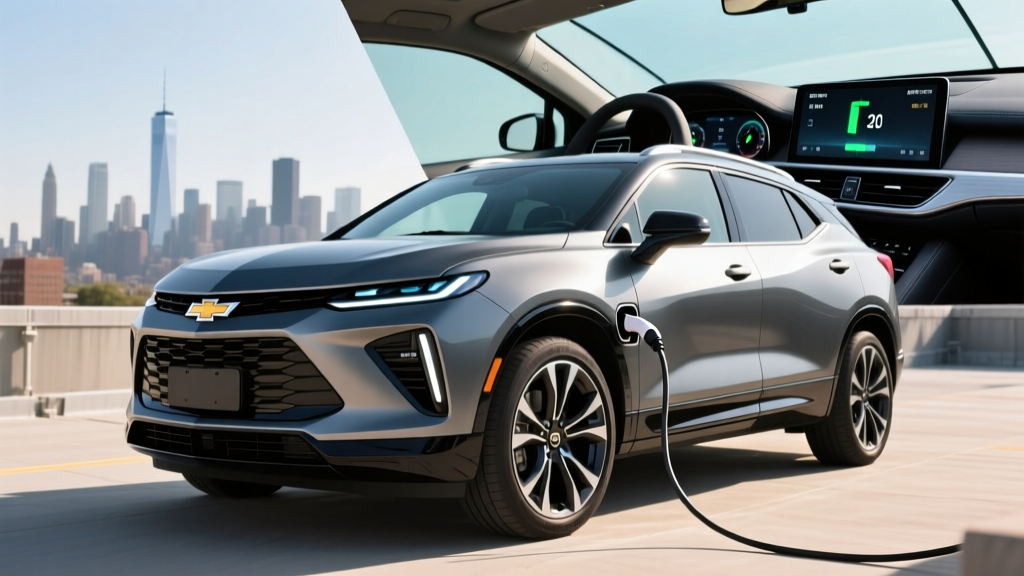
The 2025 Chevrolet Blazer EV SS occupies a rare lane: a two-row electric crossover that pairs sports-sedan acceleration with legitimate DC fast-charging speed and a usable 292-mile EPA range. Built on GM's Ultium platform with a dual-motor AWD layout producing 557 horsepower, it targets buyers who want performance without sacrificing daily practicality. After spending time with the spec sheet, cross-referencing EPA data on fueleconomy.gov, and reviewing GM's official technical documentation, the Blazer EV SS emerges as a compelling—if imperfect—alternative to the Tesla Model Y Performance and Ford Mustang Mach-E GT.
| Attribute | Value |
|---|---|
| EPA Range | 292 miles (2RS AWD/SS trim) |
| Battery (usable) | 102 kWh, NMC lithium-ion (Ultium) |
| Drivetrain | Dual-motor AWD |
| Horsepower | 557 hp (648 lb-ft torque) |
| 0-60 mph | ~4.0 seconds (est., WOW mode) |
| Peak DC Fast Charge | 190 kW |
| 10-80% DC Time | ~32 minutes |
| Level 2 Home Charge | 11.5 kW (~31 mi/hr) |
| MPGe (combined) | 89 MPGe (est.) |
| Base MSRP (SS) | $65,995 (incl. destination) |
| Battery Warranty | 8 years / 100,000 miles |
Range and Efficiency: EPA Sticker vs. What You'll Actually See
Real-World Expectation: ~245–265 miles on mixed highway driving (70–75 mph); ~210–230 miles in sub-30°F winter conditions with cabin heat.
The Blazer EV SS uses a 102 kWh usable Ultium battery pack with NMC (nickel-manganese-cobalt) chemistry. This is the same architecture found in the Cadillac Lyriq and GMC Hummer EV, though tuned differently. The 292-mile EPA figure applies to the SS trim specifically; lower trims with smaller wheels or RWD configurations can achieve up to 324 miles.
Why the gap between sticker and reality? The SS runs 21-inch wheels with performance-oriented tires that increase rolling resistance, and the dual-motor AWD system adds drivetrain mass. On a 75-mph highway loop in moderate temperatures (65–75°F), expect consumption around 38–41 kWh/100mi, translating to roughly 250–265 miles before you'll want to plug in at 10–15% SoC. In cold weather, NMC chemistry suffers reduced ion mobility, and cabin heating draws 3–5 kW continuously—plan for 20–25% range reduction below freezing.
The Blazer EV SS does not include a heat pump as standard equipment, relying instead on resistive PTC heating. This is a notable omission at this price point, as competitors like the Hyundai Ioniq 5 and Tesla Model Y use heat pumps that consume roughly half the energy in cold conditions.
Charging Speed: DC Fast Charging and Home Setup
The Blazer EV SS supports up to 190 kW peak DC fast charging via its CCS1 connector (NACS adapter available for Tesla Supercharger access starting 2025). Here's what that translates to in practice:
| Charge Level | Power | Miles Added | Notes |
|---|---|---|---|
| Level 1 (120V) | 1.4 kW | ~3 mi/hr | Emergency/top-up only |
| Level 2 (240V, 48A) | 11.5 kW | ~31 mi/hr | Full charge in ~9 hours |
| DC Fast (peak) | 190 kW | ~65 mi in 10 min | Sustained 150+ kW to ~55% SoC |
| DC Fast (10-80%) | Avg ~130 kW | ~205 miles | ~32 minutes total |
The 190 kW peak is achievable on 350 kW Electrify America or EVgo stations, but the charge curve tapers meaningfully above 55% State of Charge. You'll see 170–190 kW from 10–40%, then a step-down to ~140 kW through 55%, followed by a gradual taper to ~60 kW by 80%. This is typical for a 102 kWh NMC pack managed conservatively for longevity.
For home charging, the onboard 11.5 kW charger means a full 0–100% session takes approximately 9 hours on a properly installed 48-amp Level 2 circuit (requiring a 60-amp breaker). Most owners charging overnight from 20–80% will add roughly 185 miles in 6 hours—more than sufficient for daily use.
GM includes two years of limited complimentary charging on the EVgo network, which helps offset public charging costs during the ownership honeymoon period. After that, expect to pay $0.35–$0.48/kWh at DC fast stations depending on your region.
Performance: 557 HP and Wide Open Watts Mode
The Blazer EV SS is the performance flagship of the lineup. Its dual-motor AWD system produces 557 horsepower and 648 lb-ft of torque. Engaging Wide Open Watts (WOW) mode—Chevrolet's performance driving setting—unlocks the full output and a launch-control-style start. The result is a 0–60 mph time in the low 4-second range, which puts it in the same acceleration bracket as the Ford Mustang Mach-E GT (3.8 sec, 480 hp) and just behind the Tesla Model Y Performance (3.5 sec).
Where the SS differentiates itself is in the character of its delivery. The Ultium platform's low center of gravity and near 50/50 weight distribution give it composed cornering behavior that belies its 6,100-pound curb weight. The Brembo front brakes (standard on SS) provide confident stopping power, though you'll notice the regen braking is less aggressive than Tesla's one-pedal mode—Chevrolet offers selectable regen levels rather than a true one-pedal default.
Towing capacity is rated at 1,500 pounds with the factory tow package. This is modest compared to the Rivian R1S or even the Blazer EV 2LT (which can tow up to 1,500 lbs as well), and it effectively limits the SS to light utility trailers or small boat rigs.
Interior, Cargo, and Technology
The Blazer EV SS cabin features an 11.3-inch diagonal infotainment touchscreen running GM's latest Google Built-in interface (Android Automotive OS), paired with an 11-inch digital instrument cluster. Wireless Apple CarPlay and Android Auto are standard. The SS adds unique interior trim, a flat-bottom steering wheel, and sport-bolstered front seats.
Cargo volume measures 25.5 cubic feet behind the second row and 58.5 cubic feet with the rear seats folded. That's competitive with the Model Y (30.2/72.1 cu ft) though the Tesla's larger glass roof and frunk give it a total-volume advantage. The Blazer EV does include a small front trunk (frunk) for additional storage, though it's shallower than the Ioniq 5's.
Passenger space is generous for a two-row midsize crossover: 41.1 inches of front legroom and 38.4 inches in the rear. Headroom is adequate even with the panoramic glass roof option.
Driver assistance comes via Chevrolet's Super Cruise suite on higher trims, though the SS includes the full Chevy Safety Assist package as standard: automatic emergency braking, lane-keep assist, adaptive cruise control, and following-distance indicator. Super Cruise—GM's hands-off, eyes-on Level 2 system compatible with over 750,000 miles of pre-mapped highways in North America—is available as an option on the SS for approximately $2,500.
Pricing, Trims, and Federal Tax Credit Eligibility
| Trim | Drivetrain | MSRP | After Est. Federal Credit |
|---|---|---|---|
| 2LT (RWD) | RWD, 85 kWh | $48,995 | $41,495* |
| 2LT (AWD) | AWD, 102 kWh | $52,195 | $44,695* |
| RS (AWD) | AWD, 102 kWh | $57,595 | $50,095* |
| SS (AWD) | AWD, 102 kWh | $65,995 | $58,495* |
*Credit amount shown assumes full $7,500 eligibility. Actual credit varies based on IRS §30D requirements.
The Blazer EV SS carries a base MSRP of $65,995 including destination. A well-equipped tester with Super Cruise, the premium audio upgrade, and the panoramic roof approached $71,000.
Does the Blazer EV SS Qualify for the $7,500 Federal Tax Credit?
Eligibility for the IRS §30D Clean Vehicle Credit depends on several factors that change periodically. As of current rules referenced on irs.gov, here is the checklist:
- MSRP Cap: SUVs must have an MSRP at or below $80,000. The SS at $65,995 clears this threshold.
- Buyer Income Cap: Modified AGI must not exceed $150,000 (single), $225,000 (head of household), or $300,000 (joint).
- Battery Sourcing: Critical minerals and battery components must meet phased-in domestic/free-trade-partner sourcing thresholds. GM has worked to onshore Ultium cell production at U.S. plants (Lansing, Spring Hill), but exact eligibility depends on the VIN-specific build date and mineral sourcing percentage for that production batch.
- Point-of-Sale Transfer: Buyers can transfer the credit to the dealer at purchase, reducing the purchase price directly rather than waiting for a tax refund.
- Assembly: Must be assembled in North America. The Blazer EV is built in Ramos Arizpe, Mexico—this satisfies the North American final assembly requirement.
Important caveat: Battery-sourcing requirements tighten annually. A VIN that qualifies in January may not qualify by July if supply-chain composition shifts. Always verify eligibility using the IRS VIN-lookup tool at fueleconomy.gov before signing a purchase agreement, and consult a tax professional for your specific situation.
Warranty and Long-Term Ownership
Chevrolet backs the Blazer EV's battery pack and electric drive components with an 8-year/100,000-mile limited warranty, which covers defects and capacity loss below 60% of original capacity. The bumper-to-bumper warranty runs 3 years/36,000 miles. This is in line with the segment standard (Hyundai offers 10yr/100kmi; Tesla offers 8yr/120kmi on Model Y).
Long-term NMC degradation data from GM's Ultium platform is still maturing—the architecture launched in 2022 with the Hummer EV. Based on similar large-format NMC packs in the industry, expect approximately 8–12% capacity loss over the first 100,000 miles under normal use patterns (avoiding habitual 100% charges and frequent DC fast charging in extreme heat).
Insurance costs trend higher than comparable ICE crossovers. Expect annual premiums in the $2,200–$3,000 range depending on your state and driving record—roughly 15–25% above a gas-powered Blazer.
Pros, Cons, and Who Should Buy the Blazer EV SS
Pros
- 557 hp with composed handling for a 6,100-lb crossover
- 190 kW DC charging with usable charge curve
- 102 kWh battery delivers genuine 250+ real-world miles
- Super Cruise availability for hands-free highway driving
- Google Built-in infotainment with native EV route planning
- Qualifies for up to $7,500 federal credit (VIN-dependent)
Cons
- No heat pump — cold-weather range hit is significant
- SS starts at $65,995 — steep entry for a Chevy-branded EV
- 1,500-lb tow rating limits utility
- Regen braking lacks true one-pedal mode
- Rear visibility compromised by thick C-pillars
- Charging curve tapers early compared to Hyundai/Kia E-GMP
Who Is the Blazer EV SS For?
The SS suits performance-oriented commuters who want a daily-drivable electric crossover with passing power to spare, and who have reliable home Level 2 charging. It works well for couples or small families who prioritize acceleration and tech over maximum cargo volume. Road-trippers should plan around the ~250-mile real-world range and 32-minute charging stops. It is not the right pick for heavy towing, extreme cold-climate drivers without garage parking, or buyers who prioritize maximum range-per-dollar (the 2LT RWD at $48,995 offers better efficiency).
Frequently Asked Questions
What is the real-world range of the 2025 Blazer EV SS?
Expect 245–265 miles in mixed highway driving at moderate temperatures, and 210–230 miles in sub-freezing winter conditions. The EPA sticker reads 292 miles, but the SS's 21-inch wheels and performance tuning reduce efficiency versus lower trims.
How fast does the Blazer EV SS charge at home and on the road?
On a 48-amp Level 2 home charger (11.5 kW), it adds roughly 31 miles of range per hour, reaching a full charge in about 9 hours. On a DC fast charger, it peaks at 190 kW and charges from 10–80% in approximately 32 minutes.
How much does the Blazer EV SS cost after the federal tax credit?
The base SS MSRP is $65,995. If you qualify for the full $7,500 §30D credit (income, sourcing, and MSRP requirements met), your effective price drops to approximately $58,495. However, credit eligibility is VIN-specific and changes throughout the year—always verify before purchase.
Is the Blazer EV SS worth buying over the Tesla Model Y Performance or Mach-E GT?
The SS offers a more premium interior than the Model Y and a larger battery than the Mach-E GT, with competitive acceleration. However, the Model Y still leads in real-world efficiency, Supercharger network access (though NACS adapters narrow this gap), and cargo versatility. The Mach-E GT is lighter and slightly quicker. Choose the SS if you want the largest battery in the segment, Super Cruise, and a more traditional SUV cabin layout.
Does the Blazer EV SS have a heat pump?
No. The Blazer EV uses resistive PTC cabin heating, which draws more energy from the battery in cold weather compared to a heat pump system. This contributes to the 20–25% range reduction observed in sub-freezing temperatures.
Can the Blazer EV SS use Tesla Superchargers?
Yes, via GM's NACS adapter (included or available depending on build date). GM began providing Supercharger access to Ultium-based EVs in late 2024, and the 2025 Blazer EV is compatible with the Tesla network using the adapter for both navigation integration and charging.