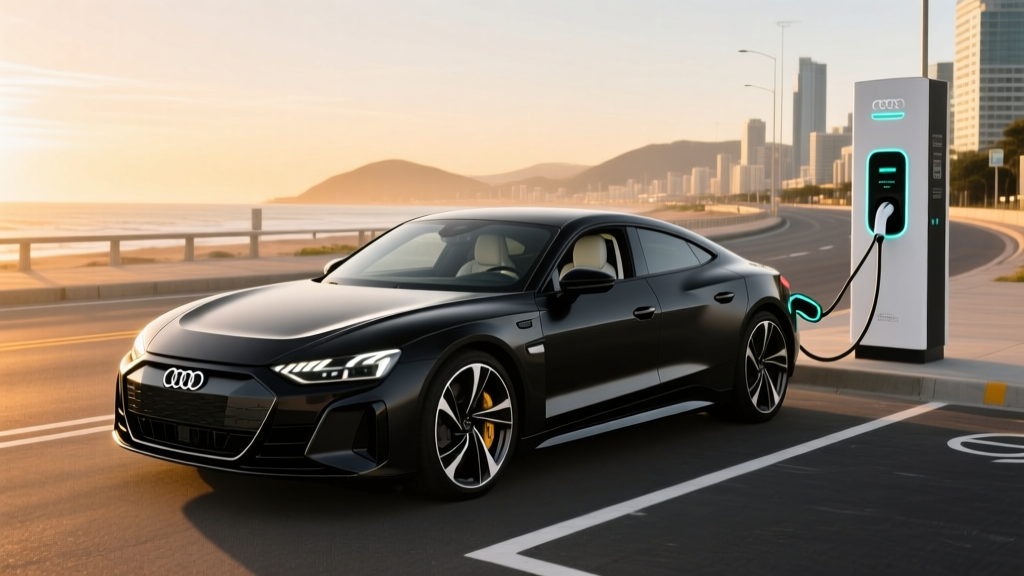
The 2025 Audi e-tron GT occupies a rare corner of the EV market: a luxury grand tourer that pairs Porsche Taycan underpinnings with Audi's design language and everyday usability. Built on the J1 Performance Platform shared with the Taycan, the e-tron GT delivers blistering acceleration, 800-volt architecture for ultra-fast DC charging, and a cabin that prioritizes craftsmanship over minimalist screens. But at a starting price above $106,000, buyers need to know exactly what they're getting — and where the compromises lie.
We've analyzed EPA data, real-world driving logs, and Audi's engineering specifications to give you the numbers that matter: actual highway range, sustained charging speeds, tax credit eligibility, and whether this EV justifies its premium over competitors like the Taycan, Tesla Model S, and Lucid Air.
2025 Audi e-tron GT: Key Specifications at a Glance
| Specification | e-tron GT quattro | RS e-tron GT | RS e-tron GT Performance |
|---|---|---|---|
| EPA Range | 238 miles | 232 miles | 232 miles (est.) |
| Battery (Usable / Gross) | 84 kWh / 93.4 kWh | 84 kWh / 93.4 kWh | 84 kWh / 93.4 kWh |
| Battery Chemistry | NMC (Nickel Manganese Cobalt) | NMC | NMC |
| Horsepower (Launch Control) | 522 hp | 637 hp | 670 hp (est.) |
| 0–60 mph | 3.9 sec | 3.1 sec | 2.9 sec (est.) |
| Drivetrain | Dual-motor AWD | Dual-motor AWD | Dual-motor AWD |
| Max DC Fast Charge | 270 kW | 270 kW | 270 kW |
| 10–80% DC Charge Time | ~22.5 min | ~22.5 min | ~22.5 min |
| Level 2 Charge Rate | 9.6 kW | 9.6 kW | 9.6 kW |
| EPA Efficiency | 85 MPGe (39 kWh/100mi) | 82 MPGe (41 kWh/100mi) | TBD |
| Base MSRP | $106,395 | $142,395 | ~$162,000 (est.) |
| Battery Warranty | 8 yr / 100,000 mi | 8 yr / 100,000 mi | 8 yr / 100,000 mi |
Real-World Range: What the EPA Sticker Doesn't Tell You
Real-World Expectation: 200–220 miles at sustained highway speeds (70–80 mph); 170–195 miles in freezing temperatures (below 32°F) with cabin heating; up to 240+ miles in mild city/suburban driving with regen.
The e-tron GT's 93.4 kWh gross battery (84 kWh usable) uses NMC chemistry optimized for power delivery and charge speed rather than maximum energy density. Audi reserves roughly 10% of gross capacity as a buffer to protect long-term battery health — a conservative approach that aids longevity but limits usable range versus competitors with larger packs.
According to EPA data on fueleconomy.gov, the e-tron GT quattro achieves 85 MPGe combined (39 kWh per 100 miles). In practice, efficiency varies dramatically with driving style. At 65 mph on flat terrain in 70°F weather, expect roughly 3.5–3.8 miles per kWh, yielding about 230–250 miles. Push to 80 mph or encounter headwinds and elevation changes, and that drops to 3.0–3.3 mi/kWh — closer to 190–210 miles before you need a charger.
Cold weather remains the e-tron GT's range kryptonite. NMC batteries experience increased internal resistance below freezing, and the cabin heat pump (standard on 2025 models) can only partially offset the energy demand. Plan for a 15–25% range reduction in winter conditions, and always precondition the battery while plugged in before departure to mitigate losses.
Charging Speed: 800-Volt Architecture Delivers
The e-tron GT's 800-volt electrical architecture is its most practical engineering advantage. While many EVs in this price range still use 400V systems limited to 150–220 kW peak charging, the e-tron GT can accept up to 270 kW at a compatible DC fast charger — putting it among the fastest-charging production EVs available.
| Charge Level | Power / Voltage | Speed (Miles of Range per Hour) | Notes |
|---|---|---|---|
| Level 1 (120V household) | 1.2 kW | ~3–4 mi/hr | Emergency/trickle only; full charge in ~70+ hours |
| Level 2 (240V home) | 9.6 kW / 40A | ~28–32 mi/hr | Full charge in ~9–10 hours; ideal overnight |
| DC Fast Charge (peak) | 270 kW / 800V | ~190–210 mi in 10 min (peak) | 10–80% in ~22.5 min; tapers significantly above 80% |
Charging curve reality matters here. The e-tron GT sustains its peak 270 kW rate only in a narrow State of Charge (SoC) window — roughly 10–35%. From 35–60%, it steps down to approximately 200–230 kW, and from 60–80% it tapers further to 100–150 kW. Above 80%, charging slows dramatically to protect the NMC cells, often dropping below 50 kW. This is why Audi quotes 10–80% time rather than 0–100%.
On a 350 kW Electrify America or IONITY station, you'll add roughly 100 miles of range in the first 10 minutes if arriving at a low SoC. On a typical 150 kW public charger, expect 10–80% in about 35–40 minutes — still fast, but not utilizing the car's full capability.
For home Level 2 charging, the onboard charger maxes out at 9.6 kW (40 amps on a 48-amp circuit). A full overnight charge from 10% takes roughly 9 hours. We recommend a hardwired Level 2 station like the ChargePoint Home Flex or Emporia Vue installed on a 60-amp dedicated circuit by a licensed electrician. Expect installation costs of $800–$2,000 depending on panel capacity and wiring distance — more if your home needs a 200-amp panel upgrade.
Performance and Driving Dynamics
The e-tron GT shares its J1 platform with the Porsche Taycan, and the engineering DNA is unmistakable. Dual permanently excited synchronous motors provide all-wheel drive with torque vectoring, and the two-speed rear transmission (a rarity among EVs) optimizes both launch acceleration and high-speed efficiency.
The base e-tron GT quattro produces 469 hp in standard driving, rising to 522 hp with Launch Control engaged for 2.5-second bursts. The RS e-tron GT bumps that to 590 hp standard and 637 hp on launch. For 2025, Audi introduced the RS e-tron GT Performance variant, pushing output to an estimated 670 hp with a sub-3.0-second 0–60 time.
Adaptive air suspension is standard across the lineup, with a 3-chamber system that adjusts ride height by up to 2.2 inches. The GT sits low for aerodynamic efficiency on the highway but can raise for speed bumps and steep driveways. Rear-axle steering (optional on quattro, standard on RS trims) shrinks the turning circle and adds agility in tight urban driving.
Regenerative braking offers three levels selectable via steering-wheel paddles, plus an auto mode that uses radar and navigation data to modulate regen based on traffic and upcoming terrain. Unlike some competitors, the e-tron GT does not offer true one-pedal driving to a complete stop — it creeps at low speeds, which some drivers prefer for smoothness.
Interior, Cargo, and Daily Practicality
The e-tron GT's cabin reflects Audi's traditional luxury approach: physical buttons coexist with touchscreens, materials are premium (standard leather, available Dinamica microfiber), and the driving position is low and sporty. The 10.1-inch central infotainment display runs Audi's MIB 3 software with wireless Apple CarPlay and Android Auto, while a 12.3-inch Virtual Cockit handles gauges and navigation.
Where the e-tron GT reveals its grand-tourer compromises is in space:
- Rear-seat legroom: 29.6 inches — tight for adults over 6 feet on longer trips
- Rear headroom: 36.5 inches — the sloping roofline cuts into space
- Trunk (rear): 9.2 cubic feet — enough for two carry-on bags or a week's groceries
- Frunk (front): 3.2 cubic feet — fits a charging cable bag and small items
- Total cargo: 12.4 cubic feet — significantly less than a Model S (28 cu ft) or Lucid Air (32 cu ft)
This is a 2+2 grand tourer, not a family sedan. If rear-seat passengers or cargo volume are priorities, the Lucid Air or Mercedes EQS are substantially more practical.
Driver-assistance technology includes Audi's Adaptive Cruise Assist with lane-centering (SAE Level 2), intersection assist, traffic sign recognition, and Park Assist with surround cameras. Audi does not currently offer a hands-free driving system comparable to GM's Super Cruise or Ford's BlueCruise — the driver must keep hands on the wheel at all times.
Pricing, Trims, and Federal Tax Credit Eligibility
| Trim | Base MSRP | As-Tested (Typical Options) | Federal §30D Credit Eligibility |
|---|---|---|---|
| e-tron GT quattro | $106,395 | $112,000–$120,000 | Not eligible (exceeds $55,000 sedan cap) |
| RS e-tron GT | $142,395 | $150,000–$165,000 | Not eligible (exceeds $55,000 sedan cap) |
| RS e-tron GT Performance | ~$162,000 (est.) | $170,000+ | Not eligible (exceeds $55,000 sedan cap) |
Without the federal credit, the e-tron GT's value proposition rests entirely on its driving experience, build quality, and charging performance. Some states offer separate EV rebates or HOV-lane access that apply regardless of MSRP — check your state's energy office for details.
Pros and Cons
Pros
- 270 kW DC fast charging among the quickest in production
- Exceptional build quality, materials, and cabin quietness
- Sharp handling with air suspension and rear-axle steering
- 800V architecture future-proofs charging on newer networks
- Distinctive design that stands out from Tesla and Lucid
- Heat pump standard for improved cold-weather efficiency
Cons
- 238-mile EPA range trails Lucid Air (419 mi) and Model S (405 mi)
- No federal tax credit due to $55K sedan MSRP cap
- Rear seat and cargo space are cramped for the price
- Infotainment system feels dated versus Tesla and Mercedes
- No hands-free highway driving option available
- Charging speed advantage requires 350 kW stations (still sparse)
Competitor Comparison: e-tron GT vs. Taycan, Model S, and Lucid Air
| Spec | Audi e-tron GT quattro | Porsche Taycan 4S | Tesla Model S LR | Lucid Air Pure |
|---|---|---|---|---|
| EPA Range | 238 mi | 246 mi | 405 mi | 419 mi |
| Battery (usable kWh) | 84 kWh | 84 kWh | ~95 kWh | 88 kWh |
| 0–60 mph | 3.9 sec | 3.8 sec | 3.1 sec | 5.0 sec |
| Peak DC Charge | 270 kW | 270 kW | 250 kW | 200+ kW |
| Cargo Volume | 12.4 cu ft | 14.3 cu ft | 28.0 cu ft | 32.0 cu ft |
| Base MSRP | $106,395 | $107,450 | $79,990 | $74,000 |
The e-tron GT and Taycan 4S are mechanical twins, and the choice between them comes down to brand preference, styling, and dealership experience. The Tesla Model S and Lucid Air deliver substantially more range and interior space for significantly less money, but neither matches the Audi's build quality or charging speed.
Who Should Buy the 2025 Audi e-tron GT?
- You value build quality, cabin materials, and brand prestige over maximum range
- Your daily commute is under 150 miles and you have reliable home charging
- You frequently use DC fast-charging corridors with 350 kW stations
- You want Porsche Taycan performance with a more understated aesthetic
- Rear-seat and cargo practicality are not primary concerns
- You need 300+ miles of range for frequent road trips (Lucid Air, Model S)
- You regularly carry adult rear-seat passengers (EQS, Lucid Air)
- Federal tax credit eligibility is important to your purchase math
- You want cutting-edge infotainment or hands-free driving features
Warranty and Long-Term Ownership
Audi provides a competitive warranty package for the e-tron GT:
- Battery: 8 years / 100,000 miles (whichever comes first), with a capacity retention guarantee of 70% minimum
- Powertrain: 8 years / 100,000 miles
- Bumper-to-bumper: 4 years / 50,000 miles
- Corrosion perforation: 12 years unlimited mileage
The 70% capacity retention threshold is industry-standard. If the battery degrades below 70% of its original 84 kWh usable capacity within the warranty period, Audi will repair or replace it. NMC chemistry in the e-tron GT benefits from the 800V system's thermal management, but owners should avoid frequent DC fast charging above 90% SoC and prolonged storage at extreme charge levels to maximize longevity.
Insurance costs for the e-tron GT run 20–40% higher than comparable gas-powered Audi sedans, reflecting repair costs for the battery and aluminum-intensive body. Expect annual premiums of $3,000–$5,000 depending on your profile and state.
Frequently Asked Questions
What is the real-world range of the 2025 Audi e-tron GT?
Expect 200–220 miles at highway speeds in mild weather, dropping to 170–195 miles in freezing temperatures. The EPA estimates 238 miles for the GT quattro and 232 for the RS variant, but real-world efficiency depends heavily on speed, temperature, and terrain.
How fast does the e-tron GT charge at home and on the road?
At home on a Level 2 (240V) charger, the e-tron GT accepts up to 9.6 kW, adding roughly 30 miles of range per hour and fully charging overnight in about 9 hours. On a 350 kW DC fast charger, it peaks at 270 kW and charges from 10–80% in approximately 22.5 minutes.
Does the 2025 Audi e-tron GT qualify for the federal EV tax credit?
No. The IRS §30D Clean Vehicle Credit caps sedan eligibility at $55,000 MSRP, and the e-tron GT starts at $106,395. State-level incentives may still apply. Check current rules at IRS.gov.
Is the e-tron GT worth buying over the Porsche Taycan?
Mechanically, they're nearly identical. The e-tron GT offers a more understated design, slightly softer ride tuning, and Audi's dealership network. The Taycan carries stronger brand cachet and marginally sharper handling. Test-drive both; the decision is subjective.
What are the biggest drawbacks of the e-tron GT?
Range (238 miles) trails competitors significantly, cargo and rear-seat space are limited, the infotainment system is a generation behind Tesla and Mercedes, and the price excludes it from federal tax credits. It's a driver's car, not a practical family EV.
Does the e-tron GT support NACS (Tesla-style) charging?
For 2025, the e-tron GT uses the CCS1 connector standard in North America. Audi has announced a transition to NACS for future model years, but 2025 models require a CCS-to-NACS adapter for Tesla Supercharger access where available.