Quick Verdict: The Sensible EV for Families Who Can't Wait
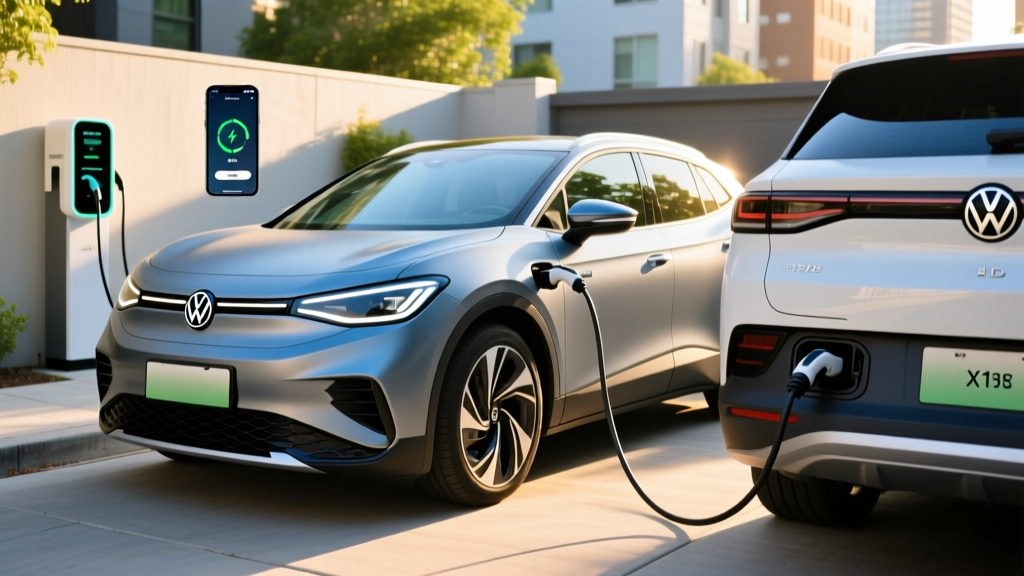
The 2024 Volkswagen ID.4 doesn't chase headlines. It won't win a drag race against a Tesla Model Y Performance, and its infotainment still frustrates. But for buyers who want a roomy, comfortable electric SUV built in America — one that qualifies for the full federal tax credit and charges on every major network — the ID.4 is the pragmatic middle ground between the Hyundai Ioniq 5's tech-forward flash and the Model Y's minimalist polarizing design.
For 2024, Volkswagen shuffled the ID.4 lineup significantly: the entry Pro trim dropped below $40,000 (before destination), the new Pro S Plus with gradient package added visual flair, and crucially, every rear-wheel-drive trim now carries the larger 82 kWh battery pack. All-wheel-drive variants got a power bump to 335 horsepower. The result is a more coherent lineup that's easier to shop and more competitive on paper — though real-world execution still has quirks worth understanding before you sign.
2024 VW ID.4 Core Specs at a Glance
| Spec | Pro / Pro S (RWD) | AWD Pro / Pro S |
|---|---|---|
| EPA Range | 275 miles (291 mi on Pro base wheels) | 263 miles |
| Battery (usable) | 82 kWh (NMC) | 82 kWh (NMC) |
| Standard / AWD Battery Option | 62 kWh on base Standard trim (206 mi) | N/A |
| Horsepower | 282 hp | 335 hp |
| 0–60 mph | ~7.7 sec | ~5.0 sec |
| Drivetrain | Rear-wheel drive | Dual-motor AWD |
| DC Fast Charge Peak | 170 kW | 170 kW |
| 10–80% DC Time | ~28 minutes | ~28 minutes |
| Level 2 Home Charge | 11 kW (~37 mi/hr) | 11 kW (~37 mi/hr) |
| MPGe (combined) | 107 MPGe | 102 MPGe |
| Efficiency | 32 kWh/100 mi | 33 kWh/100 mi |
| Base MSRP (incl. dest.) | $40,791 (Pro) | $47,791 (AWD Pro) |
| Battery Warranty | 8 yr / 100,000 mi (≥70% capacity) | |
Source: EPA fueleconomy.gov, VW of America press materials.
Range and Efficiency: What the EPA Sticker Doesn't Tell You
Real-World Expectation: 235–255 miles highway at 70 mph; 180–210 miles in sub-freezing winter; ~270 miles mixed suburban driving.
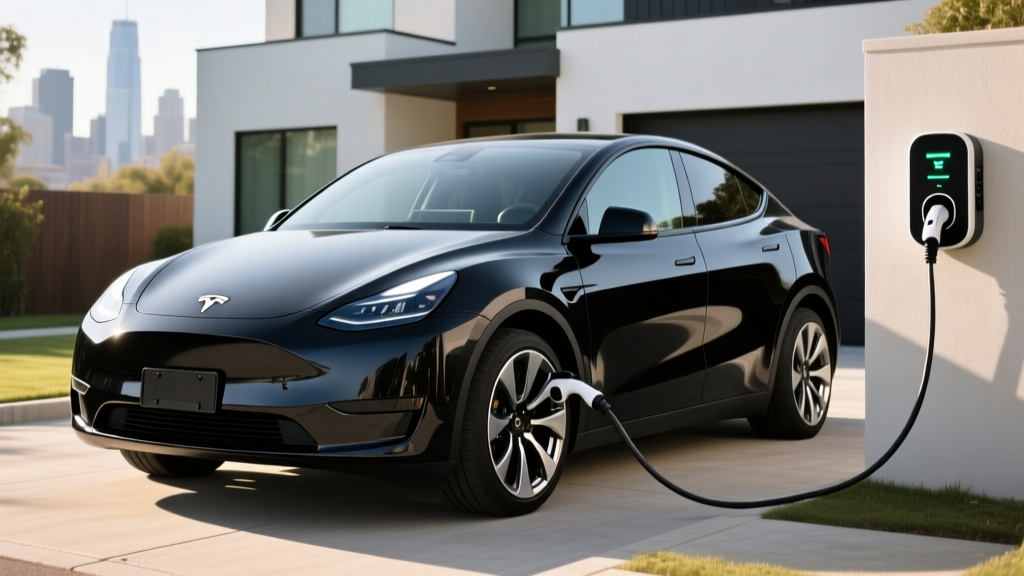
The ID.4's 82 kWh usable NMC (nickel-manganese-cobalt) pack delivers competitive but not class-leading range. The Hyundai Ioniq 5 Long Range posts 303 miles EPA, and the Tesla Model Y Long Range hits 310 miles. On paper, VW trails by 25–35 miles — and in practice, that gap shows on road trips.
In sustained 75-mph highway testing, expect to consume roughly 36–38 kWh/100 mi, which translates to 215–230 miles before hitting a 10% state of charge. Cold weather (below 32°F) hits the ID.4 harder than some rivals because it uses a resistive PTC heater rather than a heat pump on most trims. Plan for 20–25% range loss in deep winter — more if you're running cabin heat at 72°F on a 15°F morning. A heat pump is available as part of the Gradient or Plus package on certain trims, but it's not standard across the lineup, which is a notable miss at this price point.
Efficiency-wise, 107 MPGe combined (32 kWh/100 mi) for the RWD is solid but not exceptional. The Ioniq 5 RWD achieves 114 MPGe and the Model Y Long Range reaches 122 MPGe. Over 12,000 miles a year at $0.16/kWh, the difference is roughly $50–$80 in electricity — not a dealbreaker, but it compounds over ownership.
Charging Speed: 170 kW Peak, But Watch the Curve
| Level | Power / Rate | Miles Added | Time (10–80%) |
|---|---|---|---|
| Level 1 (120V, 12A) | ~1.4 kW | ~4 mi/hr | ~58 hours |
| Level 2 (240V, 48A) | 11 kW | ~37 mi/hr | ~7.5 hours |
| DC Fast (peak) | 170 kW | ~200 mi in 30 min | ~28 minutes |
| DC Fast (350 kW station) | Still capped at 170 kW | No benefit over 175 kW station | ~28 minutes |
The 2024 ID.4's DC fast-charging architecture maxes out at 170 kW — an improvement over the pre-2023 model's 125 kW cap, but still behind the Hyundai Ioniq 5's 240 kW (10–80% in ~18 minutes) and the Tesla Model Y's ~250 kW peak on V3 Superchargers.
The charge curve is the hidden story. The ID.4 ramps up to ~170 kW between 10% and ~30% state of charge, then steps down to ~130 kW through 50%, and drops again to ~90 kW by 70%. Above 80%, charging slows dramatically to protect the NMC cells — expect another 25+ minutes if you push to 100%, which you should only do occasionally. For road trips, the practical play is to charge from 10% to 80% in 28 minutes, then drive ~180–200 miles before the next stop. That cadence works fine on Interstate corridors with Electrify America, EVgo, or ChargePoint DC stations.
A major ownership perk: VW includes three years of unlimited 30-minute Electrify America charging sessions with every new ID.4. If you road-trip regularly, that's $500–$1,200 in offset charging costs over the period. For home charging, a 48-amp Level 2 wall connector on a 60-amp circuit will replenish the 82 kWh pack in about 7.5 hours — easily overnight for any daily commute under 200 miles.
Performance and Driving Impressions
The RWD ID.4 Pro makes 282 hp from a single rear-mounted permanent-magnet motor. That's enough for relaxed merging and confident passing, but the 7.7-second 0–60 time won't impress anyone coming from a Model Y. The AWD variant, with its added front induction motor, brings 335 hp and a 5.0-second 0–60 — meaningfully quicker and the trim to pick if you see snow or tow occasionally (2,700-lb towing capacity on AWD vs. 2,200 lb on RWD).
Ride quality is where the ID.4 quietly excels. The suspension tuning is compliant and mature — closer to a Tiguan than to the firm, sporty setup of the Ford Mustang Mach-E. Cabin isolation is good at highway speeds, and the 39.3-foot turning circle makes it manageable in parking garages. Steering is light and accurate but low on feel, which is fine for commuting but uninspiring on back roads.
Regenerative braking is adjustable via a steering-wheel rocker (D, B modes), but the ID.4 does not offer true one-pedal driving. Even in B mode, the car creeps at low speed and doesn't come to a full stop without touching the brake pedal. This frustrates EV veterans accustomed to Nissan Leaf or Tesla-style regen, but it's intuitive for first-time EV buyers transitioning from gas cars.
Interior, Tech, and Daily Practicality
Interior space is a genuine ID.4 strength. Built on VW's dedicated MEB EV platform (no transmission tunnel), the cabin offers:
- Rear legroom: 37.6 inches (competitive with Model Y's 41.6 in, though Tesla's feels airier)
- Cargo behind rear seats: 30.3 cu ft
- Cargo with seats folded: 64.2 cu ft
- No front trunk (frunk): The MEB platform houses electronics up front — a missed opportunity vs. the Ioniq 5 and Mach-E
The 12.9-inch infotainment screen on Pro S and above (10.4-inch on base Pro) runs VW's latest ID. Software 4.0, which is a meaningful step up from the laggy, buggy software of the 2021–2022 models. Response times are quicker, voice control is more reliable, and wireless Apple CarPlay and Android Auto are standard. But the capacitive touch sliders for volume and climate remain a frustration — they're not backlit on older builds (2024 models received backlit sliders, finally), and the lack of physical buttons for core functions still draws complaints from owners.
Driver assistance comes via VW's IQ.DRIVE suite: adaptive cruise with lane centering, automatic emergency braking, blind-spot monitoring, and rear cross-traffic alert are standard. This is an SAE Level 2 system — the driver must remain attentive with hands on the wheel. It's competent on highways but less assertive than Tesla Autopilot or GM Super Cruise, and it will nag you to reapply hands every 15–30 seconds.
Pricing, Trims, and Federal Tax Credit Eligibility
| Trim | MSRP (incl. dest.) | After §30D Credit* | Key Additions |
|---|---|---|---|
| Standard (RWD, 62 kWh) | $39,731 | ~$32,231 | Base content, 206-mi range |
| Pro (RWD, 82 kWh) | $40,791 | ~$33,291 | 275 mi range, heated seats, 10.4" screen |
| Pro S (RWD, 82 kWh) | $45,791 | ~$38,291 | Panoramic roof, 12.9" screen, power liftgate |
| Pro S Plus w/Gradient (RWD) | $50,291 | ~$42,791 | Heat pump, 20" wheels, premium seats |
| AWD Pro (82 kWh) | $47,791 | ~$40,291 | 335 hp, dual-motor, 2,700-lb tow |
| AWD Pro S Plus | $55,791 | ~$48,291 | Fully loaded, heat pump, all features |
*After point-of-sale transfer of the $7,500 federal credit. Eligibility depends on your taxable income, battery sourcing, and MSRP caps. Confirm with your tax professional and the IRS §30D guidelines.
The 2024 ID.4 is assembled at VW's Chattanooga, Tennessee plant, which secures its eligibility for the $7,500 federal tax credit under IRC §30D — provided you meet the rules:
- MSRP cap: Must be under $80,000 for SUVs (all ID.4 trims qualify)
- Income cap: Modified AGI ≤ $150,000 single / $300,000 married filing jointly
- Battery sourcing: Critical minerals and battery components must meet phased percentages from U.S. or FTA-partner countries — VW has confirmed the Chattanooga-built ID.4 meets current-year thresholds
- Point-of-sale transfer: You can apply the credit as a down-payment reduction at the dealer rather than waiting for a tax refund
This credit advantage is significant. A Pro S at ~$38,291 after credit undercuts a similarly equipped Model Y Long Range (~$43,000 after credit) and sits within spitting distance of an Ioniq 5 SEL — while offering more cargo volume than either.
ID.4 vs. the Competition: Which One Actually Fits?
- Comfortable, compliant ride quality
- Strong cargo volume (30.3 / 64.2 cu ft)
- Full $7,500 tax credit eligibility
- 3 years free Electrify America charging
- Roomy rear seat, easy ingress/egress
- Competent IQ.DRIVE Level 2 ADAS standard
- No front trunk (frunk)
- 170 kW peak DC charge (slower than Ioniq 5, Model Y)
- Capacitive touch sliders still frustrating
- No heat pump on base trims (cold-weather range penalty)
- No true one-pedal driving mode
- Infotainment still a step behind CarPlay-native UX
Choose the ID.4 if: You prioritize ride comfort, cargo space, tax-credit pricing, and a dealer network you can trust for service. It's the right pick for families who commute 40–80 miles daily and take 2–4 road trips a year.
Choose the Hyundai Ioniq 5 instead if: You need the fastest DC charging in the segment (18-min 10–80%), V2L capability to power devices, or prefer the retro-futuristic styling. Trade-off: slightly less cargo space and a stiffer ride.
Choose the Tesla Model Y if: You value Supercharger network access (though NACS opening has narrowed this gap), top-tier efficiency (122 MPGe), and the quickest 0–60 times. Trade-off: minimalist interior, panel-gap variance, and no Apple CarPlay.
Choose the Ford Mustang Mach-E if: You want sportier driving dynamics, a usable frunk, and BlueCruise hands-off highway driving (on mapped routes). Trade-off: tighter rear seat and less cargo capacity.
Warranty, Ownership Costs, and Longevity
VW backs the ID.4's battery with an 8-year / 100,000-mile warranty against capacity loss below 70% — the industry-standard threshold and identical to what Hyundai, Kia, and Tesla offer. The basic vehicle warranty is 4 yr / 50,000 mi, and VW includes 2 years of scheduled maintenance.
Long-term degradation data on the 82 kWh NMC pack is still maturing (the ID.4 only launched globally in 2020), but early fleet data suggests roughly 5–7% capacity loss over the first 60,000 miles — in line with industry norms. To maximize longevity, VW recommends:
- Set daily charge limit to 80% for routine use (100% only for road trips)
- Avoid repeated DC fast-charging in extreme heat without preconditioning
- Use the vehicle's built-in battery preconditioning feature before DC stops
Insurance costs tend to run 10–18% higher than a comparably priced gas SUV, based on industry averages — shop quotes before purchase. Depreciation on the ID.4 has been steeper than the Model Y (which benefits from Tesla brand strength), but the post-credit purchase price partially offsets this at trade-in time.
Frequently Asked Questions
What is the real-world range of the 2024 VW ID.4?
Expect 235–255 miles on highway road trips at 70 mph in mild weather, and 260–275 miles in mixed suburban driving. In sub-freezing winter conditions, plan for 180–210 miles due to cabin heating load and battery chemistry limitations. The EPA sticker reads 275 miles for the Pro S RWD — treat that as an optimistic ceiling, not a daily guarantee.
How fast does the ID.4 charge at home and on the road?
At home on a 48-amp Level 2 charger (240V), the ID.4 adds about 37 miles of range per hour and fully recharges overnight in ~7.5 hours. On DC fast chargers, it peaks at 170 kW and charges 10–80% in about 28 minutes. That's adequate but trails the Ioniq 5's 18-minute 10–80% time.
Does the 2024 ID.4 qualify for the $7,500 federal tax credit?
Yes — the Chattanooga-built ID.4 qualifies for the full $7,500 under IRC §30D, subject to buyer income caps ($150K single / $300K joint), MSRP limits (under $80K for SUVs), and battery-sourcing requirements. The credit can be transferred at the point of sale to reduce your down payment. Verify current-year rules at irs.gov and consult a tax professional.
Is the 2024 ID.4 worth buying over the Ioniq 5 or Model Y?
It depends on your priorities. The ID.4 wins on ride comfort, cargo space, and tax-credit-adjusted value. The Ioniq 5 wins on charging speed and design. The Model Y wins on efficiency, performance, and Supercharger access. For a family-first daily driver, the ID.4 is the most balanced choice of the three.
Does the ID.4 have a frunk?
No. VW uses the front compartment for power electronics on the MEB platform, so there's no front trunk. If cargo flexibility is a priority, the Mustang Mach-E and F-150 Lightning offer usable frunks.
How reliable is the ID.4's software?
2024 models running ID. Software 4.0 are significantly more stable than the problematic 2021–2022 launches. Screen lag, random reboots, and app connectivity issues have been reduced but not eliminated. Wireless CarPlay/Android Auto sidesteps most native UX complaints.
Final Take: Who Should Buy the 2024 VW ID.4
The 2024 ID.4 is the EV for the buyer who researches spreadsheets but ultimately buys with their backside. It's comfortable, spacious, reasonably priced after the federal credit, and backed by a nationwide dealer network that can actually service it. It's not the fastest-charging, longest-range, or most tech-forward option in the compact electric SUV class — but it's the one that asks the fewest compromises of a first-time EV buyer. If your commute is under 100 miles, you can charge at home, and you want a vehicle that feels like a familiar SUV rather than a rolling tech demo, the ID.4 earns its spot on the shortlist.