Quick Verdict: A Bold Newcomer With Caveats
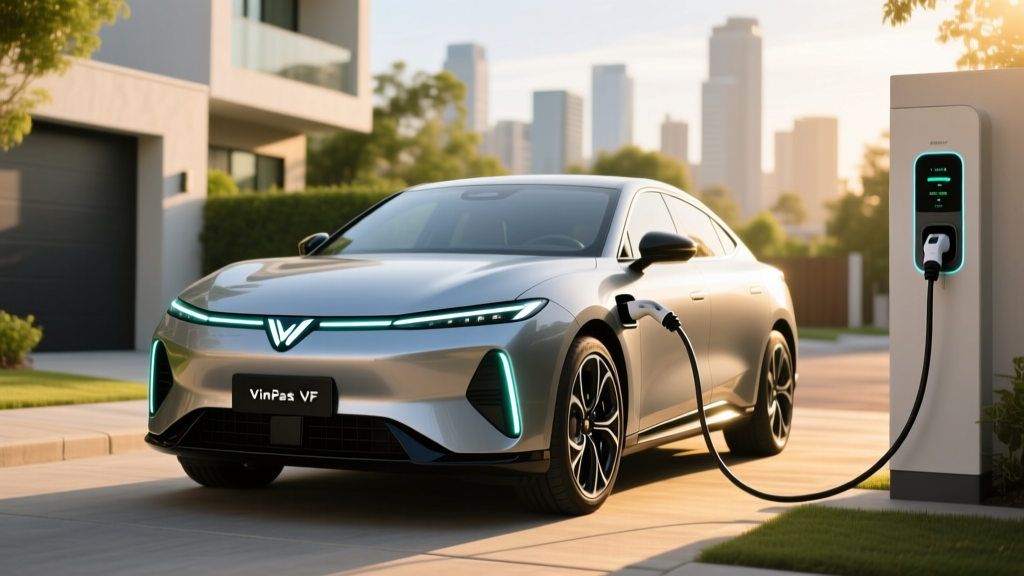
The 2024 VinFast VF 7 is the Vietnamese automaker's entry into the compact electric SUV segment, slotted between the smaller VF 6 and the midsize VF 8. With a starting MSRP around $37,000, EPA-estimated range up to 248 miles (Eco trim), and a distinctive design, the VF 7 aims to undercut established rivals like the Hyundai Ioniq 5, Tesla Model Y, and Ford Mustang Mach-E on price. But buyers searching for a 2024 VinFast VF 7 for sale should understand what they're getting — and what they're giving up — before signing on the dotted line.
VinFast is still building its U.S. dealer and service network, software refinement remains a work in progress based on early VF 8 owner feedback, and federal tax credit eligibility is uncertain due to battery-sourcing rules. This review breaks down every spec that matters, from real-world range expectations to charging curves and total cost of ownership.
Range, Battery & Efficiency
The VF 7 is offered in two primary configurations: the single-motor Eco trim and the dual-motor Plus trim. Both use a 75 kWh (usable) lithium-ion battery pack. VinFast has not publicly confirmed the cell chemistry for the U.S.-spec VF 7, though industry reports suggest an NMC (nickel manganese cobalt) formulation supplied by Gotion High-Tech, consistent with the VF 8 and VF 9 packs.
| Spec | Eco (FWD) | Plus (AWD) |
|---|---|---|
| Battery Capacity (usable) | 75 kWh | 75 kWh |
| Chemistry | NMC (estimated) | NMC (estimated) |
| EPA Range | ~248 mi | ~222 mi |
| Efficiency (MPGe) | ~109 MPGe combined | ~97 MPGe combined |
| Energy Consumption | ~31 kWh/100 mi | ~35 kWh/100 mi |
The EPA sticker says 248 miles for the Eco trim, but plan for less in practice. In mixed highway driving at 70-75 mph, expect roughly 200-220 miles before needing a charge. In cold weather (below 32°F), range can drop an additional 15-25%, putting realistic winter highway range closer to 170-190 miles for the Eco and 150-170 miles for the AWD Plus. City driving with regenerative braking recovers some efficiency, but highway commuters and road-trippers should budget conservatively.
Charging Speed: DC Fast & Home Level 2
Charging speed is where many new EV buyers get surprised — peak kW ratings are rarely sustained across the full session. Here's what the VF 7 delivers:
| Charging Level | Spec | Details |
|---|---|---|
| DC Fast Charge (Peak) | ~150 kW | CCS1 connector; NACS adapter expected |
| DC 10-80% Time | ~30 minutes | Under optimal battery temperature |
| Level 2 (Home/Public AC) | 11 kW (48A) | ~25-28 miles of range per hour |
| Level 1 (120V Trickle) | ~1.4 kW | ~3-4 miles per hour (overnight top-up only) |
The 150 kW peak DC rate is competitive but not class-leading — the Hyundai Ioniq 5 peaks at 240 kW and charges 10-80% in roughly 18 minutes on a 350 kW station. The VF 7's charge curve likely tapers significantly above 80% state of charge, as is typical for NMC packs without aggressive thermal preconditioning. On a road trip, plan for 30-minute stops at 150 kW+ chargers to go from 10% to 80%, then expect a slower top-off if you need a full battery.
For home charging, the 11 kW onboard charger is solid. On a 48-amp Level 2 circuit (hardwired, 60-amp breaker), you'll recover roughly 25-28 miles of range per hour, meaning a full overnight charge from 20% to 100% takes about 7-8 hours. Installation costs for a Level 2 home setup typically run $800-$2,500 depending on your electrical panel capacity — budget for a potential panel upgrade if you're running a 200-amp service with high existing load. Always consult a licensed electrician for final specifications.
Performance & Drivetrain
The VF 7 Eco uses a single front-mounted motor producing approximately 174 horsepower and 228 lb-ft of torque, driving the front wheels. The Plus trim adds a rear motor for dual-motor all-wheel drive, bumping output to roughly 349 horsepower and 369 lb-ft of torque.
| Spec | Eco (FWD) | Plus (AWD) |
|---|---|---|
| Horsepower | 174 hp | 349 hp |
| Torque | 228 lb-ft | 369 lb-ft |
| 0-60 mph | ~7.5 seconds | ~4.5 seconds |
| Drivetrain | Single-motor FWD | Dual-motor AWD |
| Top Speed | ~112 mph | ~124 mph |
The Eco trim's 174 hp is modest for the segment — the base Model Y RWD makes 295 hp, and the Ioniq 5 Standard Range makes 168 hp. For daily commuting and city driving, the Eco is perfectly adequate. The Plus trim's 349 hp and ~4.5-second 0-60 time put it in the same ballpark as the Mustang Mach-E Premium AWD and Model Y Long Range, making it the clear choice for buyers who want passing power and all-weather traction.
Pricing, Trims & Federal Tax Credit
VinFast has positioned the VF 7 aggressively on price, undercutting most competitors in the compact electric SUV class. Here's the trim and pricing breakdown:
| Trim | Base MSRP | As-Tested (w/ Options) | §30D Credit Eligibility |
|---|---|---|---|
| Eco (FWD) | ~$37,000 | ~$39,500 | Unlikely — battery sourcing rules |
| Plus (AWD) | ~$42,000 | ~$45,000 | Unlikely — battery sourcing rules |
Federal tax credit reality: Under IRS §30D clean vehicle rules, the $7,500 federal credit requires that a percentage of battery critical minerals and components be sourced from the U.S. or free-trade-agreement partners, with thresholds increasing annually. As a Vietnamese manufacturer using battery cells from Gotion (a Chinese-affiliated supplier), the VF 7 is unlikely to meet current critical-mineral and battery-component requirements. Additionally, buyer income caps ($150K single / $300K joint) and MSRP caps ($55K for SUVs) apply. Always verify eligibility on the IRS website or with a tax professional before counting the credit into your budget.
Some states offer additional rebates or incentives that may apply regardless of federal credit status — check your state energy office or fueleconomy.gov for current programs.
Interior, Cargo & Technology
The VF 7's cabin is modern and minimalist, dominated by a 12.9-inch central touchscreen and a compact digital instrument cluster. VinFast uses a button-light design philosophy, routing most climate and vehicle controls through the touchscreen — a choice that divides opinion.
| Dimension | Measurement |
|---|---|
| Wheelbase | 108.3 in |
| Overall Length | 177.6 in |
| Front Legroom | ~41.0 in |
| Rear Legroom | ~37.5 in |
| Cargo Volume (rear seats up) | ~17.5 cu ft |
| Cargo Volume (rear seats folded) | ~50.0 cu ft |
| Frunk | Not available |
Cargo space is on the smaller side of the segment. The Ioniq 5 offers 27.2 cu ft behind the rear seats and 59.3 cu ft folded; the Model Y provides roughly 30.2 cu ft (rear cargo) plus additional under-floor storage. If you regularly haul gear, strollers, or luggage for family road trips, the VF 7's 17.5 cu ft may feel tight.
Tech highlights:
- 12.9-inch infotainment touchscreen with wireless Apple CarPlay and Android Auto
- ADAS suite: adaptive cruise control, lane-keeping assist, automatic emergency braking, blind-spot monitoring (SAE Level 2 — driver supervision required at all times)
- Over-the-air (OTA) software updates
- Vehicle-to-load (V2L) capability (power external devices from the traction battery)
- Head-up display (Plus trim)
Notable drawbacks: Early VinFast models (VF 8) drew criticism for sluggish infotainment response, software bugs, and inconsistent ADAS behavior. VinFast has issued multiple OTA updates to address these issues, but the VF 7's software maturity should be evaluated during a thorough test drive. The lack of a frunk is a missed opportunity for additional storage.
Warranty & Ownership Considerations
VinFast offers one of the more competitive warranty packages in the EV space, signaling confidence in its battery and powertrain durability:
- Battery warranty: 8 years / 100,000 miles (capacity retention threshold: 70%)
- Powertrain warranty: 8 years / 100,000 miles
- Bumper-to-bumper: 5 years / 60,000 miles
- Roadside assistance: 5 years / unlimited miles
The 8-year/100,000-mile battery warranty aligns with the federal minimum mandated for EVs and matches competitors like Hyundai, Tesla, and Ford. The 70% capacity retention threshold is standard — if your battery drops below 70% of original capacity within the warranty period, VinFast will repair or replace it.
Service network caveat: VinFast's U.S. service center footprint is still expanding. Before purchasing, confirm that there is an authorized service location within a reasonable distance of your home or workplace. Parts availability and repair turnaround times may be longer than for established brands, particularly for collision repair.
Who the VF 7 Suits Best
Choose the VF 7 Eco if: You're a budget-conscious commuter who drives under 40 miles round-trip, has reliable home Level 2 charging, and wants a distinctive design without paying a premium. The Eco's lower price and better efficiency make it the value play.
Choose the VF 7 Plus if: You need AWD for snow or mountain driving, want the 4.5-second 0-60 performance, and don't mind sacrificing ~26 miles of EPA range for the extra power and traction.
Look elsewhere if: You need maximum cargo space for family hauling, rely on the federal $7,500 tax credit to make the math work, frequently road-trip beyond 200 miles between charging stops, or want the reassurance of a mature service network.
How It Stacks Up Against Key Competitors
| Spec | VinFast VF 7 Eco | Hyundai Ioniq 5 SE | Tesla Model Y RWD | Ford Mach-E Select |
|---|---|---|---|---|
| Base MSRP | ~$37,000 | ~$42,000 | ~$44,000 | ~$42,000 |
| EPA Range | ~248 mi | 303 mi | ~260 mi | ~250 mi |
| Battery (usable) | 75 kWh | 77.4 kWh | ~60 kWh | 70 kWh |
| DC Fast Charge Peak | ~150 kW | 240 kW | ~170 kW | ~150 kW |
| 10-80% DC Time | ~30 min | ~18 min | ~25 min | ~30 min |
| 0-60 mph | ~7.5 sec | ~7.4 sec | ~6.6 sec | ~6.3 sec |
| Cargo (seats up) | ~17.5 cu ft | 27.2 cu ft | 30.2 cu ft | 29.7 cu ft |
| §30D Tax Credit | Unlikely | Partial/Likely | Likely | Likely |
The VF 7's price advantage narrows or disappears once you factor in the $7,500 federal credit that competitors like the Model Y, Ioniq 5, and Mach-E may qualify for. A $42,000 Ioniq 5 with the credit effectively costs $34,500 — below the VF 7 Eco — while offering more range, faster charging, more cargo space, and a mature dealer network. The VF 7 makes the most sense for buyers who cannot access the federal credit (due to income limits or tax liability) and want the lowest out-of-pocket MSRP.
Pros, Cons & Bottom Line
- Competitive base MSRP undercuts most rivals
- Strong 8-year/100,000-mile battery & powertrain warranty
- Distinctive, modern exterior design
- AWD Plus trim offers strong 349 hp performance
- V2L capability for powering devices
- OTA update support for ongoing improvements
- Likely ineligible for $7,500 federal tax credit
- Real-world highway range falls well below EPA estimate
- DC fast-charge speed (150 kW) trails class leaders
- Cargo space (17.5 cu ft) is smallest in segment
- Nascent U.S. service network — potential parts delays
- Software maturity still being proven post-launch
- No frunk for additional storage
Frequently Asked Questions
What is the real-world range of the 2024 VinFast VF 7?
The EPA rates the VF 7 Eco at approximately 248 miles and the Plus AWD at approximately 222 miles. In real-world highway driving at 70-75 mph, expect roughly 200-220 miles (Eco) and 180-200 miles (Plus). In freezing temperatures, subtract another 15-25%, bringing winter highway range to roughly 170-190 miles for the Eco.
How fast does the VF 7 charge at home and on the road?
On a DC fast charger, the VF 7 peaks at approximately 150 kW and charges from 10-80% in about 30 minutes under optimal conditions. At home on a 48-amp Level 2 charger (11 kW), you'll add roughly 25-28 miles of range per hour, fully charging overnight in 7-8 hours.
Does the 2024 VinFast VF 7 qualify for the federal EV tax credit?
It is unlikely. Under current IRS §30D rules, the vehicle must meet critical-mineral and battery-component sourcing thresholds that increase each year. VinFast's battery supply chain (Gotion High-Tech, Chinese-affiliated) likely does not meet these requirements. Always check irs.gov for the latest eligible vehicle list before purchasing.
Is the VinFast VF 7 worth buying over the Tesla Model Y or Hyundai Ioniq 5?
If you qualify for the federal tax credit, competitors like the Ioniq 5 and Model Y often come out ahead on effective price, range, charging speed, cargo space, and service infrastructure. The VF 7 makes the most sense for buyers who don't qualify for the credit, want the lowest sticker price, and have a VinFast service center nearby.
What are the biggest concerns with buying a VinFast?
The primary concerns are the still-expanding U.S. service network (potentially longer wait times for repairs and parts), early software reliability based on VF 8 owner feedback, and uncertain long-term resale value compared to established brands. The battery and powertrain warranty is competitive, which provides some peace of mind.
Can I road-trip in the VF 7?
Yes, with planning. With ~200 miles of real-world highway range and ~30-minute DC fast-charge stops, the VF 7 can handle road trips on well-served corridors ( Electrify America, EVgo networks). However, in rural areas or cold weather, the smaller effective range and 150 kW charge rate mean you'll need to plan stops more carefully than in a 300+ mile, 240 kW-capable rival.