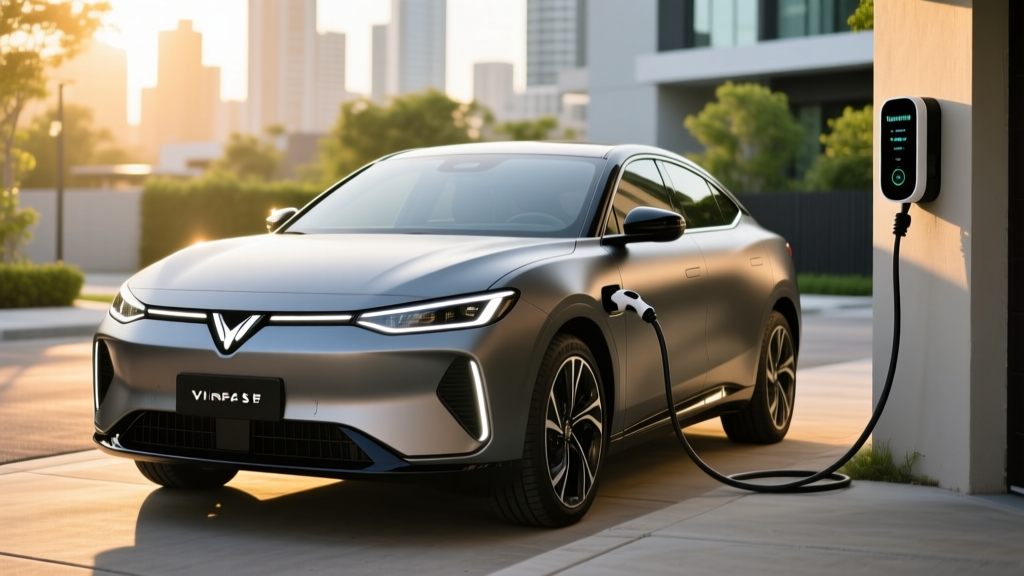
The VinFast VF 6 occupies a rare position in the US electric-vehicle market: a subcompact crossover priced near the affordable end of the EV spectrum, wrapped in a distinctive Pininfarina-penned design, and backed by one of the longest battery warranties in the industry. If you've been searching for a 2024 VinFast VF 6 for sale, you've likely noticed the limited dealer footprint and a spec sheet that raises more questions than it answers. This review cuts through the marketing with exact numbers on range, charging, performance, pricing, and tax-credit eligibility so you can decide whether the VF 6 earns a spot on your shortlist.
Quick Verdict: Who the VF 6 Is For
The VF 6 targets urban and suburban commuters who want a compact EV with standout styling, respectable city range, and low running costs — without stepping up to the $40,000+ tier. It works best as a daily driver for one or two occupants, with enough cargo flexibility for weekly groceries and carry-on luggage. Road-trippers and families needing three-across seating will want to look at the larger VF 8 or competitors like the Hyundai Ioniq 5. If you have reliable Level 2 home charging and your commute stays under 150 miles round-trip, the VF 6's LFP battery and generous warranty make it a compelling, if niche, choice.
Range, Efficiency, and the Real-World Caveat
The 2024 VF 6 is offered in two trims — Eco and Plus — sharing the same battery pack but differing in motor output and efficiency. Here is the core efficiency data as published by the manufacturer and cross-referenced with fueleconomy.gov:
| Metric | VF 6 Eco | VF 6 Plus |
|---|---|---|
| EPA Estimated Range | ~248 miles | ~237 miles |
| Usable Battery Capacity | 59.6 kWh (LFP) | 59.6 kWh (LFP) |
| Combined Efficiency | ~29 kWh/100 mi | ~31 kWh/100 mi |
| MPGe (Combined) | ~116 MPGe | ~109 MPGe |
| Drivetrain | FWD, single motor | FWD, single motor |
The VF 6 uses a lithium iron phosphate (LFP) battery. LFP cells trade energy density for longevity — they tolerate daily 100% charging better than NMC chemistries and typically degrade more slowly over thousands of cycles. The trade-off is heavier weight per kWh and reduced cold-weather performance compared to NMC packs found in vehicles like the Tesla Model Y or Hyundai Ioniq 5.
Charging Speed: DC Fast and Home Level 2
Charging speed is where budget EVs often disappoint, and the VF 6 is adequate rather than exceptional. Here's the breakdown by charging level:
| Charging Level | Power / Rate | Time or Miles Added |
|---|---|---|
| Level 1 (120V household) | ~1.4 kW | ~4–5 miles per hour |
| Level 2 (240V home/public) | ~11 kW (onboard charger) | ~35–40 miles per hour; full charge ~6 hrs |
| DC Fast Charge (CCS) | Peak ~76 kW | 10–80% in ~34 minutes |
The ~76 kW peak DC rate is the VF 6's most notable limitation for road-trip use. Modern competitors like the Ioniq 5 (peak ~240 kW) or Tesla Model Y (peak ~250 kW) add 10–80% in roughly 18 minutes. The VF 6's charge curve holds near peak from roughly 10–50% state of charge, then tapers progressively — expect the 50–80% segment to take nearly as long as the first 40%. For daily use with overnight Level 2 charging, this is irrelevant. For interstate travel, it means planning 35–40-minute stops rather than 20-minute pit stops.
kW vs kWh refresher: kW (kilowatts) measures the rate of energy flow — how fast you're charging. kWh (kilowatt-hours) measures the total energy stored in the battery. The VF 6's 59.6 kWh battery is the "tank size"; the 76 kW peak is the "pump speed."
Performance and Drivetrain
| Spec | VF 6 Eco | VF 6 Plus |
|---|---|---|
| Motor Type | Single front motor | Single front motor |
| Horsepower | 134 hp | 201 hp |
| Torque | 137 lb-ft | 228 lb-ft |
| 0–60 mph (est.) | ~9.5 seconds | ~6.8 seconds |
| Top Speed | ~93 mph | ~112 mph |
The Eco trim's 134 hp makes it a relaxed city runabout — adequate for merging and passing but not quick. The Plus trim's 201 hp transforms the character entirely, delivering the kind of instant electric torque that makes the VF 6 genuinely fun on on-ramps and around town. Neither trim offers all-wheel drive; this is a front-wheel-drive-only platform, which limits its appeal in heavy-snow regions.
Interior, Cargo, and Technology
The VF 6's cabin leans modern and minimalist, dominated by a 12.9-inch central touchscreen in the Plus trim (10.4-inch in Eco). There is no traditional instrument cluster — all driving information routes through the center display, which some drivers find distracting and others quickly adapt to.
Dimensions and space:
- Cargo volume (rear seats up): ~18.3 cu ft
- Cargo volume (rear seats folded): ~50.2 cu ft
- Front headroom: ~39.1 inches
- Rear legroom: ~35.8 inches
- Seating capacity: 5 passengers
Rear legroom is tight compared to the Hyundai Kona Electric (~38.2 inches) or the Kia Niro EV. Two adults fit comfortably; three across is a squeeze. Cargo space handles a week of groceries or two large suitcases with room to spare.
Tech highlights:
- Wireless Apple CarPlay and Android Auto (Plus trim; wired on Eco)
- Over-the-air (OTA) software updates
- ADAS suite: adaptive cruise control, lane-keeping assist, automatic emergency braking, blind-spot monitoring
- Virtual assistant with voice control
Notable drawbacks: Build quality on early 2024 units drew mixed reviews, with some owners reporting panel-gap inconsistencies and infotainment lag. The lack of a physical instrument cluster and minimal tactile buttons frustrates some drivers. The ADAS system is SAE Level 2 — it requires full driver attention and hands-on-wheel supervision at all times. It is not autonomous driving.
Pricing, Tax Credits, and Total Cost
| Trim | Base MSRP | §30D Federal Credit | Effective Price (if eligible) |
|---|---|---|---|
| VF 6 Eco | ~$31,750 | Up to $7,500* | ~$24,250 |
| VF 6 Plus | ~$35,900 | Up to $7,500* | ~$28,400 |
*Federal tax credit eligibility under IRS §30D is subject to multiple requirements. Consult irs.gov and a tax professional before purchasing.
Tax credit eligibility checklist (§30D, current rules):
- MSRP cap: The VF 6 qualifies as an SUV/crossover, so the MSRP cap is $80,000 — well above its sticker price.
- Buyer income limits: AGI must not exceed $150,000 (single), $225,000 (head of household), or $300,000 (joint).
- Battery sourcing: Critical minerals and battery component requirements phase in progressively. VinFast has faced scrutiny over supply-chain transparency — verify current-year sourcing compliance on the IRS eligible-vehicle list before relying on the credit.
- Point-of-sale transfer: Eligible buyers can transfer the credit to the dealer at purchase, reducing the upfront price directly rather than waiting for a tax refund.
- Assembly: Final assembly must occur in North America. Confirm the VIN qualifies via the DOE VIN decoder.
If the full $7,500 credit applies, the VF 6 Eco drops to roughly $24,250 — making it one of the least expensive new EVs available in the US market. However, the sourcing and assembly requirements are strict, and VinFast's evolving supply chain means eligibility can shift between model years. Always verify before signing paperwork.
Warranty and Battery Longevity
VinFast backs the VF 6 with one of the strongest warranty packages in the segment:
- Battery warranty: 10 years / 124,000 miles (whichever comes first), with capacity retention guaranteed above 70% of original capacity
- Powertrain warranty: 10 years / 124,000 miles
- Bumper-to-bumper: 7 years / 75,000 miles
- Roadside assistance: 7 years / unlimited miles
The 10-year battery warranty outpaces competitors like Hyundai (10yr/100k mi), Tesla (8yr/120k mi), and most others in the sub-$40k EV space. Combined with LFP chemistry's inherent cycle-life advantage, long-term degradation should be modest — industry data suggests LFP packs typically retain 85–90% capacity after 1,000 full charge cycles. That translates to well over 200,000 miles before hitting the 70% warranty threshold.
VF 6 vs. Key Competitors
| Spec | VinFast VF 6 Plus | Hyundai Kona Electric | Kia Niro EV | Chevrolet Equinox EV 2LT |
|---|---|---|---|---|
| EPA Range | ~237 mi | 261 mi | 239 mi | 319 mi |
| Battery (kWh) | 59.6 (LFP) | 65.4 (NMC) | 64.8 (NMC) | 85 (NMC) |
| Peak DC Charge | ~76 kW | ~100 kW | ~77 kW | ~150 kW |
| 0–60 mph | ~6.8s | ~7.5s | ~7.8s | ~8.0s |
| Base MSRP | ~$35,900 | ~$32,975 | ~$39,600 | ~$36,100 |
| Battery Warranty | 10yr/124k mi | 10yr/100k mi | 10yr/100k mi | 8yr/100k mi |
The VF 6 Plus is the quickest in this group but trails on range and charging speed. The Kona Electric offers a better balance of range, price, and dealer network. The Equinox EV dominates on range and DC charging but costs more before incentives. The Niro EV is practical but pricey for its range. Your priority — speed, range, charging, or warranty — determines the winner.
- Class-leading 10-year/124,000-mile battery warranty
- LFP chemistry supports daily 100% charging with minimal degradation
- Quick acceleration in Plus trim (201 hp, ~6.8s 0–60)
- Distinctive Pininfarina design stands out in a conservative segment
- Low effective price if full §30D credit applies
- DC fast charging limited to ~76 kW — slow for road trips
- Real-world highway and cold-weather range drops significantly below EPA
- Limited dealer and service network in the US
- No AWD option; FWD only
- No physical instrument cluster; all info on center screen
- Tax credit eligibility uncertain due to battery-sourcing rules
Frequently Asked Questions
What is the real-world range of the 2024 VinFast VF 6?
In mild weather with mixed city/suburban driving, expect roughly 210–235 miles from the Eco trim. Sustained highway driving at 70+ mph reduces this to approximately 195–215 miles. In freezing temperatures, plan for 165–185 miles due to LFP chemistry's cold-weather sensitivity and the energy demands of cabin heating.
How fast does the VF 6 charge at home and on DC fast chargers?
On a Level 2 (240V) home charger, the VF 6 accepts up to ~11 kW, adding roughly 35–40 miles of range per hour and reaching a full charge in about 6 hours. On a DC fast charger, it peaks at ~76 kW, taking approximately 34 minutes from 10–80% state of charge. This is slower than many competitors and worth considering if you road-trip frequently.
Does the 2024 VinFast VF 6 qualify for the $7,500 federal EV tax credit?
It may, but eligibility depends on several factors under IRS §30D: your adjusted gross income must fall below the thresholds ($150k single / $300k joint), the vehicle must meet critical-mineral and battery-component sourcing requirements, and final assembly must be in North America. VinFast's supply-chain compliance has been in flux — verify the specific VIN on the IRS eligible-vehicle list and consult a tax professional before counting on the credit.
How much does the VF 6 cost after tax credits?
If you qualify for the full $7,500 §30D credit and apply it at point of sale, the VF 6 Eco drops to roughly $24,250 and the Plus to about $28,400. Without the credit, expect to pay the full MSRP (~$31,750 Eco / ~$35,900 Plus) plus destination and dealer fees. State and local incentives may stack on top — check your jurisdiction's energy-office website.
Is the VinFast VF 6 worth buying over a Kona Electric or Equinox EV?
If you prioritize warranty length, distinctive styling, and LFP battery longevity — and you mostly drive in the city with home charging — the VF 6 is a strong value, especially with the tax credit. If road-trip charging speed, maximum range, or a large dealer/service network matter more, the Hyundai Kona Electric or Chevrolet Equinox EV are more practical choices. Test-drive both and compare real-world feel before committing.
What is the VF 6's battery replacement cost?
VinFast has not published a flat replacement figure for the VF 6's 59.6 kWh LFP pack. Industry estimates for packs in this size range fall between $8,000 and $14,000 out of warranty. However, LFP batteries are engineered for extended cycle life, and the 10-year/124,000-mile warranty with a 70% capacity-retention guarantee makes an out-of-pocket replacement unlikely for most first owners.
Sources: fueleconomy.gov (EPA range and efficiency data), VinFast US official VF 6 page, IRS §30D Clean Vehicle Credit guidelines.