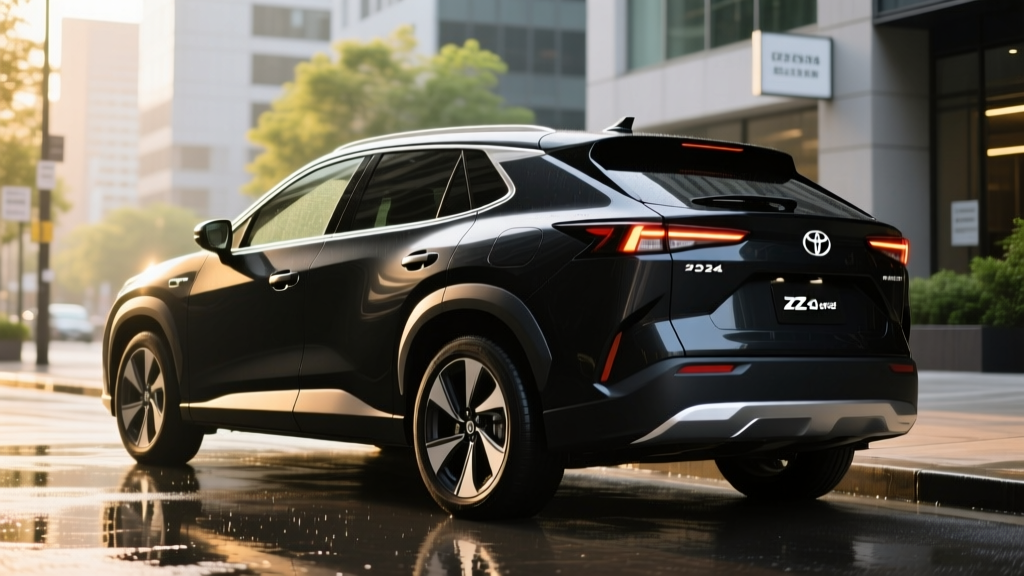
The 2024 Toyota bZ4X Limited sits at the top of Toyota's first dedicated electric crossover lineup, promising the brand's legendary reliability in a battery-electric package. But in a segment crowded with longer-range, faster-charging rivals, does the bZ4X Limited earn its premium price? After examining EPA data, real-world driving behavior, and ownership economics, the answer is nuanced: it's a competent daily driver with notable caveats around highway range and DC charging speed.
Range and Real-World Efficiency
The 2024 Toyota bZ4X Limited comes exclusively with all-wheel drive (AWD) and dual motors, which reduces its range compared to the front-wheel-drive XLE trim. Here's what the numbers look like:
EPA Estimated Range: 228 miles (AWD Limited)
Real-World Highway (65-75 mph): Expect approximately 185–205 miles in moderate temperatures
Real-World City/Suburban: Closer to 215–230 miles with regenerative braking
Cold Weather Impact (below 32°F): Range can drop 20–30%, yielding roughly 160–180 miles
Efficiency: 102 MPGe combined / 33 kWh per 100 miles (EPA)
The bZ4X's efficiency is competitive, but its smaller 71.4 kWh usable battery capacity (72.8 kWh gross) limits total range. The AWD system uses two AC permanent-magnet synchronous motors producing a combined 214 horsepower and 248 lb-ft of torque. Unlike some rivals with heat pumps standard, the bZ4X uses a resistive heater for cabin warming, which contributes to steeper cold-weather range loss. Toyota does offer a radiant cabin heater in some markets, but U.S. models rely on conventional HVAC.
For context, the EPA's official bZ4X page confirms the 228-mile AWD figure and 102 MPGe combined rating. Highway drivers covering 200+ miles between charges will need to plan stops carefully, especially in winter or mountainous terrain.
Charging Speed: DC Fast and Home Level 2
Charging is where the bZ4X Limited reveals its most significant competitive gap. While adequate for overnight home charging, its DC fast-charging performance lags behind the 800-volt architectures found in Hyundai/Kia models.
| Charging Level | Power / Rate | Time / Speed |
|---|---|---|
| Level 1 (120V household) | ~1.4 kW | ~3–4 miles per hour |
| Level 2 (240V home/public) | 7.2 kW (onboard charger max) | ~23 miles per hour; 0–100% in ~9.5 hours |
| DC Fast Charge (CCS) | Peak 150 kW | 10–80% in ~30 minutes (under ideal conditions) |
The 150 kW peak DC rate is the headline number, but real-world charging curves tell a more complete story. The bZ4X sustains approximately 120–135 kW between 10–40% state of charge, then tapers progressively. Above 60% SoC, speeds drop below 80 kW, and charging slows further past 80%. On a 350 kW Electrify America station, expect a 10–80% session to take 30–35 minutes if the battery is preconditioned (the bZ4X does precondition when navigation routes to a charger).
Compare this to the Hyundai Ioniq 5 AWD, which peaks at 240 kW on 800V architecture and hits 10–80% in roughly 18 minutes. For road-trippers who DC-charge frequently, this difference adds up.
The 7.2 kW onboard Level 2 charger is standard for the segment. On a 48-amp home wall connector (like a ChargePoint Home Flex or Emporia Level 2), the bZ4X adds about 23 miles of range per hour of charging. Most owners charging overnight from 20% to full will wake up to a complete battery in 8–10 hours.
Performance and Drivetrain
The bZ4X Limited AWD pairs front and rear electric motors for a combined 214 hp and 248 lb-ft of torque. Toyota quotes a 0–60 mph time of approximately 5.8 seconds — brisk for daily driving but not sports-car quick. The single-speed direct-drive transmission delivers smooth, linear acceleration typical of EVs.
Key performance specifications:
- 0–60 mph: ~5.8 seconds (manufacturer estimate)
- Horsepower: 214 hp combined
- Torque: 248 lb-ft combined
- Drivetrain: Dual-motor AWD (front AC synchronous + rear AC synchronous)
- Top Speed: Electronically limited to ~112 mph
- Towing Capacity: Not rated for towing
The AWD system provides confident traction in rain and light snow, with torque vectoring between axles. Ride quality is a strength — the bZ4X uses a multi-link rear suspension that absorbs road imperfections well, and cabin isolation is excellent at highway speeds. However, the steering is deliberately light and numb, tuned for comfort rather than engagement.
Regenerative braking is adjustable via paddle shifters behind the steering wheel, offering multiple levels of regen. However, the bZ4X does not offer true one-pedal driving (full stop via regen alone) like some competitors. You'll still use the friction brake pedal for complete stops.
Interior, Cargo, and Technology
The bZ4X Limited's interior reflects Toyota's conservative approach to EV design. Materials are upscale but not luxurious, with SofTex synthetic leather upholstery, heated and ventilated front seats, a heated steering wheel, and a panoramic fixed glass roof (no shade, which can increase cabin heat on sunny days).
Passenger and Cargo Dimensions:
- Front Headroom: 39.4 inches
- Front Legroom: 41.5 inches
- Rear Headroom: 38.1 inches
- Rear Legroom: 35.4 inches (adequate for adults, but not class-leading)
- Cargo Volume (behind rear seats): 27.7 cubic feet
- Cargo Volume (rear seats folded): 56.9 cubic feet
- Front Trunk (Frunk): None — the bZ4X has no front storage compartment
The 12.3-inch touchscreen runs Toyota's Audio Multimedia system with wireless Apple CarPlay and Android Auto, built-in navigation, and cloud-based voice recognition. The interface is responsive but the menu structure requires more taps than ideal for common functions. A 7-inch digital instrument cluster sits behind the steering wheel (positioned low, similar to Peugeot's i-Cockpit, which some drivers find obstructed by the wheel rim).
Driver Assistance (Toyota Safety Sense 3.0):
The bZ4X Limited includes Toyota's latest SAE Level 2 driver-assist suite:
- Pre-Collision System with Pedestrian Detection
- Lane Departure Alert with Steering Assist
- Lane Tracing Assist (centering on highways)
- Dynamic Radar Cruise Control (full-speed adaptive)
- Road Sign Assist
- Automatic High Beams
- Blind Spot Monitor with Rear Cross-Traffic Alert
- Front and Rear Parking Assist with Automatic Braking
These systems work reliably, though Lane Tracing Assist can be overly sensitive to lane markings and occasionally disengages without warning. This is Level 2 automation — the driver must remain engaged and hands on the wheel at all times. It is not "self-driving" capability.
Pricing, Trims, and Federal Tax Credit Eligibility
The 2024 Toyota bZ4X is offered in two trims, with the Limited at the top of the range. Pricing reflects its premium positioning, though value depends heavily on tax credit eligibility.
| Trim | Drivetrain | MSRP (incl. destination) |
|---|---|---|
| XLE | FWD | $43,215 |
| XLE | AWD | $45,295 |
| Limited | AWD only | $48,035 |
The Limited AWD tested here starts at $48,035 including the $1,350 destination charge. Options are limited to paint color (no premium packages), so as-tested pricing typically lands between $48,035 and $48,500 depending on metallic paint selection.
The 2024 Toyota bZ4X does qualify for the $7,500 federal tax credit, but with critical caveats:
- MSRP Cap: The bZ4X is classified as an SUV, so the MSRP cap is $80,000. All trims qualify.
- Buyer Income Cap: Adjusted gross income must not exceed $150,000 (single), $225,000 (head of household), or $300,000 (joint filers).
- Battery Sourcing: Toyota sources battery cells from Panasonic (Japan), and as of 2024, the bZ4X meets critical mineral and battery component requirements for the full $7,500 credit. However, sourcing rules tighten annually — verify current eligibility on IRS.gov before purchase.
- Point-of-Sale Transfer: As of 2024, buyers can transfer the credit to the dealer at purchase, reducing the upfront cost by $7,500 rather than waiting for a tax refund.
Not all buyers will qualify. If your income exceeds the caps, or if battery sourcing rules change mid-year, the credit may be reduced or eliminated. Always confirm eligibility with a tax professional and check the IRS's updated vehicle eligibility list before signing paperwork.
Battery, Warranty, and Long-Term Ownership
The bZ4X uses a 72.8 kWh (gross) lithium-ion battery pack with NMC (nickel-manganese-cobalt) chemistry, supplied by Panasonic. NMC offers higher energy density than LFP (lithium iron phosphate), enabling more range in a smaller package, but it's more sensitive to high state-of-charge stress and extreme temperatures over time.
Warranty Coverage:
- Basic Vehicle: 3 years / 36,000 miles
- Powertrain (motors, inverter): 5 years / 60,000 miles
- EV Battery: 8 years / 100,000 miles (covers defects and capacity loss below 70% of original capacity)
- Corrosion Perforation: 5 years / unlimited miles
- Roadside Assistance: 2 years / 25,000 miles
Toyota's 8-year/100,000-mile battery warranty is standard for the segment, matching competitors like Hyundai, Kia, and Ford. The 70% capacity retention threshold is typical — if your battery degrades below 70% of its original 72.8 kWh capacity within the warranty period, Toyota will repair or replace it. Real-world degradation data for the bZ4X is still limited (the model launched in 2023), but Panasonic NMC cells in other applications have shown 10–15% degradation over 100,000 miles under normal use.
Toyota recommends charging to 80% for daily use and reserving 100% charges for long trips. The vehicle's battery management system includes a buffer (approximately 1.4 kWh unusable) to protect against deep discharge and overcharge stress.
How Does It Compare to Key Competitors?
The bZ4X Limited competes in the midsize electric crossover segment against established players. Here's how it stacks up on critical metrics:
| Metric | Toyota bZ4X Limited | Hyundai Ioniq 5 SEL AWD | Tesla Model Y Long Range |
|---|---|---|---|
| EPA Range | 228 mi | 260 mi | 303 mi |
| Battery (usable) | 71.4 kWh (NMC) | 77.4 kWh (NMC) | 75 kWh (NMC) |
| Peak DC Charge | 150 kW | 240 kW (800V) | 250 kW |
| 10–80% DC Time | ~30 min | ~18 min | ~22 min |
| 0–60 mph | 5.8 sec | 5.1 sec | 4.8 sec |
| MSRP (AWD) | $48,035 | $50,100 | $48,990 |
| Cargo (rear seats up) | 27.7 cu ft | 27.2 cu ft | 30.2 cu ft |
The bZ4X Limited is priced competitively, but the Ioniq 5 offers 32 more miles of range and significantly faster DC charging for roughly $2,000 more. The Model Y Long Range dominates on range and Supercharger network access, though its interior materials and ride quality are less refined than the Toyota.
For buyers who prioritize Toyota's dealer network, reliability reputation, and conservative engineering, the bZ4X makes sense. For those who road-trip frequently or need maximum range, the Ioniq 5 or Model Y are stronger choices.
Pros and Cons: The Honest Assessment
- Comfortable, quiet ride with excellent suspension tuning
- Toyota Safety Sense 3.0 is comprehensive and reliable
- Strong build quality and Toyota dealer support
- Qualifies for full $7,500 federal tax credit (if eligible)
- Heated/ventilated seats and heated steering wheel standard on Limited
- Competitive efficiency at 102 MPGe combined
- 228-mile EPA range is below segment average; highway range ~190 mi
- 150 kW peak DC charging is slow vs. 800V competitors
- No front trunk (frunk) for additional storage
- Panoramic glass roof lacks a shade, increasing heat gain
- Infotainment menu structure is cluttered
- No one-pedal driving mode (regen doesn't bring to full stop)
- Not rated for towing
Who Should Buy the 2024 Toyota bZ4X Limited?
- Toyota-loyal buyers transitioning to an EV who want familiar dealer support and proven reliability
- Commuters with round trips under 150 miles who can charge at home overnight
- Second-vehicle households where a gas car handles long road trips
- Urban/suburban drivers who prioritize ride comfort and safety tech over maximum range
Look Elsewhere If:
- You regularly drive 250+ miles between charges or road-trip frequently
- You need fast DC charging for apartment dwellers without home charging
- You require towing capability
- You want cutting-edge infotainment or one-pedal driving
Frequently Asked Questions
What is the real-world range of the 2024 Toyota bZ4X Limited?
The EPA rates the bZ4X Limited AWD at 228 miles. In real-world highway driving at 65–75 mph, expect 185–205 miles. City driving with regenerative braking can approach 215–230 miles. Cold weather (below freezing) reduces range by 20–30%, yielding roughly 160–180 miles.
How fast does the bZ4X charge at home and on DC fast chargers?
On a Level 2 home charger (240V, 48A), the bZ4X charges at 7.2 kW, adding about 23 miles per hour. A full charge from empty takes ~9.5 hours. On DC fast chargers, it peaks at 150 kW and charges 10–80% in approximately 30 minutes under ideal conditions, though real-world sessions often take 30–35 minutes due to charging curve taper.
How much does the 2024 Toyota bZ4X Limited cost after tax credits?
The MSRP is $48,035 including destination. If you qualify for the full $7,500 federal tax credit (income and sourcing rules apply), the effective price drops to $40,535. State incentives may reduce the cost further, but eligibility varies by jurisdiction — check your state's EV rebate program.
Does the 2024 Toyota bZ4X qualify for the federal EV tax credit?
Yes, the bZ4X qualifies for the full $7,500 federal tax credit under current IRS §30D rules, provided the buyer meets income caps ($150K single / $300K joint) and the vehicle's battery sourcing meets critical mineral requirements. Verify eligibility on IRS.gov before purchase, as sourcing rules can change.
Is the bZ4X Limited worth buying vs. the Hyundai Ioniq 5 or Tesla Model Y?
It depends on priorities. The bZ4X offers superior ride comfort, Toyota reliability, and strong safety tech. However, the Ioniq 5 provides 32 more miles of range and much faster DC charging (18 min vs. 30 min 10–80%) for ~$2,000 more. The Model Y Long Range offers 303 miles of range and Supercharger access. Choose the bZ4X if you value Toyota's brand and comfort; choose the Ioniq 5 or Model Y if range and charging speed are critical.
Does the bZ4X have one-pedal driving?
No. The bZ4X offers adjustable regenerative braking via paddle shifters, but it does not bring the vehicle to a complete stop using regen alone. You must use the friction brake pedal for full stops.
What is the battery warranty on the bZ4X?
Toyota covers the EV battery for 8 years or 100,000 miles, whichever comes first. The warranty covers defects and capacity loss below 70% of original capacity.