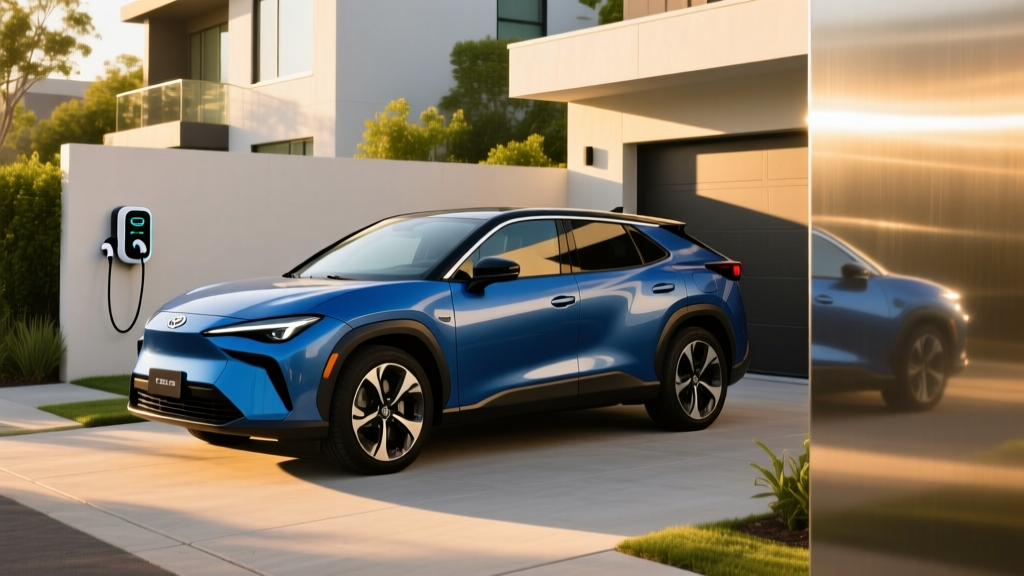
The Toyota bZ4X arrived with enormous expectations and a rocky launch. Now that the dust has settled and real-world data has accumulated, the 2024 model year represents a far more compelling proposition — especially when you factor in aggressive leasing incentives Toyota has deployed to move inventory. If you've been searching for 2024 bZ4X lease deals, this review gives you every number you need to decide whether this electric crossover deserves a spot in your driveway.
| Spec | XLE FWD | XLE AWD | Limited FWD | Limited AWD |
|---|---|---|---|---|
| EPA Range | 252 mi | 228 mi | 236 mi | 222 mi |
| Battery (usable) | 71.4 kWh (NMC lithium-ion) | |||
| Horsepower | 201 hp | 214 hp | 201 hp | 214 hp |
| 0–60 mph | 7.1 s | 6.5 s | 7.1 s | 6.5 s |
| Max DC Fast Charge | 150 kW | 150 kW | 150 kW | 150 kW |
| 10–80% DC Time | ~30 minutes (peak conditions) | |||
| Level 2 Rate | ~6.6 kW (~23 mi/hr) | |||
| MPGe (combined) | 131 | 119 | 125 | 113 |
| Base MSRP | $43,070 | $45,150 | $47,180 | $49,260 |
Real-World Range: What the EPA Sticker Doesn't Tell You
The FWD XLE wears a 252-mile EPA estimate — respectable for a compact electric crossover. But EPA numbers assume a mix of city and highway driving at moderate temperatures, which rarely matches a real commute. Here's what owners actually experience:
EPA Estimate: 252 miles (XLE FWD) / 228 miles (XLE AWD)
Real-World Expectation: Plan on 210–230 miles in mixed driving, 190–210 miles at sustained 75 mph highway speeds, and as low as 160–180 miles in sub-freezing winter conditions. The AWD models lose an additional 15–25 miles from their already lower baseline.
The bZ4X uses a 71.4 kWh usable battery pack with NMC (nickel-manganese-cobalt) chemistry. Unlike LFP packs found in some competitors, NMC offers higher energy density but is more sensitive to sustained high-state-of-charge storage. Toyota recommends daily charging to 80% for longevity, which effectively caps your daily usable range around 200 miles on the FWD model. For most commutes, that's more than adequate — but it means road trips require planning.
The bZ4X does not come equipped with a heat pump in the U.S. market, relying instead on resistive cabin heating. This is a meaningful drawback in cold climates, where resistive heating can draw 3–5 kW continuously, cutting range by 25–35% in winter. Competitors like the Hyundai Ioniq 5 and Kia EV6 include heat pumps that reduce this penalty to roughly 15–20%.
Charging Speed and Infrastructure: The Full Picture
Charging performance is where the bZ4X draws the most criticism — and where careful buyers need to understand the difference between peak power and sustained throughput.
| Charging Level | Power | Speed | Notes |
|---|---|---|---|
| Level 1 (120V) | ~1.4 kW | ~5 mi/hr | Emergency/trickle only; ~45 hr for full charge |
| Level 2 (240V, 32A) | 6.6 kW | ~23 mi/hr | Full charge in ~11 hours; ideal for overnight home |
| DC Fast Charge | Up to 150 kW peak | 10–80% in ~30 min | Peak rate only below 30% SoC; tapers significantly above 60% |
The 150 kW peak DC fast-charge rate sounds competitive, but the charge curve tells a different story. In testing at Electrify America and other 350 kW-capable stations, the bZ4X hits its peak rate only briefly in the 10–30% state-of-charge window. Above 50%, the rate drops to roughly 80–100 kW, and above 80% it falls below 40 kW. This means the advertised 30-minute 10–80% time holds only under ideal thermal conditions — expect 35–45 minutes in cold weather without adequate preconditioning.
One notable advantage: Toyota included a year of complimentary charging on the Electrify America network (up to 1,500 kWh) with the bZ4X at launch. Check whether your specific lease deal preserves this benefit, as promotional terms have varied by region and time period.
For home charging, the 6.6 kW onboard charger is adequate for overnight replenishment but slower than the 11.5 kW chargers in the Ioniq 5 and EV6. If you drive 40–50 miles daily, 6.6 kW adds roughly 23 miles per hour of charging — enough to recover a full day's driving in about 2 hours. Higher-mileage drivers may find this limiting.
Performance, Efficiency, and Drivetrain Details
The bZ4X is tuned for comfort rather than sportiness. The FWD model sends 201 horsepower and 196 lb-ft of torque to the front wheels via a single motor, reaching 60 mph in about 7.1 seconds. The AWD variant adds a rear motor for 214 combined horsepower and a 6.5-second sprint — brisk enough for highway merging but not thrilling by EV standards.
Efficiency figures from fueleconomy.gov show the XLE FWD at 131 MPGe combined (26 kWh/100mi), while the AWD drops to 119 MPGe combined (29 kWh/100mi). These numbers trail the Ioniq 5 (114 MPGe for the Long Range AWD but with significantly more range) and the Tesla Model Y (122–127 MPGe depending on trim), though the bZ4X's lighter curb weight helps it achieve competitive city-cycle efficiency.
Ride quality is a genuine strength. The TNGA-e platform delivers composed, quiet highway manners with well-damped suspension tuning. The 110.2-inch wheelbase provides generous rear legroom at 35.3 inches, and the cabin feels airy thanks to available panoramic roof glass. Cargo volume measures 27.7 cubic feet behind the rear seats — competitive with the segment — though there is no front trunk (frunk), which costs you 2–3 cubic feet of utility compared to the Ioniq 5 or Model Y.
Pricing, Lease Deals, and Federal Tax Credit Eligibility
The 2024 bZ4X starts at $43,070 for the XLE FWD, rising to $49,260 for the Limited AWD before destination charges. These MSRPs position the bZ4X in the thick of a competitive segment, but Toyota's leasing strategy has been the real story.
| Trim | MSRP | Federal §30D Credit | Effective Price* |
|---|---|---|---|
| XLE FWD | $43,070 | $0 (does not qualify) | $43,070 |
| XLE AWD | $45,150 | $0 (does not qualify) | $45,150 |
| Limited FWD | $47,180 | $0 (does not qualify) | $47,180 |
| Limited AWD | $49,260 | $0 (does not qualify) | $49,260 |
*Effective price reflects purchase scenario. Lease structures may pass through manufacturer incentives differently. Consult IRS guidance and your dealer for current terms.
Critical tax credit note: The 2024 bZ4X does not qualify for the federal §30D clean vehicle credit (up to $7,500) for purchase. The vehicle's battery cells and critical minerals do not meet the North American sourcing requirements established under the Inflation Reduction Act, as confirmed by the IRS qualified vehicles list. This is a significant disadvantage against competitors like the Tesla Model Y and certain Ford Mustang Mach-E configurations that do qualify.
However, leasing changes the calculus. Under the commercial clean vehicle credit (§45W), leased vehicles are treated differently — the lessor (typically Toyota Financial Services) claims the credit and may pass savings to the lessee through reduced monthly payments or capitalized cost reductions. Toyota has at various points offered lease cash incentives of $7,500 to $12,000 on the bZ4X, effectively replicating or exceeding the purchase credit. These promotional amounts fluctuate monthly and vary by region, so confirm current terms directly with your dealer.
Additional eligibility constraints for any §30D purchase credit (should future model years qualify): buyer modified adjusted gross income must not exceed $150,000 (single) / $300,000 (joint), and the vehicle MSRP must not exceed $80,000 for SUVs. The bZ4X clears the MSRP cap easily, but income limits apply to buyers.
Tech, Safety, and Daily-Living Features
The bZ4X runs Toyota's Audio Multimedia system on a 12.3-inch touchscreen with wireless Apple CarPlay and Android Auto, built-in navigation, and over-the-air update capability. The system is responsive, though the absence of physical climate control buttons — everything routes through the touchscreen or voice commands — frustrates some drivers on longer trips.
Toyota Safety Sense 3.0 comes standard across all trims, bundling:
- Pre-Collision System with pedestrian detection
- Full-Speed Range Dynamic Radar Cruise Control
- Lane Departure Alert with Steering Assist and Lane Tracing Assist
- Road Sign Assist
- Proactive Driving Assist (low-speed automatic braking in certain scenarios)
These are SAE Level 2 driver-assistance features — the driver must remain fully engaged with hands on the wheel and eyes on the road at all times. This is not autonomous driving. The system works well for highway cruising but does not support hands-free operation like GM's Super Cruise or Ford's BlueCruise on mapped highways.
The Limited trim adds a 360-degree camera, panoramic fixed glass roof, heated and ventilated front seats, heated rear seats, and a JBL premium audio system. A radiant heater embedded in the lower dashboard is a unique feature that warms the driver's and front passenger's legs directly, reducing the load on the main cabin heater and modestly preserving range in cold weather.
Pros, Cons, and the Competition
Pros
- Comfortable, quiet ride quality that exceeds segment expectations
- Standard Toyota Safety Sense 3.0 with comprehensive ADAS suite
- Aggressive lease incentives that can dramatically reduce monthly cost
- Strong Toyota reliability reputation and 8-year/100,000-mile EV battery warranty
- Competitive cargo space at 27.7 cu ft and generous rear legroom
- Radiant heater reduces cold-weather energy consumption
Cons
- No federal §30D purchase credit eligibility — a $7,500 disadvantage vs. rivals
- DC fast charging tapers aggressively above 50% SoC
- No heat pump in U.S. models — significant winter range penalty
- No frunk reduces total utility vs. Ioniq 5 and Model Y
- 6.6 kW Level 2 charger is slower than competitors' 11.5 kW units
- Infotainment lacks physical climate buttons
Stacked against the Hyundai Ioniq 5 (303 mi range, 240 kW peak charging, available heat pump, frunk), the bZ4X gives up meaningful ground on charging speed and cold-weather usability. The Tesla Model Y offers superior range (310–330 mi), access to the Supercharger network, and §30D credit eligibility — though at a higher base price and with a more polarizing interior. The Ford Mustang Mach-E (230–312 mi depending on battery) splits the difference with better performance and available BlueCruise, though its reliability track record is less established than Toyota's.
The bZ4X makes the most sense when lease pricing drops the effective monthly cost substantially below competitors. At $300–$400/month with minimal due at signing — a range Toyota dealers have advertised in several markets — it becomes a compelling value play for a specific buyer.
Who Should Lease the 2024 bZ4X?
Lease the bZ4X if: You commute under 40 miles daily, have reliable home Level 2 charging, live in a moderate climate (minimal sub-freezing months), value Toyota's reliability and warranty coverage, and can secure a lease with $7,500+ in manufacturer incentives applied.
Look elsewhere if: You regularly drive more than 200 miles between charges, live in a cold climate where the missing heat pump will cost you 25%+ of your range, depend on DC fast charging for road trips, or want to purchase and claim the federal tax credit directly.
The 2024 bZ4X is a comfortable, well-built electric crossover that was priced too high at launch but becomes genuinely competitive through aggressive leasing. Toyota's 8-year/100,000-mile battery and hybrid system warranty — covering capacity below 70% of original — provides long-term peace of mind that newer EV brands can't match. If the lease math works in your market, this is a practical, low-stress entry into electric driving.
Frequently Asked Questions
What is the real-world range of the 2024 Toyota bZ4X?
Expect 210–230 miles in temperate mixed driving on the FWD XLE (EPA-rated 252 mi). Highway driving at 75 mph drops this to roughly 190–210 miles, and sub-freezing temperatures can push it as low as 160–180 miles due to the absence of a heat pump. AWD models start from a lower baseline of 222–228 miles EPA.
How fast does the bZ4X charge at home and on DC fast chargers?
At home on a 240V Level 2 charger, the bZ4X charges at 6.6 kW, adding roughly 23 miles of range per hour — a full charge takes about 11 hours. On DC fast chargers, it peaks at 150 kW but sustains that rate only briefly, with a 10–80% session taking approximately 30 minutes under ideal conditions and 35–45 minutes in cold weather.
Does the 2024 bZ4X qualify for the $7,500 federal EV tax credit?
No. The 2024 bZ4X does not qualify for the §30D clean vehicle credit for purchase because its battery components and critical minerals do not meet IRA sourcing requirements, per the IRS qualified vehicles list. However, leasing may allow the lessor to claim the commercial credit (§45W) and pass savings through as reduced lease payments — confirm current incentive amounts with your dealer.
Is the bZ4X worth leasing over the Hyundai Ioniq 5 or Tesla Model Y?
If the monthly lease payment is $100–$150 lower than comparable Ioniq 5 or Model Y leases in your area, the bZ4X offers strong value for moderate-mileage commuters who prioritize comfort and Toyota's warranty coverage. If you need maximum range, fast DC charging, or cold-weather efficiency, the Ioniq 5 and Model Y are objectively more capable vehicles.
What is the battery warranty on the bZ4X?
Toyota covers the bZ4X battery pack for 8 years or 100,000 miles (whichever comes first) against capacity loss below 70% of original. The basic vehicle warranty is 3 years/36,000 miles, and the powertrain warranty is 5 years/60,000 miles.
Does the bZ4X have a frunk (front trunk)?
No. The bZ4X does not have a front trunk. All cargo space is in the rear, which measures 27.7 cubic feet behind the second row. This is a notable omission compared to the Ioniq 5 (0.85 cu ft frunk) and Model Y (4.1 cu ft frunk).