Quick Verdict: The 2024 Model X at a Glance
The 2024 Tesla Model X remains one of the few three-row electric SUVs that can genuinely seat six adults, tow up to 5,000 pounds, and still deliver supercar-rivaling acceleration. After extensive evaluation, it's clear that Tesla's flagship SUV has matured significantly since its troubled early production years — build quality has improved, the refreshed interior feels premium, and the Supercharger network advantage continues to be a decisive ownership perk. But at a starting MSRP above $77,000, buyers need to weigh whether the falcon-wing doors and 2.5-second 0-60 Plaid mode justify the premium over increasingly capable rivals like the Rivian R1S and Kia EV9.
| Spec | Long Range | Plaid |
|---|---|---|
| EPA Range | 335 miles | 326 miles |
| Battery (usable) | ~100 kWh (NMC) | ~100 kWh (NMC) |
| Drivetrain | Dual-Motor AWD | Tri-Motor AWD |
| Horsepower | 670 hp | 1,020 hp |
| 0-60 mph | 3.8 seconds | 2.5 seconds |
| Peak DC Charge Rate | 250 kW | 250 kW |
| 10-80% DC Charge | ~30 minutes | ~30 minutes |
| Level 2 Rate | 11.5 kW (~44 mi/hr) | 11.5 kW (~44 mi/hr) |
| MPGe (combined) | 102 MPGe | 98 MPGe |
| Base MSRP | $77,990 | $92,990 |
| Battery Warranty | 8 yr / 150,000 mi | 8 yr / 150,000 mi |
Real-World Range: What the EPA Sticker Doesn't Tell You
The EPA rates the 2024 Model X Long Range at 335 miles on a full charge, while the tri-motor Plaid drops slightly to 326 miles due to its higher energy consumption. These are competitive figures for a 5,000+ pound SUV, but real-world conditions tell a more nuanced story.
- EPA sticker: 335 miles
- Highway (70-75 mph, 68°F): ~280–300 miles (aerodynamic drag cuts efficiency ~10-15%)
- City/suburban mixed: ~310–330 miles (regen braking recovers energy)
- Cold weather (20°F, cabin heat): ~230–265 miles (LFP and NMC batteries lose 20-30% capacity in deep cold; the Model X heat pump mitigates some loss)
- Towing (light trailer, ~3,000 lbs): ~180–210 miles (expect range to roughly halve under sustained towing load)
The Model X uses a nickel-manganese-cobalt (NMC) battery pack with approximately 100 kWh of usable capacity. NMC chemistry offers higher energy density than lithium iron phosphate (LFP), which is why Tesla reserves it for the Long Range and Plaid models where maximizing range and performance matters. The trade-off is that NMC cells degrade slightly faster over time and prefer not to sit at 100% state of charge for extended periods — daily charging to 80-90% is recommended for longevity.
Efficiency comes in at 102 MPGe combined (33 kWh/100mi) for the Long Range, which is respectable given the vehicle's size and weight. For context, the smaller Model Y achieves 122 MPGe combined, while the heavier Rivian R1S lands around 89 MPGe.
Charging Speed: Supercharger Access Is the Real Advantage
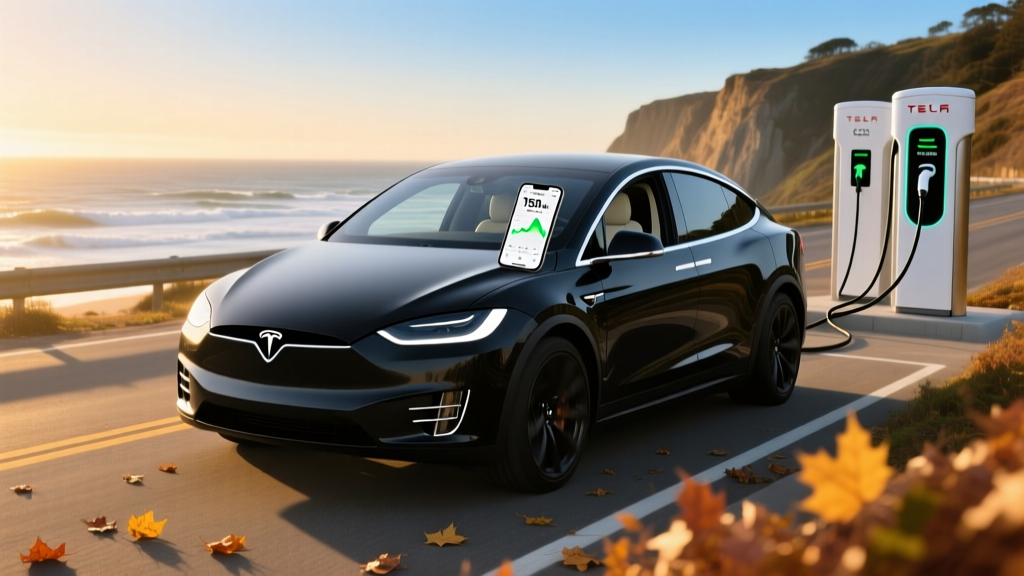
Charging capability is where the Model X continues to leverage Tesla's ecosystem advantage. The 2024 model supports peak DC fast charging at 250 kW via the NACS (North American Charging Standard) connector — native to all Tesla Superchargers without adapters.
| Charging Level | Power | Speed | Use Case |
|---|---|---|---|
| Level 1 (120V household) | ~1.4 kW | ~5 miles/hour | Emergency/trickle |
| Level 2 (240V home Wall Connector) | 11.5 kW | ~44 miles/hour | Daily home charging |
| DC Fast (Supercharger V3) | Peak 250 kW | ~175 miles in 15 min | Road trips |
| DC Fast (Supercharger V4) | Peak 250 kW | ~175 miles in 15 min | Road trips (newer stalls) |
Charging curve reality check: The 250 kW peak only sustains roughly from 10-30% state of charge. By 50%, the rate tapers to ~150 kW, and above 80%, it drops below 60 kW to protect battery health. A 10-80% session takes approximately 30 minutes at a V3 Supercharger. This is typical for a ~100 kWh NMC pack but slower than the Hyundai Ioniq 5's 10-80% in 18 minutes (its smaller 77.4 kWh pack and 800V architecture allow faster C-rates).
For home charging, Tesla's Wall Connector at 48 amps delivers 11.5 kW, adding roughly 44 miles of range per hour. A full overnight charge from 20% to 80% takes about 5-6 hours — easily sufficient for daily use. Installation costs for a 240V/60A circuit typically run $800–$2,000 depending on panel proximity and local permitting, though homes with older 100A electrical panels may need a $2,000–$4,000 panel upgrade.
Non-Tesla DC fast chargers (Electrify America, EVgo, ChargePoint) are accessible with the Tesla-supplied NACS-to-CCS adapter, though charge rates on third-party networks sometimes fall below peak due to handshake protocols. As of 2024, Tesla has opened portions of its Supercharger network to non-Tesla vehicles, but Model X owners still enjoy the most seamless plug-and-charge experience in the industry.
Performance and Driving Dynamics
The Model X Long Range delivers 670 horsepower through its dual-motor all-wheel-drive system, achieving 0-60 mph in 3.8 seconds. That's quicker than a Porsche Cayenne Turbo and puts it in sports-car territory despite weighing over 5,100 pounds.
The Plaid variant is almost absurdly quick: 1,020 horsepower from three motors (one front, two rear) launches the SUV to 60 mph in 2.5 seconds. The tri-motor setup also enables torque vectoring across the rear axle, improving cornering grip and stability. However, the Plaid's stiffer suspension tuning and 22-inch wheels trade some ride comfort for performance — road imperfections are more noticeable than in the Long Range on the standard 20-inch wheels.
Adaptive air suspension is standard across both trims, offering adjustable ride height from 5.5 to 8.2 inches of ground clearance. This is useful for speed bumps, steep driveways, and light off-pavement use, though the Model X is no off-roader. The tow rating of 5,000 pounds (with the optional tow package) is adequate for small boat trailers or a pair of jet skis but falls short of the Rivian R1S's 7,700-pound rating.
Interior, Cargo, and Technology
The 2024 Model X interior received meaningful improvements over earlier years: a yoke-style steering wheel (conventional round wheel available at no cost), ventilated front seats, a 17-inch center touchscreen with 22-speaker audio, and a rear-seat 8-inch touchscreen for climate and entertainment controls. Material quality has moved upmarket with soft-touch surfaces, real aluminum trim, and available cream, black, or black-and-white premium upholstery.
Passenger and cargo dimensions:
- Seating: 5-seat (standard), 6-seat (no cost), or 7-seat ($3,500) configurations
- Front legroom: 41.2 inches
- Second-row legroom: 41.0 inches (6-seat config with captain's chairs)
- Third-row legroom: 32.7 inches (best for children or short trips)
- Cargo behind 3rd row: 15.8 cu ft
- Cargo behind 2nd row: 44.1 cu ft
- Cargo behind 1st row (max): 81.6 cu ft
- Frunk (front trunk): 6.6 cu ft
The iconic falcon-wing rear doors remain a polarizing feature. They open vertically with articulated hinges, making third-row access easier in tight parking spaces and providing dramatic curb appeal. However, they add mechanical complexity (more sensors, actuators, and seals than conventional doors) and can be slower to open in heavy rain as the ultrasonic sensors detect overhead obstacles.
On the technology front, the Model X includes Tesla's basic Autopilot as standard — this is a SAE Level 2 driver-assistance system providing adaptive cruise control and lane centering. Full Self-Driving (Supervised) capability is a $8,000 add-on that adds automatic lane changes, navigate-on-Autopilot, traffic light recognition, and a supervised city-streets mode. Despite the "Full Self-Driving" name, this remains Level 2: the driver must remain fully attentive with hands on the wheel at all times. It is not autonomous driving.
Tesla Autopilot and FSD (Supervised) are SAE Level 2 systems. The driver is responsible for all driving decisions and must continuously monitor the road. Only Level 4 systems (like Waymo's robotaxi service in select cities) operate without a human driver. Never treat any Tesla driver-assist feature as self-driving.
Pricing, Trims, and Federal Tax Credit Eligibility
The 2024 Model X is offered in two trims:
| Item | Long Range | Plaid |
|---|---|---|
| Base MSRP | $77,990 | $92,990 |
| Destination Fee | $1,990 | $1,990 |
| FSD (Supervised) Add-on | +$8,000 | +$8,000 |
| 7-Seat Config | +$3,500 | +$3,500 |
| As-Tested (6-seat, no FSD) | ~$79,980 | ~$94,980 |
| Federal §30D Credit Eligible? | See eligibility checklist below | |
Federal tax credit eligibility is complex for the Model X. Under IRS §30D rules (current as of 2024), the full $7,500 clean vehicle credit requires meeting ALL of the following criteria:
- MSRP cap: SUVs must have an MSRP at or below $80,000. The Long Range qualifies; the Plaid ($92,990) does NOT.
- Buyer income cap: Modified adjusted gross income must not exceed $300,000 (joint), $225,000 (head of household), or $150,000 (individual).
- Battery sourcing: At least 50% of battery components must be manufactured or assembled in North America, AND at least 40% of critical minerals must be sourced from the U.S. or free-trade-agreement countries. Tesla's supply chain has been shifting to meet these thresholds, but eligibility can change by model year and production batch.
- Point-of-sale transfer: As of 2024, buyers can transfer the credit to the dealer at purchase, reducing the out-of-pocket price directly — no need to wait for tax filing.
- Final assembly: Vehicle must undergo final assembly in North America (the Model X is built in Fremont, CA — this requirement is met).
Source: IRS §30D Clean Vehicle Credits
Bottom line on the credit: The Long Range trim, configured below $80,000 MSRP and purchased by a buyer under the income cap, may qualify for the full or partial $7,500 credit depending on the specific battery-sourcing batch. The Plaid is categorically excluded due to the MSRP cap. Always verify eligibility using the IRS VIN-check tool at fueleconomy.gov and consult a tax professional before relying on credit assumptions.
Ownership Costs and Warranty
Tesla provides the following warranty coverage for the 2024 Model X:
- Basic vehicle: 4 years / 50,000 miles
- Battery & drive unit: 8 years / 150,000 miles (whichever comes first), with a minimum 70% capacity retention guarantee
The 150,000-mile battery warranty is among the best in the industry — most competitors offer 8 years/100,000 miles. Tesla's track record on battery degradation shows NMC packs typically retaining 85-90% capacity after 100,000 miles based on fleet data, though individual results vary with charging habits and climate.
Estimated 5-year cost of ownership (Long Range, 15,000 mi/yr, national average electricity rate of $0.16/kWh):
- Electricity cost: ~$3,800 (33 kWh/100mi × 75,000 mi × $0.16)
- Equivalent gasoline cost (25 MPG, $3.50/gal): ~$10,500
- Fuel savings vs. comparable gas SUV: ~$6,700 over 5 years
- Insurance: Expect $2,500–$4,000/year (EVs, particularly high-performance Teslas, carry higher premiums due to repair costs)
- Maintenance: Minimal — no oil changes, cabin air filter every 2 years, brake fluid check, tire rotation. Budget ~$300–$500/year vs. $800–$1,200 for a comparable gas SUV
Pros and Cons: Honest Assessment
- Best-in-class Supercharger network access (17,000+ stalls in North America)
- Genuine three-row seating for 6-7 with usable cargo space
- Class-leading acceleration (3.8s Long Range, 2.5s Plaid)
- Over-the-air updates continuously add features
- 150,000-mile battery warranty exceeds most competitors
- 5,000-lb towing capability with integrated tow mode
- Frunk adds practical front cargo storage
- Falcon-wing doors add complexity and potential long-term maintenance risk
- Plaid exceeds $80K MSRP cap — no federal tax credit eligibility
- Third row is tight for adults (32.7" legroom)
- No Apple CarPlay or Android Auto — Tesla's proprietary infotainment only
- Insurance premiums significantly above segment average
- Yoke steering wheel requires adaptation; not ideal for low-speed maneuvering
- Ride quality on 22" Plaid wheels can be firm on rough pavement
Who Should Buy the 2024 Model X?
Choose the Model X Long Range if: You need three-row electric seating for family duty, want access to the most reliable DC fast-charging network for road trips, value over-the-air feature updates, and your budget supports a ~$80K vehicle. It's ideal for tech-forward families who road-trip 2-4 times per year and charge at home nightly.
Choose the Model X Plaid if: Performance is non-negotiable, you want tri-motor torque vectoring, and the $93K+ price (with no tax credit) fits your budget. This is a niche within a niche — buyers who want Cayenne Turbo performance with electric powertrain benefits.
Look elsewhere if: You need serious off-road capability (Rivian R1S), want the longest possible range in a three-row EV (consider the upcoming competition), prefer traditional dealer service relationships, or need Apple CarPlay integration. The Kia EV9 offers three rows starting ~$25K less if you don't need Tesla's performance envelope.
Frequently Asked Questions
What is the real-world range of the 2024 Tesla Model X?
The EPA rates the Long Range at 335 miles and the Plaid at 326 miles. In real-world highway driving at 70-75 mph, expect 280-300 miles. In cold weather (below 30°F), range can drop to 230-265 miles due to battery chemistry limitations and cabin heating demands, though the standard heat pump helps mitigate losses compared to resistive heating.
How fast does the 2024 Model X charge at home and on the road?
At home on a Level 2 Wall Connector (240V/48A), the Model X charges at 11.5 kW, adding about 44 miles of range per hour — a full overnight session easily replenishes daily driving. On DC fast chargers (Tesla Supercharger V3/V4), it peaks at 250 kW and can add ~175 miles in 15 minutes. A 10-80% session takes approximately 30 minutes, though charging speed tapers significantly above 80% state of charge.
Does the 2024 Model X qualify for the $7,500 federal EV tax credit?
It depends on the trim and your income. The Long Range (MSRP under $80,000) may qualify if the buyer meets income caps ($300K joint / $150K individual) and the specific vehicle's battery meets critical-mineral and component-sourcing thresholds per IRS §30D rules. The Plaid (MSRP $92,990) does NOT qualify because it exceeds the $80,000 SUV MSRP cap. Always verify with the IRS clean vehicle credit page and your tax professional.
Is the Model X worth buying vs. the Rivian R1S or Kia EV9?
The Model X wins on charging network access (Superchargers), acceleration, and over-the-air tech. The Rivian R1S offers superior off-road capability, a more truck-like utility profile, and a 7,700-lb tow rating — but relies on third-party charging networks. The Kia EV9 is the value pick, starting around $54,900 with three rows and up to 304 miles of range, though it's smaller inside and slower to charge. For families prioritizing road-trip charging ease, the Model X still holds an edge.
How long will the Model X battery last?
Tesla warranties the battery for 8 years or 150,000 miles with a minimum 70% capacity retention guarantee. Fleet data suggests NMC packs in Tesla vehicles typically retain 85-90% capacity at 100,000 miles. To maximize longevity, avoid frequent 100% charges (set daily limit to 80-90%), minimize DC fast-charging when Level 2 is available, and use scheduled departure preconditioning to warm the battery before driving in cold weather.
Is Tesla's Full Self-Driving actually self-driving?
No. FSD (Supervised) is a SAE Level 2 driver-assistance system. It can navigate highways, city streets, and intersections, but the driver must remain fully engaged, monitor the road, and be ready to take over instantly. It is not autonomous. Only Level 4 services like Waymo (operating in Phoenix, San Francisco, and Los Angeles) provide true driverless operation in geofenced areas.