Quick Verdict: The Refreshed Model 3 Sets the Efficiency Benchmark
The 2024 Tesla Model 3 "Highland" refresh brought meaningful improvements in ride quality, cabin quietness, and interior materials to Tesla's volume sedan. For buyers researching 2024 Tesla Model 3 specs, the headline remains industry-leading efficiency — up to 4.0 miles per kWh in the Long Range variant — paired with access to the Supercharger network. Starting at $38,990 before incentives, it undercuts most premium electric sedans while delivering performance figures that embarrass cars costing twice as much.
But the 2024 Model 3 isn't for everyone. The touchscreen-centric interface, firm rear seat, and absence of traditional physical controls (no turn signal stalk in the refreshed version) will frustrate some buyers. Here's every spec that matters, interpreted for real ownership.
Range, Battery & Efficiency: EPA vs. Reality
The 2024 Model 3 is offered in two primary configurations, each with distinct battery chemistry and range profiles.
| Trim | EPA Range | Battery (Usable) | Chemistry | Efficiency | Drivetrain |
|---|---|---|---|---|---|
| RWD (Base) | 272 mi | ~57.5 kWh | LFP (CATL) | 132 MPGe / 25 kWh/100mi | Rear-Wheel Drive |
| Long Range RWD | 363 mi | ~75 kWh | NMC | 142 MPGe / 24 kWh/100mi | Rear-Wheel Drive |
| Long Range AWD | 341 mi | ~75 kWh | NMC | 131 MPGe / 26 kWh/100mi | Dual-Motor AWD |
| Performance (AWD) | 315 mi | ~75 kWh | NMC | 121 MPGe / 28 kWh/100mi | Dual-Motor AWD |
EPA sticker: 272 mi (RWD) / 341 mi (Long Range AWD) / 315 mi (Performance)
Highway driving (70-75 mph): Expect ~230-245 mi (RWD), ~290-310 mi (Long Range AWD), ~270-285 mi (Performance). The Model 3's aerodynamic drag coefficient of 0.219 helps, but highway speeds still cost 10-15% vs. EPA.
Cold weather (below 32°F): LFP batteries in the RWD trim lose roughly 20-30% range in sustained freezing temps without preconditioning. NMC Long Range variants fare slightly better at 15-25% loss. The Model 3's heat pump (standard on all trims) mitigates cabin-heating energy draw significantly vs. resistive heaters.
City/commute driving: Often meets or exceeds EPA thanks to regenerative braking recapturing energy in stop-and-go traffic.
LFP vs. NMC — what it means for you: The base RWD's lithium iron phosphate battery is heavier and less energy-dense but can be charged to 100% daily without degradation concerns. Tesla recommends periodic 100% charges for LFP to maintain cell balancing. The NMC packs in Long Range and Performance trims should typically be charged to 80% daily, reserving 100% for road trips. Over 8-10 years, LFP generally shows slower calendar degradation.
Charging Speed: DC Fast, Level 2 & Home Setup
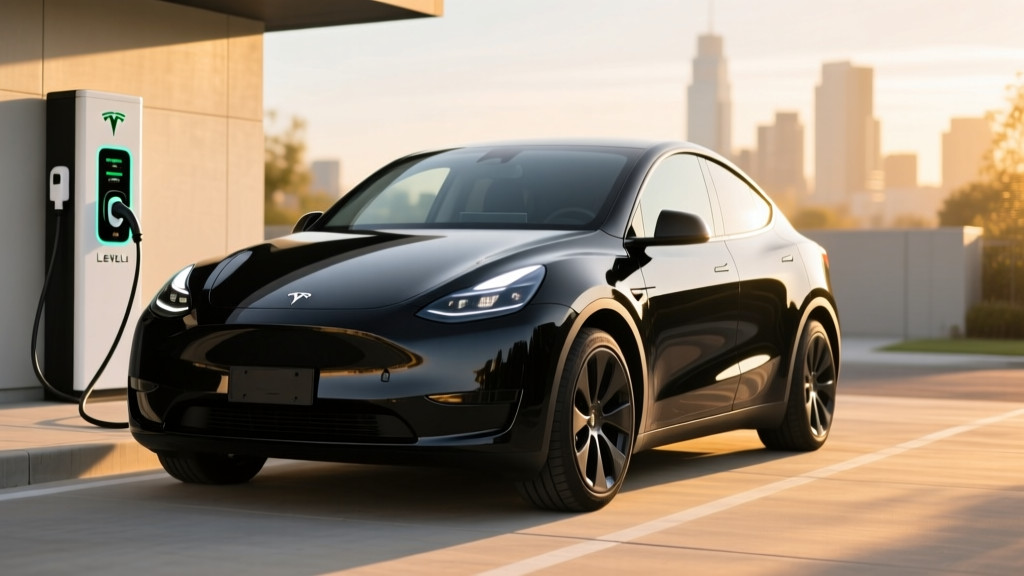
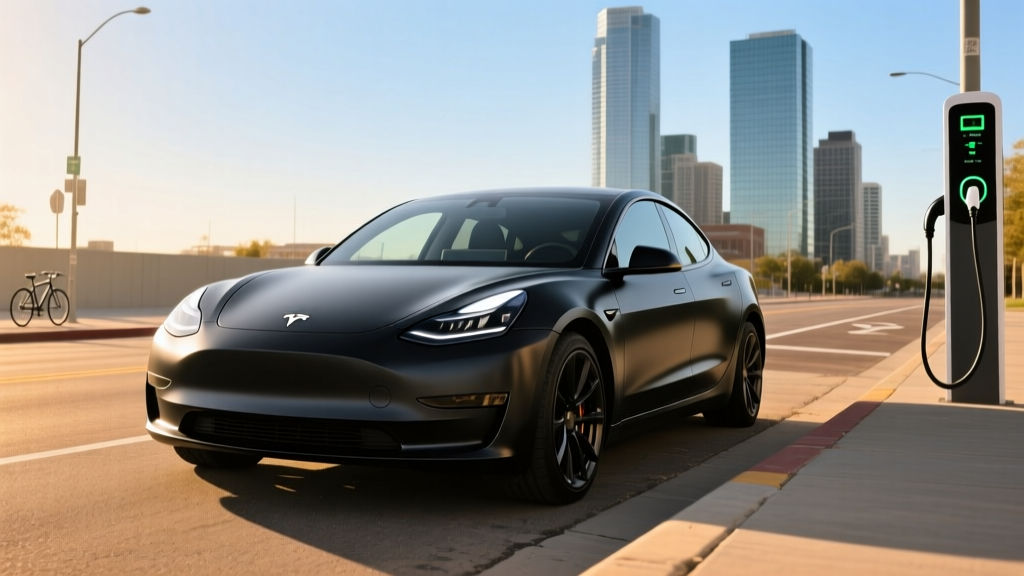
Charging capability is where the 2024 Model 3's NACS connector and Supercharger ecosystem deliver a tangible ownership advantage.
| Charging Level | Power (kW) | Speed (mi/hr added) | Notes |
|---|---|---|---|
| Level 1 (120V household) | ~1.2 kW | ~3-5 mi/hr | Emergency/trickle only |
| Level 2 (240V home, 48A) | 11.5 kW | ~44 mi/hr | Full overnight charge in 6-9 hrs |
| DC Fast (Supercharger V3/V4) | Peak 250 kW | Up to ~175 mi in 15 min | 10-80% in ~25-30 min (Long Range) |
| DC Fast (CCS adapter, non-Tesla) | Up to 250 kW | Varies by station | Requires Tesla CCS adapter (~$250) |
Charging curve reality: The 250 kW peak rate applies only between roughly 10-30% State of Charge on Long Range NMC variants. Above 50%, the rate tapers to ~120 kW; above 80%, it drops below 50 kW. A 10-80% session on a V3 Supercharger takes approximately 25-30 minutes for Long Range and 22-27 minutes for the RWD (which has a smaller battery to fill). The LFP RWD can sustain relatively strong charge rates to higher SoC due to LFP's flat voltage curve, but the smaller total capacity means absolute session time is similar.
Home charging setup: The onboard charger accepts up to 11.5 kW (48 amps) on Level 2. Tesla's Wall Connector ($420) or any J1772/NACS-compatible Level 2 unit on a 60-amp circuit delivers a full charge overnight. Expect $500-$1,500 for professional installation depending on panel proximity and whether your home needs a service upgrade.
Preconditioning matters: Navigate to a Supercharger using the car's built-in routing and the battery will automatically warm to optimal charging temperature. Arriving at a DC fast charger with a cold, un-preconditioned battery can cut peak charge rates by 40-60%.
Performance: 0-60, Horsepower & Drivetrain
| Trim | 0-60 mph | Horsepower | Torque (lb-ft) | Top Speed |
|---|---|---|---|---|
| RWD | 5.8 sec | 271 hp | 317 | 125 mph |
| Long Range RWD | 4.9 sec | 346 hp | 389 | 125 mph |
| Long Range AWD | 4.2 sec | 384 hp | 377 | 125 mph |
| Performance | 2.9 sec | 510 hp | 546 | 163 mph |
Even the base RWD Model 3 hits 60 mph faster than most turbocharged gas sedans in its price class. The Performance variant's 2.9-second sprint puts it in supercar territory — aided by instant electric torque and standard dual-motor all-wheel drive with torque vectoring.
The Highland refresh also retuned the suspension and added frequency-selective damping. The result is a noticeably more compliant ride than pre-2024 Model 3s, though it remains firmer than a BMW i4 or Mercedes EQB. Track Mode on the Performance trim allows adjustable regen, torque split, and stability control for closed-course driving.
Pricing, Trims & Federal Tax Credit Eligibility
| Trim | Base MSRP | Federal §30D Credit | Effective Price (if eligible) |
|---|---|---|---|
| RWD | $38,990 | Up to $3,750* | ~$35,240 |
| Long Range RWD | $42,490 | Up to $7,500* | ~$34,990 |
| Long Range AWD | $47,490 | Up to $7,500* | ~$39,990 |
| Performance | $52,990 | Up to $7,500* | ~$45,490 |
*Tax credit amounts reflect 2024-2025 IRS §30D rules. The RWD trim historically qualifies for $3,750 due to partial critical-mineral sourcing compliance; Long Range and Performance trims have qualified for the full $7,500. Battery sourcing requirements tighten annually — always verify current eligibility at IRS.gov or via Tesla's checkout page, which now supports point-of-sale credit transfer.
- MSRP cap: Sedans must be ≤$55,000 (all Model 3 trims qualify)
- Buyer income cap: AGI ≤$150,000 (single) / ≤$300,000 (joint)
- Battery sourcing: Critical minerals and battery components must meet escalating domestic/free-trade-agreement thresholds
- Assembly: Final assembly must be in North America (Model 3: Fremont, CA — qualifies)
- Point-of-sale transfer: Eligible buyers can apply the credit as a down-payment reduction at purchase
Consult a tax professional for your specific situation. Some states (CA, CO, MA, NY, and others) offer additional credits or rebates — check fueleconomy.gov for state-level resources.
Interior, Cargo & Technology
Passenger space: Front headroom: 40.3 in / legroom: 42.7 in. Rear headroom: 37.8 in / legroom: 35.2 in. The rear seat is comfortable for two adults on shorter trips but tight for three across or tall passengers on long drives. The near-flat floor (no transmission tunnel) helps middle-seat usability.
Cargo: 23 cu ft trunk + ~3 cu ft frunk (front trunk). The trunk opening is narrower than a hatchback (Model Y or Hyundai Ioniq 5 offer more practical cargo access). Rear seats fold 60/40 for longer items.
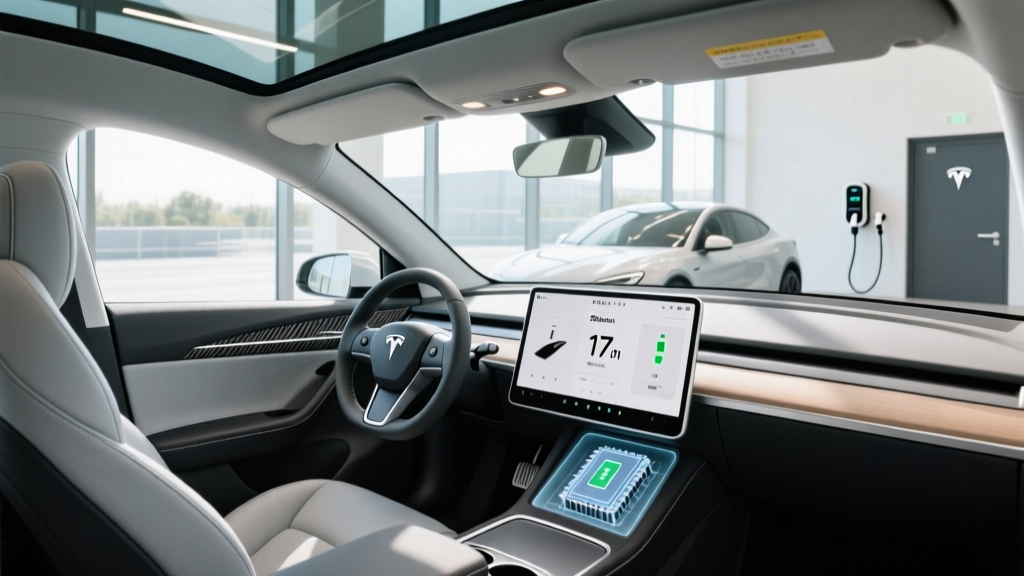
Infotainment: A 15.4-inch central touchscreen handles everything — navigation, media, climate, glovebox release, and mirror adjustment. The Highland refresh added ventilated front seats, ambient lighting, rear-seat ventilation controls on an 8-inch screen, and acoustic glass all around for dramatically reduced cabin noise. No Apple CarPlay or Android Auto — Tesla's native system is the only option, though Bluetooth audio streaming works seamlessly.
Driver assistance: Basic Autopilot (adaptive cruise + lane centering) is standard. Enhanced Autopilot ($6,000) adds auto lane-change, navigate-on-autopilot, and smart summon. Full Self-Driving (Supervised) is a $8,000 add-on or $99/month subscription.
All Tesla driver-assist features — including FSD (Supervised) — are SAE Level 2. The driver must remain attentive, keep hands on the wheel (or demonstrate engagement via the cabin camera), and be prepared to take over instantly. This is not autonomous driving. Level 4 robotaxi services (Waymo, Zoox) operate without a driver in geofenced areas; Tesla's system does not meet this threshold.
Warranty, Ownership Costs & Who Should Buy
| Component | Coverage |
|---|---|
| Basic Vehicle | 4 years / 50,000 miles |
| Battery & Drive Unit (RWD) | 8 years / 100,000 miles (min 70% retention) |
| Battery & Drive Unit (Long Range/Performance) | 8 years / 120,000 miles (min 70% retention) |
The 70% capacity retention threshold is standard for the industry — if your battery degrades below 70% within the warranty window, Tesla replaces or refurbishes it. Real-world data from Tesla's fleet shows average degradation of ~12% at 200,000 miles for NMC packs, though LFP data is still maturing.
Estimated 5-year cost of ownership (15,000 mi/yr, home charging at $0.14/kWh): roughly $4,500 in electricity vs. $9,000+ in gasoline for a comparable BMW 330i. Maintenance is minimal — no oil changes, cabin air filter every 2 years, tire rotation every 6,250 miles. Insurance averages 15-25% higher than equivalent gas sedans; get a quote before purchasing.
- Daily commuters (20-60 mi round trip): RWD trim is ideal. Charge nightly at home, rarely visit a gas station or DC charger. LFP battery handles daily 100% charges without worry.
- Road-trip enthusiasts: Long Range AWD's 341-mile EPA range and Supercharger access make cross-country travel seamless. Plan ~20-minute stops every 2.5-3 hours.
- Performance seekers on a budget: The Performance trim's 2.9-sec 0-60 and track mode rival a Porsche Taycan at half the price — with 315 miles of range.
- Small families: Adequate rear space for child seats, but consider the Model Y or Ioniq 5 if you regularly haul three passengers or bulky cargo.
Consider alternatives if: You need a physical instrument cluster, prefer Apple CarPlay, regularly carry rear-seat adults on long trips, or live in an area with limited Supercharger density and no home charging.
Pros & Cons
- Class-leading efficiency (up to 142 MPGe)
- Supercharger network access (17,000+ US stalls)
- Over-the-air updates continuously add features
- Highland refresh: quieter cabin, better ride, ventilated seats
- Strong resale value relative to EV segment average
- LFP RWD allows daily 100% charging without degradation anxiety
- No turn signal stalk (steering-wheel buttons instead)
- No Apple CarPlay / Android Auto
- Rear seat legroom tight for tall adults
- Trunk is a sedan opening, not a hatchback
- FSD subscription cost adds up; still Level 2 only
- Insurance premiums 15-25% above segment average
Frequently Asked Questions
What is the real-world range of the 2024 Tesla Model 3?
The EPA rates the Long Range AWD at 341 miles, but expect 290-310 miles on highway road trips at 70-75 mph, and 250-275 miles in freezing winter conditions. The base RWD's 272-mile EPA rating translates to roughly 230-245 highway miles. City driving with regenerative braking often matches or exceeds EPA numbers.
How fast does the 2024 Model 3 charge at home and on the road?
On a 240V Level 2 home charger (48A/11.5 kW), the Model 3 adds ~44 miles of range per hour — a full charge takes 6-9 hours overnight. On a Tesla V3/V4 Supercharger, peak DC fast-charge rate is 250 kW, delivering a 10-80% charge in approximately 25-30 minutes (Long Range) or 22-27 minutes (RWD). Always precondition the battery by navigating to the charger for fastest speeds.
How much does the 2024 Model 3 cost after the federal tax credit?
The base RWD starts at $38,990 and may qualify for a $3,750 credit (~$35,240 effective). Long Range and Performance trims have historically qualified for the full $7,500 credit, bringing the Long Range RWD to roughly $34,990. Eligibility depends on buyer income (≤$150K single / ≤$300K joint), and battery sourcing rules that change annually. Verify at IRS.gov before purchase.
Is the 2024 Model 3 worth buying vs. the Hyundai Ioniq 6 or BMW i4?
The Model 3 wins on efficiency, Supercharger access, and software. The Ioniq 6 offers 361 miles of EPA range and 800V architecture (faster peak charging at compatible stations) but uses the smaller CCS network. The BMW i4 provides a more traditional luxury interior and CarPlay but costs $10,000+ more and has less range. If charging access and software matter most, the Model 3 leads; if interior luxury or CarPlay are dealbreakers, test-drive the competitors.
Does the 2024 Tesla Model 3 qualify for the federal EV tax credit?
Yes, with caveats. All trims fall under the $55,000 sedan MSRP cap, and final assembly is in Fremont, CA. The credit amount ($3,750 or $7,500) depends on battery critical-mineral and component sourcing, which Tesla does not publicly break down by trim — check the IRS clean vehicle credit page or Tesla's checkout for the current figure. Buyer income caps apply.
What's the biggest difference between the RWD and Long Range trims?
Beyond the 71-mile range gap, the RWD uses an LFP battery (heavier, but safe for daily 100% charges) while the Long Range uses NMC (more energy-dense, but best kept at 80% daily). The Long Range also offers an AWD dual-motor option, more horsepower, and slightly faster DC charging due to the larger battery accepting higher sustained kW.