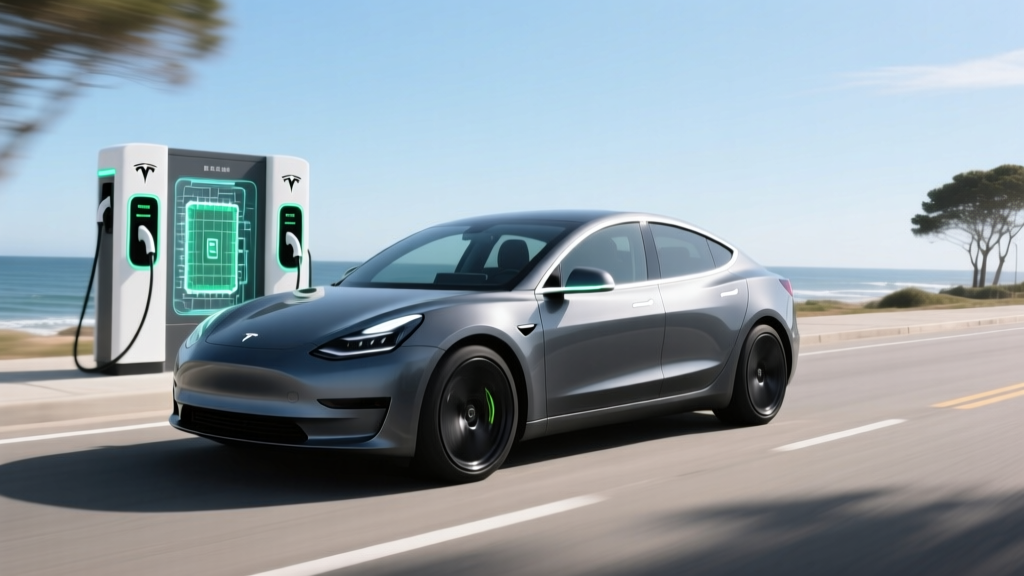
The 2024 Tesla Model 3 RWD (often called the "Highland" refresh) redefined what buyers should expect from an entry-level electric sedan. With improved ride quality, a quieter cabin, and a starting MSRP of $38,990 before incentives, it remains the benchmark against which every other affordable EV is measured. But beneath the refreshed styling lies a specific set of engineering trade-offs — an LFP battery, a single-motor drivetrain, and a minimalist interior — that make this car excellent for some buyers and wrong for others.
This review breaks down the 2024 Tesla Model 3 RWD with the exact numbers that matter: real-world range in cold weather, actual DC fast-charging curves, and the specific IRS rules that determine whether you'll see the full $7,500 federal tax credit. Let's get into the data.
Spec Sheet: 2024 Tesla Model 3 RWD at a Glance
| Specification | Value |
|---|---|
| EPA Range | 272 miles |
| Battery (Usable) | ~57.5 kWh (LFP chemistry) |
| Drivetrain | Single motor, Rear-Wheel Drive (RWD) |
| Horsepower / Torque | 271 hp / 317 lb-ft |
| 0–60 mph | 5.8 seconds |
| Top Speed | 125 mph |
| Max DC Fast Charge | 170 kW (peak) |
| 10–80% DC Charge Time | ~25 minutes |
| Level 2 Home Charge Rate | 11.5 kW (~44 mi/hr) |
| Efficiency (Combined) | 132 MPGe / 25 kWh/100mi |
| Cargo Volume | 23.1 cu ft (trunk + frunk) |
| Rear Legroom | 35.3 inches |
| Base MSRP | $38,990 (excl. destination) |
| Battery Warranty | 8 years / 100,000 miles |
Sources: fueleconomy.gov, Tesla official specifications.
Real-World Range: What the EPA Sticker Doesn't Tell You
Real-World Expectation: ~220–250 miles highway (70–80 mph); ~170–200 miles in freezing temperatures with cabin heat.
The EPA's 272-mile rating for the 2024 Model 3 RWD is achieved through a mixed city/highway test cycle that favors regenerative braking and moderate speeds. In practice, your mileage will vary significantly based on three factors:
- Highway driving: At sustained 75–80 mph, aerodynamic drag dominates. Expect 220–250 miles on a full charge in temperate weather (60–80°F). The Model 3's 0.219 drag coefficient helps, but physics is physics.
- Cold weather: LFP batteries are more sensitive to cold than NMC cells. In sub-32°F conditions, range loss of 25–35% is typical. That drops your effective range to roughly 170–200 miles. Preconditioning the battery while plugged in mitigates some of this loss.
- City/regenerative driving: This is where the Model 3 RWD shines. In stop-and-go traffic with one-pedal driving engaged, you can actually exceed the EPA rating, sometimes hitting 280–290 miles on a charge.
The 57.5 kWh usable battery (LFP chemistry) is smaller than the Long Range's ~75 kWh NMC pack, which is the direct trade-off for the lower price. For daily commuting under 80 miles round-trip, this capacity is more than adequate. For road trips exceeding 200 miles between charging stops, you'll want to plan carefully.
Charging Speed: DC Fast, Level 2, and the LFP Advantage
| Charging Level | Power / Rate | Miles Added | Notes |
|---|---|---|---|
| Level 1 (120V household) | ~1.4 kW | ~5 mi/hr | Emergency/top-up only |
| Level 2 (240V home) | 11.5 kW (48A) | ~44 mi/hr | Full charge in ~5.5 hours |
| DC Fast (Tesla Supercharger) | 170 kW peak | ~175 mi in 15 min | 10–80% in ~25 min |
| DC Fast (CCS adapter, non-Tesla) | ~150 kW typical | Varies by station | Requires $250 CCS adapter |
The Model 3 RWD's 170 kW peak DC charging rate is lower than the Long Range AWD's 250 kW, but the real-world difference is narrower than the spec sheet suggests. Here's why:
- Charge curve taper: The RWD sustains roughly 150–160 kW from 10% to about 50% SoC, then tapers progressively. The 10–80% time of ~25 minutes is competitive for the class.
- LFP charging advantage: Unlike NMC batteries, Tesla recommends charging LFP packs to 100% regularly. This means your daily usable range is the full 272 miles, not an 80% subset. For home charging, this effectively adds ~54 miles of "free" range compared to an NMC owner who stops at 80%.
- Preconditioning: Navigate to a Supercharger using the car's built-in navigation, and the battery will automatically warm to optimal charging temperature. This can shave 5–10 minutes off your charge time in cold weather.
For home Level 2 charging, the onboard 11.5 kW charger adds about 44 miles of range per hour. A full 0–100% charge takes roughly 5.5 hours, easily achievable overnight on a Tesla Wall Connector or any J1772/NACS Level 2 station.
Performance and Driving Dynamics
The single rear motor produces 271 horsepower and 317 lb-ft of torque, delivering a 5.8-second 0–60 mph time. That's quick by any commuter-sedan standard and quicker than most buyers will ever need. Instant torque delivery makes merging and passing effortless.
The 2024 Highland refresh brought meaningful improvements to ride quality: new frequency-selective dampers, additional acoustic glass, and revised suspension bushings. The result is a noticeably quieter, more compliant ride than the pre-2024 Model 3 — addressing one of the most common owner complaints.
RWD means reduced traction in snow and ice compared to the Long Range AWD. If you live in a region with harsh winters, winter tires are strongly recommended (and significantly cheaper than upgrading to AWD). The car's low center of gravity and balanced weight distribution keep handling predictable.
Interior, Tech, and Cargo
The Model 3 interior is famously minimalist. All vehicle controls — climate, mirrors, glovebox, wiper speed — route through the 15.4-inch center touchscreen. The 2024 refresh added ventilated front seats, ambient lighting, a rear passenger touchscreen, and power-folding mirrors as standard equipment.
Cargo: 23.1 cubic feet total (trunk + front trunk/frunk). The trunk opening is a sedan-style slot, not a hatchback, which limits loading bulky items. The frunk adds roughly 3.1 cu ft for charging cables or a small bag.
Passenger space: Rear legroom measures 35.3 inches — adequate for adults on short trips but tighter than a Hyundai Ioniq 6 or BMW i4. The panoramic glass roof creates an airy feel but offers no shade in the 2024 model (aftermarket shades are a popular accessory).
Driver assistance: Basic Autopilot (lane centering + adaptive cruise) is standard. Enhanced Autopilot ($6,000) and Full Self-Driving Supervised ($8,000) are optional. Note: FSD is a SAE Level 2 system — you must remain fully engaged and supervising at all times. It is not autonomous driving.
Pricing, Trims, and Federal Tax Credit
| Scenario | Price |
|---|---|
| Base MSRP | $38,990 |
| + Destination fee | $1,390 |
| Total before incentives | $40,380 |
| Federal §30D credit (if eligible) | –$7,500 |
| Effective price (full credit) | $32,880 |
The 2024 Model 3 RWD does qualify for the full $7,500 federal EV tax credit under IRS §30D, but only if you meet all eligibility requirements:
- MSRP cap: Sedans must be under $55,000. The RWD at $38,990 clears this easily. (Long Range AWD at ~$47,740 also qualifies.)
- Income cap: Adjusted gross income must not exceed $150,000 (single), $225,000 (head of household), or $300,000 (joint). Check your most recent tax return.
- Battery sourcing: The LFP battery in the RWD is manufactured by CATL in China, but Tesla has structured its supply chain to meet critical-mineral and battery-component thresholds for 2024. Verify current eligibility at fueleconomy.gov before purchasing, as sourcing rules tighten annually.
- Point-of-sale transfer: As of 2024, you can transfer the credit to Tesla at purchase, reducing your out-of-pocket cost immediately rather than waiting for tax filing. This effectively functions as a down-payment reduction.
Source: IRS.gov — Clean Vehicle Credits. Tax rules change; consult a tax professional for your specific situation.
Ownership Costs and Warranty
Tesla's battery warranty covers the LFP pack for 8 years or 100,000 miles, whichever comes first, with a minimum 70% capacity retention guarantee. The limited vehicle warranty is 4 years / 50,000 miles.
LFP batteries have demonstrated excellent longevity in Tesla's fleet data, with many Model 3 RWD examples showing less than 5% degradation after 60,000 miles. The chemistry's tolerance for daily 100% charging means you're not sacrificing long-term health for daily convenience.
Efficiency cost: At the national average electricity rate of ~$0.16/kWh and the Model 3 RWD's 25 kWh/100mi consumption, fuel cost is approximately $0.04 per mile — roughly one-third the cost of a comparable gas sedan at 30 MPG and $3.50/gallon.
Pros, Cons, and Who Should Buy
Pros
- Class-leading efficiency (132 MPGe combined)
- LFP battery allows daily 100% charging without degradation concerns
- Access to Tesla Supercharger network (17,000+ stalls in North America)
- Highland refresh dramatically improves ride quality and cabin noise
- $7,500 federal tax credit eligibility (with caveats)
- Over-the-air updates continuously add features
Cons
- 272-mile EPA range is limiting for road trips vs. Long Range (341 mi)
- LFP battery loses more range in cold weather than NMC
- 170 kW peak DC charge rate slower than rivals (Ioniq 6: 350 kW)
- No physical controls — everything through the touchscreen
- Sedan trunk opening limits cargo versatility
- RWD only — winter traction requires dedicated snow tires
Best for: Daily commuters with home charging, solo drivers or couples without frequent rear-seat passengers, buyers in mild-winter climates who want the lowest total cost of ownership in the EV sedan segment.
Look elsewhere if: You regularly drive more than 200 miles between charging stops (get the Long Range), you need AWD for harsh winters without buying separate tires, or you prefer physical buttons and a hatchback cargo area (consider the Hyundai Ioniq 6 or Chevrolet Bolt EUV).
Frequently Asked Questions
What is the real-world range of the 2024 Tesla Model 3 RWD?
Expect 220–250 miles on the highway in moderate temperatures, and as low as 170–200 miles in freezing weather. City driving with regenerative braking can push past the 272-mile EPA rating.
How fast does the 2024 Model 3 RWD charge?
On a Tesla Supercharger, it peaks at 170 kW and charges from 10–80% in approximately 25 minutes. At home on a Level 2 charger (11.5 kW), it adds about 44 miles of range per hour, fully charging overnight in ~5.5 hours.
Does the 2024 Tesla Model 3 RWD qualify for the $7,500 federal tax credit?
Yes, provided you meet IRS §30D requirements: income under $150K/$300K (single/joint), the vehicle's MSRP under $55,000, and battery sourcing compliance. The credit can be transferred at point of sale to reduce your purchase price immediately. Always verify current eligibility at fueleconomy.gov.
Is the Model 3 RWD worth buying vs. the Long Range or competitors?
The RWD makes sense if your daily driving is under 80 miles and you have reliable home charging — the $8,000 savings over the Long Range is significant. For road-trip-heavy buyers, the Long Range's 341-mile range and 250 kW charging justify the premium. Against the Hyundai Ioniq 6 (361 mi range, 350 kW charging), the Model 3 wins on Supercharger network access and software, but loses on charging speed and cargo versatility.
What's the biggest drawback of the LFP battery?
Cold-weather range loss. LFP cells are more affected by freezing temperatures than NMC, meaning winter range drops more sharply than on the Long Range AWD. Preconditioning and garage parking help mitigate this.