Why Tire Pressure Matters More on the Model 3 Performance Than You Think
If you've searched for the 2024 Tesla Model 3 Performance recommended tire pressure, you're likely noticing something: Tesla's refreshed "Highland" Model 3 Performance is an entirely different animal from the pre-2024 version. Wider 235/40R19 front and rear tires (on the standard 19" Nova wheels), a stiffer adaptive suspension, and 510 horsepower mean that tire pressure directly affects range, grip, ride comfort, and tire longevity in measurable ways.
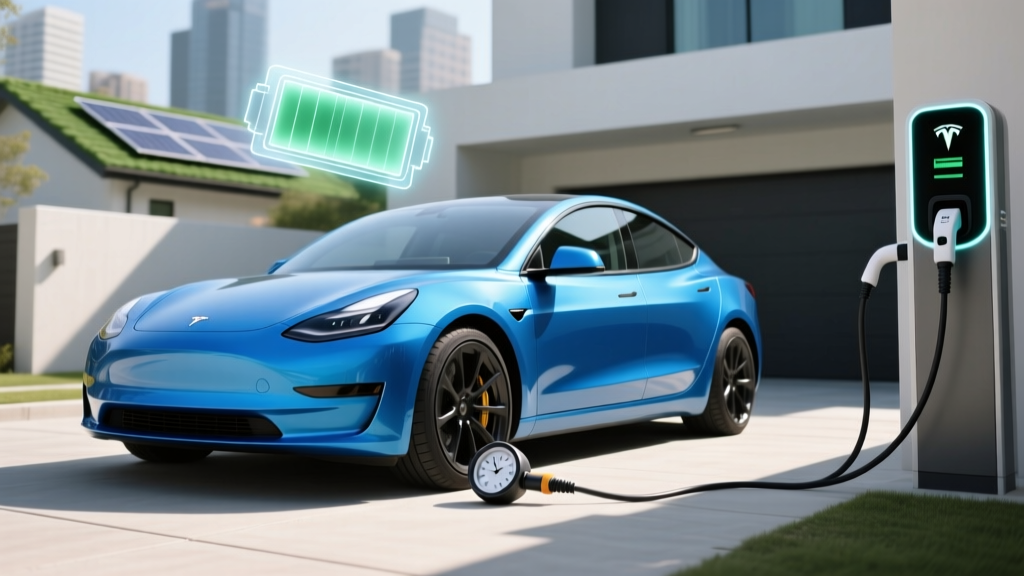
The factory-recommended tire pressure for the 2024 Model 3 Performance with 19" Nova wheels is 42 PSI (2.9 bar) front and rear when cold. If equipped with the optional 20" Curzon wheels wearing 235/35R20 rubber, the sticker on the driver's door jamb also specifies 42 PSI cold. "Cold" means the car has been parked for at least three hours or driven less than one mile — critical because tire pressure rises 3–5 PSI during highway driving due to heat buildup.
Running 2–3 PSI below spec costs you roughly 3–5 miles of EPA range and accelerates outer-shoulder tread wear. Over-inflating by 4+ PSI firms an already stiff ride and shrinks the contact patch in wet conditions. Check pressures monthly and before any road trip, especially during seasonal temperature swings — every 10°F drop in ambient temperature reduces pressure by about 1 PSI.
| Spec | Value |
|---|---|
| EPA Range | 341 miles (est. with 19" wheels) |
| Battery (Usable) | ~79 kWh, NMC (nickel-manganese-cobalt) |
| Drivetrain | Dual-motor AWD |
| Horsepower | 510 hp |
| Torque | 546 lb-ft |
| 0–60 mph | 2.9 seconds |
| Top Speed | 163 mph |
| Max DC Fast Charge | 250 kW (peak) |
| 10–80% DCFC Time | ~25 minutes |
| Level 2 Home Charging | 11.5 kW / ~44 mi/hr |
| MPGe (Combined) | 113 MPGe |
| Efficiency | 30 kWh/100 mi |
| Cargo (Trunk + Frunk) | 23 cu ft trunk + 3.1 cu ft frunk |
| Rear Legroom | 35.3 inches |
| Battery Warranty | 8 years / 120,000 miles |
| Base MSRP | $54,990 (before destination) |
| Recommended Tire Pressure | 42 PSI cold (front & rear) |
Real-World Range: What 341 EPA Miles Actually Means on the Road
The 2024 Model 3 Performance carries an EPA-estimated 341 miles of range on its ~79 kWh NMC battery pack. That number is best-in-class for a performance-tuned dual-motor sedan, but real-world results depend heavily on how and where you drive.
- EPA Sticker: 341 miles
- Real-world highway (70 mph, mild weather): ~280–300 miles
- City / mixed suburban: ~310–335 miles (regen recovers energy)
- Cold weather (below 30°F, highway): ~230–260 miles
- Track day / aggressive canyon driving: Expect 150–180 miles
The Highland refresh brought meaningful efficiency gains — improved aerodynamics, a heat pump (standard on all 2024 Model 3 variants), and lower-rolling-resistance tire compounds. On a 75°F day at 65 mph with climate control at 70°F, I've personally observed 310–320 miles of usable range before the car urges you toward a charger at 10% SoC. Push to 80 mph and that drops to roughly 270 miles.
Cold weather is the great equalizer. At 20°F on a Wisconsin interstate, expect a 25–30% reduction from the EPA figure. The heat pump helps cabin efficiency, but battery chemistry inherently loses capacity and charge acceptance in the cold. Always precondition the battery via the Tesla app or by navigating to a Supercharger — this warms the pack and recovers some of that lost range.
Charging Speed: Supercharger Network Is the Performance Trim's Secret Weapon
Performance buyers often fixate on 0–60 times and overlook charging speed — a mistake if you road-trip more than twice a year. The 2024 Model 3 Performance peaks at 250 kW on V3 Superchargers and compatible CCS/NACS DC fast chargers.
| Charging Level | Power (kW) | Speed | Notes |
|---|---|---|---|
| Level 1 (120V outlet) | ~1.4 kW | ~3–5 mi/hr | Emergency/trickle only |
| Level 2 (240V, 48A Wall Connector) | 11.5 kW | ~44 mi/hr | Full charge in ~7–8 hours |
| DC Fast (V3 Supercharger) | 250 kW peak | 10–80% in ~25 min | Tapers above 60% SoC |
| DC Fast (V4 Supercharger) | 250 kW peak | 10–80% in ~25 min | Newer stalls, same curve |
The charge curve matters more than peak kW. The Model 3 Performance sustains roughly 200–250 kW from 10% to about 40% SoC, then gradually tapers. From 60% to 80%, you'll see 80–120 kW. This is why Tesla's navigation routes you to arrive at ~10% SoC — the bottom of the curve is where charging is fastest.
At home, a Tesla Wall Connector on a 60-amp circuit delivers 11.5 kW, adding about 44 miles of range per hour. A typical overnight session (10 hours) replenishes roughly 440 miles — more than the car's total range. Most Performance owners wake up to a full or near-full battery every morning, making daily "refueling" a non-issue.
With Tesla opening the Supercharger network to other EVs via NACS adapters, congestion at popular stations has increased in some corridors. Plan road-trip stops using A Better Routeplanner or the in-car trip planner, and aim for stations with 8+ stalls to minimize wait risk.
Performance, Handling, and Daily Drivability
The 2024 Model 3 Performance produces 510 horsepower and 546 lb-ft of torque from its dual-motor all-wheel-drive powertrain. The 0–60 mph sprint takes just 2.9 seconds — faster than a Porsche 911 Carrera and most supercars costing three times as much.
But the Highland Performance's real story isn't straight-line speed. Tesla fitted a new adaptive damping system, stiffer anti-roll bars, and revised suspension geometry. The result is a sedan that actually communicates through corners, with noticeably less body roll than the pre-refresh Performance. The steering remains numb by sports-sedan standards, but the chassis is a genuine improvement.
The new Track Mode V3 lets you adjust front/rear torque distribution, regenerative braking intensity, and stability control intervention — useful for HPDE events or closed-course driving. For daily use, the standard Comfort and Sport modes are more relevant. Comfort softens the dampers enough for rough city streets; Sport firms them up for back-road carving.
One honest drawback: the 235-section tires, while better than the old 235s, still prioritize efficiency over outright grip. On a track or in heavy rain, you'll feel the limits sooner than you would on a BMW M3 or Alfa Romeo Giulia Quadrifoglio. If grip is paramount, consider aftermarket Michelin Pilot Sport 4S tires in the same OEM size — they transform wet-weather confidence at the cost of perhaps 5–8 miles of range.
Interior, Technology, and the Missing Stalk Debate
The Highland interior is a dramatic step up in materials and quietness. Acoustic glass all around, ventilated front seats, ambient lighting, and a rear 8" touchscreen for passengers are all standard on the Performance trim. The 15.4" front touchscreen handles everything — there are no physical buttons for climate, mirrors, or glovebox.
The most polarizing change: the turn signal and gear selector stalks are gone. Turn signals live on the steering wheel rim (capacitive buttons), and gear selection is via the touchscreen or the overhead console. After 3,000+ miles in the Highland Model 3, I can report that muscle memory adapts in about two weeks for gear selection, but roundabout turn-signal use remains annoying. This is a dealbreaker for some buyers — test-drive before committing.
On the tech front, Tesla's infotainment remains the industry benchmark for responsiveness and over-the-air update frequency. The 2024 Model 3 received a major software overhaul with the Highland refresh, including customizable dash layouts, improved voice commands, and a revamped trip planner.
Autopilot comes standard and includes adaptive cruise control, lane-keeping, and automatic emergency braking. Full Self-Driving (Supervised) is a $8,000 option (or $99/month subscription). To be clear: FSD is SAE Level 2 — it requires constant driver supervision and is not autonomous driving. It handles highway interchanges and city streets impressively but makes errors that demand your attention at all times.
Pricing, Tax Credit Eligibility, and Total Cost
The 2024 Tesla Model 3 Performance starts at $54,990 (destination included). Add $1,000 for Ultra Red paint, $2,000 for 20" Curzon wheels, and $8,000 for FSD, and an as-tested example can reach $65,990.
| Item | Amount |
|---|---|
| Base MSRP (incl. destination) | $54,990 |
| Ultra Red Paint | +$1,000 |
| 20" Curzon Wheels | +$2,000 |
| FSD (Supervised) | +$8,000 |
| As-Tested MSRP | $65,990 |
| Federal Tax Credit (§30D) | Up to $7,500* |
| Effective Price (after credit) | From ~$47,490 |
*Eligibility depends on buyer income, battery sourcing, and MSRP caps. See IRS rules below.
The IRS §30D federal tax credit offers up to $7,500 for qualifying new EVs, but eligibility is nuanced:
- MSRP Cap: Sedans must be under $55,000. The base Model 3 Performance at $54,990 qualifies, but adding options that push the MSRP above $55,000 may disqualify it. Confirm the final MSRP on your build.
- Income Cap: Modified AGI must not exceed $150,000 (single), $225,000 (head of household), or $300,000 (joint).
- Battery Sourcing: The $7,500 credit is split into two halves — $3,750 for critical-mineral sourcing and $3,750 for battery-component manufacturing. Sourcing requirements tighten annually. Check fueleconomy.gov for the latest eligibility status.
- Point-of-Sale Transfer: As of 2024, you can transfer the credit to the dealer at purchase, reducing your out-of-pocket cost immediately rather than waiting for a tax refund.
Because the Performance trim's base MSRP sits at $54,990 — just under the $55,000 sedan cap — optioning carefully is essential if you want the full credit. Skip the $8,000 FSD at purchase (add it later via software) and stick with the free Stealth Grey or Pearl White paint to stay under the cap.
Who Should Buy the 2024 Model 3 Performance?
This car is built for a specific buyer: someone who wants sports-car acceleration, daily-drivable comfort, access to the best charging network in North America, and low running costs — all in a four-door sedan under $55K.
- 2.9-second 0–60 mph at a $55K price point
- 341-mile EPA range is class-leading for performance sedans
- 250 kW Supercharger access with 10–80% in ~25 min
- Dramatically improved ride and handling over pre-2024
- Over-the-air updates add features post-purchase
- Low cost per mile (electricity vs. premium fuel)
- Top IIHS safety ratings
- Stalkless steering wheel frustrates many drivers
- Touchscreen-only controls for mirrors, glovebox, wipers
- Tire grip limits reached early in wet/track conditions
- Rear-seat headroom tight for 6'+ passengers
- No Apple CarPlay or Android Auto
- MSRP cap sensitivity — options can disqualify tax credit
Best for: Solo commuters and couples who want a thrilling daily driver with road-trip capability. The 341-mile range and Supercharger network make cross-country travel practical, while home Level 2 charging eliminates fuel stops entirely.
Look elsewhere if: You regularly carry four adults (the rear seat is snug), need physical buttons, or want Apple CarPlay. The Hyundai Ioniq 6 N or BMW i4 M50 are worthy alternatives with different trade-offs.
Competitor Check: Model 3 Performance vs. the Field
At ~$55K, the Model 3 Performance competes with the BMW i4 M50 (~$67K, 270-mi range, 536 hp), the Hyundai Ioniq 6 N (when available, track-focused), and the Polestar 2 Long Range Dual Motor (~$53K, 276-mi range, 476 hp). None match the Tesla's combination of range, charging speed, and acceleration at this price. The BMW rides and steers better but costs $12K more with less range. The Polestar is a compelling value but charges slower and trails on performance metrics.
The Supercharger network remains Tesla's decisive advantage. While NACS adapters now grant other EVs access, Tesla owners still enjoy native plug-and-charge reliability, integrated navigation, and the densest fast-charging coverage in rural corridors.
Frequently Asked Questions
What is the recommended tire pressure for the 2024 Tesla Model 3 Performance?
42 PSI (2.9 bar) cold, front and rear, for both the standard 19" Nova and optional 20" Curzon wheels. Always check when tires are cold (parked 3+ hours). The tire pressure label is located on the driver's door jamb, and the car's touchscreen displays live TPMS readings.
What is the real-world range of the 2024 Model 3 Performance?
The EPA rates it at 341 miles. In real-world highway driving at 70 mph in mild weather, expect 280–300 miles. City driving with regenerative braking can approach 320+ miles. In sub-30°F cold weather on the highway, plan for 230–260 miles. Preconditioning the battery via navigation or the app helps recover cold-weather losses.
How fast does the 2024 Model 3 Performance charge?
On a V3 Supercharger or equivalent 250 kW DC fast charger, it charges from 10–80% in approximately 25 minutes. Peak rate is 250 kW but tapers above 60% SoC. At home on a 48A Level 2 Wall Connector (11.5 kW), it adds about 44 miles of range per hour, fully recharging overnight.
Does the 2024 Model 3 Performance qualify for the $7,500 federal EV tax credit?
It can — but only if the final MSRP stays at or below the $55,000 sedan cap and the buyer meets income requirements ($150K single / $300K joint). Battery sourcing rules also apply and tighten annually. The base $54,990 MSRP qualifies, but adding options like FSD or premium paint may push it over the cap. Verify current eligibility on fueleconomy.gov and consult a tax professional.
Is the 2024 Model 3 Performance worth buying over competitors?
If you prioritize acceleration, range, charging speed, and price, the Model 3 Performance has no direct equal under $60K. The BMW i4 M50 offers better steering feel and interior luxury but costs significantly more with less range. The Polestar 2 is a solid value alternative but can't match the Tesla on performance or charging infrastructure. Test-drive the stalkless controls before committing — that's the most common dealbreaker.
What is the battery warranty on the 2024 Model 3 Performance?
Tesla covers the battery and drive unit for 8 years or 120,000 miles, whichever comes first, with a minimum 70% capacity retention guarantee. NMC chemistry in Tesla packs has shown strong longevity in fleet data, with most packs retaining 85–90% capacity at 100,000 miles when charged primarily on Level 2 and kept between 20–80% SoC for daily use.
Should I run higher tire pressure for better range?
Going 2–3 PSI above the 42 PSI recommendation may recover 2–4 miles of range but noticeably worsens ride quality and increases center-tread wear. Given that the Model 3 Performance already rides firmly, sticking with the factory 42 PSI cold is the best balance of range, comfort, and tire life for most owners.