The 2024 Tesla Model 3 "Highland" refresh brought the most significant interior overhaul in the sedan's history. Ambient lighting, ventilated seats, a rear touchscreen, and drastically improved noise isolation transformed what was already the best-selling premium EV into a genuinely refined daily driver. But beyond the cabin upgrades, the 2024 Model 3 also quietly updated its powertrain efficiency and charging behavior — details that matter far more to ownership satisfaction than stitching patterns.
This review covers every number a prospective buyer needs: EPA range versus real-world expectations, battery chemistry trade-offs between trims, DC fast-charging curves, federal tax credit eligibility under IRS §30D, and how the 2024 Model 3 stacks up against the Hyundai Ioniq 6, BMW i4, and Polestar 2.
2024 Tesla Model 3 Interior: What Changed and Why It Matters
The 2024 Model 3 interior represents a generational leap in perceived quality. Tesla eliminated the traditional turn-signal stalk (signals are now on the steering wheel), replaced physical gear selectors with touchscreen controls and a roof-mounted backup, and wrapped the dashboard in a continuous band of ambient lighting that doubles as a visual notification system.
Material upgrades include microfiber suede on the upper dash, real aluminum trim, and redesigned seats with ventilation on all trims — a feature previously reserved for the Model S. The cabin is noticeably quieter thanks to acoustic glass on all windows and additional sound-deadening material throughout the floor and firewall.
The 15.4-inch center touchscreen remains the command center, running Tesla's latest software with native Spotify, Netflix, YouTube, and a surprisingly capable web browser. A new 8-inch rear touchscreen gives back-seat passengers control over climate, media, and heated seats — addressing one of the most common complaints from ride-share drivers and families.
Interior Dimensions and Cargo Space
| Measurement | Specification |
|---|---|
| Front headroom | 40.3 in |
| Front legroom | 42.7 in |
| Rear headroom | 37.8 in |
| Rear legroom | 35.2 in |
| Trunk (rear cargo) | 23 cu ft |
| Frunk (front trunk) | 3.1 cu ft |
| Total cargo volume | 26.1 cu ft |
The rear legroom remains tight compared to midsize sedans — a six-foot passenger behind a six-foot driver will find knees brushing the seatback. The trunk is practical but not class-leading; the Hyundai Ioniq 6 offers a similar footprint with slightly less usable volume due to its sloping roofline, while the Polestar 2's liftback design provides more vertical flexibility.
Spec Table: 2024 Tesla Model 3 by Trim
| Spec | Model 3 RWD | Model 3 Long Range AWD | Model 3 Performance |
|---|---|---|---|
| EPA Range | 272 mi | 341 mi | 315 mi |
| Battery (usable) | ~57.5 kWh | ~75 kWh | ~75 kWh |
| Chemistry | LFP (CATL) | NMC | NMC |
| Drivetrain | RWD, single motor | AWD, dual motor | AWD, dual motor |
| Horsepower | 271 hp | 346 hp | 510 hp |
| 0–60 mph | 5.8 sec | 4.2 sec | 2.9 sec |
| MPGe (combined) | 132 MPGe | 131 MPGe | 121 MPGe |
| Efficiency (kWh/100 mi) | 25 kWh/100mi | 25 kWh/100mi | 28 kWh/100mi |
| Max DC charge rate | 170 kW | 250 kW | 250 kW |
| 10–80% DC time | ~25 min | ~25 min | ~25 min |
| Level 2 rate | 11.5 kW (~44 mi/hr) | 11.5 kW (~44 mi/hr) | 11.5 kW (~44 mi/hr) |
| Base MSRP | $38,990 | $47,740 | $52,990 |
All MSRP figures exclude the $1,390 destination fee. Specs per fueleconomy.gov and Tesla's official order page.
Range and Efficiency: EPA vs. Real-World Expectations
EPA sticker: 272 mi (RWD) / 341 mi (Long Range) / 315 mi (Performance)
Highway driving (70–80 mph): Expect ~225–240 mi (RWD), ~280–300 mi (Long Range), ~260–275 mi (Performance)
Cold weather (below 32°F): Subtract 20–30% from EPA figures — the LFP RWD battery is especially sensitive to cold due to chemistry limitations at low temperatures
Combined real-world average: Most owners report 240–260 mi (RWD) and 290–320 mi (Long Range) in mixed driving
The 2024 Model 3 Long Range AWD achieves 131 MPGe combined — essentially identical to the pre-refresh model, because Tesla prioritized cabin comfort improvements over powertrain efficiency gains. The RWD model's 132 MPGe and 25 kWh/100 mi consumption rate make it one of the most efficient EVs in its class, trailing only the Hyundai Ioniq 6 (140 MPGe) and the Lucid Air Pure (146 MPGe, though at a much higher price point).
The LFP battery in the RWD trim has a distinct behavioral quirk: Tesla recommends charging it to 100% at least once per week for accurate state-of-charge calibration. NMC batteries in the Long Range and Performance trims should be kept at 80% for daily use and charged to 100% only before long trips. This matters for real-world usability — the RWD's 272-mile EPA range is fully accessible daily, while the Long Range's 341 miles requires a 100% charge that you'd only use for road trips.
Charging Speed: DC Fast Charge, Level 2, and the Charge Curve
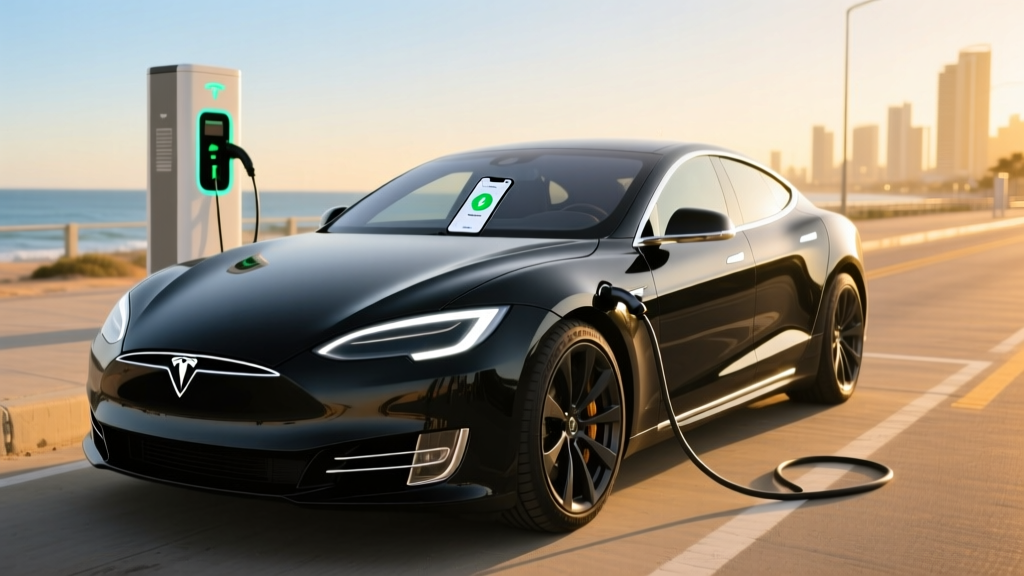
Charging speed is where the 2024 Model 3's trim differences become practically significant. The RWD's LFP battery caps DC fast charging at 170 kW, while the Long Range and Performance trims peak at 250 kW on Tesla's V3 Superchargers.
| Charging Level | Power | RWD (miles/hr) | Long Range / Performance (miles/hr) |
|---|---|---|---|
| Level 1 (120V outlet) | ~1.4 kW | ~5 mi/hr | ~5 mi/hr |
| Level 2 (240V, 48A) | 11.5 kW | ~44 mi/hr | ~44 mi/hr |
| DC Fast (peak) | 170 kW / 250 kW | ~650 mi/hr peak | ~950 mi/hr peak |
| DC 10–80% time | — | ~25 min | ~25 min |
The 10–80% times are similar across trims (~25 minutes), but the charge curves differ. The LFP battery sustains a flatter curve at lower peak power, meaning you won't see dramatic taper until above 80%. The NMC batteries hit 250 kW briefly around 15–25% SoC, then taper progressively — average power across the 10–80% session is closer to 150–170 kW sustained.
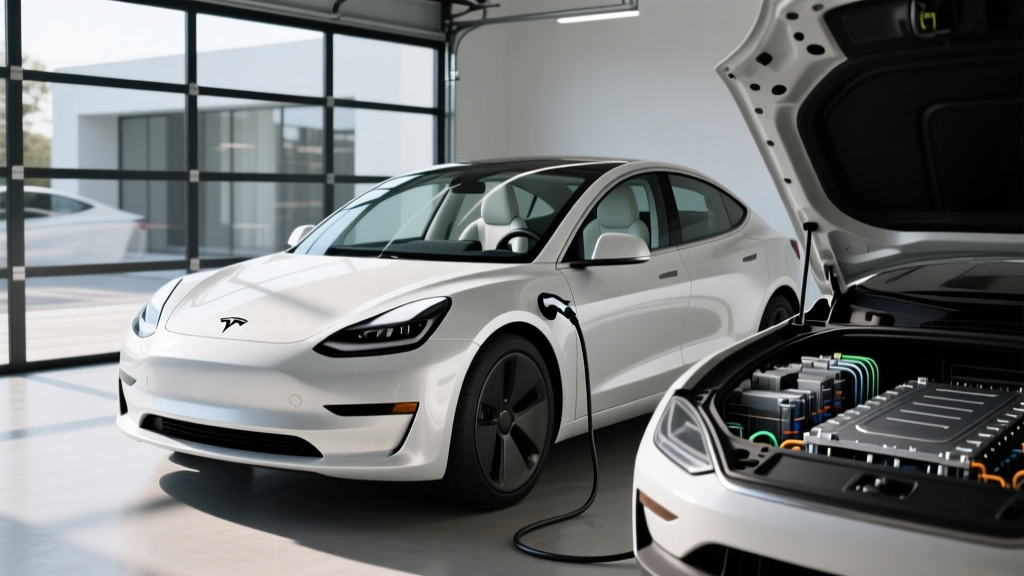
At home on a Level 2 Wall Connector (48 amps, 11.5 kW), a full overnight charge from 20% to 80% takes roughly 4–5 hours depending on trim. A full 0–100% session on the Long Range takes about 7–8 hours. Most owners never need to charge from zero; plugging in nightly at home keeps the battery in the optimal 30–80% window.
Preconditioning matters: When navigating to a Supercharger, the Model 3 automatically warms the battery to its optimal charging temperature. Without preconditioning (e.g., arriving at a non-navigated DC charger), cold-soaked batteries may charge at half their peak rate for the first 10–15 minutes.
Pricing, Trims, and Federal Tax Credit Eligibility
| Trim | Base MSRP | Destination | Total Before Credit | §30D Credit (est.) | Effective Price |
|---|---|---|---|---|---|
| Model 3 RWD | $38,990 | $1,390 | $40,380 | Up to $7,500 | ~$32,880 |
| Model 3 Long Range AWD | $47,740 | $1,390 | $49,130 | Up to $7,500 | ~$41,630 |
| Model 3 Performance | $52,990 | $1,390 | $54,380 | Up to $7,500 | ~$46,880 |
The §30D federal EV tax credit provides up to $7,500, split into two halves: $3,750 for battery component manufacturing requirements and $3,750 for critical minerals sourcing. As of 2024–2025, the Model 3 Long Range and Performance (built in Fremont, CA, with NMC cells from Panasonic) have historically qualified for the full $7,500. The RWD's LFP battery, sourced from CATL in China, has seen variable eligibility — sometimes qualifying for only $3,750 or the full amount depending on the specific production batch and current IRS sourcing determinations.
§30D Eligibility Checklist
- MSRP cap: Sedans must be under $55,000 — all Model 3 trims qualify
- Buyer income cap: Modified AGI ≤ $150,000 (single) / $225,000 (head of household) / $300,000 (joint)
- Battery sourcing: Must meet escalating critical-minerals and battery-component thresholds (check IRS manufacturer list at time of purchase)
- Point-of-sale transfer: As of 2024, buyers can transfer the credit to the dealer for an immediate price reduction rather than waiting for a tax refund
- VIN verification: Confirm eligibility on the VIN at fueleconomy.gov before purchase
Tax credit rules change frequently. Consult a tax professional and verify current eligibility on irs.gov before relying on credit amounts for purchase decisions.
Performance, Driving Dynamics, and Safety
The 2024 Model 3 Performance (introduced mid-cycle) delivers 510 hp and a 2.9-second 0–60 mph time — making it one of the quickest sedans under $60,000. The Long Range AWD's 4.2-second sprint is more than adequate for highway merging and passing, while the RWD's 5.8 seconds is leisurely by Tesla standards but still competitive with a BMW 330i.
The Highland refresh brought a retuned adaptive suspension (on Performance and Long Range) that absorbs road imperfections noticeably better than the pre-2024 model. Steering remains quick but has been weighted for more natural on-center feel. The removal of the turn-signal stalk is the most polarizing change — some owners adapt within a week, others find it persistently irritating during roundabouts and lane changes.
The Model 3 earned a 5-star overall rating from NHTSA and was named an IIHS Top Safety Pick+ — the highest honor from both agencies.
Driver Assistance: Autopilot and FSD
Tesla Autopilot (standard) and Full Self-Driving Supervised ($8,000 option or $99/month) are SAE Level 2 driver-assistance systems. The driver must remain fully engaged, hands on the wheel, and eyes on the road at all times. These systems do not make the vehicle autonomous. Only Level 4 services like Waymo operate without a human driver in defined geographic areas.
Autopilot includes adaptive cruise control, lane centering, and automatic emergency braking — and it works well on highways. FSD Supervised adds city-street navigation, traffic-light recognition, and automatic turns, but requires constant vigilance and occasionally makes unpredictable decisions in construction zones or complex intersections.
Warranty and Long-Term Ownership
| Coverage | Term |
|---|---|
| Basic vehicle warranty | 4 years / 50,000 miles |
| Battery & drive unit (RWD) | 8 years / 100,000 miles |
| Battery & drive unit (LR / Perf) | 8 years / 120,000 miles |
| Battery capacity retention guarantee | ≥70% of original capacity during warranty period |
Tesla's battery warranty guarantees at least 70% capacity retention over the warranty term. Real-world data from high-mileage Model 3 owners suggests NMC batteries typically retain 85–92% capacity at 100,000 miles when charged primarily to 80%. LFP batteries show slower calendar degradation but are more sensitive to extreme cold and repeated 100% charges in hot climates.
Insurance costs remain a consideration: the Model 3's average annual premium is $2,100–$2,800 depending on state and driver profile — roughly 25–40% higher than a comparable Toyota Camry. Tesla Insurance is available in select states and may offer competitive rates for drivers with clean records.
Pros, Cons, and Who Should Buy
- Class-leading efficiency (25 kWh/100mi)
- Extensive Supercharger network access
- Quiet, refined Highland cabin
- Over-the-air updates add features post-purchase
- Strong safety ratings (5-star NHTSA, IIHS TSP+)
- Full $7,500 credit eligibility on most trims
- Best-in-class software and app integration
- No turn-signal stalk (steering-wheel buttons)
- Rear legroom tight for tall passengers
- All climate/media controls require touchscreen
- LFP RWD charges slower (170 kW peak)
- No Apple CarPlay or Android Auto
- Insurance costs above segment average
- FSD Supervised is expensive and still Level 2
- Choose the RWD ($38,990) if you commute under 60 miles daily, charge at home every night, and want the lowest effective price after the tax credit (~$32,880). The LFP battery's 100% daily charge recommendation suits home-charging routines perfectly.
- Choose the Long Range AWD ($47,740) if you take regular road trips (300+ miles), live in a cold climate where AWD traction matters, or need the extra 70 miles of range buffer. The 250 kW peak charge rate makes highway charging meaningfully faster.
- Choose the Performance ($52,990) if driving engagement is a priority and you want supercar-rivaling acceleration in a practical sedan. The adaptive suspension and track mode justify the premium for enthusiasts.
- Look elsewhere if you need Apple CarPlay, prefer physical buttons for climate control, regularly carry tall rear-seat passengers, or want a traditional dealership service experience.
How It Compares to Key Competitors
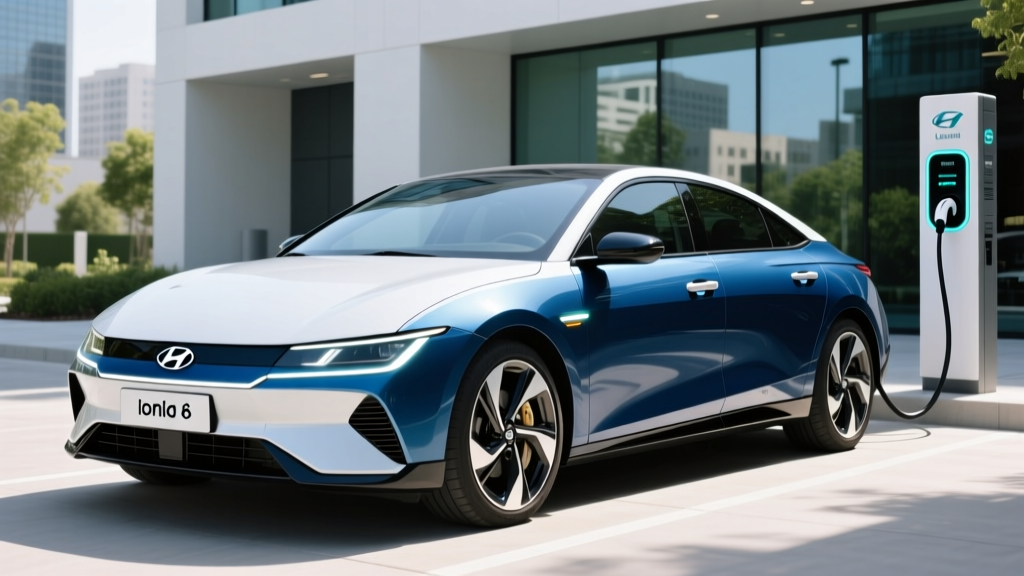
Against the Hyundai Ioniq 6 (EPA 361 mi, $42,715 base), the Model 3 Long Range trails on paper range but wins on charging infrastructure (Supercharger reliability vs. third-party networks), software quality, and performance. The Ioniq 6's 800V architecture charges at up to 350 kW on compatible chargers, but those stations remain scarce.
The BMW i4 eDrive40 (EPA 301 mi, $52,200 base) offers a more traditional luxury interior with physical controls and Apple CarPlay, but costs significantly more and delivers less range. It's the right choice for buyers who prioritize build quality and dealer service networks over technology and value.
The Polestar 2 (EPA 276 mi, $49,900 base) provides Google-built infotainment with native Google Maps and Assistant, plus a more conventional cabin layout. However, it charges slower (205 kW peak), offers less range, and costs more than the Model 3 Long Range.
Frequently Asked Questions
What is the real-world range of the 2024 Tesla Model 3?
Expect 240–260 miles in mixed driving for the RWD, 290–320 miles for the Long Range, and 260–280 miles for the Performance. Highway driving at 75+ mph reduces these by roughly 15%. In sub-freezing temperatures, subtract an additional 20–30%, especially for the LFP RWD model.
How fast does the 2024 Model 3 charge at home and on the road?
At home on a Level 2 Wall Connector (11.5 kW), the Model 3 adds approximately 44 miles of range per hour — a full overnight session easily replenishes a day's driving. On DC fast chargers, the RWD peaks at 170 kW and the Long Range/Performance at 250 kW, with 10–80% sessions taking about 25 minutes across all trims.
Does the 2024 Tesla Model 3 qualify for the $7,500 federal tax credit?
Most 2024 Model 3 Long Range and Performance vehicles qualify for the full $7,500 under IRS §30D. The RWD's LFP battery eligibility varies by production batch due to critical-minerals sourcing rules. Buyer income must not exceed $150K (single) / $300K (joint), and the credit can now be transferred at point of sale for an immediate price reduction. Always verify on the IRS manufacturer list before purchasing.
Is the 2024 Tesla Model 3 worth buying vs. the competition?
For buyers who prioritize charging infrastructure reliability, software features, efficiency, and total cost of ownership, the Model 3 remains the segment benchmark. If physical controls, Apple CarPlay, or traditional dealer service are non-negotiable, the BMW i4 or Polestar 2 are strong alternatives at a higher price.
What's the biggest drawback of the 2024 Model 3 interior?
The removal of the turn-signal stalk is the most divisive change, followed by the total reliance on the touchscreen for climate, glovebox, and mirror adjustments. Rear-seat legroom is also tight for passengers over six feet tall. However, the ambient lighting, ventilated seats, acoustic glass, and rear touchscreen represent genuine improvements over the pre-2024 model.