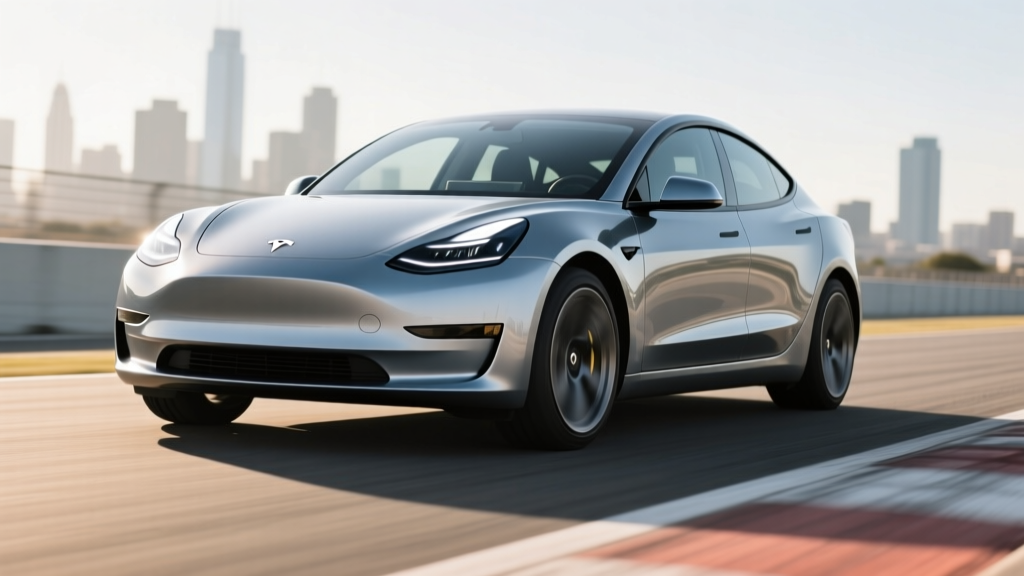
The refreshed Tesla Model 3 (internally dubbed "Project Highland") landed for the 2024 model year with a quieter cabin, updated suspension, and a redesigned interior — but the headline question for enthusiasts and spec-shoppers remains: how quick is it off the line? The 2024 Model 3 0-60 times vary meaningfully across the lineup, from the efficient Long Range to the track-focused Performance variant. Below, we break down every trim's acceleration, real-world range, charging behavior, and ownership economics so you can decide which version fits your driving profile.
2024 Tesla Model 3 0-60 mph Times by Trim
Tesla publishes 0-60 mph figures for each Model 3 variant, but those numbers assume ideal conditions: a prepped surface, full battery state of charge, and launch mode engaged (where applicable). Here's how the 2024 lineup stacks up on paper and in practice.
| Trim | Drivetrain | 0-60 mph | Horsepower | EPA Range | Battery (usable) | Top Speed |
|---|---|---|---|---|---|---|
| Long Range RWD | Rear-Wheel Drive | 4.9 sec | ~280 hp | 363 mi | ~75 kWh (NMC) | 125 mph |
| Long Range AWD | Dual Motor AWD | 4.2 sec | ~346 hp | 341 mi | ~75 kWh (NMC) | 125 mph |
| Performance | Dual Motor AWD | 2.9 sec | ~510 hp | 315 mi | ~75 kWh (NMC) | 163 mph |
The Performance trim's 2.9-second sprint to 60 mph is supercar territory — and it's repeatable, thanks to Tesla's sophisticated traction management and instant electric torque delivery. The Long Range AWD's 4.2-second time is more than adequate for highway merging and passing. The RWD model, while the slowest of the group, still outpaces most turbocharged four-cylinder sedans in its price class.
Real-world note: 0-60 times degrade as battery State of Charge (SoC) drops below 50%. Expect roughly a 0.3–0.5 second penalty at 30% SoC on the Performance trim. Cold battery temperatures (below 50°F / 10°C) further reduce peak power output unless the battery is preconditioned.
Real-World Range vs. EPA Estimates
EPA combined estimate: 341 miles
Real-world highway (70 mph, 72°F): ~295–310 miles
Real-world highway (32°F, winter): ~245–270 miles
City driving (regenerative braking active): ~330–350 miles
The 2024 Model 3 Long Range AWD achieves an EPA-rated 341 miles of range, while the RWD variant pushes an impressive 363 miles — among the highest of any production sedan. The Performance trim sacrifices some efficiency for its upgraded motors and wider tires, landing at 315 miles.
Tesla's efficiency is genuinely class-leading. The Long Range AWD earns an EPA-rated 132 MPGe combined, consuming roughly 25 kWh per 100 miles. That means even with a smaller battery than some competitors, the Model 3 extracts more miles per kilowatt-hour than heavier or less aerodynamic rivals.
According to fueleconomy.gov, the 2024 Model 3 Long Range AWD posts 136 MPGe city / 123 MPGe highway. Highway efficiency drops noticeably above 75 mph due to aerodynamic drag, which scales with the square of velocity — a physics reality no EV escapes. In our experience, sustained 80+ mph cruising in cold weather can reduce range by 30–35% compared to the EPA sticker.
Charging Speed: DC Fast Charge and Home Level 2
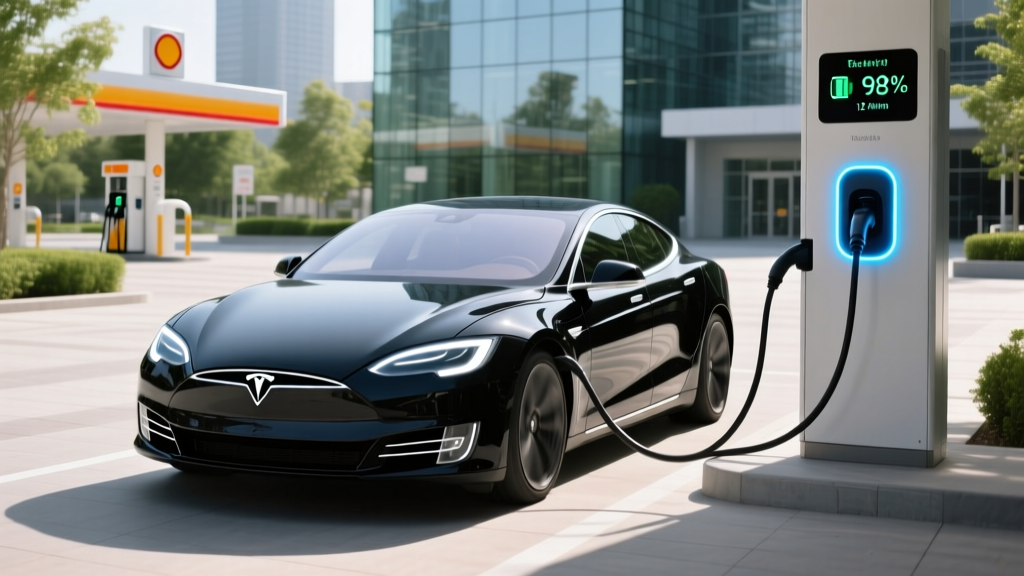
The 2024 Model 3 uses the NACS (North American Charging Standard) connector natively — no adapter required at Tesla Superchargers. This gives it access to the most reliable and extensive DC fast-charging network in North America.
| Charging Level | Power | Time / Rate | Notes |
|---|---|---|---|
| Level 1 (120V household) | ~1.4 kW | ~3–4 mi/hr | Emergency / overnight trickle only |
| Level 2 (240V home / destination) | Up to 11.5 kW | ~44 mi/hr / ~8 hr full charge | Requires 48A-capable wall connector + 60A circuit |
| DC Fast (V3 Supercharger) | Peak 250 kW | 10–80% in ~25 min | Tapers significantly above 60% SoC |
| DC Fast (V4 Supercharger) | Peak 250 kW (current) | Similar to V3 | Hardware-ready for higher future rates |
The Model 3's peak DC fast-charge rate of 250 kW is competitive but not class-leading — the Hyundai Ioniq 5 and Kia EV6 can peak at 240–250 kW on 800V architectures with faster sustained curves. The Model 3's charge curve is aggressive early (reaching ~250 kW around 15–20% SoC) but tapers steadily after 50%, and drops sharply past 80%. This is typical of NMC chemistry managed for long-term longevity.
For home charging, the Tesla Wall Connector at 48 amps delivers up to 11.5 kW (approximately 44 miles of range per hour). A full overnight charge from 20% to 100% takes roughly 7–8 hours. Note: the onboard charger limits AC charging to 11.5 kW; plugging into a higher-amperage Level 2 station won't charge the car faster.
Pricing, Trims, and Federal Tax Credit Eligibility
The 2024 Model 3 lineup has simplified significantly compared to prior years. Here's where pricing stands and how the federal tax credit factors in.
| Trim | Base MSRP | §30D Credit | Effective Price | MSRP Cap Status |
|---|---|---|---|---|
| Long Range RWD | $39,630 | Up to $7,500 | ~$32,130 | Under $55,000 sedan cap ✓ |
| Long Range AWD | $45,630 | Up to $7,500 | ~$38,130 | Under $55,000 sedan cap ✓ |
| Performance | $52,630 | Up to $7,500 | ~$45,130 | Under $55,000 sedan cap ✓ |
Important tax credit caveats: The IRS §30D clean vehicle credit has several eligibility requirements beyond the vehicle itself. As outlined on irs.gov, buyers must meet adjusted gross income limits ($150,000 single / $300,000 joint filers), and the vehicle must satisfy critical mineral and battery component sourcing requirements that tighten annually. The credit can now be transferred to the dealer at point of sale as an immediate price reduction. Always verify current-year eligibility with your tax professional before relying on the credit in your purchase math.
Options like Ultra Red paint ($2,500), 19" Nova wheels ($1,500), and Full Self-Driving (Supervised) capability ($8,000) can push the Performance trim above $55,000, which would disqualify it from the federal credit since sedans carry a $55,000 MSRP cap under §30D. Configure carefully.
Interior, Tech, and Cargo Capacity
The "Highland" refresh brought meaningful interior upgrades to the Model 3. The cabin is noticeably quieter thanks to acoustic glass all around, improved door seals, and additional sound deadening. The suspension retuning delivers a more compliant ride over broken pavement — a common complaint of pre-2024 models.
Infotainment and controls: The 15.4-inch center touchscreen handles virtually all vehicle functions, including climate, mirrors, and glovebox. There is no separate instrument cluster; speed and navigation info display on the main screen. A rear 8-inch touchscreen for passengers controls climate and media. Physical stalks for turn signals and drive selection have been removed — these functions now live on the steering wheel (turn signals) and touchscreen (gear selection), with a roof-console backup for Drive/Reverse. This is the Model 3's most polarizing change; budget at least a week to build muscle memory.
Cargo and passenger space:
- Rear cargo (trunk): 21.0 cu ft
- Front trunk (frunk): 3.1 cu ft
- Total cargo: 24.1 cu ft
- Rear legroom: 35.2 inches
- Front legroom: 42.7 inches
- Seating: 5 passengers
Cargo space trails the Hyundai Ioniq 6 (which offers a liftback design) and significantly trails the Model Y hatchback. If you regularly haul bulky items, the Model 3's traditional sedan trunk opening is a real limitation.
Driver assistance: Standard Autopilot includes Traffic-Aware Cruise Control and Autosteer (lane centering). This is an SAE Level 2 system — you must remain attentive, with hands on the wheel, at all times. The optional Full Self-Driving (Supervised) package adds automatic lane changes, navigation-guided on/off-ramp handling, and city-street autosteer, but it remains a Level 2 driver-assist feature requiring continuous supervision. It is not autonomous driving.
Battery, Warranty, and Long-Term Ownership
The 2024 Model 3 uses an NMC (nickel manganese cobalt) lithium-ion battery pack across all trims, with approximately 75 kWh of usable capacity. Tesla's battery management system is among the most conservative in the industry, maintaining a buffer at both the top and bottom of the charge range to slow degradation.
Warranty coverage:
- Basic vehicle: 4 years / 50,000 miles
- Battery & drive unit: 8 years / 120,000 miles (Long Range) or 8 years / 120,000 miles (Performance)
- Battery capacity retention threshold: 70% minimum during warranty period
Real-world degradation data from Tesla's fleet shows most Model 3 packs retain approximately 88–92% capacity after 100,000 miles. Tesla recommends daily charging to 80–90% for NMC packs (unlike LFP packs, which tolerate regular 100% charges). Following this guidance maximizes long-term State of Health (SoH).
Insurance costs tend to run higher than comparable ICE sedans. Expect annual premiums 15–25% above a similarly priced gasoline vehicle, driven by repair cost data and parts pricing. Get a quote before purchasing — this is a frequently overlooked ownership expense.
Pros, Cons, and the Verdict
- Class-leading efficiency (25 kWh/100mi)
- Supercharger network access (most reliable DC charging)
- Performance trim: 2.9-sec 0-60 is supercar-fast
- Over-the-air updates add features post-purchase
- Improved ride comfort and cabin quietness vs. pre-2024
- Strong resale value relative to EV segment
- Steering-wheel turn signals require adaptation
- No physical instrument cluster or HUD
- Sedan trunk limits cargo versatility
- FSD (Supervised) costs $8,000 and remains Level 2
- DC fast-charge curve tapers early vs. 800V rivals
- Insurance premiums above segment average
Who should buy the 2024 Model 3? The Long Range RWD suits daily commuters who prioritize maximum range and lowest cost per mile. The Long Range AWD is the best all-around pick for most buyers — offering dual-motor traction, strong acceleration, and over 340 miles of EPA range. The Performance trim targets driving enthusiasts who want a legitimate sports-sedan experience with daily-driver practicality and near-zero running costs.
Who should look elsewhere? If you need hatchback cargo space, consider the Model Y. If you want the fastest DC charging curve available, the Hyundai Ioniq 5 N or Kia EV6 GT are worth cross-shopping. If you prefer physical controls and a traditional instrument cluster, the BMW i4 may feel more intuitive.
Frequently Asked Questions
What is the fastest 2024 Tesla Model 3 0-60 time?
The 2024 Model 3 Performance achieves a manufacturer-claimed 0-60 mph time of 2.9 seconds with rollout subtracted. In independent testing, times typically fall between 2.9 and 3.2 seconds depending on surface conditions, tire temperature, and battery SoC.
Does the 2024 Model 3 qualify for the $7,500 federal tax credit?
All three trims fall under the $55,000 MSRP cap for sedans. However, buyer eligibility depends on income limits ($150K single / $300K joint AGI), and the vehicle must meet evolving critical-mineral and battery-sourcing requirements under IRS §30D. Verify eligibility at purchase, as sourcing rules tighten each year. The credit can be applied at point of sale as an instant discount.
How does the 2024 Model 3 compare to the Hyundai Ioniq 6?
The Ioniq 6 offers a longer-wheelbase interior, a liftback trunk, and faster sustained DC charging on its 800V architecture (10-80% in ~18 minutes at a 350 kW charger). The Model 3 counters with Supercharger network access, higher efficiency per kWh, stronger over-the-air software updates, and a more proven long-term reliability track record. The Ioniq 6 SE Long Range achieves 361 miles EPA; the Model 3 Long Range RWD achieves 363 miles.
What's the real cost to charge a Model 3 at home?
At the U.S. average residential electricity rate of ~$0.17/kWh, fully recharging the Model 3's ~75 kWh battery costs approximately $12.75. That's roughly $0.036 per mile — about one-quarter the per-mile fuel cost of a 30 MPG gasoline sedan at $3.50/gallon. Actual costs vary significantly by state, time-of-use rates, and whether you have solar.
Is the removal of turn-signal stalks a dealbreaker?
This is subjective. Most owners report adapting within 1–2 weeks. The steering-wheel buttons work reliably, and there's a backup touch control on the overhead console. However, when navigating roundabouts or using the steering wheel at full lock (e.g., parking), locating the signal button requires a glance down that some drivers find distracting. Test-drive before committing.
How does cold weather affect the Model 3's range?
Expect a 20–30% range reduction at freezing temperatures (32°F) during highway driving. The Model 3's heat pump (standard on all 2024 trims) significantly reduces cabin-heating energy consumption compared to older resistive heaters. Preconditioning the battery while plugged in — using the Tesla app's scheduled departure feature — recovers most of the cold-weather charging-speed penalty and preserves range.