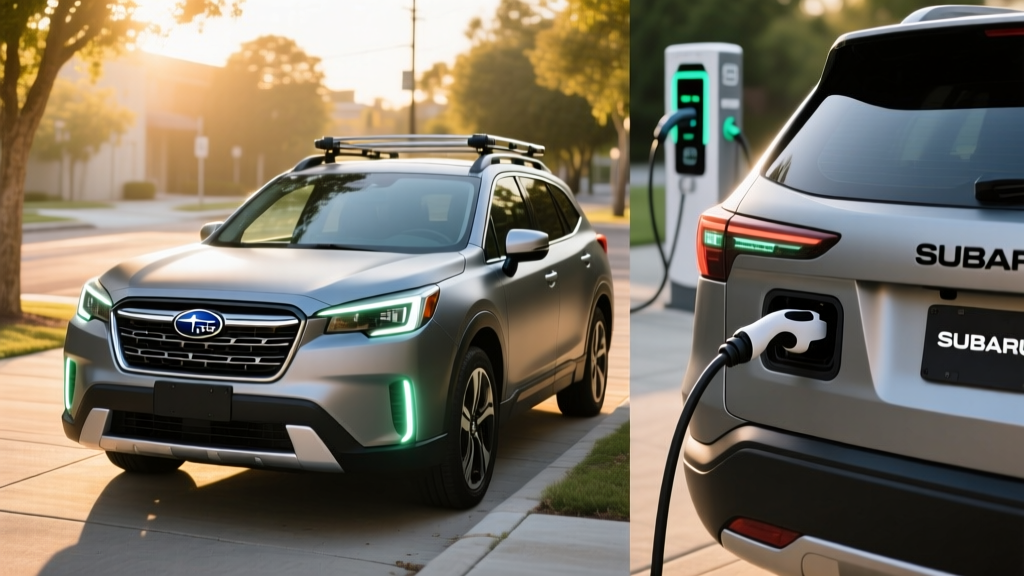
The 2024 Subaru Solterra Premium sits at an interesting crossroads in the electric SUV market. Built on the same Toyota-subaru co-developed e-TNGA platform as the bZ4X, the Solterra Premium differentiates itself with standard all-wheel drive, Subaru's trademark rugged styling, and a genuine off-road pedigree that most electric crossovers simply don't attempt. But with an EPA range that trails key competitors and a charging architecture that peaked a generation ago, is the Solterra Premium still a smart buy in 2026's crowded EV landscape?
We've spent time with the Solterra Premium to give you the exact numbers — range, charging curves, real-world efficiency, and total ownership cost — so you can decide whether Subaru's first EV earns a spot in your driveway.
Range and Efficiency: What the EPA Says vs. Reality
The 2024 Solterra Premium carries an EPA-estimated range of 227 miles on its 71.4 kWh usable battery pack (72.8 kWh total capacity). That places it squarely in the middle-lower tier of compact electric SUVs — behind the Hyundai Ioniq 5 (303 mi), the Tesla Model Y Long Range (330 mi), and the Ford Mustang Mach-E Extended Range (312 mi).
Efficiency lands at 104 MPGe combined (111 city / 97 highway) per fueleconomy.gov, translating to roughly 32 kWh per 100 miles. That's adequate but not class-leading — the Ioniq 5 achieves 114 MPGe combined, and the Model Y hits 122 MPGe.
Battery Chemistry, Capacity, and Longevity
The Solterra Premium uses a lithium-ion NMC (nickel manganese cobalt) battery with 71.4 kWh of usable capacity. NMC chemistry offers higher energy density than LFP (lithium iron phosphate), which is why Subaru can package this pack in a relatively compact floor layout while still offering standard AWD.
NMC packs do carry a slightly faster degradation profile than LFP over thousands of charge cycles, but Subaru backs the battery with an industry-standard warranty: 8 years or 100,000 miles (whichever comes first) against capacity loss below 70%. In practice, most NMC packs from this generation lose roughly 8–12% capacity over the first 100,000 miles based on fleet data from similar e-TNGA vehicles — meaning you'd still have approximately 200 miles of range at that mileage mark.
| Spec | Value |
|---|---|
| EPA Range | 227 miles |
| Battery (usable) | 71.4 kWh (NMC) |
| Efficiency | 104 MPGe / 32 kWh/100 mi |
| Max DC Fast Charge | 100 kW (peak) |
| 10–80% DC Charge Time | ~56 minutes |
| Level 2 Home Charge Rate | 6.6 kW (~22 mi/hr) |
| Drivetrain | Dual-motor AWD |
| Horsepower | 215 hp |
| 0–60 mph | 6.5 seconds |
| Cargo Volume | 23.8 cu ft (rear seats up) / 63.5 cu ft (folded) |
| Rear Legroom | 35.7 inches |
| Ground Clearance | 8.3 inches |
| Battery Warranty | 8 years / 100,000 miles |
| Base MSRP (Premium) | $44,995 |
Charging Speed: The Solterra's Biggest Compromise
Here's where the Solterra Premium reveals its most significant limitation. The DC fast-charging architecture tops out at 100 kW peak — and that peak is short-lived. The actual charge curve tells the real story:
| Charge Level | Power | Speed | Notes |
|---|---|---|---|
| Level 1 (120V) | ~1.4 kW | ~4 mi/hr | Emergency/trickle only |
| Level 2 (240V, 32A) | 6.6 kW | ~22 mi/hr | Full charge in ~11 hours |
| DC Fast Charge | 100 kW peak | 10–80% in ~56 min | Sustained rate ~60–70 kW avg |
The 10–80% charge takes approximately 56 minutes on a 150+ kW DC fast charger — nearly double the time of competitors like the Ioniq 5 (18 minutes at 240 kW) or the Kia EV6 (18 minutes at 240 kW). The Solterra's charge curve tapers aggressively after 40% state of charge (SoC), dropping below 50 kW by the time you reach 65%. This means road-trip charging stops will be noticeably longer.
For home Level 2 charging, the onboard charger accepts up to 6.6 kW. With a standard 32-amp Level 2 wall connector (like a ChargePoint Home Flex or Tesla Wall Connector set to 32A), you'll add roughly 22 miles of range per hour — enough to replenish a full day's commute overnight. A full 0–100% charge takes about 11 hours.
The Solterra uses the CCS1 connector for DC fast charging and a J1772 inlet for Level 2. Subaru has not announced a transition to the NACS (Tesla) connector for the 2024 model year, so you'll need a CCS adapter to access Tesla Superchargers — and not all Supercharger stalls support CCS yet.
Performance and Driving Dynamics
Every 2024 Solterra comes with Subaru's dual-motor Symmetrical All-Wheel Drive — no single-motor, front-wheel-drive variant exists. The Premium trim produces 215 horsepower and 248 lb-ft of torque, delivering a 0–60 mph time of approximately 6.5 seconds. That's adequate for merging and passing, though it trails the Mach-E GT (3.5s) and Model Y Performance (3.5s) by a wide margin.
Where the Solterra earns its Subaru badge is off-pavement. With 8.3 inches of ground clearance and Subaru's X-MODE traction management system, the Solterra handles dirt roads, snow, and light trail duty with more confidence than nearly any other electric crossover. The 220 mm water fording depth and Hill Descent Control aren't marketing gimmicks — they're genuinely useful for owners who take the Subaru lifestyle seriously.
The ride quality is compliant and well-damped, though the steering lacks the precision of the Ioniq 5 or the Model Y. Regenerative braking offers multiple levels adjustable via paddle shifters, but the Solterra does not offer true one-pedal driving — you'll still need the friction brake for complete stops.
Pricing, Trims, and Federal Tax Credit
The 2024 Solterra is available in three trims, all with standard AWD:
| Trim | Base MSRP | §30D Credit Eligible? | Effective Price* |
|---|---|---|---|
| Premium | $44,995 | Up to $7,500 | ~$37,495 |
| Limited | $48,495 | Up to $7,500 | ~$40,995 |
| Touring | $51,995 | Up to $7,500 | ~$44,495 |
*Effective price assumes full $7,500 §30D credit eligibility. Actual credit varies by buyer.
Does the 2024 Solterra qualify for the federal EV tax credit? Yes — but with critical caveats. Under IRS §30D rules, the full $7,500 credit requires meeting both critical-mineral sourcing and battery-component manufacturing thresholds, which shift annually. The Solterra's battery is manufactured in Japan by Panasonic, and its critical-mineral supply chain compliance has fluctuated. Always verify current eligibility on the IRS clean vehicle credit page before purchasing.
Additional eligibility requirements include:
- MSRP cap: SUVs must have an MSRP at or below $80,000 (all Solterra trims qualify)
- Buyer income cap: AGI must not exceed $150,000 (single), $225,000 (head of household), or $300,000 (joint)
- Point-of-sale transfer: As of 2024, you can transfer the credit to the dealer for an immediate price reduction at purchase
- Battery sourcing: Verify current-year critical-mineral and component requirements on irs.gov
Interior, Technology, and Cargo
The Solterra Premium's interior is functional but not class-leading in material quality. The 12.3-inch touchscreen (shared with the Toyota bZ4X on higher trims; the Premium uses an 8-inch display) runs Subaru's Starlink infotainment system with wireless Apple CarPlay and Android Auto. The system is responsive enough, though the menu structure isn't as intuitive as Hyundai's or Tesla's interface.
Standard driver-assistance tech includes Subaru EyeSight 4.0 with adaptive cruise control, lane-centering assist, pre-collision braking, and evasive steering assist. This is a SAE Level 2 driver-assistance system — it does not enable hands-free or self-driving operation. You must keep your hands on the wheel and eyes on the road at all times. EyeSight performs competently on highways but lacks the lane-change-on-indicator functionality of GM's Super Cruise or Ford's BlueCruise.
Cargo space measures 23.8 cubic feet behind the rear seats and 63.5 cubic feet with the 60/40 split rear seats folded. That's competitive with the Ioniq 5 (27.2 / 59.3 cu ft) but notably less than the Model Y (30.2 / 76.2 cu ft). Rear-seat passengers get 35.7 inches of legroom, which is adequate for adults but not generous. There is no front trunk (frunk).
Pros, Cons, and Who Should Buy
Pros
- Standard AWD with genuine off-road capability (8.3" ground clearance, X-MODE)
- Competitive pricing after federal tax credit (~$37,500 effective)
- Comfortable ride quality and compliant suspension
- Strong safety ratings (IIHS Top Safety Pick+)
- 8-year/100,000-mile battery warranty
- Subaru brand loyalty and dealer network in snow-belt states
Cons
- EPA range of 227 mi trails most competitors by 50–100 miles
- 100 kW peak DC charging is slow — 56 min for 10–80%
- No heat pump on Premium trim reduces cold-weather efficiency
- No frunk; cargo space is mid-pack
- Infotainment interface feels dated vs. rivals
- One-pedal driving not available
Who Should Buy the 2024 Solterra Premium?
Choose the Solterra Premium if: You live in a snowy or mountainous region, value standard AWD, want genuine light-off-road capability, primarily commute under 150 miles round-trip, have reliable home Level 2 charging, and identify with the Subaru brand.
Look elsewhere if: You take frequent road trips over 250 miles, need fast DC charging for time-sensitive travel, want maximum cargo space, or prioritize cutting-edge infotainment and one-pedal driving.
Competitive Comparison
The Solterra Premium competes directly with the Hyundai Ioniq 5, Kia EV6, Ford Mustang Mach-E, and Tesla Model Y. Here's how the numbers stack up:
| Metric | Solterra Premium | Ioniq 5 SEL AWD | Mach-E ER AWD | Model Y LR |
|---|---|---|---|---|
| EPA Range | 227 mi | 290 mi | 290 mi | 330 mi |
| DC Charge (10–80%) | ~56 min | ~18 min | ~37 min | ~25 min |
| 0–60 mph | 6.5s | 5.2s | 5.1s | 4.8s |
| Base MSRP (AWD) | $44,995 | $49,850 | $48,995 | $47,740 |
| Ground Clearance | 8.3" | 6.1" | 5.7" | 6.6" |
The Solterra wins on ground clearance and starting price (before credits, the gap narrows). The Ioniq 5 and Model Y dominate on range and charging speed — the two metrics that most influence daily EV satisfaction.
Frequently Asked Questions
What is the real-world range of the 2024 Subaru Solterra Premium?
Expect 200–215 miles in mixed driving at moderate temperatures, 180–195 miles on sustained highway trips, and 155–175 miles in freezing conditions. The EPA rates it at 227 miles, but real-world conditions — especially cold weather and highway speeds — reduce that figure meaningfully.
How fast does the Solterra Premium charge?
DC fast charging peaks at 100 kW, with a 10–80% charge taking approximately 56 minutes. The sustained average charge rate is closer to 60–70 kW due to aggressive tapering above 40% SoC. Home Level 2 charging at 6.6 kW adds about 22 miles per hour, with a full charge taking roughly 11 hours.
Does the 2024 Solterra qualify for the $7,500 federal tax credit?
It can, but eligibility depends on your income (AGI caps apply), the vehicle's battery sourcing compliance with current-year §30D rules, and the MSRP (under the $80,000 SUV cap — all trims qualify). The credit can be transferred to the dealer at point of sale for an immediate price reduction. Verify current sourcing requirements on irs.gov before purchasing, as rules update annually.
Is the Solterra Premium worth buying vs. the Ioniq 5 or Model Y?
It depends on your priorities. If you need maximum range, fast road-trip charging, and modern infotainment, the Ioniq 5 or Model Y are objectively stronger EVs. If you live in snow country, want standard AWD with real ground clearance, and your daily commute fits within 150 miles, the Solterra Premium offers a compelling package — especially after the federal credit brings the effective price below $38,000.
Does the Solterra have a heat pump?
The 2024 Solterra Premium does not include a heat pump — it uses a resistance (PTC) heater, which draws more energy from the battery in cold weather. Higher trims (Touring) include a heat pump, which can improve cold-weather range by 10–15% compared to resistance heating.
Can the Solterra tow?
Subaru does not rate the 2024 Solterra for towing. If you need an EV with towing capability, the Ford F-150 Lightning, Rivian R1S, or Tesla Model Y (rated at 3,500 lbs) are better options.
What connector does the Solterra use?
The 2024 Solterra uses CCS1 for DC fast charging and J1772 for Level 2 AC charging. It does not have a native NACS (Tesla) port. Subaru has indicated future models will adopt NACS, but the 2024 model year retains CCS.