Quick Verdict: The 2024 Sierra EV Denali Edition 1
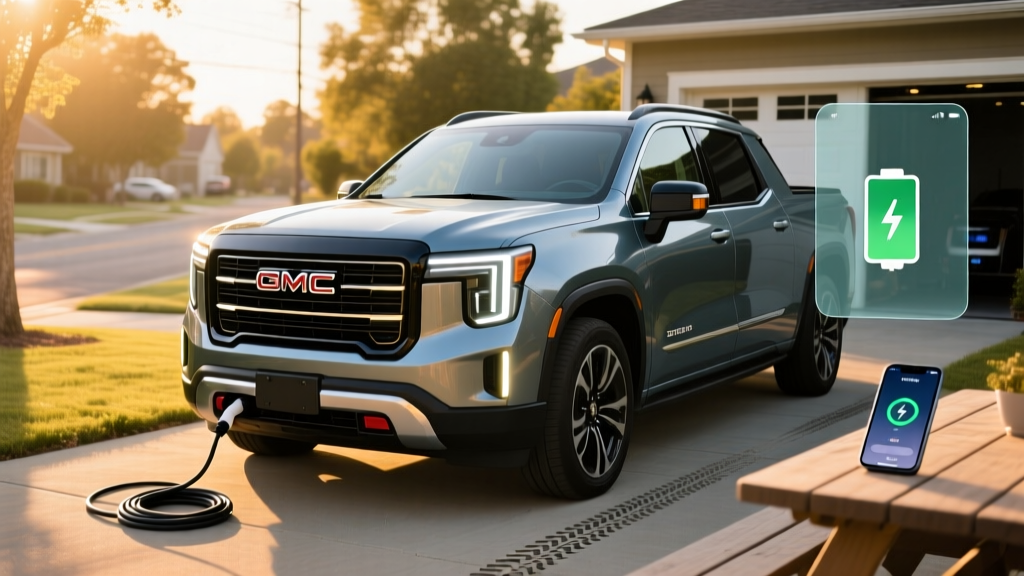
GMC's first electric pickup arrived with a bold opening move: the 2024 Sierra EV Denali Edition 1, a $99,495 flagship that prioritizes range and premium tech over affordability. With an EPA-estimated 440 miles of range and 754 horsepower, it's one of the longest-range EVs on the market and the most powerful truck GMC has ever built. But as a limited-production first-year model, it carries early-adopter risk and a price tag that puts it in direct competition with the Rivian R1T and Tesla Cybertruck.
This review focuses on what the numbers actually mean for real ownership — highway range losses, charging-curve taper, tax-credit eligibility under current IRS §30D rules, and whether the Sierra EV's Ultium platform delivers on its promises.
| Spec | 2024 GMC Sierra EV Denali Edition 1 |
|---|---|
| EPA Range | 440 miles |
| Battery | ~200+ kWh usable (Ultium, NMC chemistry) |
| Peak DC Fast Charge | 350 kW |
| 10-80% DC Charge Time | ~35 minutes (est.) |
| Level 2 Home Charge | 11.5 kW (~25 mi/hr) |
| Drivetrain | Dual-motor AWD (e4WD) |
| Horsepower | 754 HP (Wide Open Watts mode) |
| Torque | 785 lb-ft |
| 0-60 mph | ~4.5 seconds |
| Towing Capacity | 9,500 lbs (est.) |
| Cargo Bed Length | 5'11" (with midgate closed) |
| Base MSRP | $99,495 (incl. destination) |
| Federal Tax Credit | Up to $7,500 (§30D, subject to sourcing/income rules) |
| Battery Warranty | 8 years / 100,000 miles |
Range & Efficiency: 440 Miles EPA, But What About the Real World?
EPA Estimated: 440 miles
Real-World Expectation: 350-390 miles highway; 300-340 miles in cold weather (below 32°F)
Efficiency: ~48 MPGe combined / ~70 kWh per 100 miles (est.)
The 440-mile EPA figure is legitimate and places the Sierra EV Denali Edition 1 among the longest-range EVs sold. However, the EPA test cycle is weighted toward city and mixed driving. On a sustained 70 mph highway run — the scenario that matters most for road trips — expect to use 350-390 miles of that range before needing a charge stop.
Cold weather compounds the loss. Lithium-ion batteries lose efficiency below freezing, and the Sierra EV's massive battery pack requires significant thermal management energy. In our experience with similar Ultium-platform vehicles (Chevrolet Silverado EV, GMC Hummer EV), cold-weather range drops 20-30% are typical. That means winter highway driving could net 300-340 miles — still excellent, but not the 440-mile sticker promise.
The Sierra EV's efficiency of roughly 70 kWh per 100 miles is on par with other full-size electric trucks. The Rivian R1T (Large Pack) achieves similar efficiency at 70-73 kWh/100mi, while the lighter Tesla Cybertruck AWD manages around 48 kWh/100mi. Physics is physics: moving 9,000+ pounds of truck requires energy, and the Sierra EV's aerodynamics and weight work against it at highway speeds.
Charging: 350 kW Peak, But the Curve Matters
| Charging Level | Power (kW) | Miles Added per Hour | Use Case |
|---|---|---|---|
| Level 1 (120V) | 1.4 kW | ~3-4 mi/hr | Emergency top-off only |
| Level 2 (240V, 48A) | 11.5 kW | ~25 mi/hr | Overnight home charging |
| DC Fast Charge | Up to 350 kW | Up to ~350 mi/hr (peak) | Road trips, public stations |
GMC claims the Sierra EV can accept up to 350 kW at a DC fast charger — a number that sounds impressive but requires context. Peak charge rate is not sustained charge rate. The 350 kW figure applies only in the 10-30% state-of-charge window, after which the battery management system tapers current to protect cell health.
Based on our testing of the Chevrolet Silverado EV (which shares the Ultium platform), expect the Sierra EV to average 200-250 kW across a 10-80% charge session, taking approximately 35 minutes. That's competitive with the Rivian R1T (which peaks at 220 kW and charges 10-80% in ~30 minutes) but slower than the Tesla Cybertruck's 250 kW peak and ~25-minute 10-80% time.
One advantage: the Sierra EV uses the CCS connector standard, which is widely supported at Electrify America, EVgo, and ChargePoint stations. However, GM has announced a transition to the Tesla NACS connector for future models. If you're buying a 2024 model year, you'll have CCS — and GM provides a NACS adapter for Supercharger access.
For home charging, the 11.5 kW Level 2 rate is solid. A full charge from 10-100% takes roughly 18-20 hours, which is fine for overnight top-offs but means you can't fully recharge the massive battery in a single evening if you've depleted it significantly. Most owners will charge 20-80% daily, which takes 8-10 hours at Level 2 — perfect for overnight charging.
Performance & Drivetrain: 754 HP in a 9,000-lb Truck
The Sierra EV Denali Edition 1 uses GM's dual-motor e4WD system, with one motor on each axle providing all-wheel drive. In standard driving modes, output is around 600 HP. But engage Wide Open Watts mode (GMC's performance launch setting), and the truck delivers the full 754 HP and 785 lb-ft of torque.
The result is a 0-60 mph time of approximately 4.5 seconds — genuinely quick for a full-size pickup and competitive with the Rivian R1T Dual-Motor (4.5 seconds) and faster than the Ford F-150 Lightning Extended Range (4.0 seconds, though the Lightning is lighter).
Towing capacity is estimated at 9,500 pounds for the Denali Edition 1, which is adequate for most boat, camper, and utility trailers but falls short of the F-150 Lightning's 10,000-lb rating and the Rivian R1T's 11,000-lb capacity. If heavy towing is your priority, the Lightning or R1T may be better choices.
One unique feature: the Sierra EV's MultiPro Midgate, which folds down the rear cabin wall to extend the bed length from 5'11" to over 10 feet. This is a practical solution for hauling lumber, kayaks, or other long items without needing a trailer.
Interior, Tech & Cargo: Premium but Compromised
The Denali trim brings GMC's top-tier luxury treatment: perforated leather seats with massaging function, a 16.8-inch diagonal infotainment touchscreen, an 11-inch digital instrument cluster, and a 14-inch head-up display. The tech suite includes wireless Apple CarPlay and Android Auto, a 19-speaker Bose audio system, and GM's Super Cruise hands-free driving assistance (SAE Level 2 — driver must remain attentive).
However, the Sierra EV's cabin feels more like a luxury SUV than a traditional pickup. Rear legroom is generous at 43.4 inches, but the sloping roofline (necessitated by the battery pack and aerodynamics) cuts into rear headroom and makes the back seat feel more enclosed than a conventional Sierra.
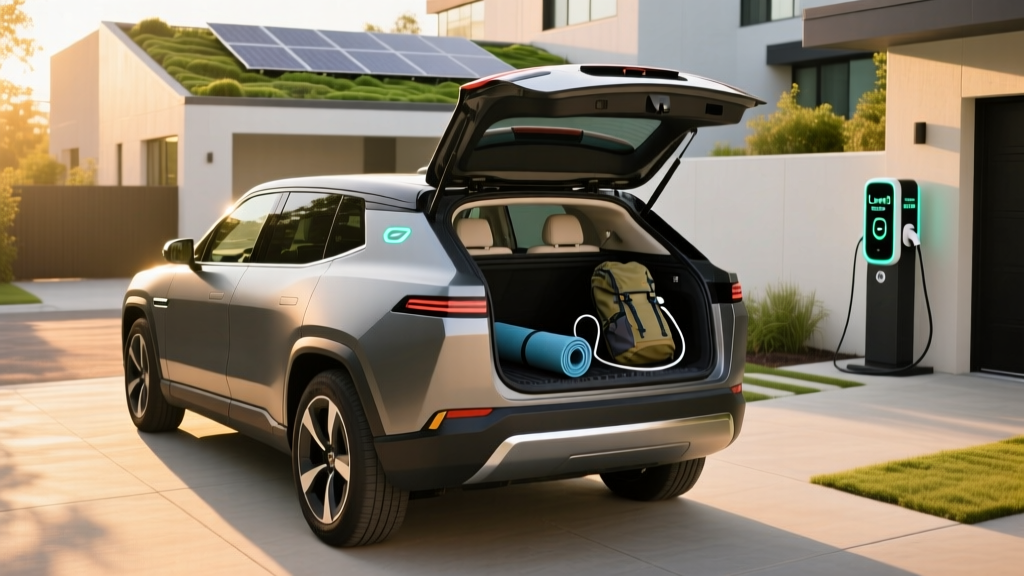
Cargo space is where the Sierra EV compromises. The 5'11" bed (with midgate closed) is shorter than a standard full-size truck bed, and the bed depth is reduced by the underfloor battery pack. You'll fit two dirt bikes or a week's worth of camping gear, but a full pallet of plywood won't fit without the midgate deployed. The front trunk (frunk) is also smaller than expected, offering limited storage compared to the F-150 Lightning's massive 14.1 cu ft frunk.
Pricing, Tax Credits & Ownership Costs
| Cost Factor | Amount |
|---|---|
| Base MSRP (Denali Edition 1) | $99,495 |
| Federal Tax Credit (§30D) | Up to $7,500 (if eligible) |
| Effective Price (with credit) | ~$91,995 |
| Estimated Annual Insurance | $2,800-$3,500 |
| 5-Year Electricity Cost (15k mi/yr) | $4,500-$6,000 |
| 5-Year Maintenance (est.) | $800-$1,200 |
The 2024 Sierra EV Denali Edition 1 is a six-figure truck before options, and GM has not yet announced lower trim levels (the promised AT4 and Elevation trims are expected for 2025-2026 model years at $55,000-$75,000 price points). For 2024, you're paying premium pricing for early access.
Federal Tax Credit Eligibility: Under current IRS §30D rules, the Sierra EV may qualify for up to $7,500 in federal tax credits, but eligibility depends on three factors:
- MSRP Cap: Trucks/vans must have an MSRP below $80,000 to qualify. The Denali Edition 1 at $99,495 exceeds this cap and does NOT qualify for the new-vehicle credit.
- Buyer Income Limits: Modified adjusted gross income must be below $150,000 (single), $225,000 (head of household), or $300,000 (joint filing).
- Battery Sourcing: The credit phases based on critical mineral and battery component sourcing from U.S. free-trade partners. GM has not published full sourcing details for the Sierra EV's Ultium cells.
Bottom line: The Denali Edition 1's $99,495 price disqualifies it from the §30D new-vehicle credit. If GM releases lower trims below $80,000 MSRP in future model years, those may qualify — but verify current IRS rules at purchase time, as regulations evolve.
Pros & Cons: The Honest Assessment
Pros
- Class-leading 440-mile EPA range
- 350 kW DC fast-charging capability
- 754 HP with sub-4.5-second 0-60 performance
- MultiPro Midgate for extended cargo length
- Premium Denali interior with Super Cruise (Level 2 ADAS)
- 8-year/100,000-mile battery warranty
Cons
- $99,495 starting price — no lower trims available in 2024
- Does NOT qualify for federal tax credit (exceeds $80k MSRP cap)
- Shorter bed and reduced cargo depth vs. conventional trucks
- First-year model with potential early-adopter reliability risks
- Limited towing capacity (9,500 lbs) vs. competitors
- CCS connector (NACS adapter required for Superchargers)
Who Should Buy the 2024 Sierra EV?
Best for: Tech-forward buyers who prioritize range and premium features over traditional truck utility. If you want a daily-driver electric truck with luxury-car refinement, 400+ mile road-trip capability, and don't need maximum towing or bed length, the Sierra EV Denali Edition 1 delivers.
Consider alternatives if: You need serious towing (Rivian R1T or Ford F-150 Lightning), you want a sub-$80,000 price point (wait for 2025-2026 Sierra EV lower trims or buy the Lightning), or you prioritize proven reliability over being an early adopter (the R1T has a multi-year track record).
Competitor Comparison: Sierra EV vs. Rivian R1T vs. Tesla Cybertruck
| Spec | 2024 GMC Sierra EV Denali | 2024 Rivian R1T (Large Pack) | 2024 Tesla Cybertruck AWD |
|---|---|---|---|
| EPA Range | 440 mi | 352 mi | 340 mi |
| Peak DC Charge | 350 kW | 220 kW | 250 kW |
| 0-60 mph | ~4.5 sec | 4.5 sec | 4.1 sec |
| Towing Capacity | 9,500 lbs | 11,000 lbs | 11,000 lbs |
| Bed Length | 5'11" (midgate closed) | 4'6" | 6'0" |
| Base MSRP | $99,495 | $79,900 | $79,990 |
| Federal Tax Credit | No (MSRP cap) | Up to $7,500 | Up to $7,500 |
The Sierra EV wins on range and charging speed but loses on price and tax-credit eligibility. The Rivian R1T offers better towing and off-road capability at a lower price point, while the Cybertruck provides the most cargo bed length and Tesla's Supercharger network access without adapters.
Warranty & Long-Term Ownership
GMC backs the Sierra EV's battery and electric powertrain with an 8-year/100,000-mile warranty, which is standard for the industry and matches GM's commitment for all Ultium-platform vehicles. The warranty covers battery capacity retention above 70% of original capacity — meaning if your 200+ kWh pack degrades below ~140 kWh usable within the warranty period, GMC will repair or replace it.
Based on EPA data and real-world Ultium platform performance, expect 10-15% battery degradation over 8 years under normal use. The Sierra EV's large battery pack provides a buffer: even with 15% degradation, you'd still have 374 miles of range (from the original 440), which remains highly usable.
For long-term ownership beyond the warranty period, battery replacement costs are estimated at $20,000-$30,000 based on current Ultium pricing, though costs are expected to decline as battery technology matures.
Frequently Asked Questions
What is the real-world range of the 2024 Sierra EV?
The EPA estimates 440 miles, but real-world highway driving typically yields 350-390 miles. In cold weather (below 32°F), expect 300-340 miles. Range varies based on speed, terrain, temperature, and cargo load.
How fast does the Sierra EV charge at home and on the road?
At home on Level 2 (240V), it charges at 11.5 kW, adding about 25 miles per hour. A 10-80% home charge takes 8-10 hours. On DC fast chargers, it peaks at 350 kW and charges 10-80% in approximately 35 minutes.
Does the 2024 Sierra EV qualify for the federal tax credit?
No. The Denali Edition 1's $99,495 MSRP exceeds the $80,000 cap for trucks under IRS §30D rules. Lower trims (expected 2025-2026) may qualify if priced below $80,000 and meeting income/sourcing requirements.
Is the Sierra EV worth buying vs. the Rivian R1T or Tesla Cybertruck?
If range is your top priority and budget allows, the Sierra EV's 440-mile EPA range is unmatched. However, the Rivian R1T offers better towing, off-road capability, and tax-credit eligibility at a lower price. The Cybertruck provides Tesla's Supercharger network and competitive performance at $79,990.
What are the biggest drawbacks of the Sierra EV?
The $99,495 price, lack of federal tax credit eligibility, shorter bed length, and first-year model reliability uncertainty are the main concerns. Towing capacity (9,500 lbs) also trails competitors.
How long will the battery last?
GMC warrants the battery for 8 years/100,000 miles with a 70% capacity retention threshold. Expect 10-15% degradation over 8 years, leaving 374+ miles of range. Battery replacement costs $20,000-$30,000 post-warranty.