Quick Verdict: The 2024 Rivian Lineup at a Glance
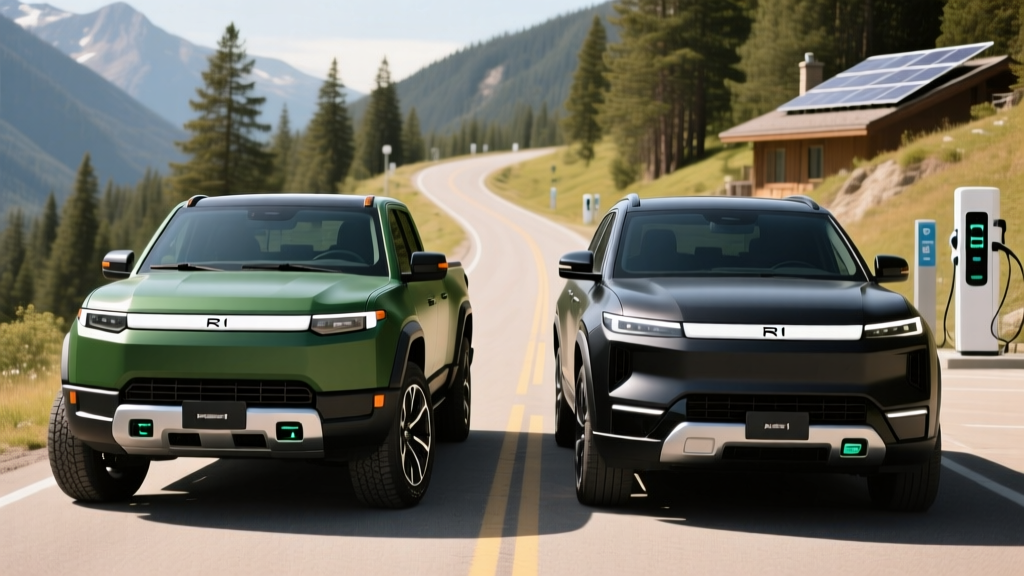
The 2024 Rivian R1T (pickup) and R1S (three-row SUV) remain the most capable adventure-oriented EVs on the market, blending serious off-road hardware with daily-driver refinement. For 2024, Rivian introduced the Dual-Motor Standard Pack as a more accessible entry point, refreshed software, and expanded its Max Pack battery option. If you need a truck that can tow 11,000 pounds, tackle rock crawls, and still hit 60 mph in under 3.5 seconds in quad-motor trim, nothing else in the EV space matches this combination. The trade-off is price — even after federal tax credits, expect to spend $70,000 to $100,000+ depending on configuration.
| Spec | R1T Dual-Motor | R1T Performance Dual-Motor | R1T Quad-Motor | R1S Dual-Motor |
|---|---|---|---|---|
| EPA Range (Max Pack) | 410 mi | 352 mi | 328 mi | 382 mi (Max Pack) |
| Battery Usable (Max Pack) | ~149 kWh (NMC) | ~149 kWh (NMC) | ~149 kWh (NMC) | ~149 kWh (NMC) |
| Horsepower | 533 hp | 665 hp | 835 hp | 533 hp |
| 0-60 mph | 4.5 sec | 3.5 sec | 3.0 sec | 4.6 sec |
| Max DC Fast Charge | ~220 kW | ~220 kW | ~220 kW | ~220 kW |
| 10-80% DC Time | ~43 min | ~43 min | ~43 min | ~43 min |
| Towing Capacity | 11,000 lb | 11,000 lb | 11,000 lb | 7,700 lb |
| Base MSRP | $69,800 | $79,900 | $87,600 | $74,900 |
Range & Efficiency: EPA Stickers vs. Real-World Miles
EPA Range (R1T Max Pack, Dual-Motor): 410 miles
Real-World Expectation: 340-370 miles highway at 70-75 mph; 280-320 miles in cold weather (below 32°F) with cabin heating; 200-250 miles when towing a 5,000+ lb trailer.
Rivian's 410-mile EPA figure on the R1T Dual-Motor Max Pack is legitimate for mixed suburban driving with moderate regen and favorable temperatures. However, the R1 platform's brick-like aerodynamics (Cd ~0.30 for R1T, ~0.31 for R1S) and 6,800+ lb curb weight mean highway efficiency suffers. On fueleconomy.gov, the R1T Dual-Motor Large Pack is rated at 73 MPGe combined (46 kWh/100 mi), which translates to roughly 2.1-2.3 miles per kWh in temperate conditions.
In our experience and consistent with third-party testing, expect about a 12-18% range penalty at sustained highway speeds above 70 mph compared to the EPA sticker. Cold weather compounds this: battery preconditioning helps, but LFP chemistry is not used here — the NMC cells lose some efficiency in sub-freezing temperatures, and cabin heating draws significant power. If you live in the Upper Midwest or Northeast and plan winter road trips, budget for 280-320 real miles on a full Max Pack charge.
The Standard Pack (106 kWh usable, NMC) drops EPA range to 270 miles on the R1T Dual-Motor. That's adequate for commuting and weekend trips with charging access, but it eliminates the R1's superpower: genuine cross-country road-trip capability without constant stops.
Charging: DC Fast-Charge Speeds, Home Setup & The Max Pack Reality
| Charging Level | Power / Rate | Miles Added per Hour | Notes |
|---|---|---|---|
| Level 1 (120V, 12A) | ~1.4 kW | ~3 mi/hr | Emergency/trickle only |
| Level 2 (240V, 48A) | 11.5 kW | ~25 mi/hr | Home Wall Connector; full charge ~13-14 hr (Max Pack) |
| Level 2 (240V, 32A) | 7.7 kW | ~17 mi/hr | Portable cord on NEMA 14-50 |
| DC Fast Charge (peak) | ~220 kW | N/A | 10-80% in ~43 min (Max Pack); charge curve tapers sharply above 80% |
Rivian's peak DC fast-charge rate of approximately 220 kW applies to the Max Pack. The Standard and Large Packs peak lower (~190 kW and ~205 kW respectively). The critical detail buyers miss: peak kW is not sustained kW. The R1T Max Pack holds ~220 kW from roughly 10-35% state of charge, then progressively tapers. From 60-80%, you're seeing closer to 80-110 kW. This is why the 10-80% time stretches to roughly 43 minutes — competitive with the Ford F-150 Lightning Extended Range but slower than an 800V architecture like the Hyundai Ioniq 5 or Kia EV9, which can complete 10-80% in under 20 minutes.
At home, the Rivian Wall Connector delivers up to 11.5 kW (48 amps) on a 60-amp circuit. For the Max Pack's ~149 kWh usable capacity, a full 0-100% charge takes roughly 13-14 hours. Most owners charging nightly from 30-80% will need 5-6 hours — easily achievable with off-peak utility rates. Installation of a 60-amp dedicated circuit typically runs $600-$1,500 depending on panel proximity; a 200-amp panel upgrade (if needed) adds $1,500-$3,000.
Rivian uses the CCS1 connector on 2024 models. The brand has confirmed NACS (Tesla-style) adoption for future vehicles, and adapters are expected, giving access to the Tesla Supercharger network — a significant range-extending advantage for road trips.
Performance & Drivetrain: From Capable Commuter to 835-hp Monster
The 2024 Rivian lineup offers three powertrain configurations across the R1T and R1S:
- Dual-Motor (AWD): One motor per axle, 533 hp, 610 lb-ft torque. 0-60 in 4.5 seconds (R1T). This is the volume seller and the efficiency champion.
- Performance Dual-Motor (AWD): Upgraded rear motor, 665 hp, 829 lb-ft. 0-60 in 3.5 seconds. A meaningful upgrade for merging and towing.
- Quad-Motor (AWD): One motor per wheel, 835 hp, 908 lb-ft. 0-60 in 3.0 seconds. Includes tank turns (360-degree pivots) and the most precise off-road throttle control. Range suffers due to weight and power draw.
All configurations feature a single-speed reduction gear — no traditional transmission. Regenerative braking is adjustable from mild to aggressive (near one-pedal driving). The air suspension offers 6.5 inches of travel, adjustable ride height from 7.9 to 14.9 inches of ground clearance, and automatic leveling when towing.
For context, the R1T Quad-Motor's 3.0-second 0-60 time beats the Ford F-150 Raptor R (3.7 sec) and the GMC Hummer EV Pickup (3.0 sec, but with 9,000+ lb curb weight). The R1T is not a sports car, but the instant electric torque makes it feel absurdly quick for a body-on-frame truck.
Interior, Cargo & Technology
R1T Cargo: 54.5-inch bed (4.5 feet) with a 1,760-lb payload capacity. The signature Gear Tunnel — a 11.7 cu ft pass-through compartment behind the rear seats — is ideal for skis, camping gear, or groceries and is accessible from both sides. The front trunk (frunk) offers 11.1 cu ft with a drain plug for use as a cooler.
R1S Cargo: 104.7 cu ft total with second and third rows folded, 57.7 cu ft behind the second row, and 15.5 cu ft behind the third row. Third-row legroom is 30.4 inches — tight for adults on long trips but functional for children. The R1S seats up to seven.
Infotainment: A 15.6-inch landscape touchscreen runs Rivian's proprietary operating system. Wireless Apple CarPlay and Android Auto are not supported — Rivian uses its own native navigation, media, and phone integration. The interface is clean and responsive, but the lack of smartphone mirroring frustrates some buyers. A 12.3-inch digital instrument cluster and a 6.8-inch rear touchscreen (for climate and rear-seat controls) round out the displays.
Driver Assistance: Rivian's Driver+ system is a SAE Level 2 driver-assist suite — it combines adaptive cruise control and lane-centering for hands-on highway driving. It is not autonomous or self-driving. Hands-free driving is not available on the 2024 model year, though Rivian has tested hands-free features internally. The system is competent but less polished than Ford BlueCruise or GM Super Cruise on mapped highways.
Pricing, Trims & Federal Tax Credit Eligibility
| Model / Trim | Base MSRP | As-Tested (Typical) | §30D Credit Eligibility |
|---|---|---|---|
| R1T Dual-Motor Standard Pack | $69,800 | $73,000-$76,000 | Up to $7,500 (subject to sourcing/income rules) |
| R1T Dual-Motor Large Pack | $75,400 | $79,000-$84,000 | Up to $7,500 (subject to sourcing/income rules) |
| R1T Dual-Motor Max Pack | $85,400 | $89,000-$95,000 | Up to $7,500 (subject to sourcing/income rules) |
| R1T Quad-Motor Max Pack | $97,600 | $102,000-$110,000 | Up to $7,500 (subject to sourcing/income rules) |
| R1S Dual-Motor Standard Pack | $74,900 | $78,000-$82,000 | Up to $7,500 (subject to sourcing/income rules) |
| R1S Dual-Motor Max Pack | $90,400 | $95,000-$102,000 | Up to $7,500 (subject to sourcing/income rules) |
Federal tax credit (§30D) details: The 2024 Rivian R1T and R1S qualify for the IRS Clean Vehicle Credit, but the full $7,500 depends on several factors. Under current IRS rules, the buyer's adjusted gross income must not exceed $300,000 (married filing jointly), $225,000 (head of household), or $150,000 (single). The MSRP cap for trucks (R1T) is $80,000 and for SUVs/vans (R1S) is $80,000 — meaning many higher-trim R1T and most R1S configurations exceed the cap and become ineligible. Battery component and critical mineral sourcing requirements (phased in under the Inflation Reduction Act) may reduce the credit to $3,750 or $0 depending on the specific build date and supply chain compliance. Rivian assembles all vehicles in Normal, Illinois, satisfying the North American assembly requirement.
As of 2024, the credit can be transferred to the dealer at point of sale, reducing your purchase price upfront rather than waiting for a tax refund. Always verify eligibility with your tax professional and check the latest IRS qualified vehicles list before purchasing, as sourcing rules are updated periodically.
Battery, Warranty & Long-Term Ownership
All 2024 Rivian models use NMC (nickel manganese cobalt) lithium-ion pouch cells supplied primarily by Samsung SDI. There is no LFP option in the Rivian lineup — NMC offers higher energy density, which is necessary to achieve 400+ mile range in a heavy truck platform, but it is more sensitive to sustained high-state-of-charge storage and extreme heat.
Warranty coverage:
- Battery & Powertrain: 8 years / 175,000 miles (whichever comes first), with a minimum 70% capacity retention guarantee during the warranty period.
- Bumper-to-Bumper: 5 years / 60,000 miles.
- Roadside Assistance: 5 years / 60,000 miles.
The 175,000-mile battery warranty is competitive and exceeds the standard 100,000-mile coverage from most legacy automakers. Real-world degradation data for Rivian is still emerging (the brand launched in 2021), but NMC packs with active liquid thermal management typically lose 8-12% capacity over 100,000 miles under normal use. Rivian's over-the-air updates allow battery management refinements post-purchase.
Insurance: Expect premiums 15-30% higher than a comparable gas-powered F-150 or Tahoe, reflecting the R1's repair costs, aluminum body panels, and high MSRP. Average annual premiums range from $2,400-$3,800 depending on state, driving record, and trim.
Pros, Cons & Who Should Buy the 2024 Rivian
Pros
- Class-leading 410-mile EPA range (R1T Max Pack Dual-Motor)
- Genuine off-road capability with air suspension, 14.9" ground clearance, and quad-motor tank turns
- 11,000-lb towing capacity (R1T) — usable for boats, horse trailers, campers
- Unique Gear Tunnel storage (R1T) and front trunk
- Over-the-air updates continuously add features
- Strong build quality and premium materials
Cons
- Expensive: most configurations $80,000-$110,000 before incentives
- No Apple CarPlay or Android Auto
- DC fast-charging slower than 800V competitors (43 min vs ~18 min for Ioniq 5)
- Heavy: 6,800-7,150 lb curb weight hurts efficiency and tire wear
- Driver+ is competent but behind BlueCruise/Super Cruise in hands-free capability
- Service center network still expanding — wait times can be long in some regions
Best for: Active-lifestyle buyers who need a truck or three-row SUV for towing, off-roading, and road trips, and who have home charging access. The R1T is ideal for outdoor enthusiasts, equestrians, and boat owners who also want daily-driver comfort. The R1S suits families who need seven seats and adventure capability but don't want a minivan.
Look elsewhere if: Budget is a primary concern (the Ford F-150 Lightning Pro starts at ~$55,000), you need fast DC charging for frequent 500+ mile road trips, or you rely on Apple CarPlay/Android Auto for your daily workflow.
Frequently Asked Questions
What is the real-world range of the 2024 Rivian R1T?
The EPA rates the R1T Dual-Motor Max Pack at 410 miles. In real-world highway driving at 70-75 mph, expect 340-370 miles. In cold weather (below freezing), range drops to approximately 280-320 miles. When towing a loaded trailer, range can fall to 200-250 miles depending on weight and terrain.
How fast does the 2024 Rivian charge at home and on the road?
At home on a Level 2 Wall Connector (240V, 48A), the R1T/R1S adds about 25 miles of range per hour, or a full Max Pack charge in roughly 13-14 hours. On DC fast chargers, the Max Pack peaks at ~220 kW and charges from 10-80% in approximately 43 minutes. Charging slows significantly above 80% — plan to charge to 80% on road trips and move on.
Does the 2024 Rivian qualify for the $7,500 federal EV tax credit?
It can, but eligibility depends on MSRP caps ($80,000 for trucks and SUVs), buyer income limits ($150,000 single / $300,000 joint), and battery component/critical mineral sourcing rules. Many higher-trim Rivians exceed the MSRP cap. Check the IRS qualified vehicle list and consult a tax professional before relying on the credit.
Is the 2024 Rivian worth buying vs. the Ford F-150 Lightning or Chevy Silverado EV?
The R1T is more expensive but offers superior off-road capability, a more premium interior, and longer max range (410 vs. 320 miles for the Lightning Extended Range). The F-150 Lightning is the better value play for work-truck buyers and fleet use. The Silverado EV (4WT and Trail Boss trims) targets commercial and heavy-duty towing with up to 400 miles range but is larger and less refined on-road. If budget allows and adventure use is a priority, the Rivian is the most well-rounded package.
What are the biggest problems with the 2024 Rivian?
The most commonly reported issues include slow public charging relative to 800V competitors, the lack of smartphone mirroring (no CarPlay/Android Auto), limited service center availability in some states, and high tire replacement costs (the R1T's weight and torque wear through tires faster than a gas truck). Build quality has improved significantly since the 2022 launch year, but minor software glitches and panel-gap inconsistencies still appear in owner forums.
Can the Rivian R1T really tow 11,000 pounds?
Yes, the R1T is rated for 11,000 pounds maximum tow capacity (all powertrains). However, towing at or near max capacity reduces range by 40-55%, depending on speed and terrain. Plan for 200-250 miles between charges when towing heavy. The integrated trailer brake controller and hitch assist camera make hookup straightforward.