Quick Verdict: The 2024 Rivian EDV at a Glance
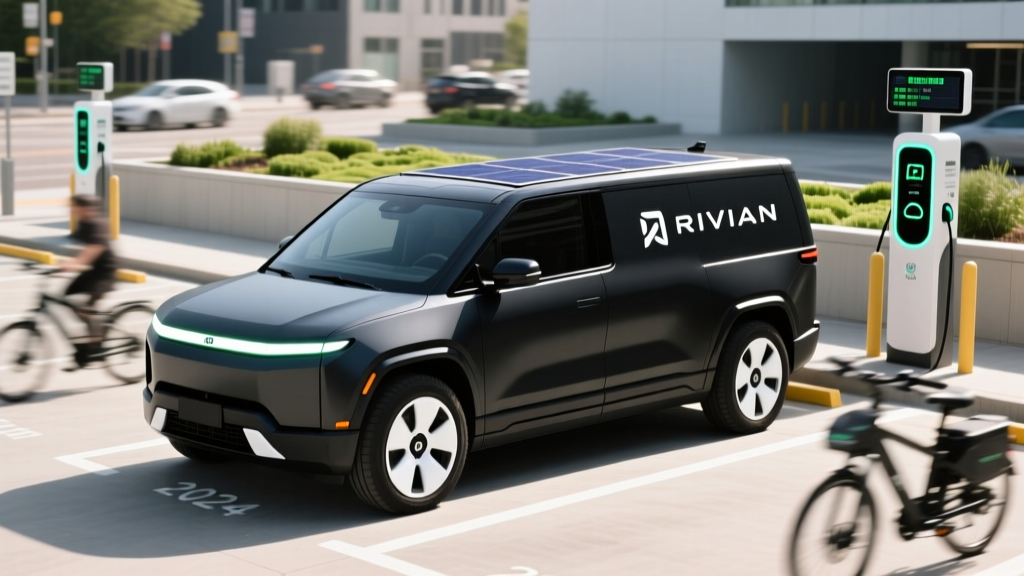
The 2024 Rivian EDV (Electric Delivery Van) isn't something you'll find on a dealer lot — it's a purpose-built commercial vehicle engineered exclusively for Amazon's last-mile delivery fleet and, increasingly, for other enterprise operators through Rivian's commercial van program. Built on a dedicated commercial platform that shares some DNA with the R1T and R1S but is fundamentally distinct, the EDV prioritizes cargo volume, route efficiency, and driver ergonomics over consumer appeal.
With an EPA-estimated range of up to 161 miles (EDV-700 variant), a massive 149 kWh battery pack, and DC fast-charging at up to 150 kW, the EDV is calibrated for predictable urban and suburban delivery routes rather than highway road trips. For fleet managers evaluating commercial electrification, this is one of the most data-rich platforms available — but individual consumers cannot purchase one new from Rivian.
| Specification | EDV-500 | EDV-700 | EDV-900 |
|---|---|---|---|
| EPA Range | ~150 mi (est.) | 161 mi | ~140 mi (est.) |
| Battery Capacity | ~115 kWh (est.) | 149 kWh | ~149 kWh |
| Battery Chemistry | NMC (Samsung SDI) | NMC (Samsung SDI) | NMC (Samsung SDI) |
| Max DC Fast Charge | 150 kW | 150 kW | 150 kW |
| 10–80% DC Charge Time | ~45 min | ~50 min | ~50 min |
| Level 2 Charge Rate | 11.5 kW | 11.5 kW | 11.5 kW |
| Drivetrain | RWD (single motor) | RWD (single motor) | RWD (single motor) |
| Horsepower | ~250 hp (est.) | ~250 hp | ~250 hp |
| Cargo Volume | ~420 cu ft | ~550 cu ft | ~660 cu ft |
| Payload Capacity | ~2,500 lbs | ~3,200 lbs | ~3,500 lbs |
| Base MSRP (Fleet) | Not publicly listed | Not publicly listed | Not publicly listed |
| Battery Warranty | 8 yr / 100,000 mi | 8 yr / 100,000 mi | 8 yr / 100,000 mi |
Range & Efficiency: EPA vs. Real-World Delivery Routes
Real-World Expectation: 120–145 miles on mixed suburban routes with frequent stops; 100–120 miles in cold weather (below 32°F) with cabin heating and cargo-area thermal load.
The EDV-700's 161-mile EPA rating is modest by consumer EV standards, but it's calibrated for a specific duty cycle: Amazon delivery routes average 80–120 miles per day with 150–200 stops. The stop-and-go nature of delivery driving actually benefits range through aggressive regenerative braking — the EDV recovers meaningful energy during the hundreds of deceleration events per shift.
Efficiency is rated at approximately 2.0–2.2 kWh/mile depending on variant and payload. That translates to roughly 45–50 MPGe equivalent — low compared to a consumer sedan, but expected for a 7,000+ lb GVWR commercial vehicle carrying hundreds of packages. The boxy aerodynamics and tall profile work against highway efficiency, but most EDV routes stay below 45 mph.
Cold weather is the real range variable. NMC chemistry loses 15–25% capacity in freezing temperatures, and the EDV's large cargo area requires significant thermal management. Fleet operators in northern climates typically plan for 100–110 miles of usable winter range, which still covers most urban delivery routes but leaves little margin for detours.
Charging: DC Fast-Charge Speed and Depot-Level 2 Infrastructure
| Charge Level | Power (kW) | Connector | Rate | Notes |
|---|---|---|---|---|
| Level 1 (120V) | ~1.4 kW | J1772 | ~3 mi/hr | Not practical for fleet ops |
| Level 2 (240V) | 11.5 kW | J1772 / CCS1 | ~25 mi/hr | Primary depot charging method |
| DC Fast Charge | 150 kW (peak) | CCS1 | ~150 mi/hr (peak) | 10–80% in ~50 min; tapers above 80% |
The EDV charges via CCS1 at up to 150 kW on DC fast chargers. In practice, the 149 kWh battery's large capacity means that even at peak rate, a 10–80% session takes roughly 50 minutes. The charge curve is relatively flat between 10–60% SoC, then tapers progressively — a characteristic of NMC chemistry managed conservatively for cycle-life longevity in commercial use.
For fleet operations, Level 2 depot charging is the primary strategy. At 11.5 kW, a full 0–100% charge takes approximately 13 hours — ideal for overnight turnaround. Most Amazon delivery stations are equipped with dozens of Level 2 chargers, allowing the fleet to top up between shifts. The U.S. Department of Energy's EV charging infrastructure data confirms that depot-based Level 2 charging remains the most cost-effective method for commercial fleets, at roughly $0.08–$0.14 per kWh depending on utility rates.
One practical note: the EDV's CCS1 port is located on the driver-side front fender, which requires specific depot layout planning. Fleet operators using Electrify America or EVgo commercial accounts should verify stall cable reach for the EDV's longer wheelbase.
Performance and Drivetrain: Built for Routes, Not Races
The EDV uses a single rear-mounted motor producing approximately 250 horsepower and 280 lb-ft of torque. Rear-wheel drive is standard across all variants — an intentional choice for efficiency and packaging, since the EDV's delivery routes are predominantly urban and suburban, rarely requiring AWD traction.
Acceleration is adequate for commercial use: 0–60 mph takes approximately 9–10 seconds depending on payload. The single-speed reduction gear provides smooth, linear torque delivery from a stop, which matters more in stop-and-go delivery traffic than peak acceleration numbers. The regenerative braking system is aggressively tuned — drivers report near one-pedal driving capability on flat routes, reducing brake wear significantly over ICE van equivalents.
Ride quality is firm but compliant, tuned for loaded operation. An empty EDV can feel stiff over bumps, but at typical payload (1,500–2,500 lbs of packages), the suspension settles into a controlled, predictable character. The turning radius is surprisingly tight for the vehicle's size — the EDV-500 can navigate standard suburban cul-de-sacs without a multi-point turn, a critical design requirement for last-mile delivery.
Cargo, Ergonomics, and Driver-Focused Design
The EDV comes in three body lengths — EDV-500, EDV-700, and EDV-900 — with cargo volumes ranging from approximately 420 to 660 cubic feet. The cargo area features a low, flat load floor, LED lighting throughout, and reinforced shelving attachment points. The bulkhead between driver and cargo includes a pass-through window for accessing packages without exiting the vehicle.
Driver ergonomics are a standout. The step-in height is lower than competing ICE vans (Mercedes Sprinter, Ford Transit), reducing fatigue over hundreds of daily entries and exits. The driver seat is air-suspended with lumbar adjustment. The instrument cluster is a 12.3-inch digital display, and the center stack features a 15.6-inch touchscreen running Rivian's commercial-specific software — optimized for route navigation, package scanning integration, and fleet telematics rather than entertainment.
The large, panoramic windshield and low dashboard provide exceptional forward visibility. Side mirrors are heated and power-folding. A 360-degree camera system aids maneuvering in tight residential streets. There's no passenger seat in the standard Amazon configuration — the space is used for package sorting and a fold-down workstation.
Pricing, Tax Credits, and Fleet Economics
| Factor | Details |
|---|---|
| Base MSRP | Not publicly listed — fleet-only pricing via commercial agreement |
| Estimated Unit Cost | $70,000–$90,000 (industry estimates for comparable commercial EVs) |
| Federal §30D Tax Credit | Up to $7,500 per vehicle (subject to MSRP, income, and battery-sourcing rules) |
| Commercial Clean Vehicle Credit (§45W) | Up to $7,500 for vehicles under 14,000 lb GVWR; up to $40,000 for heavier vehicles |
| MSRP Cap (§30D) | $80,000 for vans/trucks — EDV likely at or near cap depending on configuration |
| Income Cap (§30D) | $300,000 joint / $225,000 head of household / $150,000 individual AGI |
| Battery Sourcing | Critical minerals and battery component requirements apply per IRS §30D rules |
Rivian does not publish retail pricing for the EDV, as it's sold exclusively through fleet agreements. Industry analysts estimate per-unit costs between $70,000 and $90,000 depending on variant and volume commitment. Amazon, as the launch and anchor customer, likely benefits from volume pricing unavailable to smaller fleet operators.
Fleet buyers should evaluate the Commercial Clean Vehicle Credit under §45W, which is distinct from the consumer §30D credit. For commercial vehicles, the credit can reach $7,500 for vehicles under 14,000 lb GVWR (which covers the EDV-500 and EDV-700) or up to $40,000 for heavier configurations. Eligibility depends on battery sourcing requirements and the vehicle being placed in service for business use. Consult a tax professional for current-year qualification specifics — these rules are subject to legislative updates.
Total cost of ownership favors the EDV over diesel equivalents at scale. Electricity costs roughly $0.10–$0.14/kWh at commercial rates, translating to approximately $0.15–$0.20 per mile in energy cost versus $0.35–$0.50 per mile for diesel in a comparable Sprinter. Maintenance savings are substantial: no oil changes, no transmission fluid, significantly reduced brake wear thanks to regen. Rivian claims a 40% reduction in scheduled maintenance costs versus ICE commercial vans.
Battery Technology, Degradation, and Warranty
The EDV uses Samsung SDI-supplied NMC (nickel manganese cobalt) cells in a structural battery pack. The 149 kWh usable capacity in the EDV-700 provides the energy density needed for a full day's route with margin. NMC chemistry was chosen over LFP for its superior energy density — critical in a vehicle where battery weight directly reduces payload capacity.
Rivian warranties the battery pack for 8 years or 100,000 miles, whichever comes first, guaranteeing at least 70% capacity retention over that period. For fleet operators running 25,000–35,000 miles annually, this means the warranty covers roughly 3–4 years of intensive use. Real-world degradation data from early Amazon fleet deployments suggests approximately 3–5% capacity loss in the first year, stabilizing to 1–2% annually thereafter — consistent with NMC packs managed with conservative charge limits (fleet vehicles are typically charged to 80–90% SoC nightly, not 100%).
Battery replacement cost is estimated at $20,000–$30,000 out of warranty based on pack size and current cell pricing. However, Rivian's modular pack architecture allows individual module replacement rather than full-pack swaps, which can reduce out-of-warranty costs to $5,000–$10,000 for a single degraded module.
Technology, Safety, and Driver Assistance
The EDV includes Rivian's Driver+ system, which provides adaptive cruise control, lane-keeping assist, and automatic emergency braking. This is an SAE Level 2 driver-assistance system — the driver must remain fully engaged and hands-on at all times. It is not autonomous driving. The system is tuned for commercial use: it handles highway merging and stop-and-go traffic competently but is not designed for complex urban navigation without driver input.
Safety features include blind-spot monitoring with trailer-length coverage, rear cross-traffic alert, and a pedestrian-detection system tuned for urban delivery environments. The EDV earned strong marks in internal fleet safety evaluations, though as a commercial vehicle, it is not rated by the NHTSA or IIHS in the same manner as consumer vehicles.
The infotainment system integrates with Amazon's delivery app ecosystem, providing real-time route optimization, package manifest management, and delivery confirmation tools. Over-the-air updates continuously improve navigation accuracy, battery preconditioning algorithms, and fleet telematics reporting.
Who the 2024 Rivian EDV Suits Best
- Purpose-built for last-mile delivery with exceptional cargo access
- Low operating cost vs. diesel ($0.15–$0.20/mi energy vs. $0.35–$0.50/mi fuel)
- Reduced maintenance: no oil, no transmission, less brake wear
- Low step-in height reduces driver fatigue over hundreds of stops
- Aggressive regenerative braking extends range in stop-and-go routes
- OTA updates continuously improve fleet efficiency
- Not available for individual consumer purchase
- 161-mile max range limits use to urban/suburban routes only
- 50-minute DC fast-charge time (10–80%) requires route planning around charging
- Cold-weather range loss (20–25%) can squeeze tight route margins
- Fleet-only pricing lacks transparency for smaller operators
- RWD only — limited traction in severe winter conditions without snow tires
Best for: Large fleet operators running predictable urban/suburban delivery routes under 120 miles per day with depot-based overnight charging. The EDV excels in high-stop-count environments where regenerative braking, low step-in height, and cargo accessibility translate directly into driver efficiency and reduced operating costs.
Not for: Long-haul delivery, rural routes exceeding the EDV's range envelope, operators without access to depot charging infrastructure, or individual consumers seeking a personal electric van (consider the Rivian R1S or commercial Ford E-Transit for smaller-scale operations).
2024 Rivian EDV vs. Key Competitors
The EDV's closest competitors in the commercial electric van space include the Ford E-Transit, BrightDrop Zevo 600, and Mercedes-Benz eSprinter. The E-Transit offers a lower starting price (~$45,000 MSRP) but with only 126 miles of EPA range and a smaller 68 kWh battery. The BrightDrop Zevo 600 (backed by GM) targets similar fleet customers with up to 250 miles of range but at a higher price point and with less real-world deployment data. The eSprinter offers 203 miles of range but at significantly higher per-unit cost.
The EDV's advantage is deployment scale: with over 10,000 units in Amazon's fleet as of late 2024, it has the most real-world operational data of any purpose-built electric delivery van. This translates into proven reliability metrics, established maintenance protocols, and continuously refined software — advantages that matter enormously in fleet procurement decisions.
Frequently Asked Questions
Can I buy a 2024 Rivian EDV as an individual consumer?
No. The EDV is sold exclusively through commercial fleet agreements. Individual consumers cannot purchase one new from Rivian. For personal use, consider the Rivian R1S SUV or R1T truck, or look at the Ford E-Transit for a consumer-available electric van.
What is the real-world range of the 2024 Rivian EDV?
The EPA rates the EDV-700 at 161 miles. In real-world delivery operations, expect 120–145 miles on typical suburban routes with frequent stops. In cold weather (below 32°F), plan for 100–120 miles due to NMC battery chemistry losses and cabin/cargo heating demands.
How fast does the EDV charge?
On DC fast charging (CCS1), the EDV peaks at 150 kW, achieving a 10–80% charge in approximately 50 minutes. On Level 2 (11.5 kW), a full charge takes about 13 hours — designed for overnight depot charging.
Does the Rivian EDV qualify for the federal EV tax credit?
Fleet buyers may qualify for the Commercial Clean Vehicle Credit (§45W), which offers up to $7,500 for vehicles under 14,000 lb GVWR. The consumer §30D credit has MSRP, income, and battery-sourcing requirements that may limit eligibility. Check current IRS guidelines and consult a tax professional.
What battery chemistry does the EDV use?
The EDV uses NMC (nickel manganese cobalt) cells supplied by Samsung SDI. NMC was chosen for its higher energy density versus LFP, which is important for preserving payload capacity in a commercial vehicle.
Is the Rivian EDV self-driving?
No. The EDV includes Rivian's Driver+ system, which is SAE Level 2 driver assistance. The driver must remain fully engaged, hands on the wheel, at all times. It provides adaptive cruise and lane-keeping but does not drive autonomously.
How does the EDV compare to the Ford E-Transit?
The EDV offers more range (161 vs. 126 miles EPA), a larger battery (149 vs. 68 kWh), and significantly more cargo volume. However, the E-Transit is available to individual consumers and smaller fleets at a lower starting price (~$45,000 MSRP). The EDV is optimized for high-volume fleet operations; the E-Transit is more accessible for smaller-scale commercial use.