Rivian EDV at a Glance: What Fleet Buyers Need to Know
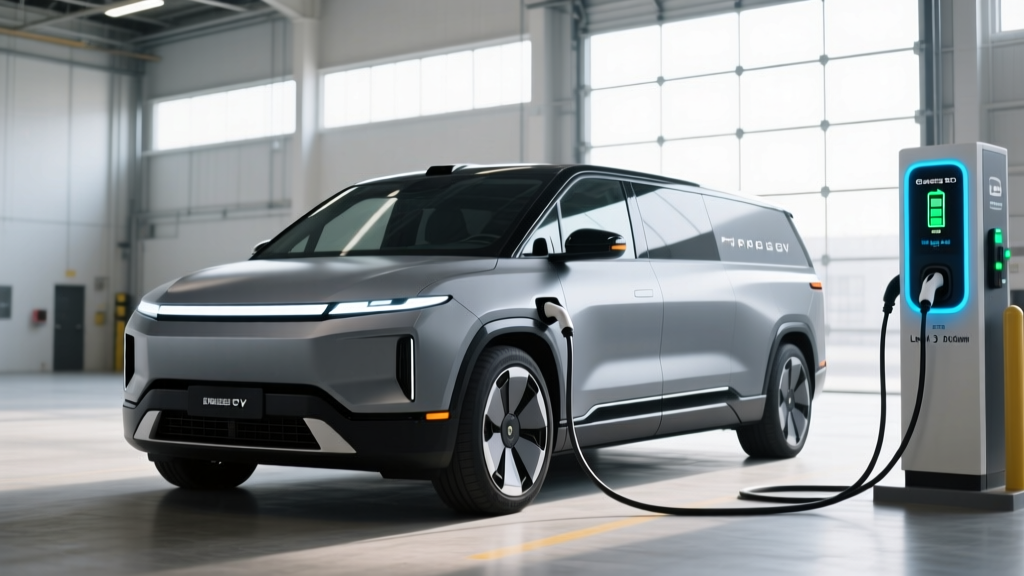
The 2024 Rivian EDV (Electric Delivery Van) is a purpose-built, body-on-frame commercial electric van developed in partnership with Amazon. Unlike retrofitted cargo vans, the EDV was engineered from the ground up as a battery-electric platform, and its modular skateboard architecture lets Rivian offer three distinct wheelbase and body lengths. If you've been searching for 2024 Rivian EDV length specifications, the answer depends on which of the three configurations you select: the EDV-700, EDV-900, or EDV-1100. Each shares the same core powertrain and battery options but differs substantially in cargo volume, overall length, and curb weight.
As of 2026, Rivian has begun opening EDV sales beyond the Amazon exclusivity window, making the van available to other commercial fleets through direct order. That shift means independent delivery operators, logistics companies, and municipal fleets can now spec and purchase the EDV for the first time. Here is everything you need to know about dimensions, range, charging, pricing, and real-world usability before placing a fleet order.
| Spec | EDV-700 | EDV-900 | EDV-1100 |
|---|---|---|---|
| Overall Length | ~217 in (5,512 mm) | ~243 in (6,172 mm) | ~272 in (6,909 mm) |
| Wheelbase | ~142 in | ~168 in | ~197 in |
| Cargo Volume | ~370 cu ft | ~500 cu ft | ~660 cu ft |
| GVWR | ~9,350 lbs | ~10,500 lbs | ~14,000 lbs |
| Max Payload | ~2,590 lbs | ~2,730 lbs | ~3,200 lbs |
| Battery (usable) | ~90 kWh (NMC) | ~135 kWh (NMC) | ~135 kWh (NMC) |
| EPA Est. Range | ~161 mi | ~150 mi | ~134 mi |
| Drivetrain | RWD (single motor) | RWD (single motor) | RWD (single motor) |
| Horsepower | ~285 hp | ~285 hp | ~285 hp |
| 0-60 mph (est.) | ~7.5 sec | ~8.0 sec | ~9.0 sec |
| Max DC Fast Charge | ~130 kW | ~130 kW | ~130 kW |
| 10-80% DCFC Time | ~45 min | ~65 min | ~65 min |
| Level 2 Charge Rate | ~11.5 kW | ~11.5 kW | ~11.5 kW |
2024 Rivian EDV Length Configurations Explained
Rivian's naming convention for the EDV line is straightforward: the number suffix roughly corresponds to the cargo volume class, but the real differentiator is physical length. Understanding the 2024 Rivian EDV length options matters for depot layout, loading-dock compatibility, and route planning in tight urban corridors.
EDV-700: The Compact Last-Mile Runner
At roughly 217 inches overall, the EDV-700 is sized to compete with the Ford E-Transit low-roof 130-inch wheelbase and the Mercedes-Benz Sprinter 144-inch wheelbase. Its shorter footprint makes it the most maneuverable of the three, ideal for dense urban delivery routes with frequent stops, narrow streets, and tight parking. Cargo volume sits around 370 cubic feet with the tallest roof height in the class (~84 inches interior), enabling standing-height work inside the bay.
EDV-900: The Mid-Size Volume Leader
Stretching to approximately 243 inches, the EDV-900 adds roughly 130 cubic feet of cargo space over the 700, landing near 500 cu ft. This is the configuration Amazon deployed most widely in its U.S. last-mile network. The added length allows for more shelving bays and a larger bulkhead partition, but still fits within standard commercial loading-bay depths.
EDV-1100: The Max-Capacity Hauler
At roughly 272 inches (nearly 23 feet), the EDV-1100 is a high-volume route vehicle competing with the longest Sprinter and Ford E-Transit extended wheelbase configurations. Cargo volume reaches approximately 660 cu ft, making it suitable for bulkier parcels, appliance delivery, or routes where fewer depot returns are desired. The trade-off is reduced maneuverability and a lower EPA range estimate due to increased weight and frontal area.
Range, Efficiency, and Real-World Expectations
EPA Estimated Range: EDV-700: ~161 mi | EDV-900: ~150 mi | EDV-1100: ~134 mi
Real-World Expectation: On mixed urban delivery routes with frequent stops and regen braking, expect ranges close to EPA stickers. On sustained highway runs at 65-70 mph, plan for 80-85% of EPA (roughly 110-130 mi for the 700). In cold weather (below 30°F) with cabin and battery heating active, range can drop 20-30%, landing the EDV-1100 near 95-105 miles per charge. Always spec routes against the worst-case (winter) number, not the sticker.
The EDV's efficiency is measured in kWh per 100 miles rather than MPGe, as is standard for commercial EVs. The EDV-700 achieves approximately 56 kWh/100 mi in combined driving; the heavier 900 and 1100 models consume between 60-68 kWh/100 mi depending on payload. For context, that's roughly equivalent to 59-60 MPGe on the EDV-700 — competitive with the Ford E-Transit's EPA rating of ~2.0 kWh/mile as reported by fueleconomy.gov.
Rivian equips the EDV with a heat pump for cabin climate control, which reduces winter range loss compared to resistive heating. However, the large, flat-sided cargo bay is not actively climate-controlled in the same way, so battery thermal management draws from the pack during extreme cold. Fleets operating in northern climates should plan depot charging during midday temperature peaks when possible.
Charging Speeds: DC Fast and Level 2 Depot Charging
Charging infrastructure is the make-or-break factor for commercial EV adoption, and the EDV's charging profile reflects its fleet-depot use case rather than public fast-charging road trips.
| Charging Level | Power | Time / Rate | Notes |
|---|---|---|---|
| Level 1 (120V) | ~1.4 kW | ~3-4 mi/hr | Emergency/trickle only; not practical for daily ops |
| Level 2 (240V) | ~11.5 kW (48A) | ~25-30 mi/hr; full charge in 8-12 hrs | Standard depot charger; overnight top-up |
| DC Fast Charge | Peak ~130 kW | 10-80% in ~45-65 min | CCS1 connector; tapers above 80% SoC |
The EDV uses a CCS1 connector for DC fast charging. At a 150 kW or higher station, the 90 kWh pack in the EDV-700 can accept up to ~130 kW peak, reaching 10-80% in approximately 45 minutes. The larger 135 kWh packs in the EDV-900 and 1100 take closer to 65 minutes for the same 10-80% window due to the greater energy volume, even though peak charge rate remains similar.
Charging curve reality: The EDV holds near-peak charge rate up to roughly 55-60% SoC, then tapers progressively. Charging from 80-100% on DC can add another 30-40 minutes. For depot operations, most fleets configure chargers to top off at 80-90% overnight on Level 2, which is gentler on the NMC cells and avoids the DC taper penalty entirely.
For depot planning, a single 11.5 kW Level 2 charger running a 10-hour overnight window delivers roughly 115 kWh — enough to fully replenish the EDV-700 and nearly fill the larger packs. Fleets should consult a licensed electrician about 480V three-phase service for higher-power AC charging if faster depot turnaround is needed.
Performance, Drivetrain, and Driving Dynamics
All three EDV configurations use a single rear-mounted electric motor producing approximately 285 horsepower and 375 lb-ft of torque. Rivian offers rear-wheel drive as standard; all-wheel drive is not currently available on the EDV platform (unlike the consumer R1T and R1S, which offer dual-, tri-, and quad-motor AWD configurations).
The EDV-700, as the lightest variant, hits 60 mph in roughly 7.5 seconds — brisk for a commercial van and meaningfully quicker than a loaded Ford E-Transit (which Rivian's own testing pegs at 8+ seconds). The EDV-1100, laden with its longer body and heavier GVWR, takes closer to 9 seconds. Top speed is electronically governed to approximately 80 mph across all variants.
Regenerative braking is aggressive and effectively enables one-pedal driving in stop-and-go urban routes, which is where the EDV spends most of its time. The regen system recovers meaningful energy during the hundreds of daily stops a delivery route demands, and drivers report reduced brake-pad wear as a secondary benefit.
Pricing, Fleet Ordering, and Tax Credit Eligibility
Rivian does not publish consumer-style MSRP stickers for the EDV line because it is sold through fleet-direct contracts. However, based on fleet order disclosures and industry reporting, estimated pricing breaks down as follows:
| Model | Est. Base Price | Federal §30D Credit (if eligible) | Est. Net Price |
|---|---|---|---|
| EDV-700 | ~$67,000 | Up to $7,500 | ~$59,500 |
| EDV-900 | ~$74,000 | Up to $7,500 | ~$66,500 |
| EDV-1100 | ~$82,000 | Up to $7,500 | ~$74,500 |
Federal tax credit caveats: Under IRS §30D rules (see IRS clean vehicle credit guidance), the EDV must satisfy several requirements to qualify for the full $7,500 credit:
- MSRP cap: Vans and pickup trucks must have an MSRP at or below $80,000. The EDV-700 and EDV-900 clear this threshold; the EDV-1100 may exceed it depending on options and upfitting.
- Buyer income cap: Modified adjusted gross income must not exceed $150,000 (single) or $300,000 (joint). For fleet purchases through a business entity, the commercial clean vehicle credit (§45W) may apply instead — consult a tax professional.
- Battery sourcing: Critical minerals and battery component requirements phase in progressively. Rivian sources cells from Samsung SDI (NMC chemistry), and compliance with domestic-content thresholds may vary by build date. Verify VIN-level eligibility on fueleconomy.gov before purchase.
- Point-of-sale transfer: As of 2024, buyers can transfer the credit to the dealer at purchase, reducing the upfront price rather than waiting for a tax refund.
For commercial fleets purchasing through a business entity, the §45W Commercial Clean Vehicle Credit may be more applicable than §30D. This credit offers up to $7,500 for vehicles under 14,000 lbs GVWR and up to $40,000 for heavier vehicles — but the calculation differs and depends on the incremental cost of the EV over a comparable ICE vehicle. Always consult a tax professional for fleet-level incentive planning.
Cargo Space, Interior, and Driver-Facing Technology
The EDV's interior was designed with input from Amazon delivery drivers, and it shows. The driver's cockpit features a low step-in height, wide-opening doors, and a pass-through bulkhead that lets the driver move from the cab into the cargo bay without exiting the vehicle — a major safety and efficiency improvement in inclement weather.
Key interior and tech features include:
- Digital instrument cluster with integrated route navigation and state-of-charge display
- 360-degree camera system for tight-urban maneuvering (the EDV-1100's 23-foot length demands it)
- Automatic emergency braking (AEB), forward collision warning, and lane-departure warning as standard ADAS — all SAE Level 1 driver-assist features (driver must remain fully engaged)
- Integrated telematics with real-time fleet tracking, remote preconditioning, and charge-status monitoring via Rivian's fleet portal
- Modular shelving system designed for quick parcel sorting; configurable by upfitters
Notable drawbacks: the infotainment system is functional but basic compared to Rivian's consumer vehicles. There is no large central touchscreen; instead, a smaller display handles navigation and vehicle settings. Apple CarPlay and Android Auto are not currently supported — Rivian's proprietary interface handles all functions. For fleet managers who want driver-device integration, this is a limitation.
Battery, Warranty, and Long-Term Durability
The EDV uses NMC (nickel-manganese-cobalt) lithium-ion cells supplied by Samsung SDI, assembled into Rivian's skateboard-style pack. NMC chemistry offers higher energy density than LFP (lithium iron phosphate), which matters for a van that needs to maximize range within a fixed chassis envelope. The trade-off is that NMC cells are more sensitive to sustained high-SoC storage and extreme temperatures — both common in fleet operations.
Rivian provides the following warranty coverage for the EDV:
- Battery pack: 8 years / 100,000 miles (whichever comes first), with a capacity-retention threshold of 70% of original capacity
- Electric powertrain (motor, inverter, reduction gear): 8 years / 100,000 miles
- Bumper-to-bumper (limited): 5 years / 60,000 miles
- Corrosion perforation: 12 years, unlimited miles
For fleet operators running 30,000-40,000 miles per year, the battery warranty provides coverage through roughly years two to three. Beyond that, budgeting for gradual capacity loss is prudent. Based on NMC degradation curves observed in Rivian's consumer vehicles, expect approximately 10-15% capacity loss over 150,000 miles under typical use — meaning an EDV-700 that started at 161 miles of range may deliver 135-145 miles after five years of heavy use.
Who the Rivian EDV Is Best For
The EDV is not a consumer vehicle — it's a purpose-built commercial tool. Here's who benefits most:
- Last-mile delivery fleets: The EDV-700 and 900 are ideal for parcel delivery with 100-150 daily stops in urban and suburban zones. The range covers most routes on a single charge, and overnight depot charging keeps operating costs low.
- Municipal and utility fleets: The EDV's quiet operation, zero tailpipe emissions, and high torque make it suitable for city maintenance crews, park services, and utility meter-reading routes.
- High-volume logistics operators: The EDV-1100 serves routes where cargo density matters more than range — think appliance delivery, furniture transport, or bulk food distribution within a metro area.
The EDV is not the right choice for long-haul intercity routes (range is insufficient without mid-route DC charging, which adds downtime), nor for fleets that need AWD capability in severe winter terrain (Rivian does not currently offer AWD on the EDV).
Pros
- Purpose-built EV architecture (not a converted ICE van)
- Three length options cover diverse fleet needs
- Low step-in height and pass-through bulkhead improve driver efficiency
- Aggressive regen braking reduces brake wear in stop-and-go use
- Heat pump standard for improved cold-weather efficiency
- Fleet telematics integrated from the factory
Cons
- No AWD option — limits cold-climate traction
- DC fast charging peaks at 130 kW (slower than some competitors at 150+ kW)
- No Apple CarPlay / Android Auto support
- EDV-1100 may exceed $80K MSRP cap for §30D credit eligibility
- Limited public service-center network compared to Ford or Mercedes-Benz
- NMC battery chemistry requires careful SoC management for longevity
Frequently Asked Questions
What is the real-world range of the 2024 Rivian EDV?
The EPA estimates range at ~161 miles (EDV-700), ~150 miles (EDV-900), and ~134 miles (EDV-1100). In real-world urban delivery use with frequent stops and regenerative braking, most operators report ranges close to these stickers. Highway driving at sustained speeds reduces range by 15-20%, and cold weather (below 30°F) can reduce it by 20-30%. Plan routes against the winter-worst-case figure.
How fast does the Rivian EDV charge?
On DC fast charging (CCS1), the EDV peaks at approximately 130 kW, reaching 10-80% in about 45 minutes (EDV-700) or 65 minutes (EDV-900/1100). On Level 2 depot chargers at 11.5 kW, a full overnight charge takes 8-12 hours depending on pack size. Level 1 (120V) is emergency-only at roughly 3-4 miles of range per hour.
How much does the Rivian EDV cost after tax credits?
Estimated pricing is ~$67,000 (EDV-700), ~$74,000 (EDV-900), and ~$82,000 (EDV-1100). If the full $7,500 federal §30D credit applies, net cost drops to roughly $59,500-$74,500. However, eligibility depends on MSRP caps (vans ≤ $80,000), buyer income limits, and battery-sourcing requirements. Commercial fleet buyers may qualify for the §45W credit instead. Verify eligibility by VIN on fueleconomy.gov and consult a tax professional.
Is the Rivian EDV worth buying vs the Ford E-Transit or Mercedes eSprinter?
The EDV offers a purpose-built EV platform, three length options, and a pass-through bulkhead that competitors lack. The Ford E-Transit has a broader dealer-service network and starts lower (~$47,000 for the low-roof cargo van), but offers only ~126 miles of EPA range. The Mercedes eSprinter provides ~200 miles of range in the longest configuration but at a significantly higher price (often $80,000+). If your fleet prioritizes range-per-dollar and dealer proximity, the E-Transit is strong. If you want maximum cargo volume in a purpose-built EV with integrated telematics, the EDV is compelling.
Does the Rivian EDV qualify for the federal EV tax credit?
Potentially yes, but with important conditions. Under IRS §30D, the vehicle must have an MSRP at or below $80,000 (the van/pickup cap), the buyer must meet income thresholds, and the battery must satisfy critical-mineral and component-sourcing requirements. The EDV-700 and EDV-900 are most likely to clear the MSRP cap; the EDV-1100 may not. Commercial entities purchasing through a business may instead use the §45W Commercial Clean Vehicle Credit. Always verify current eligibility on IRS.gov and consult a tax professional before relying on credit estimates.
What is the 2024 Rivian EDV length for each model?
The EDV-700 is approximately 217 inches long, the EDV-900 is approximately 243 inches, and the EDV-1100 is approximately 272 inches. These measurements determine cargo volume (370/500/660 cu ft respectively) and directly affect route planning, depot layout, and loading-dock compatibility.