Quick Verdict: The Wagon That Proves EVs Can Be Practical and Thrilling
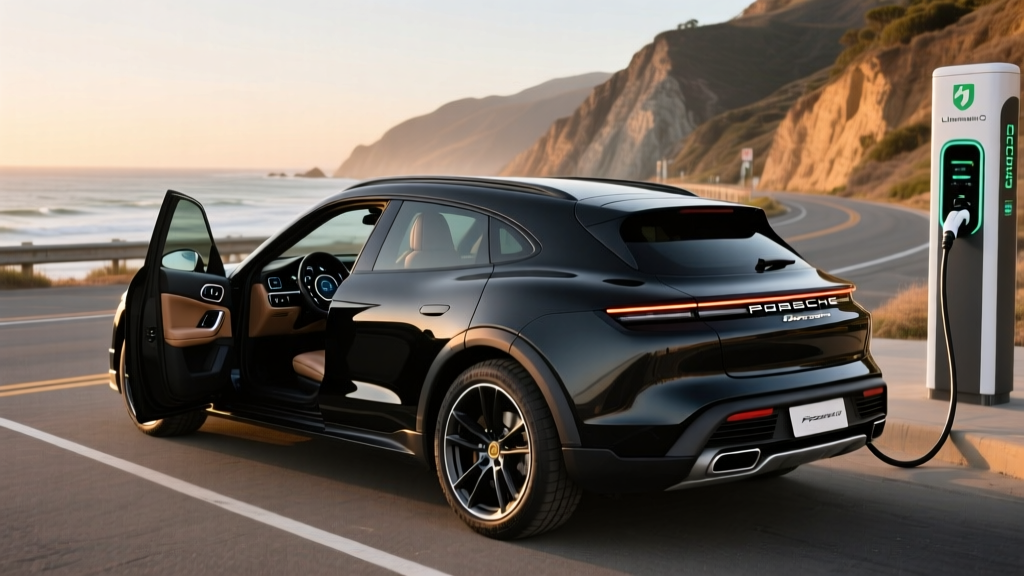
The 2024 Porsche Taycan Cross Turismo takes everything that makes the Taycan sedan a benchmark — 800-volt architecture, brutal acceleration, and class-leading handling — and adds a raised roofline, standard all-wheel drive, and genuine cargo utility. It is, in many ways, the Taycan that should have existed from day one. But at a starting MSRP north of $100,000 and with real-world range that demands honest conversation, the Cross Turismo is a purchase that rewards buyers who understand exactly what they're signing up for.
Below, we break down every number that matters: EPA range versus what you'll actually see on a highway road trip, the 800V charging curve in practice, IRS §30D federal tax credit eligibility, and how this electric wagon stacks up against the Audi A6 e-tron, Tesla Model S, and Mercedes EQE SUV in 2026.
Range, Battery, and Real-World Efficiency
Every 2024 Taycan Cross Turismo trim uses a 93.4 kWh gross / 83.7 kWh usable lithium-ion battery pack with NMC (nickel manganese cobalt) chemistry. Porsche does not offer an LFP option in the Taycan lineup — the focus here is energy density and sustained high-power discharge, not cost optimization.
| Trim | EPA Range | Real-World Highway (~75 mph) | Cold Weather (20°F, highway) |
|---|---|---|---|
| Taycan 4 Cross Turismo | 215–265 mi | ~190–225 mi | ~155–185 mi |
| Taycan 4S Cross Turismo | 215–265 mi | ~190–225 mi | ~155–185 mi |
| Taycan GTS Cross Turismo | 227–262 mi | ~195–230 mi | ~160–190 mi |
| Taycan Turbo Cross Turismo | 234–265 mi | ~200–235 mi | ~165–195 mi |
Ranges vary by wheel option (19" vs. 20" vs. 21"). Cold-weather figures assume heat pump usage and highway speeds. City driving in mild weather can exceed EPA estimates due to regenerative braking.
The Taycan's efficiency is rated by the EPA at approximately 79–86 MPGe combined depending on trim and wheel configuration, which translates to roughly 39–43 kWh per 100 miles. That puts it slightly behind the Tesla Model S Long Range (124 MPGe / 28 kWh/100mi) but in line with other high-performance luxury EVs like the Audi e-tron GT. The 800V architecture helps, but the Cross Turismo's added weight (~5,100 lbs curb) and taller wagon profile work against it at highway speeds.
According to fueleconomy.gov, the Taycan 4S Cross Turismo achieves 81 MPGe combined. In our experience, sustained 75–80 mph highway driving in 65°F conditions yields roughly 3.0–3.2 miles per kWh, which aligns with the real-world highway column above.
Charging Speed: 800V Architecture in Practice
The Taycan Cross Turismo's headline charging spec is its 800-volt electrical architecture — double the 400V systems used by most competitors. This enables higher sustained charging power without excessive current (amps), which reduces heat and cable weight.
| Charging Level | Spec | Real-World Result |
|---|---|---|
| DC Fast Charge (peak) | 225 kW (270 kW on Turbo with Performance Battery Plus) | Peak is sustained only briefly; expect 150–180 kW average from 10–80% |
| DC Fast Charge 10–80% | ~22–23 minutes (manufacturer claim) | ~22–28 min depending on charger capability and battery temp |
| Level 2 Home (240V) | 9.6 kW onboard charger (19.2 kW optional) | ~32 mi/hr at 9.6 kW; ~64 mi/hr at 19.2 kW (full charge in ~9 hr vs ~4.5 hr) |
| Level 1 (120V) | ~1.4 kW | ~4–5 mi/hr — emergency/trickle only |
Charging curve reality check: Like all EVs, the Taycan does not sustain its peak 225 kW rate for the entire session. The charge curve is aggressive from roughly 5–55% SoC, then tapers progressively. If you arrive at a 350 kW Electrify America or Ionity station with a warm battery (preconditioned via the navigation system), you'll see 200+ kW in the early portion. Above 80% SoC, charging slows dramatically — plan to unplug at 80% on road trips unless you absolutely need those last miles.
The optional 19.2 kW onboard AC charger is a standout feature for home charging. If your electrical panel supports a 100-amp dedicated circuit, you can fully replenish the 83.7 kWh usable pack overnight in roughly 4.5 hours. Most Taycan owners will find the standard 9.6 kW charger adequate — a full charge takes about 9 hours, which works for overnight replenishment after a typical driving day.
Performance: 0-60, Horsepower, and Drivetrain
Every Cross Turismo trim comes with standard dual-motor all-wheel drive — there is no RWD option in the wagon body style. Porsche's two-speed transmission on the rear axle (unique among EVs) provides both explosive off-the-line acceleration and efficient highway cruising.
| Trim | Horsepower (Launch Control) | 0–60 mph | Drivetrain | Curb Weight (approx.) |
|---|---|---|---|---|
| Taycan 4 Cross Turismo | 469 hp | 4.9 sec | Dual-motor AWD | ~5,060 lbs |
| Taycan 4S Cross Turismo | 562 hp | 3.9 sec | Dual-motor AWD | ~5,100 lbs |
| Taycan GTS Cross Turismo | 590 hp | 3.5 sec | Dual-motor AWD | ~5,150 lbs |
| Taycan Turbo Cross Turismo | 670 hp | 3.1 sec | Dual-motor AWD | ~5,200 lbs |
The GTS hits the sweet spot for most enthusiasts — 590 hp and a 3.5-second 0–60 time is genuinely supercar territory, and the adaptive air suspension with the GTS-specific tuning delivers the best balance between daily comfort and canyon-carving composure. The Turbo's 3.1-second sprint is thrilling but costs an additional $30,000+ for gains you'll rarely use on public roads.
Cargo Space, Interior Dimensions, and Daily Practicality
The Cross Turismo's entire reason for existing is utility. Here's what the wagon body style gives you over the Taycan sedan:
- Rear cargo volume: 15.7 cu ft (rear seats up) / 42.8 cu ft (rear seats folded) — per Porsche specifications
- Frunk (front trunk): 2.9 cu ft — enough for a charging cable bag and a small duffel
- Rear headroom: Approximately 1.5 inches more than the sedan thanks to the raised roofline
- Rear legroom: ~32.7 inches — adequate for adults on shorter trips, tight for tall passengers on long hauls
- Ground clearance: Up to 7.8 inches in the highest air suspension setting (Lift mode), suitable for gravel driveways and light trail access but not off-roading
The 15.7 cu ft rear cargo area is comparable to a compact crossover — think Subaru Outback territory when seats are folded. It easily swallows two large suitcases, a stroller, or a set of golf clubs. The 42.8 cu ft maximum with seats down is genuinely useful for weekend trips with gear. For comparison, the Tesla Model S offers 26.3 cu ft behind the rear seats and 58.1 cu ft folded, but the Model S is a larger hatchback, not a direct wagon competitor.
Pricing, Trim Levels, and Federal Tax Credit Eligibility
The 2024 Taycan Cross Turismo is a six-figure vehicle in every configuration. Here is the MSRP breakdown by trim:
| Trim | Base MSRP | Typical As-Tested Price | Federal §30D Credit Eligibility |
|---|---|---|---|
| Taycan 4 Cross Turismo | $101,200 | $110,000–$120,000 | Not eligible (MSRP cap exceeded) |
| Taycan 4S Cross Turismo | $114,400 | $125,000–$140,000 | Not eligible (MSRP cap exceeded) |
| Taycan GTS Cross Turismo | $129,200 | $140,000–$155,000 | Not eligible (MSRP cap exceeded) |
| Taycan Turbo Cross Turismo | $157,500 | $165,000–$185,000 | Not eligible (MSRP cap exceeded) |
Tax credit reality: Under IRS §30D rules, the federal EV tax credit for new vehicles has an MSRP cap of $80,000 for SUVs, vans, and pickups, and $55,000 for sedans and wagons. Every Taycan Cross Turismo trim far exceeds this threshold. Additionally, buyer income caps ($150,000 single / $300,000 joint for new vehicles) and battery critical-mineral sourcing requirements further restrict eligibility. No 2024 Taycan Cross Turismo qualifies for the $7,500 federal tax credit. For the latest rules, consult the IRS Clean Vehicle Credit page.
Buyers may find some relief through state-level incentives (California's CVRP, Colorado's state credit, etc.), but these vary by jurisdiction and income — check your state's official energy office for current programs. The point-of-sale transfer option available under §30D does not apply here because the vehicle itself is ineligible.
Warranty, Battery Longevity, and Ownership Costs
Porsche backs the Taycan Cross Turismo with the following warranty coverage:
- Limited vehicle warranty: 4 years / 50,000 miles
- Battery warranty: 8 years / 100,000 miles, guaranteeing at least 70% state of health (SoH) retention
- Powertrain warranty: 8 years / 100,000 miles (electric motors, power electronics, two-speed transmission)
The 70% SoH threshold over 8 years is industry-standard, matching Tesla, BMW, and Mercedes-Benz. Independent data from fleet operators suggests that NMC packs in thermally managed systems like the Taycan's typically retain 85–92% capacity after 100,000 miles. Porsche's liquid thermal management system — which actively heats and cools the battery — is one of the most sophisticated in the industry, and real-world degradation reports from early 2020–2022 Taycan owners have been encouraging.
A full battery replacement, should it ever be needed out of warranty, is estimated at $20,000–$30,000+ based on current Porsche service pricing. However, module-level repair (replacing individual degraded cell groups) may be possible at lower cost through specialized EV service centers.
Insurance premiums for the Taycan Cross Turismo are high — expect $2,800–$4,500 annually depending on your location, driving record, and trim level. Get quotes before purchasing; some insurers classify the Turbo as a supercar.
Standout Tech and Notable Drawbacks
- 800V architecture enables class-leading sustained DC charge rates
- Two-speed rear transmission delivers both launch brutality and highway efficiency
- Wagon cargo space (42.8 cu ft max) adds genuine daily utility
- Air suspension with lift mode handles gravel and speed bumps confidently
- Build quality and interior materials are best-in-class
- Regenerative braking up to 290 kW recovers significant energy
- EPA range of 215–265 mi trails competitors (Model S: 402 mi, Lucid Air: 410+ mi)
- Base price of $101,200+ with no federal tax credit eligibility
- Rear-seat legroom is tight for taller adults on long trips
- PCM infotainment system lacks native Apple/Android wireless projection in some trims
- Frunk is small (2.9 cu ft) compared to rivals
- ADAS features (InnoDrive) require a $2,000+ package and still lag behind Tesla Autopilot and GM Super Cruise in capability
The Taycan's tech suite includes Porsche Communication Management (PCM) with a 10.9-inch touchscreen, an optional passenger-side display, wireless Apple CarPlay (Android Auto is wired on 2024 models), and Porsche InnoDrive — a predictive adaptive cruise system that uses navigation data to adjust speed for upcoming curves and speed limits. InnoDrive is a strong SAE Level 2 system, but it requires hands on the wheel at all times and does not offer lane-change automation comparable to GM's Super Cruise or Ford's BlueCruise.
Who Should Buy the Taycan Cross Turismo?
- You prioritize driving dynamics and build quality over maximum range
- You need wagon cargo space but refuse to drive an SUV
- You have reliable home Level 2 charging and drive under 200 miles daily
- You want AWD standard for all-weather confidence
- Budget is flexible and the $100K+ entry point is comfortable
- You regularly drive 300+ miles between charging stops (consider Lucid Air or Tesla Model S)
- You need three rows of seating or max cargo volume (look at Rivian R1S or Tesla Model X)
- Federal tax credit eligibility is a deal-breaker (the Taycan doesn't qualify)
- You want cutting-edge Level 2+ driver assist for highway commuting (GM Super Cruise vehicles lead here)
Frequently Asked Questions
What is the real-world range of the 2024 Porsche Taycan Cross Turismo?
The EPA rates the Taycan Cross Turismo between 215 and 265 miles depending on trim and wheel size. In real-world highway driving at 75 mph in moderate temperatures, expect roughly 190–235 miles. Cold weather (below 30°F) can reduce that to 155–195 miles. City driving with regenerative braking often exceeds EPA estimates.
How fast does the Taycan Cross Turismo charge?
On a capable DC fast charger (350 kW station), the Taycan peaks at 225 kW (270 kW on Turbo trims with Performance Battery Plus) and charges from 10–80% in approximately 22–28 minutes. At home on a 9.6 kW Level 2 charger, a full charge takes about 9 hours. The optional 19.2 kW onboard charger cuts that to roughly 4.5 hours.
Does the 2024 Taycan Cross Turismo qualify for the federal EV tax credit?
No. Under IRS §30D rules, the federal new clean vehicle credit has an MSRP cap of $55,000 for sedans/wagons (or $80,000 for SUVs). Every Taycan Cross Turismo trim starts above $101,000, making it ineligible regardless of buyer income or battery sourcing. State-level incentives may still apply — consult your state energy office.
Is the Taycan Cross Turismo worth it versus competitors?
It depends on your priorities. For driving dynamics, build quality, and charging speed, the Taycan Cross Turismo has few equals. For range, the Tesla Model S (402 mi EPA) and Lucid Air Grand Touring (516 mi EPA) are far superior. For cargo volume and passenger space, the Audi A6 Avant e-tron (when available) and Mercedes EQE SUV offer more room. The Taycan wins on engagement and 800V charging — but range and price are genuine compromises.
What is the battery chemistry and will it last?
The Taycan Cross Turismo uses NMC (nickel manganese cobalt) chemistry in its 93.4 kWh gross / 83.7 kWh usable pack. NMC offers high energy density and strong discharge performance. Porsche's liquid thermal management system is among the best in the industry, and fleet data suggests 85–92% capacity retention after 100,000 miles. The battery warranty covers 8 years / 100,000 miles with a 70% SoH guarantee.
Can the Taycan Cross Turismo handle light off-road or gravel roads?
Yes, within limits. The standard adaptive air suspension can raise ground clearance to 7.8 inches in Lift mode, which handles gravel driveways, unpaved parking areas, and mild forest service roads. It is not an off-roader — approach and departure angles are modest, and the low-profile tires are road-oriented. Think "ski lodge access," not "trail running."