Quick Verdict: Porsche's Electric Crossover Delivers on the Badge
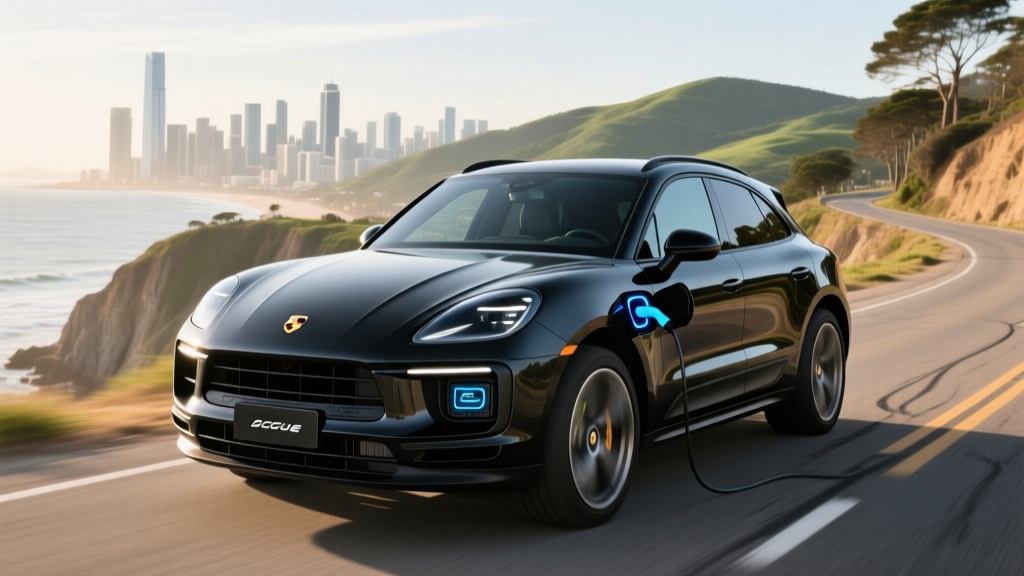
The 2024 Porsche Macan Electric marks the brand's first dedicated battery-electric vehicle built on the Premium Platform Electric (PPE) architecture co-developed with Audi. It arrives in two trims — the Macan 4 Electric and the Macan Turbo Electric — pairing Porsche's trademark driving dynamics with an 800-volt electrical system capable of some of the fastest DC charging in the luxury EV segment. With EPA range reaching 308 miles, a 0-60 mph time as low as 3.1 seconds, and a starting price near $80,000, the Macan Electric targets buyers who want sports-car reflexes in a practical crossover footprint. But at this price point, federal tax credit eligibility becomes a major question, and real-world range tells a slightly different story than the EPA sticker.
Range, Battery & Real-World Efficiency
The 2024 Macan Electric uses a 100 kWh battery pack (95 kWh usable capacity) with lithium-ion NMC (nickel manganese cobalt) chemistry. Porsche opted for NMC over LFP to prioritize energy density and performance characteristics consistent with the brand's sporty positioning. The pack sits low in the skateboard platform, contributing to a center of gravity that Porsche claims is lower than the outgoing combustion Macan.
- Macan 4 Electric: EPA-estimated 308 miles (combined). Expect approximately 250–275 miles on sustained highway driving at 70+ mph, and 220–245 miles in cold weather (below 32°F) with cabin heating active.
- Macan Turbo Electric: EPA-estimated 288 miles (combined) due to higher output and wider tires. Real-world highway: ~230–255 miles; cold weather: ~200–225 miles.
The 800V architecture and standard heat pump help mitigate cold-weather losses compared to 400V competitors, but NMC chemistry still suffers measurable capacity reduction in sub-freezing conditions. Plan for roughly a 15–20% range penalty in winter for northern-climate owners.
Efficiency ratings land at approximately 87 MPGe combined for the Macan 4 and 83 MPGe for the Turbo, translating to roughly 35–38 kWh per 100 miles depending on trim and driving style. These figures place the Macan Electric in the middle of the luxury EV SUV pack — slightly behind the BMW iX xDrive50's efficiency but ahead of the Mercedes EQB and Jaguar I-PACE.
| Specification | Macan 4 Electric | Macan Turbo Electric |
|---|---|---|
| EPA Range | 308 miles | 288 miles |
| Battery (usable/total) | 95 kWh / 100 kWh | 95 kWh / 100 kWh |
| Chemistry | NMC | NMC |
| Horsepower | 402 hp (launch control) | 630 hp (launch control) |
| 0–60 mph | 4.9 seconds | 3.1 seconds |
| Drivetrain | Dual-motor AWD | Dual-motor AWD |
| Max DC Fast Charge | 270 kW | 270 kW |
| 10–80% DC Charge Time | ~21 minutes | ~21 minutes |
| Level 2 Charge Rate | 11 kW (onboard charger) | 11 kW (onboard charger) |
| MPGe (combined) | 87 MPGe | 83 MPGe |
| Base MSRP | $78,800 | $105,300 |
| Battery Warranty | 8 yr / 100,000 mi | 8 yr / 100,000 mi |
Source: EPA / fueleconomy.gov, Porsche USA specifications.
Charging Speed: 800V Architecture Pays Off
The Macan Electric's 800-volt platform is its charging ace. Both trims accept up to 270 kW at a DC fast charger — among the highest peak rates available in any luxury electric SUV. On a compatible 350 kW charger (such as Electrify America's latest stalls), the Macan can add 10% to 80% state of charge in approximately 21 minutes under ideal thermal conditions.
However, peak kW is not sustained kW. The Macan's charge curve holds near 270 kW from roughly 10% to 40% SoC, then tapers progressively — dropping to approximately 150 kW by 60% and further to under 100 kW past 80%. This taper behavior is normal for NMC chemistry managed conservatively to protect long-term battery health. For road trips, plan charging stops around the 10–80% window to maximize time at peak rates.
A notable feature is the Macan's charge preconditioning: when you enter a DC fast charger into the navigation system, the thermal management system pre-heats or pre-cools the battery to optimal temperature before arrival. This can shave several minutes off a charging session, especially in cold weather.
For home Level 2 charging, the 11 kW onboard charger adds approximately 30–33 miles of range per hour on a 48-amp Level 2 station. A full overnight charge from 10% to 100% takes roughly 9–10 hours. Porsche does not currently offer an optional higher-rate onboard charger, so upgrading to a 240V/60A circuit provides no additional benefit beyond the 11 kW the vehicle can accept.
| Charging Level | Power | Rate / Time |
|---|---|---|
| Level 1 (120V) | ~1.4 kW | ~4 miles per hour |
| Level 2 (240V, 48A) | 11 kW (vehicle-limited) | ~30–33 miles per hour; 0–100% in ~9–10 hrs |
| DC Fast Charge (peak) | 270 kW | 10–80% in ~21 min; ~160 miles in 10 min (ideal) |
The Macan Electric ships with a NACS (North American Charging Standard) port for the U.S. market, giving native access to Tesla Supercharger stations alongside CCS-compatible networks like Electrify America and EVgo via adapter. This dual-network compatibility is a significant practical advantage for road-trip charging.
Performance & Driving Dynamics
The Macan 4 Electric produces 402 horsepower with overboost (launch control engaged) and 479 lb-ft of torque, delivering a 4.9-second 0–60 mph time. The Macan Turbo Electric elevates output to 630 hp and 833 lb-ft, slashing the 0–60 run to 3.1 seconds — territory that rivals the Taycan Turbo S and embarrasses most combustion performance SUVs.
Both trims feature dual-motor all-wheel drive with an electronically controlled torque distribution system. The rear motor is a permanently excited synchronous design while the front uses an asynchronous (induction) motor that can fully decouple for efficiency during light-load cruising. This setup allows the Macan to coast with near-zero drivetrain drag when neither motor is needed.
The Macan Turbo also includes rear-axle steering (up to 5 degrees), adaptive air suspension with Porsche Active Suspension Management (PASM), and Porsche Torque Vectoring Plus. The result is a crossover that corners with a composure rarely seen in the segment. Steering feel is communicative by electric-SUV standards, though some Porsche loyalists will note the synthetic steering weight compared to the hydraulic systems in past models.
Ride quality on the air suspension is compliant in Normal mode and firm but controlled in Sport Plus. Road noise isolation is excellent, aided by acoustic laminated glass standard on both trims.
Interior, Tech & Cargo Practicality
The cabin adopts Porsche's latest digital architecture: a 12.6-inch curved instrument cluster, a 10.9-inch central infotainment touchscreen running Porsche Communication Management (PCM), and an available 10.9-inch front-passenger display. The infotainment system supports wireless Apple CarPlay and Android Auto, over-the-air updates, and integrated navigation with real-time charge planning.
Driver-assistance technology includes adaptive cruise control with stop-and-go, lane-keeping assist, traffic sign recognition, and Porsche InnoDrive (predictive cruise that adjusts speed for curves and traffic ahead using map data). These are SAE Level 2 systems — the driver must remain attentive with hands on the wheel at all times. Porsche does not offer a hands-free highway driving system comparable to GM's Super Cruise or Ford's BlueCruise on the Macan Electric.
Cargo space measures 18.4 cubic feet behind the rear seats and approximately 39.8 cubic feet with the 40/20/40 split rear seats folded. The front trunk (frunk) adds 2.9 cubic feet — enough for a charging cable bag and a small duffel. Rear legroom is 33.5 inches, which is adequate for adults but tighter than the BMW iX or Mercedes EQS SUV. Headroom is generous at 40.1 inches front and 38.8 inches rear.
Notable drawbacks include the lack of one-pedal driving mode (Porsche's regen strategy requires the brake pedal for maximum deceleration, which the brand argues is safer and more predictable) and the absence of vehicle-to-load (V2L) capability, which competitors like the Hyundai Ioniq 5 and Ford F-150 Lightning offer.
Pricing, Trims & Federal Tax Credit Eligibility
The 2024 Macan 4 Electric starts at $78,800 (including destination), while the Macan Turbo Electric begins at $105,300. A well-equipped Macan 4 with Premium Package, panoramic roof, and 21-inch wheels typically lands in the $88,000–$92,000 range. The Turbo, loaded with Porsche Dynamic Chassis Control and Burmester audio, can exceed $120,000 as-tested.
- Class-leading 270 kW DC fast charging
- Genuine Porsche driving dynamics and steering feel
- 308-mile EPA range on Macan 4 is competitive
- 800V architecture with NACS port for Supercharger access
- Standard heat pump for cold-climate efficiency
- Excellent build quality and cabin materials
- No federal tax credit eligibility (MSRP and sourcing)
- Rear legroom tighter than key competitors
- No one-pedal driving mode
- No hands-free Level 2+ highway assist
- Options packages push price well past $100K
- Small 2.9 cu-ft frunk
Federal EV Tax Credit (§30D): The 2024 Porsche Macan Electric does not qualify for the $7,500 federal tax credit under current IRS §30D rules. The primary disqualifying factor is the MSRP cap: §30D limits eligibility to SUVs with a manufacturer's suggested retail price at or below $80,000. While the Macan 4's base MSRP of $78,800 technically falls under that threshold, adding any factory options or destination charges pushes the transaction above the cap for virtually all retail configurations. Additionally, the Macan Electric's battery cells and critical minerals are sourced primarily from suppliers that do not meet the §30D battery-component and critical-mineral requirements enacted for 2024 and beyond. Buyers should consult a tax professional to confirm eligibility based on their specific configuration, income limits ($300,000 joint / $150,000 single modified adjusted gross income), and any applicable state or local incentives.
| Trim | Base MSRP | As-Tested (typical) | §30D Federal Credit |
|---|---|---|---|
| Macan 4 Electric | $78,800 | $88,000–$92,000 | Not eligible (MSRP/sourcing) |
| Macan Turbo Electric | $105,300 | $110,000–$122,000 | Not eligible (MSRP/sourcing) |
Who Should Buy the Macan Electric?
The 2024 Macan Electric is best suited for:
- Performance-oriented EV buyers who prioritize driving dynamics over maximum cargo space or rear-seat room
- Current Porsche owners transitioning from a combustion Macan or Cayenne who want brand continuity
- Road-trip-capable EV adopters who value 270 kW charging speeds and Supercharger network access via NACS
- Commuters with home charging who can take advantage of the 308-mile range for daily driving with infrequent public charging
It is less ideal for budget-conscious buyers (no tax credit, high starting price), families needing maximum rear-seat space (the BMW iX offers more legroom), or those who prioritize hands-free highway driving assists (GM Super Cruise and Ford BlueCruise are more advanced in this area).
How It Compares to Key Rivals
Against the BMW iX xDrive50 (EPA 324 mi, $87,250), the Macan 4 trades a slight range disadvantage for faster DC charging (270 kW vs. 195 kW) and sharper handling. The iX wins on interior spaciousness and available hands-free driving assist.
Versus the Audi Q8 e-tron (EPA 285 mi, $74,400), the Macan offers more range and a sportier drive, though the Audi is priced more accessibly and qualifies for certain state incentives the Porsche does not.
The Tesla Model Y Performance ($52,490) undercuts the Macan by $30,000+ and offers comparable acceleration, but cannot match the Porsche's build quality, cabin refinement, or chassis tuning.
Warranty & Long-Term Ownership
Porsche covers the Macan Electric's battery and electric powertrain for 8 years or 100,000 miles, whichever comes first, with a capacity retention threshold of 70%. If the battery degrades below 70% of its original usable capacity within the warranty period, Porsche will repair or replace it to restore function. The limited vehicle warranty runs 4 years / 50,000 miles, and Porsche includes 2 years of complimentary scheduled maintenance.
Long-term NMC degradation data for the PPE platform is still emerging, but the 800V system's conservative charge management and active thermal conditioning suggest degradation curves similar to the Taycan — which has shown approximately 5–7% capacity loss over the first 60,000 miles in fleet data. Battery replacement costs out of warranty are estimated at $20,000–$30,000 based on Taycan service bulletins, though this figure is expected to decline as the platform matures.
Frequently Asked Questions
What is the real-world range of the 2024 Porsche Macan Electric?
The Macan 4 Electric achieves an EPA-estimated 308 miles, but real-world highway driving at sustained speeds typically yields 250–275 miles. In cold weather (below freezing), expect 220–245 miles due to battery resistance and cabin heating load. The Macan Turbo's real-world range is approximately 230–255 miles highway.
How fast does the Macan Electric charge at home and on the road?
On a DC fast charger, the Macan peaks at 270 kW and charges from 10–80% in about 21 minutes. At home on a Level 2 (240V, 48A) station, the 11 kW onboard charger adds roughly 30–33 miles per hour, fully replenishing the battery in 9–10 hours.
Does the 2024 Macan Electric qualify for the $7,500 federal EV tax credit?
No. The Macan Electric does not qualify under current IRS §30D rules due to a combination of MSRP cap issues (most configured vehicles exceed the $80,000 SUV limit once options are added) and battery-component/critical-mineral sourcing requirements that the supply chain does not meet. Always verify with a tax professional for your specific situation.
Is the Macan Electric worth buying over the BMW iX or Tesla Model Y?
If driving dynamics, build quality, and ultra-fast DC charging are your top priorities, the Macan Electric is compelling. If you need more interior space, hands-free driving assist, or a lower price, the BMW iX or Tesla Model Y may be better fits. The Macan commands a premium for the Porsche badge and chassis engineering.
Does the Macan Electric have one-pedal driving?
No. Porsche intentionally omitted a true one-pedal driving mode. Maximum regenerative braking is available when lifting off the accelerator, but the vehicle will not come to a complete stop without using the brake pedal. Porsche's engineering philosophy holds that separating regen from friction braking provides more predictable deceleration behavior.
What connector does the Macan Electric use?
The U.S.-spec 2024 Macan Electric is equipped with a NACS (North American Charging Standard) port, providing native access to Tesla Supercharger stations. It can also use CCS-equipped public chargers via an included adapter.