Quick Verdict: The 2024 Polestar 3 at a Glance
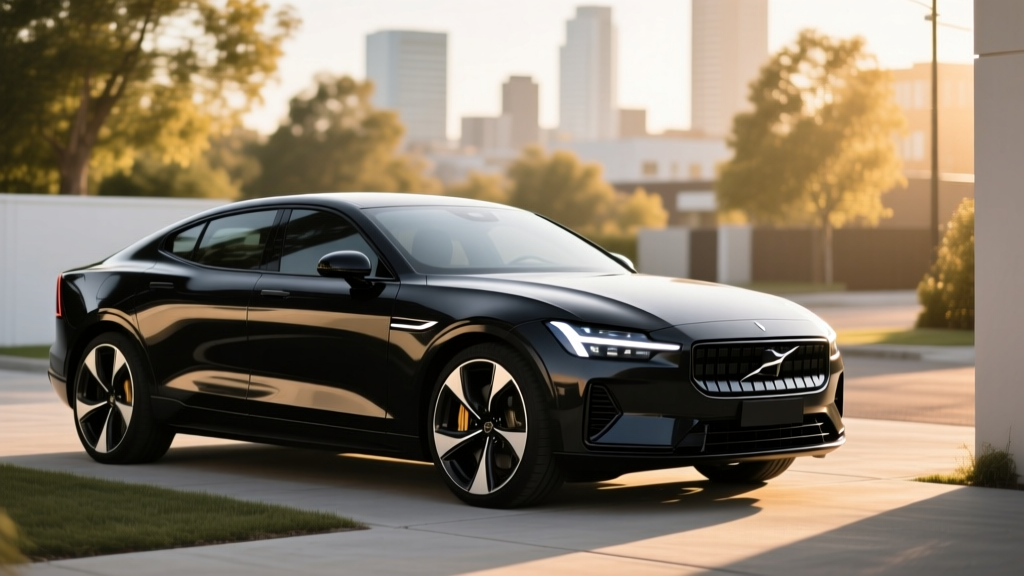
The 2024 Polestar 3 arrives as the Swedish-Chinese brand's first luxury electric SUV, positioning itself squarely against the BMW iX, Audi Q8 e-tron, and Tesla Model X. Built on Volvo's SPA2 platform and sharing its powertrain architecture with the Volvo EX90, the Polestar 3 delivers a compelling mix of Scandinavian design restraint, serious range, and fast DC charging. But at a starting MSRP hovering near $83,000, buyers need to know exactly what they're getting — and where this EV falls short of the luxury EV establishment.
We've analyzed EPA data, manufacturer specifications, and real-world driving variables to give you the full ownership picture. Here's what matters.
| Spec | Long Range Dual Motor | Long Range Dual Motor w/ Performance Pack |
|---|---|---|
| EPA Range | 315 miles | 300 miles |
| Battery (usable) | 107 kWh (NMC) | 107 kWh (NMC) |
| Drivetrain | Dual-motor AWD | Dual-motor AWD |
| Horsepower | 489 hp | 517 hp |
| Torque | 620 lb-ft | 671 lb-ft |
| 0–60 mph | 4.7 seconds | 4.2 seconds |
| Max DC Fast Charge | 250 kW | 250 kW |
| 10–80% DC Charge | ~30 minutes | ~30 minutes |
| Level 2 (AC) Charge Rate | 11 kW | 11 kW |
| MPGe (combined) | 79 MPGe | 77 MPGe |
| Base MSRP | $82,900 | $88,900 |
| Battery Warranty | 8 yr / 100,000 mi | 8 yr / 100,000 mi |
Range & Efficiency: EPA Numbers vs. the Real World
The standard Long Range Dual Motor variant carries an EPA-estimated 315 miles of range, while adding the Performance Pack drops that to 300 miles due to the stickier Pirelli P Zero tires and sportier tuning. According to fueleconomy.gov, the base model achieves 79 MPGe combined (roughly 42 kWh per 100 miles), which is competitive for a 5,500+ pound luxury SUV but trails the more aerodynamic BMW iX xDrive50 (87 MPGe combined).
EPA Sticker: 315 miles (Long Range Dual Motor)
Highway driving (70–75 mph): Expect ~255–275 miles. The Polestar 3's bluff SUV profile creates more aero drag than a sedan-shaped EV, and highway speeds are where range takes the biggest hit.
Mixed city/highway (moderate climate): ~280–300 miles is achievable with moderate regen use.
Cold weather (below 32°F): Plan for 220–250 miles. The NMC pack loses efficiency in the cold, and cabin heating draws significant energy despite the heat pump being standard.
Bottom line: For road-trip planning, budget 250 miles between stops in fair weather and 220 in winter. The 107 kWh usable battery gives a genuine buffer, but don't expect to match the EPA sticker outside of ideal city driving.
One factor working in the Polestar 3's favor: its heat pump is standard rather than a costly add-on (as it is on some German competitors), which helps mitigate cold-weather range loss during cabin preconditioning. Still, NMC chemistry is more temperature-sensitive than LFP, so preconditioning the battery before DC fast charging in winter is essential to hitting peak charge rates.
Charging Speed: DC Fast and Home Level 2
The Polestar 3 supports a peak DC fast-charge rate of 250 kW via CCS1 (with the North American market receiving NACS compatibility for Tesla Supercharger access via adapter or native port in later builds). On an optimal 350 kW charger — Electrify America, EVgo, or a Tesla Supercharger with Magic Dock — the 111 kWh gross (107 kWh usable) battery can go from 10% to 80% in approximately 30 minutes.
| Charging Level | Power / Rate | Speed / Time |
|---|---|---|
| Level 1 (120V household) | ~1.4 kW | ~4 miles per hour of charging |
| Level 2 (240V home) | 11 kW (48A) | ~33 miles per hour / full charge in ~10 hours |
| DC Fast Charge (peak) | 250 kW | 10–80% in ~30 minutes |
| DC Fast Charge (sustained avg.) | ~150–170 kW | Average rate from 10–80% accounting for taper above 80% |
Charging-curve reality check: The 250 kW peak is achieved only between roughly 10–35% state of charge. Above 50%, the rate tapers significantly, and above 80%, it drops sharply to protect the NMC cells. If you're road-tripping and only need to get from 20% to 60%, you'll see excellent speeds. Charging from 60% to 90% takes disproportionately longer — a common trait in large NMC packs. Plan your stops to stay in the 15–75% window for the fastest turnaround.
For home charging, the onboard 11 kW AC charger means a full 10–100% session takes roughly 10 hours on a Level 2 wallbox. If your home setup is limited to a 40-amp circuit (delivering 9.6 kW), expect closer to 11–12 hours for a full charge. For most owners who plug in nightly and rarely drain below 20%, this is a non-issue — you'll wake up with a full battery every morning.
Performance and Driving Dynamics
The dual-motor all-wheel-drive setup delivers 489 horsepower and 620 lb-ft of torque in standard form, good for a 0–60 mph time of 4.7 seconds. The Performance Pack bumps output to 517 hp and 671 lb-ft, dropping the sprint to 4.2 seconds. Both figures are quick but not class-leading — the Tesla Model X Plaid obliterates them at 2.5 seconds, and the BMW iX M60 hits 60 in 3.6 seconds.
Where the Polestar 3 differentiates is in its chassis tuning. Polestar has always leaned toward the sporty side of the Volvo family tree, and the 3 features a double-wishbone front suspension, integral-link rear, and standard air suspension with adaptive dampers. The result is a composed, planted ride that handles back roads with more confidence than its 5,500-pound curb weight suggests. Torque vectoring on the rear axle (via a clutch-based system that can disconnect the rear motor entirely for efficiency) adds agility and reduces energy consumption during light-load cruising.
Regenerative braking is adjustable via steering-wheel paddles, with a true one-pedal driving mode available. The blending between regen and the mechanical brakes is among the smoothest in the segment — no abrupt grabbiness at low speeds, which is a common complaint in rival EVs.
Interior, Cargo, and Technology
The cabin is unmistakably Scandinavian: clean lines, minimal physical buttons, and high-quality materials including wool-blend upholstery (standard), Nappa leather (optional), and recycled aluminum trim. The centerpiece is a 14.5-inch portrait touchscreen running a Google Automotive OS-based infotainment system with native Google Maps navigation, Google Assistant voice control, and over-the-air updates. A 9-inch driver display sits behind the steering wheel, and an available 25-speaker Bowers & Wilkins audio system is one of the best in any vehicle at this price point.
Cargo and passenger space:
- Rear cargo volume (behind second row): ~17.1 cu ft
- Cargo volume (second row folded): ~38.5 cu ft
- Front trunk (frunk): ~1.1 cu ft (small — enough for a charging cable kit)
- Rear legroom: ~38.0 inches
- Front headroom: ~40.2 inches
The cargo area is the Polestar 3's weakest practical point. At 17.1 cubic feet behind the rear seats, it trails the BMW iX (35.5 cu ft) and Tesla Model X (behind the second row, ~37 cu ft) significantly. This is a five-seat SUV that sacrifices cargo utility for its sleek roofline. If you regularly haul bulky gear or have a growing family, this matters.
Driver Assistance: Pilot and Pilot Assist
The Polestar 3 offers Pilot Assist as standard — a Level 2 SAE driver-assistance system combining adaptive cruise control and lane-centering. It's competent for highway cruising but requires continuous driver supervision and hands on the wheel. An optional Pilot Pack adds LiDAR hardware (supplied by Luminar) intended for future over-the-air feature enhancements, though as of 2026, no hands-off or eyes-off capability has been unlocked. According to NHTSA's automation framework, this remains firmly Level 2 — you are the driver at all times.
Pricing, Trims, and Federal Tax Credit Eligibility
The 2024 Polestar 3 lineup is straightforward — two trims, both dual-motor AWD with the same 111 kWh battery:
| Trim | Base MSRP | Destination | Federal §30D Credit | Est. Net Price* |
|---|---|---|---|---|
| Long Range Dual Motor | $82,900 | $1,400 | $0 (MSRP cap exceeded) | ~$84,300 |
| LR Dual Motor + Performance Pack | $88,900 | $1,400 | $0 (MSRP cap exceeded) | ~$90,300 |
*Net price before state/local incentives, dealer fees, or optional equipment.
- Federal §30D credit status: The Polestar 3 does NOT qualify for the $7,500 federal EV tax credit. Under IRS rules, SUVs must have an MSRP at or below $80,000 to be eligible. Both Polestar 3 trims exceed this cap at $82,900 and $88,900 respectively.
- Income caps (moot here, but for reference): §30D also caps buyer AGI at $150,000 (single) / $300,000 (joint) — but the MSRP disqualification makes this irrelevant for the Polestar 3.
- Battery sourcing: Even if the price were under the cap, the Polestar 3's battery sourcing from CATL (China) complicates critical-mineral and battery-component requirements under current IRS guidance. Check irs.gov for the latest eligible vehicle list.
- State incentives: Some states offer their own EV rebates that have no MSRP cap (e.g., certain utility company rebates, state-level programs). Check your local DMV and utility provider for specifics.
The absence of the federal credit is a meaningful disadvantage versus the base Tesla Model X (starting ~$79,990, which may qualify depending on exact trim) and some BMW iX configurations. It's a factor luxury buyers should weigh against the Polestar 3's design and driving merits.
Warranty Coverage
Polestar provides warranty coverage competitive with the European luxury segment:
- Battery: 8 years / 100,000 miles (whichever comes first), with a capacity retention threshold of 70% — if the pack degrades below 70% of original capacity within the warranty period, Polestar will repair or replace it.
- Powertrain: 8 years / 100,000 miles
- Bumper-to-bumper: 4 years / 50,000 miles
- Roadside assistance: 4 years / unlimited miles
- Corrosion: 12 years / unlimited miles
The 70% battery retention threshold is standard for the industry (Tesla uses the same). NMC chemistry in a pack this large typically degrades 8–12% over the first 100,000 miles based on industry data, so most owners should remain well within warranty limits with normal use. Avoiding repeated 100% charges and DC fast-charging exclusively can help extend long-term State of Health.
Who Should Buy the 2024 Polestar 3?
Choose the Polestar 3 if:
- You value distinctive Scandinavian design over German or American luxury conventions
- You want 300+ miles of real-world range with fast 250 kW DC charging
- You prioritize ride quality and chassis composure over maximum cargo space
- You don't need third-row seating (this is strictly a five-seater)
- You want LiDAR hardware for potential future ADAS upgrades
Look elsewhere if:
- You need maximum cargo volume — the BMW iX offers over double the space behind the rear seats
- The $7,500 federal tax credit is essential to your purchase math
- You want sub-4-second 0–60 performance (look at the Model X Plaid or iX M60)
- You need third-row seating (consider the Rivian R1S or Volvo EX90)
- Public charging reliability in your area is poor — the CCS-to-NACS transition may require adapter use at Tesla Superchargers depending on your build date
- 315-mile EPA range is excellent for a luxury SUV
- 250 kW DC fast charging keeps road-trip stops reasonable
- Composed, confidence-inspiring chassis with standard air suspension
- Beautiful, minimalist interior with premium materials
- Standard heat pump (not a costly add-on)
- LiDAR hardware included with Pilot Pack for future capability
- 25-speaker Bowers & Wilkins audio available
- Does NOT qualify for the $7,500 federal tax credit (MSRP exceeds $80K SUV cap)
- Cargo space (17.1 cu ft) is surprisingly small for the class
- No third-row option
- Frunk is tiny (~1.1 cu ft)
- Performance Pack's 300-mile range trails the base model
- Pilot Assist is competent but unremarkable vs. GM Super Cruise or Ford BlueCruise on mapped highways
- Brand is still building its dealer and service network in the US
How It Stacks Up Against Key Competitors
| Spec | Polestar 3 LR DM | BMW iX xDrive50 | Tesla Model X LR |
|---|---|---|---|
| EPA Range | 315 mi | 324 mi | 335 mi |
| Battery (usable) | 107 kWh (NMC) | 105.2 kWh (NMC) | ~100 kWh (NMC) |
| Max DC Charge | 250 kW | 200 kW | 250 kW |
| 0–60 mph | 4.7 sec | 4.4 sec | 3.8 sec |
| HP | 489 | 516 | 670 |
| Cargo (behind 2nd row) | 17.1 cu ft | 35.5 cu ft | ~37 cu ft |
| Base MSRP | $82,900 | $87,250 | $79,990 |
| Federal §30D Credit | No (MSRP cap) | No (MSRP cap) | Potentially (under $80K cap) |
The Polestar 3 holds its own on range and charging speed, outpacing the BMW iX on DC fast-charge rate (250 vs 200 kW). The Tesla Model X leads on performance and cargo but has a more dated interior and inconsistent build quality. The Polestar's biggest challenge is justifying its price without the federal credit — if the §30D credit matters to you, the base Model X is the only competitor here that may qualify.
Frequently Asked Questions
What is the real-world range of the 2024 Polestar 3?
The EPA rates the Long Range Dual Motor at 315 miles and the Performance Pack variant at 300 miles. In mixed real-world driving, expect 280–300 miles in moderate weather, 255–275 miles on sustained highway trips at 70+ mph, and 220–250 miles in sub-freezing temperatures.
How fast does the Polestar 3 charge at home and on the road?
On a DC fast charger, it peaks at 250 kW and charges from 10–80% in roughly 30 minutes. At home on a Level 2 (240V) charger at 11 kW, expect about 33 miles of range added per hour, or a full charge in approximately 10 hours.
Does the 2024 Polestar 3 qualify for the $7,500 federal EV tax credit?
No. Under IRS §30D rules, SUVs must have an MSRP at or below $80,000 to qualify. The Polestar 3 starts at $82,900, exceeding this cap. Additionally, its battery sourcing complicates critical-mineral compliance. Always verify current eligibility at irs.gov.
Is the Polestar 3 worth buying over the BMW iX or Tesla Model X?
It depends on your priorities. The Polestar 3 offers the most distinctive design, excellent charging speed, and a composed driving experience. The BMW iX offers far more cargo space. The Tesla Model X offers more performance and potential tax-credit eligibility. If design and driving refinement matter more than maximum utility, the Polestar 3 earns its place on your shortlist.
What battery chemistry does the Polestar 3 use?
The Polestar 3 uses an NMC (nickel-manganese-cobalt) lithium-ion battery pack with 111 kWh gross capacity (107 kWh usable). NMC offers high energy density, which is essential for achieving 315 miles in a vehicle this heavy, but it is more sensitive to extreme temperatures and long-term high-SoC storage than LFP chemistry.
Can the Polestar 3 use Tesla Superchargers?
Polestar has committed to NACS (Tesla's charging connector) adoption. Depending on your vehicle's build date and port configuration, you may have a native NACS port or may need a CCS-to-NACS adapter. Tesla Supercharger access for non-Tesla vehicles continues to expand — check Tesla's app for compatible stations in your area.
How much cargo space does the Polestar 3 have?
Behind the second row, cargo volume is 17.1 cubic feet — modest for the luxury midsize SUV class. With the rear seats folded, it expands to approximately 38.5 cubic feet. The frunk adds just 1.1 cubic feet, enough for a charging cable bag.