Quick Verdict: The Budget EV That Knows Its Limits
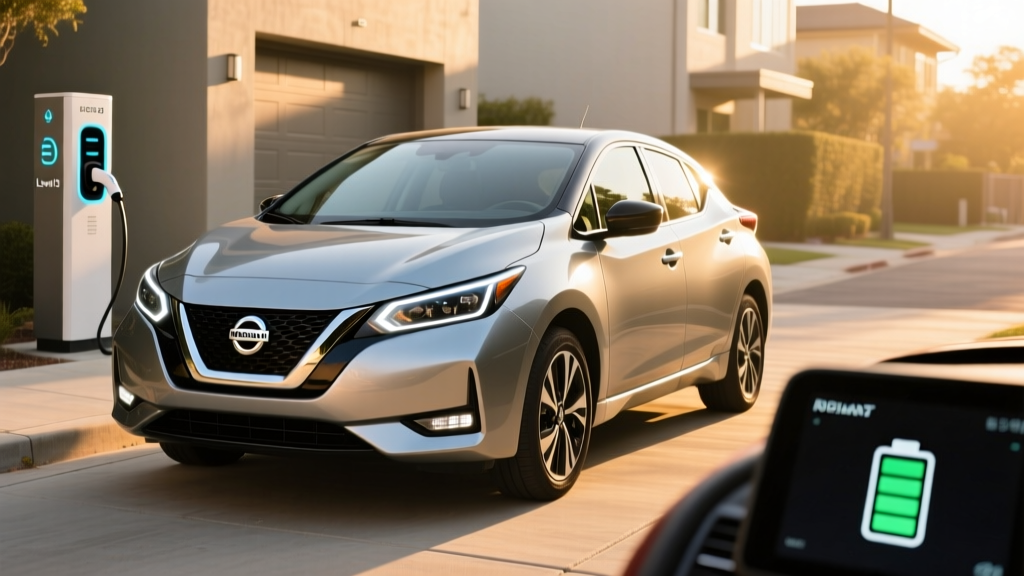
The 2024 Nissan Leaf S is the most affordable new electric vehicle you can buy in the United States, with a starting MSRP of $28,140 before any incentives. It's also one of the oldest EV platforms still in production, and that legacy shows in both its strengths and its compromises. If you need a reliable, no-nonsense commuter that charges at home overnight and stays within a 120-mile daily radius, the Leaf S delivers genuine value. If you're planning cross-country road trips or need DC fast-charging speeds that rival modern rivals, you'll want to look elsewhere.
Nissan discontinued the Leaf after the 2024 model year, making this the final iteration of the nameplate that launched the modern mass-market EV era in 2010. That means you're buying into a proven platform with extensive real-world reliability data — but also one that won't receive further updates.
Range & Efficiency: EPA vs. Real World
EPA Estimated: 149 miles (combined city/highway)
Real-World Expectation: 120–135 miles in mixed city/highway driving at moderate temperatures. Highway-only driving at 70+ mph drops this to roughly 105–115 miles. In cold weather (below 32°F), expect a 25–35% reduction, putting usable range between 95 and 110 miles without cabin preconditioning.
The Leaf S uses a 40 kWh lithium-ion battery pack (approximately 38 kWh usable) with NMC (nickel manganese cobalt) chemistry. The EPA rates the Leaf S at 123 MPGe combined, which translates to roughly 27 kWh per 100 miles — competitive with other compact EVs but not class-leading. The Leaf SV Plus, with its larger 60 kWh pack, achieves 212 miles EPA, but the base S trim is strictly a 149-mile vehicle.
For context, the Leaf S lacks a dedicated heat pump — it uses a resistive PTC heater for cabin warmth, which draws significantly more energy in cold weather than heat-pump-equipped competitors like the Hyundai Kona Electric or Chevrolet Bolt EV. If you live in a northern climate, budget for meaningful winter range loss.
| Specification | Value |
|---|---|
| EPA Range | 149 miles |
| Battery Capacity | 40 kWh total (~38 kWh usable) |
| Battery Chemistry | NMC (Nickel Manganese Cobalt) |
| Efficiency | 123 MPGe combined / 27 kWh/100 mi |
| Motor Output | 147 hp / 236 lb-ft torque |
| Drivetrain | FWD (single front motor) |
| 0–60 mph | ~7.9 seconds |
| Max DC Fast Charge | ~50 kW (CHAdeMO) |
| Level 2 Charge Rate | 6.6 kW onboard charger |
| Base MSRP | $28,140 |
| Battery Warranty | 8 years / 100,000 miles |
Charging Speed: The CHAdeMO Compromise
This is the Leaf's most significant drawback for anyone who drives beyond a daily commute. The 2024 Leaf S uses the CHAdeMO DC fast-charging connector, not the CCS1 standard adopted by nearly every other automaker, and not the NACS (Tesla) connector now becoming the industry default. CHAdeMO infrastructure is shrinking as networks like Electrify America and EVgo prioritize CCS and NACS.
| Charging Level | Power / Rate | Time or Range Added |
|---|---|---|
| Level 1 (120V household) | ~1.4 kW | ~4–5 miles per hour |
| Level 2 (240V home/public) | 6.6 kW (onboard max) | ~22 miles per hour; full charge in ~7 hours |
| DC Fast Charge (CHAdeMO) | Peak ~50 kW | 10–80% in approximately 60 minutes |
The 50 kW peak DC charge rate is painfully slow by 2026 standards. Most modern compact EVs charge at 100–150 kW, and several exceed 200 kW. A 10–80% charge taking roughly an hour means road-trip stops are a commitment. Worse, the Leaf's air-cooled battery (no liquid thermal management) leads to charge-rate throttling on repeated fast charges or in hot weather — a phenomenon known as "Rapidgate" that Nissan has never fully resolved. On a second consecutive DC fast charge, expect speeds to drop to 30–35 kW or lower.
For home charging, the 6.6 kW onboard charger is adequate. A full 0–100% Level 2 charge takes about 7 hours, easily handled overnight. If you install a dedicated 240V Level 2 charger on a 30-amp circuit, you'll wake up to a full battery every morning — which is how this car is designed to be used.
Performance & Driving Dynamics
The Leaf S's front-mounted AC synchronous motor produces 147 horsepower and 236 lb-ft of torque, driving the front wheels. Nissan quotes no official 0–60 mph time, but independent testing consistently clocks the Leaf S at approximately 7.9 seconds — adequate for merging and passing, if not exciting.
Ride quality is compliant and comfortable at city speeds, with the battery's low placement giving the Leaf a planted feel through corners. The steering is light and numb, typical of the economy segment. Regenerative braking is adjustable via the e-Pedal mode, which enables one-pedal driving with near-complete deceleration when you lift off the accelerator. It's intuitive and well-calibrated — one of the Leaf's enduring strong points.
Noise insulation is reasonable for the price point, though wind noise becomes prominent above 65 mph. The suspension absorbs urban bumps well but can feel floaty on undulating highways at speed.
Interior, Tech & Cargo Space
The 2024 Leaf S interior is functional but shows its age. You get a 7-inch touchscreen infotainment display with Apple CarPlay and Android Auto (wired, not wireless), a 5-inch driver information display, and physical buttons for climate control — a practical choice many buyers prefer over all-touch interfaces.
Nissan includes its ProPILOT Assist suite as standard on all 2024 Leaf trims. This is an SAE Level 2 driver-assist system combining adaptive cruise control with lane-centering steering. It works well on marked highways but requires continuous driver supervision — this is not autonomous driving, and the system will issue hands-on-wheel alerts if you disengage.
Standard safety technology includes:
- Automatic Emergency Braking with Pedestrian Detection
- Lane Departure Warning and Lane-Keeping Assist
- Blind Spot Warning and Rear Cross-Traffic Alert
- Intelligent Cruise Control
Cargo and passenger dimensions:
- Cargo volume (rear seats up): 23.6 cu ft
- Cargo volume (rear seats folded): 31.6 cu ft
- Front legroom: 42.1 inches
- Rear legroom: 33.5 inches
- Seating capacity: 5 passengers
The cargo area is decent for groceries and luggage for two, but the rear seats don't fold completely flat, and there's no front trunk (frunk) — the space under the hood houses the motor and power electronics. Rear legroom is tight for taller passengers on longer trips.
Pricing, Trims & Federal Tax Credit
| Trim | Base MSRP | Battery | EPA Range |
|---|---|---|---|
| Leaf S | $28,140 | 40 kWh | 149 miles |
| Leaf SV Plus | $36,190 | 60 kWh | 212 miles |
The Leaf S starts at $28,140 (plus a $1,095 destination charge), making it the least expensive new EV available in the U.S. for the 2024 model year. The SV Plus trim adds the larger 60 kWh battery, a 150 kW motor (214 hp), and more range for $36,190.
Does the 2024 Nissan Leaf S Qualify for the Federal EV Tax Credit?
The 2024 Leaf S does not qualify for the full $7,500 IRS §30D federal tax credit in most cases. Under current rules, eligible vehicles must meet critical-mineral and battery-component sourcing requirements, and the Leaf's battery is manufactured in Japan with supply chains that do not satisfy the North American sourcing thresholds established by the Inflation Reduction Act.
Key §30D eligibility rules that affect the Leaf:
- Battery sourcing: The Leaf's battery does not meet the critical-minerals or battery-component requirements for 2024, disqualifying it from the full $7,500 credit.
- MSRP cap: The Leaf S ($28,140) is well under the $55,000 sedan cap — no issue here.
- Buyer income cap: AGI must not exceed $150,000 (single) / $300,000 (joint) — applies to all buyers regardless of vehicle.
- Point-of-sale transfer: Even if partially eligible, the credit can be transferred to the dealer at purchase for an upfront price reduction.
Always verify current eligibility on fueleconomy.gov and consult a tax professional before relying on any credit amount. Some state and utility incentives may still apply to the Leaf regardless of federal credit status.
Battery Warranty & Long-Term Ownership
Nissan provides an 8-year / 100,000-mile lithium-ion battery capacity warranty on the 2024 Leaf. The warranty guarantees the battery will retain at least 9 bars out of 12 on the capacity gauge (approximately 70% of original capacity). If degradation drops below that threshold within the warranty period, Nissan will repair or replace the pack.
This is a meaningful warranty, but the 70% retention threshold is lower than some competitors who guarantee 70% or even 75% with more precise kWh-based language. The Leaf's air-cooled battery has historically shown more degradation in hot climates (Arizona, Texas, Southern California) compared to liquid-cooled packs. Real-world data from Leaf owners suggests most 40 kWh packs retain 85–92% capacity after 5 years and 60,000 miles in moderate climates, but hot-climate owners have reported faster decline.
The powertrain (motor, inverter, reduction gear) carries a 5-year / 60,000-mile warranty, and the basic vehicle warranty is 3 years / 36,000 miles.
Pros & Cons
Pros
- Lowest new-EV MSRP in the U.S. market at $28,140
- Proven platform with 14 years of real-world reliability data
- Comfortable ride quality for city and suburban commuting
- e-Pedal one-pedal driving is well-calibrated and intuitive
- ProPILOT Assist (Level 2 ADAS) standard on all trims
- 8-year / 100,000-mile battery warranty
- Physical buttons for climate — no screen-diving
Cons
- 149-mile EPA range limits use to commuting and local errands
- CHAdeMO connector — shrinking public charging infrastructure
- 50 kW peak DC charge rate is extremely slow by 2026 standards
- Air-cooled battery causes charge throttling and hot-climate degradation
- No heat pump — significant winter range loss (25–35%)
- Does not qualify for the $7,500 federal tax credit under current §30D rules
- Discontinued after 2024 — no future updates or support expansion
- Tight rear legroom (33.5 in) and no frunk
Who Should Buy the 2024 Nissan Leaf S?
Choose the Leaf S if: You need the most affordable new EV available, you charge at home every night, your daily round-trip commute is under 80 miles, and you rarely take road trips longer than 100 miles one way. It's ideal as a second car, a dedicated commuter, or an entry point into EV ownership with minimal financial risk.
Look elsewhere if: You need 200+ miles of range, you rely on public DC fast charging, you live in a hot climate and plan to keep the car 8+ years, you regularly drive in freezing winters, or you want a vehicle with access to the Tesla Supercharger network or CCS infrastructure.
Key competitors to cross-shop include the Chevrolet Bolt EV (259 miles EPA, CCS, was eligible for the federal credit before its initial discontinuation), the Hyundai Kona Electric (261 miles EPA, CCS, heat pump available), and the MINI Cooper SE (114 miles EPA but more engaging to drive). Each offers significantly more range and faster charging, though typically at a higher MSRP before incentives.
Frequently Asked Questions
What is the real-world range of the 2024 Nissan Leaf S?
The EPA estimates 149 miles combined, but expect 120–135 miles in typical mixed driving. Highway-only trips at 70+ mph yield roughly 105–115 miles. In freezing weather without preconditioning, range can drop to 95–110 miles due to the resistive cabin heater and cold battery chemistry.
How fast does the 2024 Nissan Leaf S charge?
At home on a 240V Level 2 charger, the Leaf S charges at 6.6 kW, adding about 22 miles of range per hour and reaching a full charge in roughly 7 hours. On a CHAdeMO DC fast charger, it peaks at approximately 50 kW, taking about 60 minutes for a 10–80% charge. Subsequent fast charges in the same day will be slower due to the air-cooled battery's thermal limitations.
Does the 2024 Nissan Leaf S qualify for the federal EV tax credit?
Under current IRS §30D rules, the 2024 Leaf S generally does not qualify for the $7,500 federal tax credit because its battery components and critical minerals do not meet the North American sourcing requirements. Always check fueleconomy.gov and consult a tax professional for your specific situation. State and utility incentives may still apply.
Is the 2024 Nissan Leaf S worth buying vs. competitors?
It depends on your use case. At $28,140, the Leaf S is the cheapest new EV available, and for a home-charging commuter with a short daily drive, it's a rational, low-risk choice. However, the 149-mile range, CHAdeMO connector, 50 kW charge speed, and lack of federal tax credit eligibility make it hard to recommend over the Chevrolet Bolt EV or Hyundai Kona Electric for buyers who need versatility. If price is the overriding factor and your driving is predictable, the Leaf S holds up. If you want a do-everything EV, it falls short.
Why was the Nissan Leaf discontinued after 2024?
Nissan confirmed the Leaf's discontinuation to make room for next-generation EVs built on newer platforms with liquid-cooled batteries, CCS/NACS charging, and longer range. The Leaf's air-cooled architecture and CHAdeMO connector had become increasingly uncompetitive, and sales volumes had declined as newer rivals offered significantly more capability at similar prices.
What is the battery warranty on the 2024 Nissan Leaf S?
Nissan covers the lithium-ion battery for 8 years or 100,000 miles, whichever comes first. The warranty guarantees the battery will not drop below 9 out of 12 capacity bars (approximately 70% of original capacity). The powertrain warranty is 5 years / 60,000 miles, and the basic bumper-to-bumper warranty is 3 years / 36,000 miles.