Quick Verdict: The Budget EV That Knows Its Lane
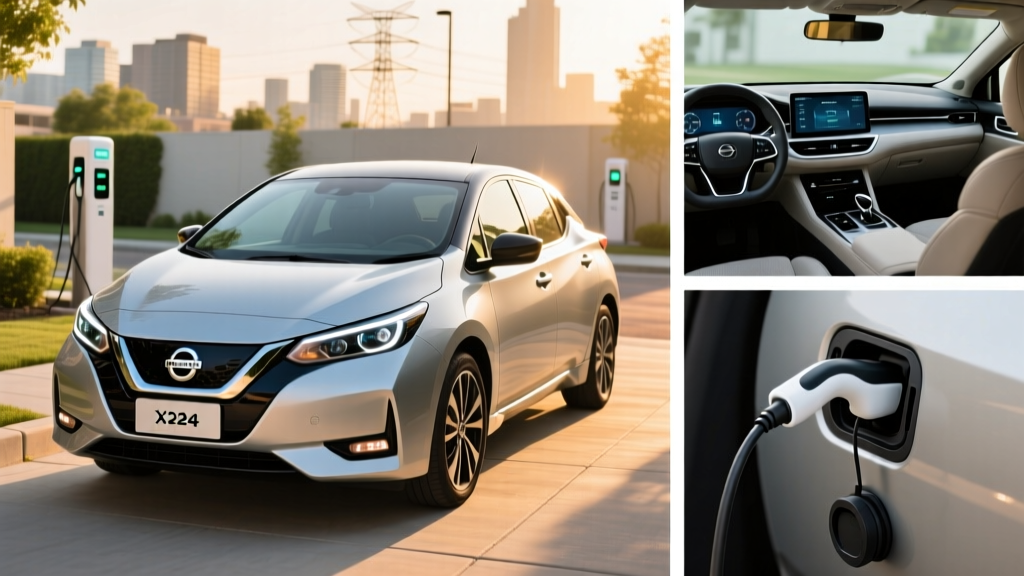
The 2024 Nissan Leaf occupies a specific niche in the EV market: an affordable, compact electric hatchback built for daily commuting and suburban errands rather than cross-country road trips. With a starting MSRP of $28,140, it undercuts nearly every competitor in the segment — but that price advantage comes with trade-offs in charging speed, battery chemistry, and highway range that buyers need to understand before signing a purchase agreement.
Now in its second generation (introduced for 2018, refreshed for 2023), the Leaf carries forward with two battery options, a CHAdeMO DC fast-charging connector in an industry rapidly standardizing on NACS and CCS, and an air-cooled battery pack that prioritizes cost over thermal management. For the right buyer — someone with home Level 2 charging, a predictable commute under 100 miles round-trip, and a tight budget — the 2024 Leaf remains a pragmatic choice. For everyone else, the limitations compound quickly.
Range and Efficiency: Two Batteries, Two Very Different Experiences
Nissan offers the 2024 Leaf in two distinct configurations that determine everything from range to highway usability:
| Specification | Leaf S (40 kWh) | Leaf SV Plus (60 kWh) |
|---|---|---|
| Battery Capacity (usable) | 40 kWh | 60 kWh |
| Battery Chemistry | NMC (lithium-ion) | NMC (lithium-ion) |
| EPA Range | 149 miles | 212 miles |
| EPA Combined MPGe | 111 MPGe | 110 MPGe |
| Efficiency (kWh/100 mi) | 30 kWh/100 mi | 31 kWh/100 mi |
| Motor Output | 110 kW (147 hp) | 160 kW (214 hp) |
| Drivetrain | FWD | FWD |
| 0–60 mph | ~7.9 sec | ~6.5 sec |
Real-World Range Reality Check: The EPA sticker tells part of the story; actual range depends heavily on conditions. For the SV Plus (212 mi EPA), expect approximately 175–190 miles on mixed highway driving at 70 mph, and as low as 140–155 miles in winter conditions (below 32°F) due to battery heating demands and reduced regenerative braking efficiency. The base S model's 149-mile EPA figure translates to roughly 115–130 miles of real-world highway range, making it strictly a city/suburban vehicle in cold climates.
The Leaf's air-cooled battery lacks the active liquid thermal management found in competitors like the Chevrolet Bolt EUV or Hyundai Kona Electric. This means sustained highway driving in hot weather and repeated DC fast charging sessions can accelerate battery temperature rise, triggering power-reduction modes to protect the cells — a phenomenon colloquially called "Rapidgate" that Nissan has mitigated but not fully eliminated since the first-generation controversy.
Charging Speed: The Leaf's Most Significant Limitation
Charging infrastructure compatibility and speed represent the 2024 Leaf's weakest competitive position. Here are the exact figures:
| Charging Level | Leaf S (40 kWh) | Leaf SV Plus (60 kWh) |
|---|---|---|
| Level 1 (120V, 12A) | ~1.4 kW / ~4 mi/hr | ~1.4 kW / ~4 mi/hr |
| Level 2 (240V, home/public) | 6.6 kW / ~22 mi/hr Full charge: ~7.5 hr | 6.6 kW / ~22 mi/hr Full charge: ~11 hr |
| DC Fast Charge (CHAdeMO) | 50 kW peak 10–80%: ~40 min | 100 kW peak 10–80%: ~45 min |
Critical context on DC fast charging: The 100 kW peak rate on the SV Plus is only sustained briefly at low state-of-charge (below 30%). The charge curve tapers significantly above 60% SoC, and above 80% the rate drops to roughly 20–30 kW. A realistic 10–80% session takes approximately 45 minutes under ideal thermal conditions — but in hot weather or after consecutive fast-charge sessions, thermal throttling can extend this to 55–65 minutes.
The CHAdeMO connector problem: The 2024 Leaf uses the CHAdeMO DC fast-charging standard, which is being actively phased out across North America. Major networks including Electrify America and Tesla Superchargers have standardized on CCS and NACS respectively. While CHAdeMO stations still exist (particularly at older Nissan dealer locations and some ChargePoint/EVgo stations), the installed base is shrinking. According to the U.S. Department of Energy's Alternative Fuels Data Center, CHAdeMO connectors now represent less than 15% of public DC fast-charging ports nationally. Buyers who rely on public fast charging for road trips should factor this diminishing infrastructure into their purchase decision.
Performance and Driving Dynamics
The SV Plus model's 214 horsepower and 250 lb-ft of torque deliver genuinely responsive acceleration in the 0–45 mph range where most commuting happens. The single-speed reduction gear provides seamless, lag-free thrust — an inherent EV advantage over turbocharged gas powertrains. The 6.5-second 0–60 mph time won't challenge a Tesla Model 3 or Ford Mustang Mach-E, but it's adequate for confident highway merging.
Ride quality is tuned toward comfort rather than sportiness, with compliant suspension tuning that absorbs urban potholes well but produces noticeable body lean in aggressive cornering. The low center of gravity (battery pack mounted under the floor) helps stability, but the Leaf's 3,400-pound curb weight and eco-oriented tires prioritize efficiency over grip.
Regenerative braking: The Leaf offers Nissan's e-Pedal mode, which provides aggressive regen strong enough for near one-pedal driving in city traffic. However, unlike competitors with blended friction-regen systems, the Leaf's regen tapers off at very low speeds, requiring brake pedal application for complete stops. The B-mode shifter position provides moderate regen without full e-Pedal engagement for drivers who prefer coasting.
Interior, Cargo, and Technology
The 2024 Leaf's interior reflects its budget positioning: functional materials, straightforward controls, and adequate space for four adults. Key dimensions:
- Front headroom: 41.2 inches
- Rear legroom: 33.5 inches (tight for tall passengers on long trips)
- Cargo volume (rear seats up): 23.6 cu ft
- Cargo volume (rear seats folded): 30.0 cu ft
The cargo area is notably smaller than the Chevrolet Bolt EUV (56.3 cu ft max) or Hyundai Kona Electric (45.8 cu ft max), limiting the Leaf's utility for large grocery hauls or luggage-heavy airport runs. There is no front trunk (frunk); the space under the hood houses power electronics.
Infotainment: An 8-inch touchscreen with Apple CarPlay (wireless) and Android Auto (wired) is standard across all trims. The SV Plus adds navigation, but the interface feels dated compared to competitors' larger, faster displays. Physical buttons for climate control and volume are a welcome ergonomic choice.
Driver Assistance (SAE Level 2): Nissan's ProPILOT Assist is available on SV and standard on SV Plus. It provides adaptive cruise control with stop-and-go capability and lane-centering steering assist on marked highways. This is a Level 2 driver-assistance system — the driver must remain fully engaged, with hands on the wheel and eyes on the road at all times. It is not autonomous driving. ProPILOT performs competently in light highway traffic but can struggle with faded lane markings, construction zones, and sharp curves. Nissan's Around View Monitor (360-degree camera) and automatic emergency braking with pedestrian detection are standard safety features; the Leaf earns a 5-Star Overall NHTSA Safety Rating.
Pricing, Trims, and Federal Tax Credit Eligibility
| Trim Level | Base MSRP | Destination | Total Before Incentives | Est. After §30D Credit* |
|---|---|---|---|---|
| Leaf S (40 kWh) | $28,140 | $1,095 | $29,235 | $21,735 |
| Leaf SV (40 kWh) | $29,140 | $1,095 | $30,235 | $22,735 |
| Leaf SV Plus (60 kWh) | $36,190 | $1,095 | $37,285 | $29,785 |
*Federal tax credit estimates shown assume full eligibility under IRS §30D rules. Actual credit amount and eligibility depend on multiple factors detailed below.
Federal EV Tax Credit (§30D) — Critical Eligibility Rules: The 2024 Nissan Leaf is assembled in Smyrna, Tennessee, and as of early 2024, Nissan has confirmed that Leaf models qualify for the full $7,500 federal tax credit under the Inflation Reduction Act's battery sourcing and critical minerals requirements. However, buyer eligibility is not automatic. Per IRS guidelines, you must meet ALL of the following:
- MSRP cap: Vehicle MSRP must not exceed $55,000 for sedans/hatchbacks (Leaf qualifies — all trims well under cap)
- Buyer income cap: Modified AGI must not exceed $150,000 (single), $225,000 (head of household), or $300,000 (joint filing)
- Tax liability: You must have at least $7,500 in federal tax liability for the year of purchase (the credit is non-refundable, though the 2024 point-of-sale transfer option changes this — see below)
- Vehicle sourcing: Battery components and critical minerals must meet escalating percentage thresholds (Nissan confirms 2024 Leaf compliance)
Point-of-Sale Transfer (new for 2024): Starting January 1, 2024, buyers can elect to transfer the tax credit to the dealer at the point of sale, receiving the $7,500 as an immediate reduction in purchase price rather than waiting to claim it on their tax return. This effectively eliminates the tax-liability requirement for most buyers and makes the Leaf accessible to a broader audience. Confirm point-of-sale transfer availability with your dealer before purchase.
Battery Warranty, Degradation, and Long-Term Ownership
Nissan provides the following warranty coverage for the 2024 Leaf:
- Lithium-ion battery capacity warranty: 8 years / 100,000 miles (guarantees battery will retain at least 66% of original capacity — i.e., 9 bars out of 12 on the capacity gauge)
- EV system warranty: 5 years / 60,000 miles
- Bumper-to-bumper: 3 years / 36,000 miles
- Powertrain: 5 years / 60,000 miles
Degradation reality: The Leaf's air-cooled battery pack is more susceptible to capacity loss from repeated DC fast charging and extreme-temperature operation than liquid-cooled competitors. Based on long-term owner data aggregated by Nissan Leaf communities and third-party tracking, expect approximately 10–15% capacity loss over 5 years / 75,000 miles under normal use (primarily Level 2 home charging with occasional DC fast charging). Heavy DC fast-charge use in hot climates (Arizona, Texas) can accelerate this to 18–22% loss over the same period. The 66% warranty threshold is notably less protective than competitors' 70% retention guarantees (Hyundai, Kia, Volkswagen).
Battery replacement cost: Out-of-warranty battery replacement for the 60 kWh pack currently runs approximately $6,500–$8,500 including labor, based on dealer parts pricing. This is a significant long-term ownership cost to factor in for high-mileage buyers or those planning to keep the vehicle beyond the 8-year warranty period.
2024 Nissan Leaf vs. Key Competitors
The Leaf competes in a segment that has evolved rapidly. Here's how it stacks up against the most direct alternatives:
| Attribute | 2024 Nissan Leaf SV Plus | 2024 Chevy Bolt EUV | 2024 Hyundai Kona Electric |
|---|---|---|---|
| EPA Range | 212 mi | 247 mi | 261 mi |
| Base MSRP | $36,190 | $27,800 | $32,975 |
| DC Fast Charge (peak kW) | 100 kW (CHAdeMO) | 55 kW (CCS) | 100 kW (CCS) |
| 10–80% DC Time | ~45 min | ~60 min | ~43 min |
| Battery Cooling | Air-cooled | Liquid-cooled | Liquid-cooled |
| Cargo (max cu ft) | 30.0 | 56.3 | 45.8 |
| Connector Standard | CHAdeMO | CCS | CCS |
The competitive analysis: The Chevrolet Bolt EUV offers more range, dramatically more cargo space, and a lower price — but its 55 kW DC fast-charge rate makes road trips tedious. The Hyundai Kona Electric delivers the best range and modern CCS charging infrastructure compatibility at a moderate price premium. The Leaf's primary remaining advantage is its combination of strong acceleration (214 hp) and the established Nissan dealer network for service.
Choose the 2024 Nissan Leaf if:
- Your budget is firm below $30,000 (after tax credit) and you want a new EV, not used
- You have reliable home Level 2 charging and your daily round-trip commute is under 80 miles
- You prioritize acceleration punch (214 hp SV Plus) over maximum cargo utility
- You live in a region with adequate remaining CHAdeMO infrastructure or rarely use DC fast charging
Consider alternatives if:
- You regularly take highway road trips exceeding 150 miles one-way
- You need maximum cargo flexibility (Bolt EUV or Kona Electric are substantially larger)
- You rely on public DC fast charging and want future-proof connector compatibility (CCS/NACS)
- You live in a hot climate and plan to keep the vehicle 8+ years (liquid-cooled batteries degrade more gracefully)
Pros and Cons
Pros
- Lowest entry price among new EVs (S trim at $28,140 before credit)
- Full $7,500 federal tax credit eligibility with point-of-sale transfer
- Strong acceleration in SV Plus trim (214 hp, 6.5 sec 0–60)
- Comfortable ride quality well-suited to city and suburban driving
- Wireless Apple CarPlay standard across all trims
- ProPILOT Assist Level 2 driver aid available and competent
- 5-Star NHTSA overall safety rating
Cons
- CHAdeMO connector is a shrinking standard with declining public infrastructure
- Air-cooled battery vulnerable to thermal throttling and accelerated degradation in heat
- Real-world highway range significantly below EPA estimate (especially in cold weather)
- Cargo space (30 cu ft max) trails competitors by a wide margin
- Base 40 kWh model's 149-mile EPA range is impractical for anything beyond city commuting
- Dated interior materials and infotainment interface
- No frunk (front trunk) for additional storage
Frequently Asked Questions
What is the real-world range of the 2024 Nissan Leaf?
The SV Plus (60 kWh) achieves an EPA-rated 212 miles, but expect approximately 175–190 miles in mixed highway driving at 70 mph and 140–155 miles in freezing temperatures. The base S model (40 kWh, 149 mi EPA) realistically delivers 115–130 highway miles, making it suitable only for short urban commutes.
How fast does the 2024 Leaf charge at home and on DC fast chargers?
Home Level 2 charging (240V, 6.6 kW) adds approximately 22 miles of range per hour, fully recharging the SV Plus in about 11 hours. DC fast charging peaks at 100 kW (SV Plus) or 50 kW (S), with 10–80% sessions taking approximately 45 minutes under ideal conditions — though thermal throttling can extend this in hot weather or after consecutive fast-charge sessions.
Does the 2024 Nissan Leaf qualify for the $7,500 federal EV tax credit?
Yes, as of early 2024 the Leaf qualifies for the full $7,500 credit under IRS §30D, including battery sourcing and critical minerals requirements. However, buyer eligibility depends on income caps ($150K single / $300K joint), the vehicle's MSRP being under $55,000 (all Leaf trims qualify), and the point-of-sale transfer option is available starting 2024 to bypass the tax-liability requirement. Consult a tax professional and confirm with your dealer.
Is the 2024 Leaf worth buying vs. the Chevrolet Bolt EUV or Hyundai Kona Electric?
For budget-focused buyers who charge primarily at home and drive short commutes, the Leaf S at under $22,000 after the tax credit is compelling. For buyers needing more range, cargo space, or future-proof public charging (CCS/NACS), the Bolt EUV and Kona Electric are stronger choices despite higher base prices.
How long will the Leaf's battery last?
Nissan warranties the battery for 8 years/100,000 miles at 66% minimum capacity retention. Real-world data suggests 10–15% capacity loss over 5 years under normal use, though hot-climate owners who DC fast-charge frequently may see 18–22% loss. Out-of-warranty replacement costs approximately $6,500–$8,500.
Is the CHAdeMO connector a dealbreaker?
It depends on your usage. If you charge at home 95% of the time and rarely use public DC fast charging, the connector standard is less relevant. If you plan regular road trips requiring public fast charging, the declining CHAdeMO infrastructure is a legitimate concern — CCS and NACS networks are expanding while CHAdeMO stations are being retired.