Quick Verdict: Still the Performance Sedan Benchmark
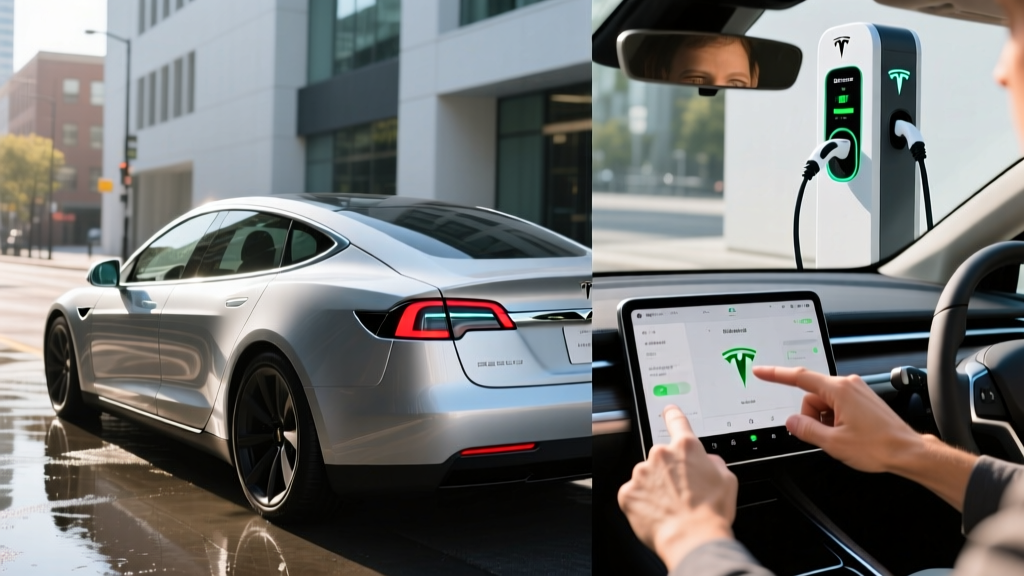
The 2024 Tesla Model S Plaid remains the fastest-accelerating production sedan you can buy, hitting 0-60 mph in 1.99 seconds with 1,020 horsepower from a tri-motor all-wheel-drive powertrain. But beyond the headline numbers, the Plaid is a surprisingly practical daily driver with 396 miles of EPA-estimated range, access to Tesla's Supercharger network, and a usable back seat. At $89,990 before incentives, it competes with the Porsche Taycan Turbo S, Lucid Air Sapphire, and BMW i7 on price — but nothing else in this bracket touches its combination of range, charging speed, and straight-line fury.
This review breaks down every number that matters: real-world range expectations, actual charging curves, total ownership costs, and whether the 2024 Model S Plaid still justifies its premium in a market that has caught up significantly since its 2021 debut.
Range, Battery, and Efficiency
Real-World Expectation: Plan for 320–350 miles on highway road trips at 70-75 mph in mild weather. In freezing temperatures (below 30°F), expect 260–300 miles due to battery heating demands and cabin climate load. City/regenerative driving can push closer to or slightly above the EPA figure.
The 2024 Model S Plaid uses a ~100 kWh battery pack (approximately 95 kWh usable) with NMC (nickel manganese cobalt) chemistry. Tesla does not publish exact usable capacity, but teardown data and charging-session analysis consistently place it in this range. NMC chemistry provides the energy density needed for 396 miles in a sedan package, though it trades some cycle-life longevity versus the LFP packs Tesla uses in standard-range models.
Efficiency lands at 120 MPGe combined (28 kWh/100 miles) per fueleconomy.gov. That is respectable for a 1,020-hp AWD sedan, though the Lucid Air Grand Touring achieves 131 MPGe combined with less power. Wheel choice matters enormously: the 21-inch Arachnid wheels reduce EPA range by 37 miles — a 9.3% penalty that is among the largest wheel-size impacts in the EV market.
| Spec | Value |
|---|---|
| EPA Range (19" wheels) | 396 miles |
| EPA Range (21" wheels) | 359 miles |
| Battery (usable, estimated) | ~95 kWh, NMC |
| Efficiency | 120 MPGe / 28 kWh/100 mi |
| Peak DC Fast Charge | 250 kW |
| 10–80% DC Charge Time | ~27 minutes |
| Level 2 Home Charge Rate | 11.5 kW (~44 mi/hr) |
| 0–60 mph | 1.99 seconds (w/ rollout) |
| Horsepower | 1,020 hp |
| Drivetrain | Tri-Motor AWD |
| Top Speed | 200 mph |
| Cargo Volume | 28 cu ft (rear) + ~3 cu ft (frunk) |
| Base MSRP | $89,990 |
| Battery Warranty | 8 years / 150,000 miles |
Charging Speed: Supercharger Network Advantage
The Model S Plaid peaks at 250 kW on V3 Superchargers (CCS-compatible via adapter or native NACS port on newer builds). Tesla's charge curve is well-managed: the pack pulls close to peak rate from roughly 10% to 45% state of charge, then tapers progressively. A 10–80% session takes approximately 27 minutes at a V3 stall, assuming the battery is preconditioned via the car's navigation-routed preconditioning.
| Charge Level | Power | Speed | Notes |
|---|---|---|---|
| Level 1 (120V) | ~1.4 kW | ~5 mi/hr | Emergency/trickle only |
| Level 2 (240V, 48A) | 11.5 kW | ~44 mi/hr | Full charge in ~9 hours |
| DC Fast (V3 Supercharger) | 250 kW peak | ~200 mi in 15 min | 10-80% in ~27 min |
| DC Fast (CCS station) | Up to 250 kW | Varies | Requires NACS-to-CCS adapter or native CCS port |
Home charging on a 48-amp Level 2 circuit (Tesla Wall Connector or equivalent) adds roughly 44 miles per hour of charging. An overnight session from 20% to 90% takes about 7–8 hours, which suits most daily routines. The onboard charger maxes at 11.5 kW, so installing a 60-amp circuit (to deliver the full 48A continuous) is the optimal home setup — confirm panel capacity with a licensed electrician, as a 200-amp service panel is typically required.
One practical advantage: Tesla's Supercharger network remains the most reliable DC fast-charging ecosystem in the U.S., with plug-and-charge billing that eliminates the app-swiping friction common on Electrify America or EVgo. As of 2024, the Model S can also use NACS-equipped Superchargers natively and CCS stations via adapter, broadening road-trip flexibility.
Performance and Driving Dynamics
The numbers are staggering and they translate directly to the seat of your pants. Three permanent-magnet and induction motors (one front, two rear) produce 1,020 hp and launch the Plaid to 60 mph in 1.99 seconds with a one-foot rollout — or approximately 2.1 seconds without. That makes it quicker to 60 than a Bugatti Chiron at roughly one-tenth the price. Quarter-mile times land around 9.2 seconds at 155 mph.
Beyond straight-line speed, the Plaid's torque-vectoring rear axle and adaptive air suspension give it genuine cornering composure. The carbon-sleeve rotor brakes (standard on Plaid) resist fade during repeated hard use, though the pedal feel remains somewhat numb compared to the Porsche Taycan Turbo S. Steering is precise but light — a Tesla hallmark that prioritizes comfort over feedback.
The yoke steering wheel is standard, with a round wheel available as a no-cost option. The yoke is polarizing: excellent for visibility of the instrument cluster, frustrating during low-speed parking maneuvers requiring hand-over-hand input. Most owners adapt within a week, but test-drive both configurations before committing.
Interior, Cargo, and Daily Practicality
The 2024 Model S interior received a significant refresh in 2021 and carries forward with a minimalist aesthetic dominated by a 17-inch center touchscreen (now in landscape orientation) and a rear-seat 8-inch display. Build quality has improved meaningfully over pre-2021 models: panel gaps are tighter, materials are softer, and road noise insulation is noticeably better.
Passenger space is generous for a performance sedan:
- Front legroom: 42.7 inches
- Rear legroom: 35.4 inches
- Front headroom: 39.3 inches
- Rear headroom: 38.1 inches
Cargo volume is a standout advantage: 28 cubic feet behind the rear seats (expandable with 60/40 split-folding) plus a ~3 cubic-foot front trunk (frunk). That crushes the Porsche Taycan's 14.3 cu ft combined and rivals many compact SUVs. The hatchback-style liftback opening makes loading bulky items straightforward.
The 17-inch touchscreen runs Tesla's latest software with native Spotify, Netflix, YouTube, and a surprisingly capable gaming system (the car can run Cyberpunk 2077 while parked). Wireless Apple CarPlay and Android Auto remain absent — Tesla uses its own interface exclusively. For some buyers this is a non-issue; for others, it is a dealbreaker.
Pricing, Trims, and Federal Tax Credit Eligibility
| Item | Amount |
|---|---|
| Base MSRP (Model S Plaid) | $89,990 |
| Destination Fee | $1,390 |
| As-Tested (w/ 21" wheels, FSD) | ~$97,880 |
| Federal §30D Tax Credit | $0 — MSRP exceeds $55,000 sedan cap |
| Estimated Effective Price | $89,990–$97,880 |
The 2024 Model S Plaid does not qualify for the $7,500 federal EV tax credit under IRS §30D rules. The reason is straightforward: the credit applies only to sedans with an MSRP at or below $55,000, and the Plaid starts at $89,990. The same MSRP cap disqualifies the Lucid Air, Porsche Taycan, and BMW i7 from the new-vehicle credit.
Buyers should also be aware of income limits under §30D: modified adjusted gross income cannot exceed $150,000 (single), $225,000 (head of household), or $300,000 (joint). Even if a qualifying vehicle were available, these caps apply. Always consult a tax professional for your specific situation, and check current-year IRS guidance as rules evolve.
State incentives may still apply. California, Colorado, and several other states offer rebates or tax credits that are not bound by the federal MSRP cap — check your state's energy office or DMV for current programs.
Warranty and Long-Term Ownership
Tesla covers the Model S Plaid with the following warranty:
- Basic Vehicle: 4 years / 50,000 miles
- Battery & Drive Units: 8 years / 150,000 miles (whichever comes first), with a minimum 70% capacity retention guarantee over the warranty period
The 150,000-mile battery warranty is longer than the 120,000-mile coverage on the standard Model S Long Range, reflecting Tesla's confidence in the Plaid's thermal management under high-performance use. NMC chemistry typically degrades 10–15% over the first 100,000 miles based on fleet data from earlier Model S generations, though the Plaid's more advanced cooling system should moderate this.
Out-of-warranty battery replacement for a Model S-class pack currently ranges from $12,000 to $20,000 depending on source and labor, though prices continue to decline as the supply chain matures. Tesla offers a Battery Health screen in the software that tracks estimated capacity, and third-party tools like TeslaFi can log degradation curves over time.
Autopilot and Driver Assistance
Standard Autopilot includes Traffic-Aware Cruise Control and Autosteer (lane centering). Full Self-Driving (Supervised) is a $8,000 option (or $99/month subscription) that adds automatic lane changes, Navigate on Autopilot, Smart Summon, and traffic-light/stop-sign recognition. Despite the "FSD" branding, this remains a Level 2 driver-assist system requiring constant supervision.
In practice, FSD Supervised has improved significantly through 2024, with smoother lane changes and better handling of unprotected left turns. However, it still struggles with construction zones, faded lane markings, and complex multi-lane roundabouts. The driver monitoring camera is persistent — repeated inattention warnings will disable Autosteer for the remainder of the trip.
Safety ratings: the Model S earned a 5-star overall rating from NHTSA and top marks from IIHS, though headlight ratings and small-overlap results should be checked for the specific model year.
Pros, Cons, and Who Should Buy
- 1.99-sec 0-60 mph — quickest sedan in production
- 396-mi EPA range with 19" wheels
- 250 kW Supercharger access, best-in-class network reliability
- 28 cu ft cargo + frunk — more utility than most SUVs
- Continuous OTA software updates add features over time
- Tri-motor torque vectoring for genuine track capability
- $89,990 MSRP — no federal tax credit eligibility
- No Apple CarPlay or Android Auto
- Yoke steering polarizing; round wheel not standard
- Rear-seat comfort trails Lucid Air and BMW i7
- Insurance premiums run 30–50% above comparable gas sedans
- Service center wait times remain long in many metro areas
Consider the Lucid Air Grand Touring if: Range (516 mi EPA) and rear-seat luxury matter more than 0-60 times, and you prefer a more traditional luxury interior.
Consider the Porsche Taycan Turbo S if: Driving feel, steering feedback, and build quality are priorities, and you accept shorter range (222 mi EPA) and slower DC charging (270 kW peak, but less sustained).
Frequently Asked Questions
What is the real-world range of the 2024 Model S Plaid?
Expect 320–350 miles on highway road trips at 70-75 mph in moderate temperatures. In freezing weather, plan for 260–300 miles. City driving with regenerative braking can match or slightly exceed the 396-mile EPA sticker. The 21-inch Arachnid wheels reduce all of these figures by roughly 10%.
How fast does the Model S Plaid charge at home and on the road?
On a 48-amp Level 2 home charger, the Plaid adds ~44 miles per hour (11.5 kW), reaching a full charge overnight in about 9 hours. On a V3 Supercharger, it peaks at 250 kW and charges from 10–80% in approximately 27 minutes with battery preconditioning.
Does the 2024 Model S Plaid qualify for the federal EV tax credit?
No. The IRS §30D new clean vehicle credit has a $55,000 MSRP cap for sedans, and the Plaid starts at $89,990. State incentives may still apply depending on your location and income. Consult a tax professional and check IRS guidance for current-year rules.
Is the Model S Plaid worth buying versus the Lucid Air or Porsche Taycan?
If maximum acceleration, Supercharger access, and cargo versatility are your priorities, the Plaid is unmatched. If you value rear-seat luxury and maximum range, the Lucid Air Grand Touring (516 mi EPA) is compelling. If steering feel and build precision matter most, the Taycan Turbo S wins — but with significantly less range. Test-drive all three before deciding.
How long will the Plaid's battery last?
Tesla warranties the battery for 8 years/150,000 miles with a 70% capacity retention floor. Real-world fleet data from earlier Model S vehicles suggests NMC packs typically retain 85–90% capacity at 100,000 miles with normal use. Avoid habitual 100% charges and frequent Supercharging to maximize longevity; keeping daily SoC between 20–80% is the consensus best practice.
What does insurance cost for a Model S Plaid?
Insurance premiums for the Plaid typically range from $3,500 to $5,500 annually depending on location, driving history, and coverage level — roughly 30–50% more than a comparably priced gas sedan. Tesla Insurance is available in many states and may offer competitive rates, though claim-service reviews are mixed. Get quotes from at least three carriers before purchase.