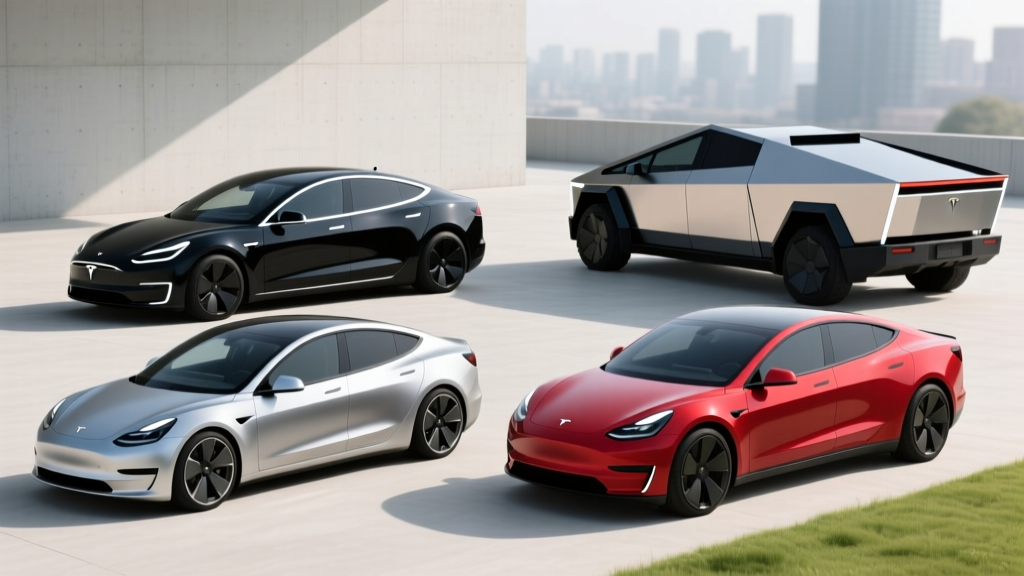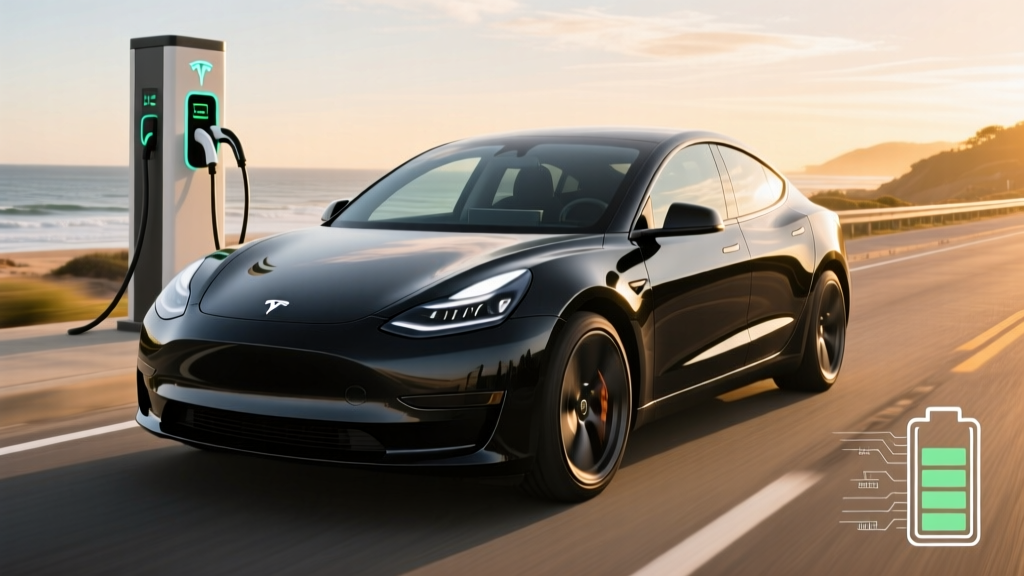
The 2024 Tesla Model 3 Performance arrived as a thorough reworking of the outgoing Performance variant, wearing Tesla's "Highland" refresh. Beneath the revised sheet metal sits a retuned dual-motor powertrain, a stiffer adaptive suspension, upgraded brakes, and a reworked interior that finally addresses the cabin-quality complaints that dogged earlier Model 3 generations. For buyers searching the used and remaining-new inventory for a 2024 Model 3 Performance, the value proposition is compelling: supercar-rivaling acceleration, access to the Supercharger network, and a usable EPA range that makes road trips genuinely practical.
But spec sheets don't tell the whole story. After examining the data, cross-referencing EPA filings, and factoring in real-world variables like cold-weather range loss and DC fast-charge taper, here's what prospective owners actually need to know.
Quick Verdict: Who Should Buy the 2024 Model 3 Performance?
The 2024 Model 3 Performance targets a specific buyer: someone who wants daily-driver practicality with sports-car acceleration, values access to the most reliable DC fast-charging network in North America, and can charge at home. It is not a family hauler — rear legroom is tight, and cargo space is modest. It's best suited for commuting enthusiasts, two-person households, and road-trippers willing to plan 20-minute charging stops.
- You want sub-3-second 0-60 mph acceleration under $55,000
- Home Level 2 charging is available to you
- You road-trip enough to value Supercharger network reliability
- You prioritize driving dynamics over rear-seat space
- You regularly carry rear-seat adults (consider Model Y or Ioniq 5)
- You need towing capability (the Model 3 is not rated for towing)
- You prefer physical buttons and a traditional instrument cluster
Range, Battery, and Efficiency: The Real Numbers
The 2024 Model 3 Performance carries a usable battery capacity of approximately 75 kWh using NMC (nickel manganese cobalt) lithium-ion chemistry. Tesla does not publish exact usable capacity figures, but teardown data and EPA test-cycle analysis consistently place it in the 74–76 kWh window. NMC chemistry offers higher energy density than LFP (lithium iron phosphate), which is why it's used in the Performance variant — the Long Range RWD model uses a similar pack, while the base Model 3 RWD uses a smaller LFP battery.
Real-World Expectations:
- Mixed city/highway driving (moderate climate): ~280–300 miles
- Sustained 75+ mph highway: ~255–275 miles
- Cold weather (below 32°F, highway): ~210–240 miles (30–35% reduction)
- Track mode / aggressive driving: ~150–180 miles
Efficiency is rated at 113 MPGe combined (city: 124 MPGe / highway: 102 MPGe) according to fueleconomy.gov. That translates to roughly 30 kWh per 100 miles in mixed driving — competitive for a dual-motor performance sedan. For context, the Hyundai Ioniq 6 Limited AWD achieves about 32 kWh/100 mi, and the BMW i4 M50 sits around 33 kWh/100 mi.
| Specification | Value |
|---|---|
| EPA Range | 315 miles |
| Battery (usable, est.) | ~75 kWh, NMC chemistry |
| Efficiency (combined) | 113 MPGe / ~30 kWh/100 mi |
| Drivetrain | Dual-motor AWD |
| Horsepower | 510 hp (combined) |
| Torque | 546 lb-ft |
| 0–60 mph | 2.9 seconds |
| Top Speed | 163 mph |
| Max DC Fast Charge | 250 kW (peak) |
| 10–80% DC Charge Time | ~25 minutes |
| Level 2 Charge Rate | 11.5 kW (~44 mi/hr) |
| Cargo Volume | 23 cu ft (trunk + frunk) |
| Rear Legroom | 35.2 inches |
| Battery Warranty | 8 years / 120,000 miles |
| Base MSRP | $52,990 (before destination) |
Charging Speed: DC Fast Charge and Home Level 2
Charging speed is where the Model 3 Performance's Supercharger ecosystem advantage becomes tangible. The car supports a peak DC fast-charge rate of 250 kW at V3 Superchargers and compatible third-party CCS stations (via the NACS connector, now standard on the 2024 model year refresh).
However, peak rate is not sustained rate. The charging curve on the Model 3 Performance's ~75 kWh NMC pack looks roughly like this:
- 10–30% SoC: Ramps quickly to ~250 kW peak
- 30–55% SoC: Sustains ~200–250 kW
- 55–80% SoC: Tapers to ~120–150 kW
- Above 80% SoC: Drops sharply to ~50 kW and below
The net result: a 10–80% charge takes approximately 25 minutes under ideal conditions (battery preconditioned, ambient temperature 60–85°F). In cold weather without preconditioning, expect 30–40 minutes for the same session. Always precondition the battery by navigating to a Supercharger in the Tesla app or in-car navigation — this warms the pack and enables peak charge rates.
| Charge Level | Power / Voltage | Speed (Miles of Range Added) | Full Session Time (10–80%) |
|---|---|---|---|
| Level 1 (120V household) | ~1.4 kW | ~3–5 mi/hr | Not practical (~50+ hours) |
| Level 2 (240V home, 48A) | 11.5 kW | ~44 mi/hr | ~6.5 hours (full charge) |
| DC Fast (V3 Supercharger) | 250 kW peak | ~170 mi in 15 min (peak) | ~25 min (10–80%) |
| DC Fast (CCS/NACS 350 kW station) | 250 kW (car-limited) | Same as V3 Supercharger | ~25 min (10–80%) |
For home charging, the Model 3 Performance accepts up to 11.5 kW on Level 2 (48 amps on a 60-amp circuit). A typical overnight charge from 20% to 80% takes about 5–6 hours, which is more than adequate for daily use. Installation of a Tesla Wall Connector or equivalent Level 2 unit typically costs $800–$2,000 including electrician labor, depending on panel proximity and whether a panel upgrade is needed. Always get a quote from a licensed electrician — older homes with 100-amp service panels may require a $2,000–$4,000 panel upgrade.
Performance and Driving Dynamics
The headline number is 2.9 seconds to 60 mph, a figure Tesla achieves through a new rear motor (the "Performance 4D" unit) producing more torque and better thermal management than the predecessor. Combined output is 510 horsepower and 546 lb-ft of torque, routed through a dual-motor all-wheel-drive system.
But straight-line speed was never the Model 3 Performance's weakness — the old car was already brutally quick. The 2024 refresh's real improvements are in chassis and braking:
- Adaptive dampers: New for the 2024 model year, these offer Track, Sport, and Comfort modes that meaningfully change ride character. Comfort mode is genuinely livable for daily commuting; Track mode firms things up for canyon carving.
- Upgraded brakes: Larger front rotors and high-performance pads reduce fade during repeated hard use. Tesla also offers an optional Track Package with higher-temp brake fluid and sticky Michelin Pilot Sport 4S tires.
- Stiffer subframe bushings and revised geometry: Turn-in response and mid-corner stability are noticeably improved over the 2023 Performance.
The result is a car that can credibly serve as both a daily commuter and an occasional track-day vehicle — something few EVs at this price point can claim.
Interior, Tech, and Practicality
The Highland refresh brought the most significant interior overhaul since the Model 3's 2017 launch. Material quality is substantially improved: soft-touch surfaces replace the hard plastics of earlier models, ventilated front seats are now standard on the Performance trim, and ambient lighting adds a premium feel.
The 15.4-inch center touchscreen remains the command hub for virtually every function — climate, mirrors, glovebox, and driving settings. There is no traditional instrument cluster; speed and navigation information appear in the upper-left corner of the main display. A new 8-inch rear touchscreen gives back-seat passengers control over climate and entertainment.
Practicality dimensions:
- Cargo (trunk): 21 cu ft
- Frunk (front trunk): 2 cu ft (fits a charging cable bag or small backpack)
- Rear legroom: 35.2 inches (tight for adults over 6 feet on long trips)
- Front headroom: 40.3 inches
- Rear headroom: 37.8 inches (the sloping roofline cuts into space)
The Model 3 Performance is not a family SUV. If you regularly carry rear-seat passengers or need substantial cargo room, the Tesla Model Y Performance or Hyundai Ioniq 5 N will serve you better.
Pricing, Tax Credits, and Ownership Costs
The 2024 Tesla Model 3 Performance carries a base MSRP of $52,990 (plus $1,390 destination charge, bringing the total to $54,380). Common options include:
- Ultra Red or Midnight Silver Metallic paint: $1,500–$2,500
- FSD (Supervised): $8,000 one-time or $99/month
- Track Package: ~$5,000 (wheels, tires, brakes)
A typical as-tested price with paint and no FSD lands around $55,500–$57,000.
| Item | Amount |
|---|---|
| Base MSRP + Destination | $54,380 |
| Federal §30D Tax Credit (if eligible) | Up to $7,500 |
| Effective Price After Max Credit | ~$46,880 |
- MSRP Cap: Sedans must be under $55,000 MSRP. The Model 3 Performance at $52,990 qualifies (before destination; confirm with your dealer how destination is counted).
- Buyer Income Cap: Modified AGI must not exceed $150,000 (single), $225,000 (head of household), or $300,000 (joint). See IRS clean vehicle credit guidelines.
- Battery Sourcing: Critical minerals and battery component sourcing requirements phase in annually. Tesla's US-assembled battery packs have generally met the requirements for the full $7,500, but eligibility can change. Verify current status on the IRS qualified vehicles list before purchasing.
- Point-of-Sale Transfer: As of 2024, the credit can be transferred to the dealer at purchase, reducing your out-of-pocket cost directly — you don't have to wait until tax filing.
Ownership costs beyond purchase price include:
- Insurance: Performance EVs carry higher premiums. Expect $2,200–$3,500/year depending on state, age, and driving record (source: industry averages from major insurers).
- Electricity: At $0.14/kWh national average, charging the 75 kWh battery costs ~$10.50 per full charge, or about $0.04/mile — roughly one-third the per-mile cost of a comparable gas sports sedan.
- Maintenance: Minimal. No oil changes. Brake pad life is extended by regenerative braking. Budget for tire replacement every 20,000–30,000 miles (performance tires wear faster; expect $1,200–$1,800 per set).
- Depreciation: The Model 3 has experienced steeper depreciation than historical Tesla averages. Expect roughly 40–50% value retention at 3 years / 36,000 miles based on current used-market trends.
Warranty Coverage
Tesla provides the following warranty coverage for the 2024 Model 3 Performance:
- Basic Vehicle: 4 years / 50,000 miles
- Battery and Drive Unit: 8 years / 120,000 miles (whichever comes first), with a minimum 70% battery capacity retention guarantee over the warranty period
- Restraint System: 5 years / 60,000 miles
- Corrosion: 12 years / unlimited miles
The 120,000-mile battery warranty is slightly more generous than the Long Range variant's 100,000-mile coverage, reflecting Tesla's confidence in the Performance pack's thermal management. Real-world degradation data from Tesla's fleet suggests NMC packs typically retain 88–92% capacity at 100,000 miles under normal charging habits (avoiding frequent 100% charges and deep discharges).
Pros, Cons, and Competitor Comparison
- 2.9-second 0–60 mph rivals cars costing three times as much
- 315-mile EPA range covers most road trips with a single stop
- Supercharger network remains the most reliable DC fast-charging option in the US
- Adaptive dampers are a meaningful upgrade over the prior generation
- Over-the-air updates continuously add features
- Qualifies for the full $7,500 federal tax credit (if eligibility criteria are met)
- Low per-mile energy cost (~$0.04/mile at average electricity rates)
- Rear seat is cramped for adults on longer trips
- No physical buttons — everything runs through the touchscreen
- Frunk is very small (2 cu ft)
- Insurance costs are higher than average for the segment
- FSD (Supervised) remains an expensive option that does not deliver full autonomy
- No towing capability
- Depreciation has been steeper than older Tesla models
Key competitors at a glance:
- Hyundai Ioniq 5 N: More engaging to drive on track with simulated gear shifts and a dedicated N mode, but shorter EPA range (~220 mi) and slower DC charging (peak ~240 kW, but smaller battery).
- BMW i4 M50: More traditional luxury interior and a proper instrument cluster, but 0–60 in 3.7 seconds and EPA range of 227 miles. Priced higher at ~$68,000.
- Polestar 2 Performance: Sharp design and Öhlins dampers, but 0–60 in 4.0 seconds and 276-mile EPA range. Less rear-seat space than the Model 3.
Frequently Asked Questions
What is the real-world range of the 2024 Tesla Model 3 Performance?
The EPA rates it at 315 miles, but real-world results vary. Expect roughly 280–300 miles in mixed driving at moderate temperatures, 255–275 miles on sustained highway trips at 75+ mph, and 210–240 miles in cold weather (below freezing). Aggressive driving or track use can drop range to 150–180 miles.
How fast does the 2024 Model 3 Performance charge?
On a V3 Supercharger or equivalent 250 kW DC fast charger, a 10–80% session takes approximately 25 minutes with a preconditioned battery. At home on a Level 2 charger (11.5 kW / 48 amps), you'll add about 44 miles of range per hour, fully replenishing the battery overnight in roughly 6–7 hours.
Does the 2024 Model 3 Performance qualify for the federal EV tax credit?
It can qualify for up to $7,500 under IRS §30D, but eligibility depends on your income (AGI caps apply), the vehicle's MSRP (sedans must be under $55,000 — the Performance's $52,990 base price meets this), and current battery-sourcing requirements. The credit can be applied at point of sale. Always verify current eligibility on the IRS website and consult a tax professional.
Is the 2024 Model 3 Performance worth buying over competitors?
For the combination of acceleration (2.9s 0–60), range (315 mi EPA), charging infrastructure (Supercharger network), and price (~$47,000 after tax credit), the Model 3 Performance is difficult to beat. If you prioritize rear-seat space, a traditional interior, or track-focused driving engagement with simulated shifts, consider the Model Y, BMW i4 M50, or Ioniq 5 N respectively.
How long will the battery last?
Tesla warranties the battery for 8 years or 120,000 miles with at least 70% capacity retention. Fleet data suggests NMC packs in the Model 3 typically retain 88–92% capacity at 100,000 miles with normal use. Many Tesla batteries have exceeded 200,000 miles before needing replacement. Avoid routinely charging to 100% or letting the battery sit at very low SoC for extended periods to maximize longevity.
Can I charge a 2024 Model 3 Performance at non-Tesla chargers?
Yes. The 2024 Model 3 uses the NACS (North American Charging Standard) connector natively. Tesla Superchargers work directly. For CCS-equipped chargers (Electrify America, EVgo, etc.), you may need a NACS-to-CCS adapter, which Tesla sells. Most new public charging stations are adding NACS cables as the industry standardizes on the connector.