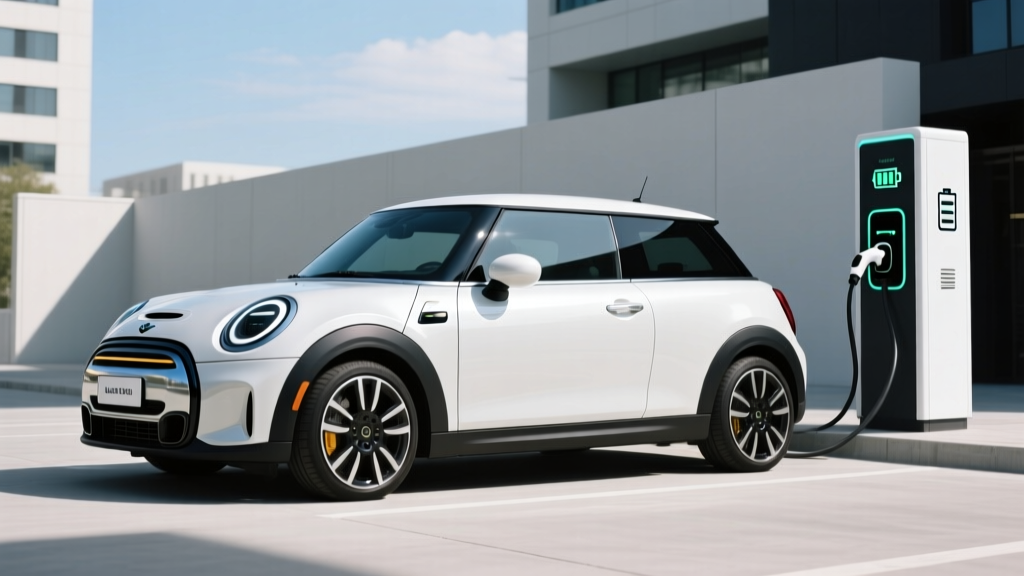
The 2024 Mini Cooper SE occupies a peculiar niche: a compact, premium electric city car that trades range for personality. If you've been searching for 2024 Mini Cooper SE length inches MSRP and related specs, you've likely discovered that this EV marches to a different drummer. With a wheelbase stretching just 98.2 inches and an overall length of 151.7 inches, it's one of the smallest new EVs sold in the U.S. — and its pricing, range, and charging profile reflect that urban-first philosophy.
This is the final model year of the first-generation electric Mini (based on the F56 hardtop platform). BMW has already announced a next-generation electric Mini on a dedicated EV architecture, but for now, the 2024 Cooper SE remains the only way to buy a new, fully electric Mini in the United States. Let's break down every number that matters.
Dimensions: 2024 Mini Cooper SE Length in Inches and Key Measurements
Compact packaging defines the Cooper SE. Here's the full dimensional breakdown:
| Measurement | Specification |
|---|---|
| Overall Length | 151.7 inches |
| Overall Width (without mirrors) | 68.0 inches |
| Overall Height | 56.5 inches |
| Wheelbase | 98.2 inches |
| Curb Weight | ~3,245 lbs |
| Front Headroom | 38.8 inches |
| Front Legroom | 41.4 inches |
| Rear Headroom | 36.5 inches |
| Rear Legroom | 29.4 inches |
| Cargo Volume (behind rear seats) | 8.7 cu ft |
| Cargo Volume (rear seats folded) | ~30 cu ft |
At 151.7 inches long, the Cooper SE is roughly 10 inches shorter than a Chevrolet Bolt EV and nearly 30 inches shorter than a Tesla Model Y. That makes it supremely easy to park in tight urban spaces — you'll fit in spots other EVs can't. The tradeoff is rear-seat usability: 29.4 inches of rear legroom is tight for adults on anything beyond short trips, and the 8.7 cu ft cargo area is essentially a couple of grocery bags or a small suitcase. This is a two-person car with occasional back-seat duty.
Range, Battery, and Real-World Efficiency
EPA Estimated Range: 114 miles
Real-World Expectation: ~90–100 miles at sustained highway speeds (65–75 mph); ~75–85 miles in cold weather (below 32°F) with cabin heating active. City driving with regenerative braking can push closer to the EPA sticker or slightly above.
The 2024 Mini Cooper SE carries a 32.6 kWh gross / 28.9 kWh usable lithium-ion battery pack using NMC (nickel manganese cobalt) cell chemistry. BMW sources cells from CATL, and the pack is mounted in a T-shape configuration beneath the floor and rear seats — a packaging compromise from adapting the ICE Mini platform to electric power.
The EPA rates the Cooper SE at 114 miles of combined range, with an efficiency rating of 110 MPGe combined (roughly 30 kWh/100 miles). That efficiency number is respectable for a small car, but the tiny battery simply can't store enough energy for long-distance work.
In real-world driving, expect the 114-mile EPA figure to hold only under moderate conditions — city and suburban routes at 35–55 mph, mild temperatures, and moderate climate-control usage. Sustained highway driving at 70+ mph drops range noticeably due to aerodynamic drag, and cold weather compounds the problem because the Cooper SE uses a resistance heater rather than a heat pump, drawing significant energy for cabin warmth. On a 30°F winter day with the heater running, plan for roughly 75–85 miles of usable range before needing to plug in.
Charging Speed: DC Fast Charging and Home Level 2
| Charging Level | Power / Rate | Time / Miles Added |
|---|---|---|
| Level 1 (120V household) | ~1.4 kW | ~3–4 miles per hour |
| Level 2 (240V, home/public) | 7.4 kW (single-phase) | ~24 miles per hour; 0–100% in ~4.5 hours |
| DC Fast Charge (CCS) | 50 kW peak | 10–80% in ~35 minutes |
The Cooper SE's charging profile reflects its older platform. The 50 kW peak DC fast-charge rate was competitive when the car launched but now trails most modern EVs, which typically accept 150–250+ kW. At 50 kW, a 10–80% session takes roughly 35 minutes — adequate for a quick top-up but not the kind of rapid turnaround that makes road-trip charging painless.
On a Level 2 home charger at 7.4 kW, the small battery fills relatively quickly. A full 0–100% charge takes about 4.5 hours, which means you can easily top off overnight on a standard 240V Level 2 installation. For urban owners with access to a garage or dedicated parking spot with a Level 2 outlet, daily charging is straightforward — plug in when you get home, wake up to a full battery every morning.
Level 1 trickle charging from a standard 120V outlet adds only 3–4 miles per hour. That's enough to recover from a short commute (~30 miles round-trip) overnight, but a full Level 1 charge would take over 20 hours. Level 1 is best treated as emergency backup.
The Cooper SE uses a CCS1 connector for DC fast charging and a J1772 connector for Level 2 AC charging. An adapter is available for Tesla Supercharger (NACS) access as more networks open up, though native CCS coverage from Electrify America, EVgo, and ChargePoint remains widespread in urban areas where this car lives.
Performance: 0–60, Horsepower, and Drivetrain
The electric Mini is surprisingly entertaining for a car its size. A single front-mounted electric motor produces 181 horsepower and 199 lb-ft of torque, driving the front wheels through a single-speed reduction gear. The instant torque delivery characteristic of electric motors gives the Cooper SE a punchy feel around town that its spec sheet understates.
Key performance figures:
- 0–60 mph: 6.9 seconds
- Horsepower: 181 hp
- Torque: 199 lb-ft
- Drivetrain: Front-wheel drive (FWD), single motor
- Top Speed: 93 mph (electronically limited)
The 6.9-second 0–60 time puts the Cooper SE in hot-hatch territory. The low center of gravity from the battery pack, combined with Mini's trademark go-kart-like steering, makes this one of the more engaging small EVs to drive on a winding road. Regenerative braking is adjustable through driving modes, though true one-pedal driving (coming to a full stop without touching the brake) isn't as aggressive as in some competitors.
The electronically limited 93 mph top speed is a deliberate efficiency choice. This is not a highway cruiser — it's a city car that can handle freeway merges competently but prefers urban environments.
Pricing, MSRP, Trim Levels, and Federal Tax Credit Eligibility
| Trim | Base MSRP | Destination | Total Starting Price |
|---|---|---|---|
| Cooper SE Signature | $30,900 | $995 | $31,895 |
| Cooper SE Iconic | $34,900 | $995 | $35,895 |
The 2024 Cooper SE comes in two trims: Signature (base) and Iconic (upgraded). The Signature trim includes an 8.8-inch touchscreen, wireless Apple CarPlay, heated front seats, and basic driver-assist features. The Iconic adds a head-up display, Harman Kardon premium audio, leather upholstery, a panoramic moonroof, and parking assist.
A well-equipped Iconic trim with optional paint, wheels, and packages can push the as-tested price into the $38,000–$40,000 range. At that price point, the Cooper SE faces stiff competition from larger, longer-range EVs.
Federal Tax Credit Eligibility (IRS §30D)
- MSRP Cap: ✅ Qualifies — MSRP is under the $55,000 sedan/hatchback cap
- Buyer Income Cap: ⚠️ AGI must be ≤ $150,000 (single) / $225,000 (head of household) / $300,000 (joint)
- Battery Sourcing: ⚠️ The Cooper SE's CATL-sourced battery cells may NOT meet critical-mineral and battery-component requirements for the full $7,500 credit. Consult the IRS clean vehicle list for current eligibility.
- Point-of-Sale Transfer: Available if eligible — credit can be transferred to the dealer at purchase to reduce the purchase price directly
- Assembly: ❌ Assembled in Oxford, UK — final assembly outside the U.S. may disqualify the vehicle from §30D entirely under current rules
Bottom Line: The Cooper SE's UK assembly is the critical issue. Under §30D, new EVs must undergo final assembly in North America to qualify for the federal credit. Since this Mini is built in the UK, it does not qualify for the $7,500 federal purchase credit. However, it may qualify for state or local incentives — check your state EV rebate programs. The DOE's Alternative Fuels Data Center maintains a state incentive database.
Technology, Safety, and Interior Features
The 2024 Cooper SE carries Mini's previous-generation infotainment system. The 8.8-inch circular touchscreen is visually distinctive — it mimics the classic Mini center gauge — and supports wireless Apple CarPlay. Android Auto is available via USB connection. Navigation, a digital instrument cluster, and ambient lighting round out the tech suite.
Driver-assistance features are basic compared to competitors:
- Forward collision warning with automatic emergency braking
- Lane departure warning
- Active cruise control (Iconic trim)
- Park distance control (front and rear sensors)
- Rear-view camera
Notably absent are modern SAE Level 2 features like lane-centering steering assist or blind-spot monitoring. The Cooper SE's safety tech is adequate for city driving but doesn't match the ADAS suites found in similarly priced competitors like the Hyundai Kona Electric or Nissan LEAF.
Interior materials are solid for the price point, with soft-touch surfaces and Mini's characteristic toggle-switch design language. The front seats are comfortable for long stints, but the rear bench is best suited for children or occasional use. The 8.7 cu ft cargo area behind the rear seats is the Cooper SE's most significant practicality limitation — even a week's worth of groceries for a family will require seat-folding.
Warranty Coverage
| Coverage | Term |
|---|---|
| Basic / Bumper-to-Bumper | 4 years / 50,000 miles |
| Powertrain | 4 years / 50,000 miles |
| High-Voltage Battery | 8 years / 100,000 miles (capacity retention below 70%) |
| Corrosion Perforation | 12 years / unlimited miles |
| Roadside Assistance | 4 years / unlimited miles |
BMW backs the Cooper SE's high-voltage battery for 8 years or 100,000 miles, warranting it against capacity loss below 70% of original capacity. This is industry-standard and matches the federal minimum for battery warranty coverage. NMC chemistry in this application has proven reasonably durable — early European-market Cooper SE owners report degradation in the low single digits after 50,000+ miles, though individual results vary based on charging habits and climate exposure.
Who Should Buy the 2024 Mini Cooper SE?
The Cooper SE is best suited for an urban commuter with reliable home or workplace Level 2 charging access, a round-trip commute under 60 miles, and a second vehicle (or transit access) for longer trips. It works well as a stylish, fun-to-drive second car for a household that doesn't need back-seat space or cargo room daily. If you value driving dynamics and distinctive design over range and practicality, this is one of the most engaging small EVs available.
Choose the Cooper SE if:
- Your daily driving is under 70 miles with access to Level 2 charging
- You want a premium, fun-to-drive city car with personality
- Tight parking is a daily reality
- You don't regularly carry rear passengers or large cargo
Look elsewhere if:
- You need 200+ miles of range for highway commuting or road trips
- You regularly carry adult rear-seat passengers
- You need meaningful cargo space
- Federal tax credit eligibility is a priority for your purchase economics
Competitive Comparison: Cooper SE vs. Alternatives
| Spec | Mini Cooper SE | Hyundai Kona Electric | Nissan LEAF S |
|---|---|---|---|
| EPA Range | 114 mi | 261 mi | 149 mi |
| Battery (usable kWh) | 28.9 kWh | 64.8 kWh | 40 kWh |
| DC Fast Charge (kW) | 50 kW | ~100 kW | 50 kW (CHAdeMO) |
| 0–60 mph | 6.9 sec | ~7.4 sec | ~7.9 sec |
| Length (inches) | 151.7 | 165.6 | 176.4 |
| Cargo (cu ft) | 8.7 | 25.8 | 23.6 |
| Base MSRP | $31,895 | ~$34,000 | ~$29,135 |
| Federal Credit (§30D) | ❌ (UK-built) | ✅ Eligible | ❌ (Japan-built) |
The Kona Electric is the most rational alternative — it offers more than double the range, substantially more cargo room, DC fast charging at roughly 100 kW, and federal tax credit eligibility, all for a few thousand dollars more. The LEAF is cheaper but uses the aging CHAdeMO connector and a passively cooled battery that degrades faster in hot climates.
Where the Cooper SE wins is driving dynamics, urban packaging, and brand cachet. No competitor in this price range matches its go-kart steering feel or its ability to squeeze into impossibly tight parking spots. If those qualities matter to you and range doesn't, the Mini earns its keep.
Pros and Cons
- Engaging, go-kart-like driving dynamics
- Extremely compact — easy to park anywhere
- Premium interior with distinctive Mini design
- Quick 6.9-second 0–60 mph time
- Fast home Level 2 charging (4.5 hours 0–100%)
- Low running costs for a city commuter
- 114-mile EPA range is limiting even for daily use
- 50 kW DC fast charging is slow by 2024 standards
- No federal §30D tax credit (UK assembly)
- Tiny 8.7 cu ft cargo area
- Cramped rear seats — not adult-friendly
- No heat pump — cold-weather range suffers
- Outdated infotainment vs. newer EVs
Frequently Asked Questions
What is the exact length of the 2024 Mini Cooper SE in inches?
The 2024 Mini Cooper SE measures 151.7 inches in overall length, 68.0 inches wide (excluding mirrors), and 56.5 inches tall. Its wheelbase is 98.2 inches. This makes it one of the shortest new EVs sold in the United States, ideal for tight urban parking.
What is the real-world range of the 2024 Mini Cooper SE?
The EPA rates the Cooper SE at 114 miles combined. In real-world driving, expect approximately 90–100 miles at highway speeds and as low as 75–85 miles in cold weather (below freezing) with the heater running. City driving with regenerative braking can yield range close to or slightly above the EPA estimate.
How fast does the 2024 Mini Cooper SE charge?
On a DC fast charger, the Cooper SE peaks at 50 kW, reaching 10–80% in approximately 35 minutes. On a home Level 2 charger (240V, 7.4 kW), a full charge takes about 4.5 hours. Level 1 (120V) adds roughly 3–4 miles per hour.
Does the 2024 Mini Cooper SE qualify for the $7,500 federal EV tax credit?
No. The Cooper SE is assembled in Oxford, United Kingdom, and the IRS §30D federal clean vehicle credit requires final assembly in North America. It does not qualify for the federal purchase credit. State and local incentives may still apply — check your jurisdiction's EV rebate programs.
What is the MSRP of the 2024 Mini Cooper SE?
The 2024 Cooper SE starts at $30,900 MSRP for the Signature trim ($31,895 with destination). The Iconic trim starts at $34,900 ($35,895 with destination). A fully optioned Iconic can reach $38,000–$40,000.
Is the 2024 Mini Cooper SE worth buying over competitors?
It depends on your priorities. If you value driving fun, compact urban packaging, and premium design over range and practicality, the Cooper SE is uniquely satisfying. However, if range, cargo space, or tax credit eligibility matter, the Hyundai Kona Electric or Chevrolet Bolt EV offer substantially more utility for similar or lower net cost. According to fueleconomy.gov, the Cooper SE's 114-mile range is the lowest of any current U.S.-market EV.
What battery chemistry does the 2024 Mini Cooper SE use?
The Cooper SE uses NMC (nickel manganese cobalt) lithium-ion cells supplied by CATL. The battery pack has a gross capacity of 32.6 kWh with 28.9 kWh usable, protected by an 8-year/100,000-mile warranty against degradation below 70% capacity.