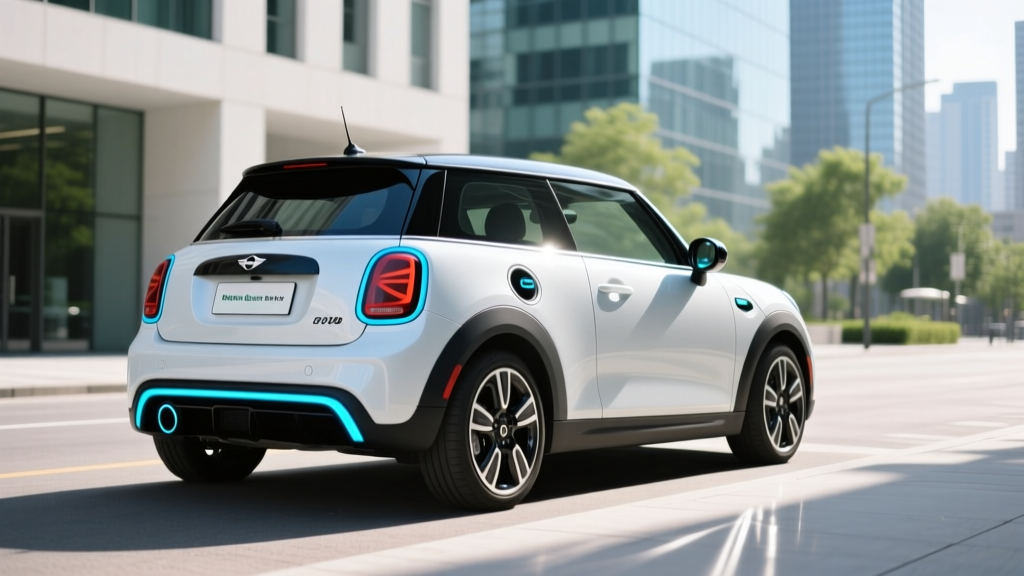
The 2024 Mini Electric Hardtop Cooper SE occupies a peculiar space in the American EV market: it is simultaneously one of the most affordable premium electric vehicles and one of the shortest-range. At just 151.4 inches in length, it's also among the smallest EVs you can buy. For urban dwellers who park on tight city streets, charge at home overnight, and rarely exceed 60 miles of daily driving, the Cooper SE's diminutive footprint and sub-$31,000 starting price make a compelling case. For anyone with a commute longer than 40 miles one way or who regularly faces sub-freezing winters, this EV's 114-mile EPA range will feel constraining.
This review covers the final 2024 model year of the F56-generation Cooper SE — the last year Mini sold the classic hardtop body style before transitioning to the new J01-generation electric Mini Cooper for 2025. If you're shopping the used or certified pre-owned market in 2026, or evaluating remaining new-old-stock inventory, the data below remains directly relevant.
2024 Mini Cooper SE: Full Specifications at a Glance
| Specification | Value |
|---|---|
| Base MSRP (Classic trim) | $30,900 |
| Signature trim MSRP | $34,100 |
| Iconic trim MSRP | $37,300 |
| Destination charge | $995 |
| EPA-estimated range | 114 miles |
| Usable battery capacity | 28.9 kWh (32.7 kWh gross) |
| Battery chemistry | NMC (Nickel Manganese Cobalt) |
| Motor output | 181 hp / 199 lb-ft torque |
| Drivetrain | Front-wheel drive (single motor) |
| 0–60 mph | 6.9 seconds |
| Top speed | 93 mph (electronically limited) |
| EPA efficiency | 110 MPGe combined (31 kWh/100 mi) |
| Max DC fast-charge rate | 50 kW (CCS) |
| DC 10–80% charge time | ~36 minutes |
| Level 2 charge rate | 7.4 kW |
| Level 2 full charge time (0–100%) | ~4.5 hours |
| Overall length | 151.4 inches |
| Wheelbase | 98.2 inches |
| Curb weight | 3,241 lbs |
| Cargo volume (rear seats up) | 8.7 cu ft |
| Cargo volume (rear seats folded) | 31.4 cu ft |
| Front legroom | 41.4 inches |
| Rear legroom | 29.9 inches |
| Battery/powertrain warranty | 8 years / 100,000 miles |
| Bumper-to-bumper warranty | 4 years / 50,000 miles |
| Federal tax credit (§30D) | Not eligible (battery sourcing) |
EPA Range vs. Real-World Range: What to Actually Expect
EPA sticker: 114 miles
Real-world city driving (mild weather): ~105–120 miles
Real-world highway (70 mph sustained): ~80–95 miles
Cold weather (below 32°F): ~70–90 miles
Worst case (highway + freezing temps): ~65–75 miles
The EPA rates the 2024 Cooper SE at 114 miles of combined range. That figure is derived from a mix of city and highway driving cycles and represents the best-case average. In practice, the 28.9 kWh usable battery capacity (drawn from a 32.7 kWh gross pack, with a ~3.8 kWh buffer to protect cell health) dictates your real-world ceiling.
During warm-weather city driving with frequent regenerative braking opportunities, owners regularly report achieving or slightly exceeding the EPA figure. The Cooper SE's strong regen — adjustable through driving modes — recovers meaningful energy in stop-and-go traffic. Efficiency in these conditions typically hovers around 28–30 kWh/100 miles, translating to 110–120 miles from a full charge.
Highway driving is where the range penalty hits hardest. The Cooper SE's upright, boxy hatchback shape creates substantial aerodynamic drag at speed. At 70 mph on the interstate, expect efficiency to drop to 33–35 kWh/100 miles, yielding only 80–95 miles before the battery is depleted. This is a critical planning consideration if your one-way commute exceeds 40 miles at highway speeds.
Cold weather compounds the problem. The Cooper SE uses a resistive heating system rather than a heat pump — a notable omission that means cabin warmth draws directly and heavily from the traction battery. In sustained sub-freezing conditions, range loss of 25–40% is well documented by Mini owners and independent testers. If you live in the upper Midwest or Northeast and lack access to a garage or preconditioning, winter range may dip below 75 miles on some days.
Charging Speeds: DC Fast Charge, Level 2, and Level 1
| Charging Level | Power | Time (0–100%) | Miles Added per Hour |
|---|---|---|---|
| Level 1 (120V household) | 1.4 kW | ~24 hours | ~4–5 mi/hr |
| Level 2 (240V, 32A) | 7.4 kW | ~4.5 hours | ~25 mi/hr |
| DC Fast Charge (CCS) | 50 kW peak | ~36 min (10–80%) | N/A (session-based) |
The Cooper SE charges via a CCS1 connector for DC fast charging and a J1772 inlet for Level 1 and Level 2 AC charging. The vehicle's onboard charger is rated at 7.4 kW, which is competitive for its class — it means a full Level 2 charge from empty to 100% takes approximately 4.5 hours on a standard 32-amp home charger.
DC fast charging is the Cooper SE's most significant limitation. The car is capped at 50 kW peak — a figure that was acceptable when the vehicle launched in 2020 but feels dated by 2024 standards. For context, most modern EVs in this price range accept 100–150 kW, and some accept 250+ kW. At 50 kW, the Cooper SE takes roughly 36 minutes to go from 10% to 80% State of Charge. The charging curve is relatively flat between 10% and 50% (sustaining close to 50 kW), then tapers progressively above 70% SoC, dropping to roughly 20–25 kW in the final stretch to 80%.
The practical implication: the Cooper SE is not a road-trip car. A 36-minute stop to recover roughly 70 miles of range is tolerable for occasional longer journeys but becomes tedious on drives exceeding 200 miles. This EV is optimized for overnight home charging, and that's where most owners will do 95% of their charging.
On Level 1 (a standard 120V household outlet), expect to recover roughly 4–5 miles of range per hour. If you drive 30 miles per day and plug in each evening, Level 1 alone can keep the car topped up — though it will take 6–8 hours to replenish a typical day's use. Level 2 installation at home is strongly recommended for any Cooper SE owner; see our DOE EV technology guide for charging fundamentals.
Performance and Driving Dynamics
The 2024 Cooper SE uses a single front-mounted electric motor producing 181 horsepower and 199 lb-ft of torque, driving the front wheels. The 0–60 mph sprint takes 6.9 seconds — brisk enough for confident highway merging and city-to-suburb transitions. Instant electric torque makes the car feel quicker than the stopwatch suggests in the 0–30 mph range, which is where urban driving predominantly operates.
The Cooper SE's low center of gravity (battery pack mounted under the floor) and near 50/50 weight distribution give it the go-kart handling character that Mini has built its brand around. Steering is direct and communicative by electric-vehicle standards, and the car's short 98.2-inch wheelbase makes it exceptionally agile in tight parking situations. At 3,241 lbs, it's also lighter than most EVs — a 2024 Tesla Model Y weighs over 4,000 lbs — which contributes to its engaging dynamics and lower tire wear.
The trade-off for front-wheel drive is torque steer under hard acceleration and traction limitations in snow or rain compared to AWD alternatives. The Cooper SE does not offer an all-wheel-drive variant. For most paved-road commuting in fair weather, the FWD layout is perfectly adequate. In snowy climates, a set of dedicated winter tires is strongly recommended.
Top speed is electronically limited to 93 mph. This is an intentional efficiency decision — higher speeds would drain the small battery even faster. For US highway driving at 70–80 mph, the limiter is not a practical concern.
Interior, Cargo Space, and Technology
The 2024 Cooper SE retains the F56-generation interior, which means a traditional Mini cockpit with a circular central infotainment display (8.8 inches), analog-look digital instrument cluster, and physical toggle switches for climate and driving modes. Apple CarPlay and Android Auto are standard. The infotainment system includes navigation with EV-specific route planning that accounts for remaining range and charging stations.
Interior quality is a genuine strong point. Soft-touch materials, optional leather upholstery, and Mini's signature design flourishes (ambient lighting, Union Jack taillights, toggle-switch gear selector) give the cabin a premium feel that outpunches its price class. Build quality is solid, consistent with BMW Group manufacturing standards.
Space is where the Cooper SE's compact dimensions impose real compromises:
- Front legroom: 41.4 inches — adequate for most adults, even tall drivers
- Rear legroom: 29.9 inches — tight; best suited for children or occasional short-trip adult passengers
- Cargo (rear seats up): 8.7 cubic feet — enough for a couple of grocery bags or a small carry-on suitcase
- Cargo (rear seats folded): 31.4 cubic feet — more practical for larger items, but the load floor is not flat due to the rear-mounted charging electronics
The Cooper SE does not have a front trunk (frunk). The space under the hood is occupied by the electric motor and power electronics. There is no towing capacity — the Cooper SE is not rated for towing.
Driver-assistance features include forward collision warning with automatic emergency braking, lane departure warning, and adaptive cruise control (on Signature and Iconic trims). These are SAE Level 1–2 assists and require full driver engagement at all times. The Cooper SE does not offer any hands-free or "self-driving" capability.
Pricing, Trims, and Federal Tax Credit Eligibility
| Trim | Base MSRP | With Destination | Key Features |
|---|---|---|---|
| Classic (2-Door Hardtop) | $30,900 | $31,895 | 16" wheels, LED headlights, 8.8" display, CarPlay/Android Auto, heated seats |
| Signature | $34,100 | $35,095 | Adds panoramic sunroof, adaptive cruise, navigation, premium audio, 17" wheels |
| Iconic | $37,300 | $38,295 | Adds Harman Kardon audio, head-up display, parking assist, leather, heated steering wheel |
The 2024 Mini Cooper SE starts at $30,900 for the Classic trim, making it one of the most affordable premium-brand EVs on the market. A well-equipped Iconic trim approaches $38,000 with destination — still competitive but entering territory where longer-range alternatives become available.
The absence of the federal credit is a meaningful financial consideration. A competitor like the 2024 Chevrolet Bolt EV (base MSRP $26,500, eligible for the full $7,500 credit) can effectively cost under $20,000 after incentives, substantially undercutting the Cooper SE on price while offering nearly double the range. However, the Mini offers premium branding, superior interior materials, and driving dynamics the Bolt cannot match.
Battery Longevity, Degradation, and Warranty Coverage
The Cooper SE's 32.7 kWh gross (28.9 kWh usable) battery pack uses NMC (Nickel Manganese Cobalt) lithium-ion cells supplied by CATL. NMC chemistry offers a good balance of energy density and cycle life, though it is more sensitive to sustained high states of charge and extreme temperatures than LFP (Lithium Iron Phosphate) chemistry.
Mini provides an 8-year / 100,000-mile battery warranty that guarantees the pack will retain at least 70% of its original capacity during the coverage period. If the battery degrades below 70% State of Health within those parameters, Mini will repair or replace it. This warranty aligns with the federal minimum for EV battery coverage.
Real-world degradation data from early-adopter Cooper SE owners (2020–2022 models) suggests typical capacity loss of 5–10% over the first three years / 40,000–60,000 miles when following best practices — keeping SoC between 20% and 80% for daily use, avoiding repeated DC fast charging, and using preconditioning when possible. This translates to a realistic loss of 6–12 miles of range over that period. For a car with only 114 miles to begin with, even modest degradation is noticeable.
Best-practice battery care for the Cooper SE:
- Set the charge limit to 80–90% for daily driving; charge to 100% only before longer trips
- Use Level 2 home charging as your primary method; minimize DC fast charging to road trips
- Enable battery preconditioning before DC fast charging sessions (available via navigation route planning)
- In hot climates, park in shade or a garage when possible — sustained heat accelerates NMC degradation
- In cold climates, plug in and precondition before driving to reduce the battery's cold-stress exposure
How the Cooper SE Stacks Up Against Key Competitors
| Spec | Mini Cooper SE | Chevy Bolt EV | Nissan LEAF S | Hyundai Kona Electric |
|---|---|---|---|---|
| Base MSRP | $30,900 | $26,500 | $28,140 | $32,675 |
| EPA Range | 114 mi | 259 mi | 149 mi | 261 mi |
| Battery (usable) | 28.9 kWh | 65 kWh | 40 kWh | 64 kWh |
| DC Fast Charge | 50 kW | 55 kW | 50 kW (CHAdeMO) | 100 kW |
| 0–60 mph | 6.9 sec | 6.5 sec | 7.4 sec | 6.5 sec |
| Length | 151.4 in | 164.0 in | 176.4 in | 164.6 in |
| Cargo (seats up) | 8.7 cu ft | 16.6 cu ft | 23.6 cu ft | 25.8 cu ft |
| Federal Credit | No | Yes ($7,500) | Yes ($3,750–$7,500) | Yes ($7,500) |
The Cooper SE loses decisively on range and cargo space to every competitor listed. The Chevrolet Bolt EV offers more than double the range at a lower price, and with the $7,500 federal credit, the Bolt's effective price drops to under $20,000. The Hyundai Kona Electric provides 261 miles of range and faster 100 kW DC charging. The Nissan LEAF, while also limited in range, offers a significantly larger cabin and cargo area.
Where the Mini wins is driving engagement, interior quality, parking ease (151.4 inches makes it the shortest EV on the US market), and brand cachet. If your criteria center on fun-to-drive character, premium feel, and city-friendly dimensions rather than maximum range and cargo utility, the Cooper SE has no direct rival.
Pros, Cons, and Who Should Buy the 2024 Cooper SE
- Engaging, go-kart handling with instant electric torque
- Shortest EV on the US market (151.4 in) — ideal for tight city parking
- Premium interior materials and build quality
- Low starting MSRP for a premium brand ($30,900)
- Strong regenerative braking for one-pedal city driving
- Proven BMW Group powertrain reliability
- 8-year / 100,000-mile battery warranty
- 114-mile EPA range — shortest of any current EV
- 50 kW DC fast charging is slow by 2024 standards
- No federal §30D tax credit eligibility
- Tight rear seat (29.9 in legroom) and small cargo area (8.7 cu ft)
- No heat pump — significant cold-weather range loss
- No frunk, no towing capability
- FWD only — no AWD option for snow-belt climates
- Urban commuters with round-trip daily drives under 60 miles and access to home Level 2 charging
- Second-car households that have a longer-range vehicle for road trips and need an efficient, fun city runabout
- Parking-challenged city dwellers who need the smallest possible vehicle footprint
- Driving enthusiasts who prioritize handling feel over range and utility
- Single-car households needing 200+ mile range flexibility
- Families needing regular rear-seat passenger space or cargo capacity
- Drivers in extreme cold climates without garage parking
- Anyone planning regular road trips of 150+ miles
Frequently Asked Questions
What is the real-world range of the 2024 Mini Cooper SE?
The EPA rates it at 114 miles combined. In real-world city driving during mild weather, expect 105–120 miles. Highway driving at 70 mph reduces that to 80–95 miles. In freezing temperatures with cabin heating, range can drop to 70–90 miles. The car lacks a heat pump, so cold-weather losses are more severe than in EVs equipped with one.
How fast does the Cooper SE charge?
On a DC fast charger, the Cooper SE peaks at 50 kW and takes approximately 36 minutes to charge from 10% to 80%. On a Level 2 home charger (240V, 7.4 kW), a full charge takes about 4.5 hours. On a standard 120V household outlet, expect roughly 24 hours for a full charge — adequate for overnight top-ups if your daily driving is under 30 miles.
Does the 2024 Mini Cooper SE qualify for the federal EV tax credit?
No. Under current IRS §30D regulations, the Cooper SE does not meet the battery component and critical minerals sourcing requirements. The battery cells are sourced from outside the US supply chain that qualifies under the 2024 rules. State and local incentives may still apply — check your state's energy or environmental agency for details.
Is the 2024 Cooper SE worth buying versus a Chevy Bolt or Kona Electric?
It depends entirely on your priorities. If maximum range, cargo space, and value are your top criteria, the Chevrolet Bolt EV (259 miles, $26,500 MSRP, eligible for $7,500 federal credit) is the more rational purchase. If you want a premium-feeling, engaging-to-drive city car with the smallest possible footprint for tight urban parking, the Cooper SE has no equivalent. Cross-shopping the Mini against the Hyundai Kona Electric (261 miles, 100 kW DC charging) reveals the Mini's range and charging disadvantages but also its handling and interior-quality advantages.
How long is the 2024 Mini Electric Hardtop Cooper SE?
The 2024 Cooper SE Hardtop 2-Door measures 151.4 inches in overall length, making it one of the shortest vehicles — electric or otherwise — sold in the United States. The wheelbase is 98.2 inches, and the car is 68.0 inches wide (excluding mirrors). These compact dimensions translate directly to easy parallel parking and tight-garage maneuverability.
What is the battery warranty on the Cooper SE?
Mini covers the high-voltage battery and electric powertrain for 8 years or 100,000 miles, whichever comes first. The warranty guarantees the battery will retain at least 70% of its original capacity during the coverage period. The bumper-to-bumper warranty is 4 years / 50,000 miles, and complimentary scheduled maintenance is included for 3 years / 36,000 miles.
Can I use the Cooper SE for road trips?
Technically yes, but it requires significant planning and patience. With 114 miles of range (less on the highway) and 50 kW DC fast charging, a 300-mile trip will require at least three charging stops of 35–40 minutes each. The Cooper SE is best understood as a city and suburban commuter that can handle an occasional longer trip, not a primary road-trip vehicle.