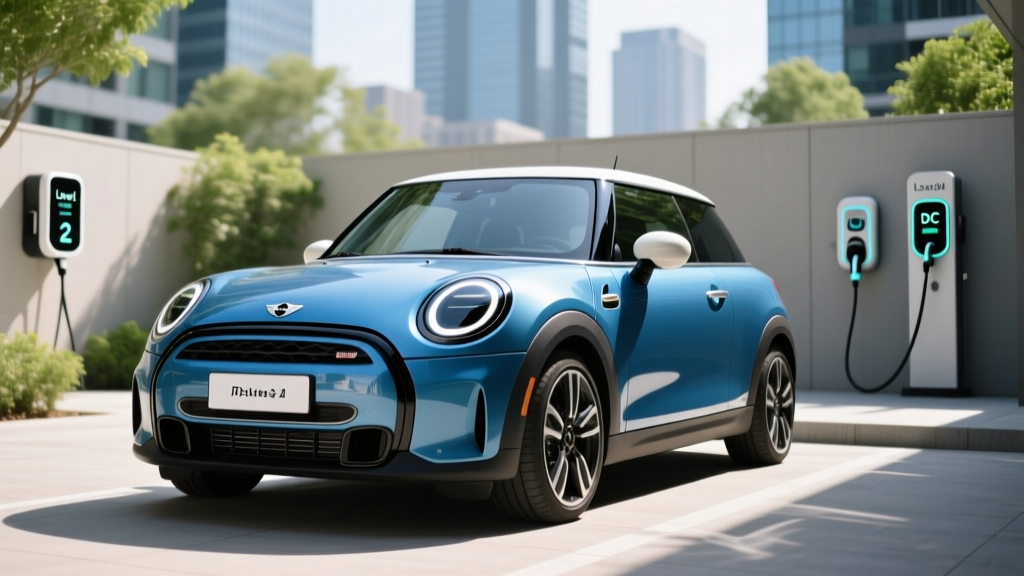
The 2024 Mini Cooper SE 2-Door occupies a specific niche in the EV market: an affordable, stylish city commuter with legendary go-kart handling and a deliberately compact battery. If you are searching for the 2024 Mini Cooper SE 2-Door MSRP and whether this electric hot hatch makes financial and practical sense, this review covers every number that matters — from real-world range to federal tax credit eligibility under current IRS §30D rules.
Mini discontinued the Cooper SE after the 2024 model year to make way for the next-generation electric Mini lineup built on a new platform. That means the 2024 model is the final iteration of the first-generation EV Mini, and understanding its exact specifications is critical whether you are buying new remaining inventory or evaluating a certified pre-owned example.
2024 Mini Cooper SE 2-Door MSRP and Pricing by Trim
The 2024 Mini Cooper SE was offered in two primary trims for the US market. Here is the exact pricing breakdown before destination charges, incentives, or dealer adjustments:
| Trim | Base MSRP | With Destination ($995) | Typical As-Tested |
|---|---|---|---|
| Signature | $30,900 | $31,895 | $33,500–$35,000 |
| Iconic | $34,900 | $35,895 | $38,000–$41,000 |
The Iconic trim adds premium features including a panoramic sunroof, Harman Kardon audio, head-up display, and enhanced leather upholstery. Options packages (like the Premium Package) and standalone additions can push the as-tested price well above $40,000 on the Iconic trim.
Federal Tax Credit Eligibility (§30D)
The 2024 Mini Cooper SE qualifies for the IRS §30D federal EV tax credit, but eligibility depends on several factors:
- MSRP cap: The vehicle must have an MSRP at or below $55,000 (sedans/hatchbacks). All Cooper SE trims clear this threshold comfortably.
- Buyer income cap: Modified adjusted gross income must not exceed $150,000 (single), $225,000 (head of household), or $300,000 (joint filers).
- Battery sourcing: The Cooper SE's battery is assembled using components that must meet critical minerals and battery component requirements that tightened in 2024. Verify current eligibility on fueleconomy.gov before purchase, as sourcing rules change.
- Point-of-sale transfer: As of 2024, buyers can transfer the credit to the dealer for an upfront price reduction rather than claiming it at tax time.
If you meet all requirements, the maximum credit is $7,500 — bringing the effective Signature trim price to approximately $23,400 after the credit. Always confirm eligibility with a tax professional, as battery component sourcing requirements have disqualified some previously eligible vehicles mid-year.
Range, Battery, and Efficiency
The Cooper SE uses a compact battery by modern standards, prioritizing urban agility over long-distance capability. Here are the exact figures:
| Specification | Value |
|---|---|
| Battery Capacity (Gross) | 32.6 kWh |
| Battery Capacity (Usable) | 28.9 kWh |
| Battery Chemistry | NMC (Nickel Manganese Cobalt) |
| EPA Estimated Range | 114 miles |
| EPA Combined Efficiency | 110 MPGe |
| Energy Consumption | 31 kWh/100 miles |
| Drivetrain | Front-Wheel Drive (FWD) |
| Motor Output | 181 hp / 199 lb-ft torque |
| 0–60 mph | 6.5 seconds |
| Top Speed | 93 mph (electronically limited) |
The 3.7 kWh buffer (gross vs. usable) protects the battery from deep discharge and overcharge, which helps long-term State of Health (SoH). The NMC chemistry provides good energy density for the pack's physical size, though it trades some cycle-life longevity compared to LFP alternatives.
Charging Speed: DC Fast Charge and Home Level 2
Charging is where the Cooper SE's compact battery is both an advantage (quick to fill) and a limitation (lower peak charge rate). Here are the precise charging specifications:
| Charging Level | Power | Time / Rate | Connector |
|---|---|---|---|
| Level 1 (120V household) | ~1.4 kW | ~2.5 miles per hour / ~20 hrs (0–100%) | J1772 |
| Level 2 (240V home/public) | 7.4 kW | ~4.5 hours (0–100%) / ~25 mi/hr | J1772 |
| DC Fast Charge | 50 kW peak | 10–80% in ~36 minutes | CCS1 |
The 50 kW DC fast-charge peak is modest by 2024 standards (many competitors hit 150–250 kW), but the small 28.9 kWh usable battery means you are only adding about 23 kWh in a 10–80% session. The charge curve holds near peak through roughly 60% SoC before tapering — a typical NMC behavior.
For daily use, most owners will charge at home on Level 2. A 7.4 kW home charger replenishes the battery fully overnight in about 4.5 hours. If you install a dedicated Level 2 circuit (typically a 40-amp circuit for a 32-amp charger), expect installation costs of $500–$1,500 depending on your electrical panel's proximity to the garage and whether a panel upgrade is needed.
Preconditioning tip: The Cooper SE does not offer active battery preconditioning for DC fast charging. In cold weather, arrive at a fast charger with the battery already warmed from driving — or accept slower initial charge rates until the pack reaches optimal temperature.
Interior, Cargo, and Practicality
The Cooper SE shares its dimensions with the gas-powered Mini Hardtop 2-Door. Interior space is snug but well-finished, with premium materials throughout.
| Dimension | Measurement |
|---|---|
| Front Legroom | 41.4 inches |
| Rear Legroom | 30.9 inches |
| Front Headroom | 38.8 inches |
| Cargo Volume (rear seats up) | 8.7 cu ft |
| Cargo Volume (rear seats folded) | 25.8 cu ft |
| Seating Capacity | 4 passengers |
| Curb Weight | ~3,225 lbs |
The 8.7 cubic feet of cargo space behind the rear seats is tight — enough for groceries or a couple of carry-on bags. Folding the rear seats expands utility significantly, but the rear seat itself is best suited for children or occasional adult passengers on short trips. There is no frunk (front trunk); the electric motor occupies the space where the gas engine sat.
The battery sits low in the chassis floor, which preserves interior cabin height and contributes to the car's excellent center of gravity and handling dynamics. Ground clearance is unchanged from the gas model.
Technology, Safety, and Driver Assists
The 2024 Cooper SE features Mini's 8.8-inch circular touchscreen infotainment display — a signature design element. Wireless Apple CarPlay is standard; Android Auto requires a USB connection. The Iconic trim adds navigation, a 12-speaker Harman Kardon system, and a head-up display.
Driver-assistance features include:
- Active Driving Assistant (forward collision warning, automatic emergency braking, lane departure warning)
- Park Distance Control (front and rear parking sensors)
- Rear-view camera (standard on all trims)
- Adaptive cruise control (available on Iconic trim)
Notable tech omissions include the absence of a heat pump (the Cooper SE uses a resistive PTC heater, which draws more battery energy in cold weather) and no over-the-air update capability for powertrain or battery management software.
Warranty and Battery Longevity
Mini provides the following warranty coverage for the 2024 Cooper SE:
| Coverage | Term |
|---|---|
| Limited Vehicle Warranty | 4 years / 50,000 miles |
| Powertrain Warranty | 4 years / 50,000 miles |
| High-Voltage Battery Warranty | 8 years / 100,000 miles (retains ≥70% capacity) |
| Corrosion Warranty | 12 years / unlimited miles |
| Roadside Assistance | 4 years / unlimited miles |
The 8-year/100,000-mile battery warranty guarantees the pack will retain at least 70% of its original capacity. If degradation falls below that threshold within the warranty period, Mini will repair or replace the battery at no cost. Based on data from earlier Cooper SE model years (2020–2023), real-world degradation has been modest — most owners report 93–97% State of Health after 2–3 years of typical use, well within warranty tolerance.
Out-of-warranty battery replacement costs are estimated at $8,000–$12,000 (parts and labor), though this figure is rarely needed given the pack's robust thermal management and conservative usable buffer.
Who Should Buy the 2024 Mini Cooper SE?
Choose the 2024 Mini Cooper SE if:
- Your daily commute is under 60 miles round-trip
- You have reliable home Level 2 charging access
- You value driving dynamics and style over maximum range
- You want an EV under $35,000 before incentives
- You live in a mild-to-moderate climate (or accept cold-weather range loss)
- You rarely need rear-seat passenger space or large cargo capacity
Look elsewhere if:
- You regularly drive more than 100 miles between charges
- You need a family vehicle with generous rear-seat room
- You frequently take road trips requiring DC fast charging
- You live in a very cold climate and need consistent 150+ mile range year-round
The Cooper SE excels as a second car, a dedicated commuter, or an urban runabout for singles and couples. Its combination of low running costs (approximately $0.10–$0.14 per mile on residential electricity vs. $0.15–$0.20 per mile for a comparable gas Mini), engaging handling, and compact footprint make it ideal for city dwellers with home charging.
Pros, Cons, and Competitive Verdict
Pros
- Low starting MSRP ($30,900) — one of the most affordable new EVs
- Engaging, go-kart handling with instant electric torque
- Premium interior materials and iconic Mini design
- Quick 0–60 in 6.5 seconds for a sub-$35K EV
- Compact size ideal for tight urban parking
- Federal tax credit eligible (up to $7,500, income/sourcing permitting)
- Low operating and maintenance costs
Cons
- 114-mile EPA range is among the lowest of any current EV
- 50 kW DC fast charging is slow by modern standards
- No battery preconditioning for cold-weather fast charging
- Tight rear seats and limited cargo space (8.7 cu ft)
- Resistive heater (no heat pump) reduces cold-weather efficiency
- No frunk for additional storage
- Discontinued after 2024 — limited new inventory
Key Competitor Comparison
Against the Nissan Leaf S (EPA 149 miles, ~$28,140 MSRP, CHAdeMO connector), the Cooper SE trades range for driving dynamics and build quality. The Chevrolet Bolt EV (discontinued after 2023, EPA 259 miles) offered far more range at a similar price point but lacked the Mini's premium feel. The Hyundai Kona Electric (EPA 261 miles, ~$32,975) is the most direct competitor on price and delivers more than double the range — making it the practical choice for buyers who need versatility beyond city commuting.
The Cooper SE wins on driving enjoyment, interior refinement, and brand cachet. It loses on range, charging speed, and practicality. Your decision hinges on whether 114 miles covers your needs with margin.
Frequently Asked Questions
What is the real-world range of the 2024 Mini Cooper SE?
Expect 95–110 miles on the highway, 110–125 miles in city driving, and 80–95 miles in cold weather below 30°F. The EPA estimate is 114 miles combined.
How fast does the 2024 Mini Cooper SE charge?
On a DC fast charger, it peaks at 50 kW and charges from 10–80% in approximately 36 minutes. At home on a Level 2 (240V, 7.4 kW) charger, a full charge takes about 4.5 hours.
How much does the 2024 Mini Cooper SE cost after the federal tax credit?
The Signature trim starts at $30,900 MSRP. With the full $7,500 §30D credit (subject to income caps, MSRP limits, and battery sourcing rules), the effective price drops to approximately $23,400 before destination and options.
Does the 2024 Mini Cooper SE qualify for the federal EV tax credit?
It can qualify for up to $7,500 under IRS §30D, provided the buyer meets income limits ($150K single / $300K joint), the vehicle MSRP is under $55,000, and battery sourcing requirements are met. Check fueleconomy.gov for the latest eligibility status before purchasing.
Is the 2024 Mini Cooper SE worth buying vs. competitors?
It is worth buying if you prioritize driving fun, premium build quality, and a low purchase price over maximum range. For buyers needing 200+ miles of range or frequent road-trip capability, the Hyundai Kona Electric or a used Chevrolet Bolt EV offers more practicality at a similar price.
What happens if the battery degrades?
Mini's battery warranty covers 8 years / 100,000 miles with a 70% capacity retention guarantee. Real-world data from 2020–2023 Cooper SE owners shows modest degradation of 3–7% over 2–3 years. Out-of-warranty replacement is estimated at $8,000–$12,000.
Can I still buy a new 2024 Mini Cooper SE?
Mini discontinued the first-generation Cooper SE after the 2024 model year. Remaining new inventory may be available at select dealers, but availability is limited. The next-generation electric Mini is built on an entirely new platform with different specifications.