Quick Verdict: The Benchmark Luxury EV Sedan, With Caveats
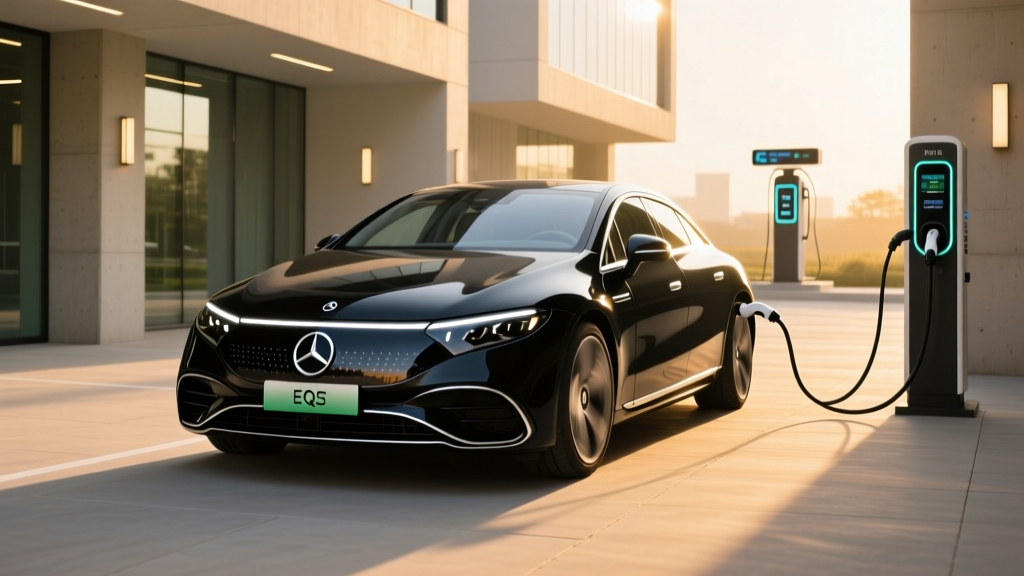
The 2024 Mercedes-Benz EQS remains the most range-rich luxury electric sedan on the market, wrapping a massive 108.4 kWh usable battery in a body that prioritizes aerodynamic efficiency over traditional sedan proportions. If you need a quiet, tech-laden executive cruiser that can handle 300+ mile road trips without range stress, the EQS 450+ delivers. But at a starting MSRP above $104,000 — and with zero federal tax credit eligibility — this is a purchase driven by luxury preference, not value optimization.
For the 2024 model year, Mercedes streamlined the EQS lineup and added mild equipment upgrades, but the core formula is unchanged: a low-slung, teardrop-shaped sedan with class-leading efficiency, excellent DC fast-charging capability, and an interior that sets the standard for EV luxury. Below, we break down the exact numbers that matter for real buyers.
Range, Battery & Real-World Efficiency
The 2024 EQS comes in two battery configurations. The rear-wheel-drive EQS 450+ uses a 108.4 kWh (usable) lithium-ion NMC (nickel manganese cobalt) pack, while the all-wheel-drive EQS 450 4MATIC and EQS 580 4MATIC share the same pack with dual-motor drivetrains that trade some range for traction and power.
| Trim | Drivetrain | EPA Range | MPGe (City/Hwy/Combined) | kWh/100 mi |
|---|---|---|---|---|
| EQS 450+ | RWD | 352 miles | 98 / 95 / 97 | 34 |
| EQS 450 4MATIC | AWD | 340 miles | 94 / 91 / 93 | 36 |
| EQS 580 4MATIC | AWD | 330 miles | 92 / 89 / 91 | 37 |
Data sourced from fueleconomy.gov.
The EQS 450+ EPA estimate of 352 miles is one of the highest of any production EV sold in the US. In real-world highway driving at 70-75 mph, expect approximately 290-310 miles before needing to charge. In cold weather (below 32°F), range drops an additional 15-25%, putting realistic winter highway range in the 240-270 mile band. City driving with regenerative braking can match or slightly exceed the EPA sticker. The EQS's exceptional 0.20 drag coefficient helps highway efficiency, but the sheer 5,600-lb curb weight works against it in stop-and-go traffic.
Charging Speed: DC Fast, Level 2 & Home Setup
The EQS supports a peak DC fast-charge rate of 200 kW via its CCS1 connector. On a 350 kW Electrify America or similar station, the EQS can add roughly 186 miles of range in 15 minutes, with a 10-80% charge taking approximately 31 minutes under optimal battery temperature conditions.
| Charge Level | Power (kW) | Time (10-80%) | Miles of Range Added per Hour |
|---|---|---|---|
| Level 1 (120V household) | 1.4 kW | N/A (not practical) | ~4 mi/hr |
| Level 2 (240V, 48A home charger) | 11.5 kW | ~10.5 hours (0-100%) | ~33 mi/hr |
| DC Fast Charge | 200 kW peak | ~31 min (10-80%) | ~370 mi/hr (peak) |
Charging curve reality: The 200 kW peak is sustained only between roughly 10-30% State of Charge (SoC). The rate tapers to ~150 kW by 50% SoC, then drops progressively to ~50 kW above 80%. This is standard NMC battery management to preserve longevity. The EQS's thermal management system includes battery preconditioning — when you navigate to a DC fast charger in the MBUX system, the car warms or cools the pack to optimize charge acceptance before you arrive. Always use preconditioning in cold weather; skipping it can add 10-15 minutes to your charge session.
For home Level 2 charging, Mercedes offers the Wallbox home charger rated at 11.5 kW (48 amps on a 60-amp circuit). At this rate, a full 0-100% charge takes roughly 10.5 hours — overnight charging is more than sufficient for daily driving needs. A licensed electrician will typically charge $800-$2,000 for a Level 2 installation depending on panel proximity and local permit requirements. Homes with older 100-amp electrical panels may need a $1,500-$3,000 panel upgrade to support a dedicated 60-amp EV circuit.
Performance & Drivetrain
| Trim | Horsepower | Torque (lb-ft) | 0-60 mph | Drivetrain | Top Speed |
|---|---|---|---|---|---|
| EQS 450+ | 355 hp | 419 | 5.9 sec | RWD (single motor) | 130 mph |
| EQS 450 4MATIC | 355 hp | 590 | 5.3 sec | AWD (dual motor) | 130 mph |
| EQS 580 4MATIC | 536 hp | 633 | 4.1 sec | AWD (dual motor) | 130 mph |
The EQS 450+ is the efficiency play — its single rear motor delivers smooth, linear acceleration that feels effortless in daily driving without the urgency of a sports sedan. The 450 4MATIC adds front-axle traction (useful in snow and rain) with a modest 0.6-second improvement to 60 mph. The 580 4MATIC transforms the character entirely: 536 hp and a 4.1-second 0-60 time make this a genuine performance sedan, though you sacrifice 22 miles of EPA range for the privilege.
All trims feature adaptive air suspension with adjustable ride height, rear-axle steering (up to 10 degrees, reducing the turning circle to a compact-car-like 35.8 feet), and Mercedes' excellent regenerative braking system with steering-wheel paddle selectors for three regen levels plus a coasting mode.
Interior, Cargo & Technology
The EQS cabin is dominated by the available MBUX Hyperscreen — a 56-inch curved glass panel spanning the entire dashboard, combining a 12.3-inch instrument cluster, 17.7-inch central OLED touchscreen, and 12.3-inch front passenger display. The system runs Mercedes' latest MBUX software with wireless Apple CarPlay/Android Auto, over-the-air updates, and a fingerprint reader for driver profiles. Standard equipment on all trims includes a 12.3-inch instrument cluster and 12.8-inch central touchscreen if you opt out of the Hyperscreen.
Passenger space: The EQS offers 41.7 inches of front legroom and 42.1 inches of rear legroom — limousine-class space that exceeds the BMW 7 Series and Audi A8. Headroom is adequate at 39.8 inches front and 38.1 inches rear, though the sloping roofline limits taller passengers.
Cargo: The hatchback-style liftback trunk provides 22.0 cubic feet behind the rear seats and 63.0 cubic feet with seats folded. There is no front trunk (frunk) — the space under the hood houses HVAC and power electronics, a common trade-off in EVs built on platforms shared with ICE architectures.
Driver assistance: The EQS comes standard with Mercedes' Driver Assistance Package including adaptive cruise control with stop-and-go, active lane-keeping, lane-change assist, and evasive steering assist. The optional Driver Assist Plus package adds Active Distance Assist with route-based speed adaptation. This is an SAE Level 2 system — the driver must remain fully engaged with hands on the wheel at all times. Mercedes has not yet enabled its Level 3 Drive Pilot system in the United States; it is currently approved only in limited German Autobahn zones.
Pricing, Trims & Tax Credit Eligibility
| Trim | Base MSRP | Typical As-Tested Price |
|---|---|---|
| EQS 450+ Sedan | $104,400 | $110,000 - $118,000 |
| EQS 450 4MATIC Sedan | $107,400 | $113,000 - $121,000 |
| EQS 580 4MATIC Sedan | $127,350 | $135,000 - $148,000 |
Destination charge adds $1,150. Common option packages include the AMG Line Exterior ($3,500), Executive Line package with rear-seat luxury amenities ($5,000+), and the Hyperscreen ($8,500 on lower trims, standard on 580).
The 2024 Mercedes-Benz EQS does not qualify for the $7,500 federal EV tax credit under IRS §30D rules. The reason: the IRS imposes an MSRP cap of $55,000 for sedans (and $80,000 for SUVs/vans/pickups). The EQS, classified as a sedan, exceeds this cap at every trim level. Additionally, the buyer income caps ($150,000 single / $300,000 joint filer AGI) would disqualify many buyers even if the price cap were met. The EQS is positioned as a luxury flagship, and federal incentive programs are designed for mass-market vehicles. Check current rules at irs.gov.
Warranty & Long-Term Battery Outlook
Mercedes covers the EQS with a 4-year/50,000-mile basic vehicle warranty and an 8-year/100,000-mile high-voltage battery warranty. The battery warranty guarantees that the pack will retain at least 70% of its original capacity during the coverage period. If degradation exceeds 30%, Mercedes will repair or replace the battery at no cost.
For NMC chemistry at this capacity, industry data suggests approximately 10-15% degradation over 100,000 miles under normal use patterns (avoiding repeated 100% charges and DC fast-charging in extreme heat). The EQS's sophisticated thermal management system — with active liquid cooling and heating — is among the best in the industry for preserving battery health. Mercedes also includes 4 years of complimentary maintenance and roadside assistance.
Pros, Cons & Who Should Buy
Pros
- Class-leading 352-mile EPA range (450+)
- Exceptional cabin quietness and ride comfort
- 200 kW DC fast charging with preconditioning
- Rear-axle steering for remarkable maneuverability
- Massive rear-seat legroom and hatchback cargo versatility
- MBUX Hyperscreen is genuinely impressive tech
Cons
- No federal tax credit eligibility (MSRP cap)
- No front trunk (frunk)
- High starting price; options push well past $130K
- Brake pedal feel is inconsistent (regen blending)
- Exterior design is polarizing — more egg-shaped than stately
- Hyperscreen adds $8,500 and can be distracting
Who the EQS is for: Executive commuters and luxury sedan loyalists who want the longest-range premium EV available and prioritize cabin comfort over sportiness. The 352-mile range makes road trips genuinely viable with only one DC fast-charge stop on most 500-600 mile routes. The generous rear seat suits families with older children or owners who regularly transport clients.
Who should look elsewhere: Buyers seeking value (the BMW i5 starts ~$38K lower), sport-sedan dynamics (Porsche Taycan or Tesla Model S Plaid), or those who need SUV cargo height and ground clearance. If you require the $7,500 tax credit to justify your EV purchase, the EQS is outside the program's scope by design.
2024 EQS vs. Key Competitors
| Spec | Mercedes EQS 450+ | BMW i7 xDrive60 | Tesla Model S Long Range | Lucid Air Pure |
|---|---|---|---|---|
| EPA Range | 352 mi | 318 mi | 402 mi | 419 mi |
| Battery (usable) | 108.4 kWh | 101.7 kWh | ~100 kWh | 112 kWh |
| Peak DC Charge | 200 kW | 195 kW | 250 kW | 220 kW |
| 0-60 mph | 5.9 sec | 4.5 sec | 3.1 sec | 4.0 sec |
| Base MSRP | $104,400 | $119,300 | $79,990 | $77,400 |
| Federal Credit | No | No | Yes (check sourcing) | Yes (check sourcing) |
The EQS trades outright range leadership to the Lucid Air and Tesla Model S, but neither competitor matches the EQS for cabin materials, ride isolation, or the Mercedes dealer service network. The BMW i7 is more traditionally styled and sportier to drive but carries a $15K premium with less range. If prestige and comfort are paramount, the EQS wins; if range-per-dollar matters, Lucid and Tesla lead.
Frequently Asked Questions
What is the real-world range of the 2024 Mercedes-Benz EQS?
The EQS 450+ has an EPA-estimated 352 miles. Real-world highway driving at 70-75 mph yields approximately 290-310 miles. In winter conditions below freezing, expect 240-270 miles on the highway. City driving with regenerative braking can match or slightly exceed the EPA figure.
How fast does the EQS charge at home and on the road?
On a DC fast charger, the EQS peaks at 200 kW and charges from 10-80% in approximately 31 minutes. At home on a Level 2 (240V, 48A) charger, it adds about 33 miles of range per hour, with a full charge taking roughly 10.5 hours. Level 1 (120V) is not practical for daily use at only ~4 miles per hour.
Does the 2024 EQS qualify for the $7,500 federal EV tax credit?
No. Under IRS §30D rules, sedans must have an MSRP at or below $55,000 to qualify. The EQS starts at $104,400, well above the cap. Buyer income limits and battery critical-mineral sourcing requirements add further restrictions, but the MSRP cap alone disqualifies the EQS. Always verify current rules at irs.gov.
Is the EQS worth buying over the Tesla Model S or Lucid Air?
If you value traditional luxury — cabin silence, air suspension, premium materials, and a Mercedes dealership experience — the EQS is the strongest choice despite its higher price. If you prioritize maximum range per dollar, the Lucid Air Pure offers 419 miles for $77,400 and qualifies for the federal credit. The Tesla Model S wins on performance and Supercharger network access but trails in interior refinement.
What battery chemistry does the EQS use, and how long will it last?
The EQS uses NMC (nickel manganese cobalt) lithium-ion cells with an 8-year/100,000-mile warranty guaranteeing at least 70% capacity retention. NMC offers high energy density (enabling the 352-mile range) but is more sensitive to extreme temperatures than LFP chemistry. With proper care — avoiding routine 100% charges and using preconditioning for fast charging — owners can expect the battery to retain 85-90% capacity at 100,000 miles.
Does the EQS have a front trunk (frunk)?
No. The EQS does not have a frunk. The space under the hood is occupied by HVAC components, the onboard charger, and power electronics. All cargo goes in the rear hatchback, which offers a generous 22.0 cubic feet (63.0 cu ft with seats folded).