Quick Verdict: The Luxury EV Sedan That Prioritizes Comfort Over Sport
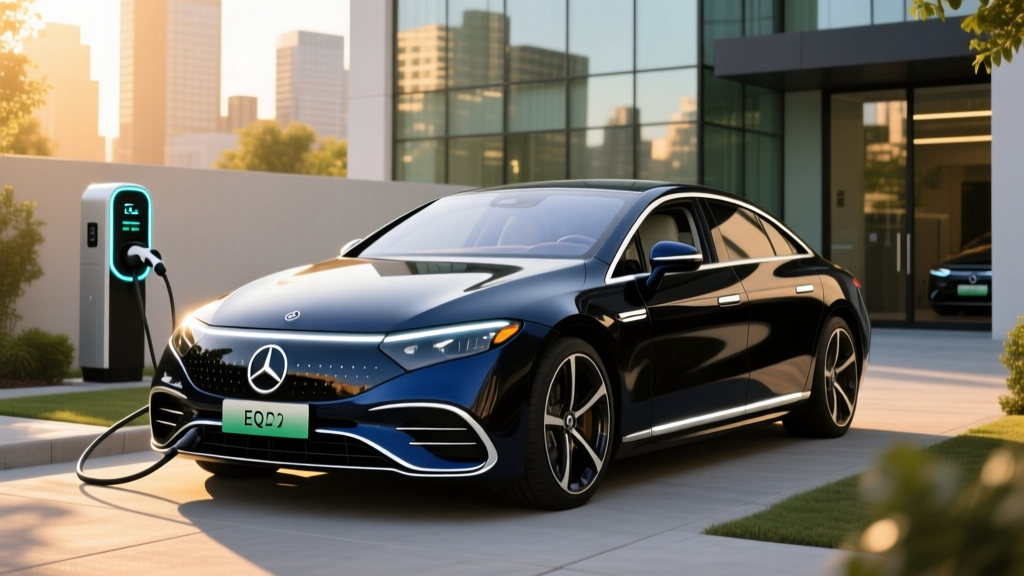
The 2024 Mercedes-Benz EQS-Class remains the benchmark for full-size electric luxury sedans, combining a massive 118 kWh battery with one of the longest EPA range estimates in its segment. But range and comfort come at a steep price — and a significant tax-credit hurdle. After spending time with the EQS 450+ and EQS 580 4Matic, the verdict is clear: this is the best EV for cross-country luxury touring, but buyers should understand exactly what they're paying for — and what they're giving up — before signing.
| Spec | EQS 450+ Sedan | EQS 580 4Matic Sedan | EQS 580 SUV 4Matic |
|---|---|---|---|
| EPA Range | 390 mi | 371 mi | 330 mi |
| Battery (usable) | 118 kWh (NMC) | 118 kWh (NMC) | 118 kWh (NMC) |
| Drivetrain | RWD, single motor | AWD, dual motor | AWD, dual motor |
| Horsepower | 355 hp | 536 hp | 536 hp |
| 0–60 mph | 5.9 sec | 4.1 sec | 4.4 sec |
| Max DC Charge Rate | 200 kW | 200 kW | 200 kW |
| 10–80% DC Time | ~31 min | ~31 min | ~31 min |
| Level 2 Rate | 9.6 kW | 9.6 kW | 9.6 kW |
| Efficiency (MPGe) | 97 MPGe combined | 92 MPGe combined | 84 MPGe combined |
| Base MSRP | $104,400 | $125,950 | $104,400 |
| Battery Warranty | 10 yr / 155,000 mi | 10 yr / 155,000 mi | 10 yr / 155,000 mi |
Range & Efficiency: 390 Miles on Paper, but What About the Real World?
EPA-rated range for the EQS 450+ sedan: 390 miles. In mixed real-world driving, expect approximately 320–350 miles in mild weather at highway speeds (70–80 mph). In cold weather (below 32°F), that figure can drop to 260–290 miles due to cabin heating demands and reduced battery chemistry efficiency. The EQS 580 4Matic sedan (371 EPA) typically delivers 300–330 miles in temperate conditions. City driving with regenerative braking can push the 450+ closer to its EPA number, as the EQS excels at low-speed efficiency.
The EQS-Class uses a 118 kWh usable battery pack (from a 120 kWh gross pack) with NMC (nickel manganese cobalt) chemistry — chosen for its high energy density, which is essential in a vehicle this size. Unlike some competitors using LFP chemistry (which trades energy density for longevity and cost), NMC gives the EQS its range advantage but requires more careful state-of-charge management for long-term health.
Efficiency figures from fueleconomy.gov show the EQS 450+ achieving 97 MPGe combined (35 kWh/100 mi), which is impressive for a 5,600-pound sedan. The dual-motor 580 drops to 92 MPGe (37 kWh/100 mi). For context, the Tesla Model S Long Range achieves 120 MPGe combined, benefiting from its lighter weight and more aerodynamic profile.
Charging Performance: 200 kW Peak, But Mind the Curve
| Charging Level | Power / Rate | Miles Added per Hour | Typical Use Case |
|---|---|---|---|
| Level 1 (120V) | ~1.4 kW | ~3–4 mi/hr | Emergency / overnight trickle |
| Level 2 (240V, 40A) | 9.6 kW | ~28–32 mi/hr | Home daily charging |
| DC Fast Charge | 200 kW peak | ~186 mi in 31 min (10–80%) | Road trips, highway corridors |
The EQS-Class supports a peak DC fast-charge rate of 200 kW via CCS1 connector. Mercedes quotes a 10–80% charge time of approximately 31 minutes under optimal conditions (battery preconditioned, ambient temperature 68–77°F). In practice, the charge curve is the story: the EQS holds close to 200 kW from roughly 10% to about 35% state of charge, then tapers progressively. From 60% onward, expect speeds in the 80–120 kW range, and above 80%, charging slows dramatically to protect the NMC cells.
For home Level 2 charging, the onboard charger accepts up to 9.6 kW (40 amps on a 240V circuit). A full 0–100% charge takes roughly 12 hours — meaning an overnight session from 20% to 80% is easily achievable in 7–8 hours. We recommend a 48-amp hardwired Level 2 station (like a ChargePoint Home Flex or Wallbox Pulsar Plus) on a 60-amp breaker for optimal throughput.
Preconditioning note: The EQS will automatically precondition its battery when a DC fast-charging station is set as your navigation destination. This is critical — arriving at a charger with a cold battery can cut peak charge rates in half, adding 15+ minutes to your stop.
Performance & Driving Dynamics
The EQS 450+ delivers 355 hp and 419 lb-ft of torque through a single rear-mounted motor. The 0–60 mph time of 5.9 seconds is adequate for a luxury sedan but won't thrill anyone coming from a Tesla Model S Plaid. The EQS 580 4Matic steps up substantially with 536 hp, 631 lb-ft, and a 4.1-second 0–60 — more in line with what buyers in this price bracket expect.
Where the EQS truly shines is ride quality. The standard AIRMATIC air suspension with adaptive damping absorbs road imperfections with a calmness that no sport-tuned EV can match. Rear-axle steering (standard, up to 4.5 degrees; optional 10 degrees) shrinks the car's effective turning radius to that of a compact car — a genuine benefit in parking garages and tight urban streets.
Regenerative braking offers multiple modes via steering-wheel paddles: D+ (coasting), D (light regen), D– (moderate), and D Auto (which uses radar and map data to adjust regen dynamically). There's no true one-pedal driving mode that brings the car to a complete stop, which frustrates some EV veterans accustomed to the Chevrolet Bolt or Nissan LEAF approach.
Interior, Cargo & the Hyperscreen Question
The EQS-Class interior is a study in Mercedes' maximalist approach to luxury tech. The optional MBUX Hyperscreen — a 56-inch curved glass panel spanning the entire dashboard — is visually stunning but divisive. It integrates three displays (12.3" instrument cluster, 17.7" central OLED, 12.3" passenger screen) behind a single glass surface. The standard setup uses a 12.8" angled central touchscreen, which many drivers find more intuitive and less distracting.
Passenger space is generous: front legroom measures 41.7 inches, rear legroom 42.2 inches — besting the BMW i7 (41.3 rear) and rivaling the long-wheelbase S-Class. Headroom is adequate at 39.7 front / 38.1 rear, though the sloping roofline cuts into rear headroom for taller passengers.
Cargo volume is the EQS sedan's practical weakness: 22 cubic feet of trunk space (with a traditional trunk lid, not a hatchback). That's less than the Tesla Model S (28 cu ft with its liftback) and significantly less than the EQS SUV (up to 63 cu ft with seats folded). The sedan also lacks a front trunk (frunk) — the space under the hood houses ancillary components and is not accessible to the owner.
Pricing, Trims & Federal Tax Credit Eligibility
| Trim | Base MSRP | As-Tested (Typical) | §30D Federal Credit | Effective Price |
|---|---|---|---|---|
| EQS 450+ Sedan | $104,400 | $115,000–$125,000 | $0 (exceeds MSRP cap) | $104,400+ |
| EQS 580 4Matic Sedan | $125,950 | $140,000–$155,000 | $0 (exceeds MSRP cap) | $125,950+ |
| EQS 580 SUV 4Matic | $104,400 | $115,000–$130,000 | $0 (exceeds MSRP cap) | $104,400+ |
Federal tax credit reality: The 2024 EQS-Class does not qualify for the IRS §30D federal EV tax credit. Under current rules, sedans must have an MSRP at or below $55,000, and SUVs/pickups/vans must be at or below $80,000 (source: IRS). Every EQS variant exceeds these caps significantly. Additionally, the buyer income caps ($150,000 single / $300,000 joint AGI) and battery critical-mineral sourcing requirements would further limit eligibility even if the price cap weren't disqualifying.
Buyers should also budget for state registration fees (some states charge additional EV fees of $50–$225/year), higher insurance premiums (the EQS averages $3,200–$4,500/year for full coverage), and potential home charging installation costs ($800–$2,500 for a Level 2 setup, depending on electrical panel capacity).
How It Stacks Up: EQS vs. Key Competitors
- Class-leading 390-mile EPA range among full-size luxury EVs
- Exceptional ride comfort with AIRMATIC air suspension
- 10-year/155,000-mile battery warranty (best in class)
- Whisper-quiet cabin at highway speeds
- Rear-axle steering for remarkable maneuverability
- Over-the-air updates improve features post-purchase
- No federal tax credit eligibility (MSRP far exceeds cap)
- Hyperscreen is expensive ($8,000+ option) and polarizing
- Only 22 cu ft trunk; no frunk
- No true one-pedal driving mode
- Heavy (5,600+ lbs) — tire wear and brake costs add up
- MBUX interface has a steep learning curve
- Depreciation steeper than Tesla Model S historically
The EQS 450+ competes directly with the BMW i7 xDrive60 (318 mi EPA, $119,300), Tesla Model S Long Range (402 mi EPA, $79,990), and the Lucid Air Pure (419 mi EPA, $69,900). The Tesla and Lucid undercut the Mercedes on price by $30,000–$40,000 while matching or exceeding its range. The BMW i7 offers a more traditional luxury sedan experience but with 72 fewer miles of range and a higher starting price.
The EQS's advantage is its specific combination of range, ride quality, and brand cachet. If your priority is technology and value, the Lucid Air is the smarter buy. If you want the most recognized luxury badge and the smoothest ride, the EQS delivers — at a premium.
Who Should Buy the 2024 EQS-Class?
- You regularly take long highway trips and value 350+ real-world miles of range
- Ride comfort and cabin quietness are your top priorities
- You want a traditional luxury-sedan experience with EV powertrain benefits
- You have access to home Level 2 charging (essential given no frunk and limited public-charging convenience)
- The $100,000+ price point and no tax credit don't affect your purchase decision
- You need maximum cargo versatility (consider the EQS SUV or Tesla Model S)
- You want one-pedal driving and sportier dynamics (Tesla Model S, Lucid Air)
- Federal tax credit eligibility matters to your budget
- You prefer a hatchback/liftback trunk design
The EQS-Class is best suited for luxury sedan loyalists transitioning from an S-Class or BMW 7 Series who prioritize comfort, prestige, and range above all else. It's an excellent cross-country touring machine but less practical as a daily family hauler than its SUV sibling.
Warranty & Long-Term Ownership
Mercedes-Benz provides a 10-year/155,000-mile battery warranty covering capacity retention below 70% of original capacity — one of the most generous terms in the luxury EV segment (BMW matches this; Tesla offers 8 years/150,000 miles). The basic vehicle warranty is 4 years/50,000 miles, and the powertrain is covered for the same period.
Long-term NMC battery degradation data for the EQS is still emerging (the model launched for the 2022 model year), but early fleet data and Mercedes' own testing suggest 10–15% capacity loss over 150,000 miles under normal use. Best practices for NMC longevity: avoid routinely charging to 100% (set daily limit to 80–90%), minimize DC fast charging when possible, and use preconditioning in extreme temperatures.
Maintenance costs are lower than a gas S-Class (no oil changes, fewer brake replacements due to regen), but tire costs are significant — the EQS's weight and torque chew through tires, and replacement sets for the 20- or 21-inch wheels run $1,600–$2,800.
Frequently Asked Questions
What is the real-world range of the 2024 Mercedes-Benz EQS-Class?
The EPA rates the EQS 450+ sedan at 390 miles and the EQS 580 4Matic at 371 miles. In real-world highway driving at 70–80 mph in mild weather, expect 320–350 miles (450+) and 300–330 miles (580). Cold weather (below freezing) reduces these figures by 20–30%, bringing the 450+ down to roughly 260–290 miles.
How fast does the 2024 EQS charge at home and on the road?
At a DC fast charger, the EQS peaks at 200 kW and charges from 10–80% in approximately 31 minutes under optimal conditions. At home on a Level 2 (240V, 40A) charger, it adds about 28–32 miles of range per hour, with a full charge taking roughly 12 hours. Level 1 (120V) adds only 3–4 miles per hour and is suitable only for emergency or supplemental use.
Does the 2024 EQS-Class qualify for the federal EV tax credit?
No. Under IRS §30D rules, sedans must have an MSRP of $55,000 or less to qualify. The least expensive EQS 450+ sedan starts at $104,400 — nearly double the cap. The SUV variants start at $104,400, also exceeding the $80,000 SUV/pickup cap. No EQS-Class trim is eligible for the $7,500 federal credit regardless of buyer income or battery sourcing.
Is the 2024 EQS worth buying over the Tesla Model S or Lucid Air?
It depends on priorities. The Tesla Model S Long Range offers 402 miles of EPA range at $79,990 — $25,000 less than the EQS 450+ — with faster acceleration, Supercharger network access, and a liftback trunk. The Lucid Air Pure delivers 419 miles at $69,900 with superior interior space. The EQS wins on ride comfort, cabin quietness, brand prestige, and the longest battery warranty (10 years vs. 8 for Tesla and Lucid). If comfort and Mercedes brand loyalty matter most, the EQS justifies its premium. If value and practicality lead your decision, the Lucid Air or Model S is the stronger choice.
What is the biggest drawback of owning the EQS-Class?
Beyond the high purchase price and lack of tax credit, the most common owner complaints center on the MBUX Hyperscreen's complexity, the absence of a frunk, limited trunk versatility (sedan-only trunk lid, no hatch), and the lack of a true one-pedal driving mode. Depreciation has also been steeper than expected, with 2-year-old EQS models losing 35–45% of their value on the used market.
What connector does the 2024 EQS use for charging?
The 2024 EQS-Class uses the CCS1 connector for DC fast charging and the J1772 connector for Level 1 and Level 2 AC charging. It does not have a native NACS (Tesla) port, though Mercedes has announced future models will adopt NACS. For 2024, you'll need a CCS-to-NACS adapter (available from Mercedes and third parties) to access Tesla Supercharger stations that support non-Tesla vehicles.