Quick Verdict: The 2024 Mach-E Premium in 2026
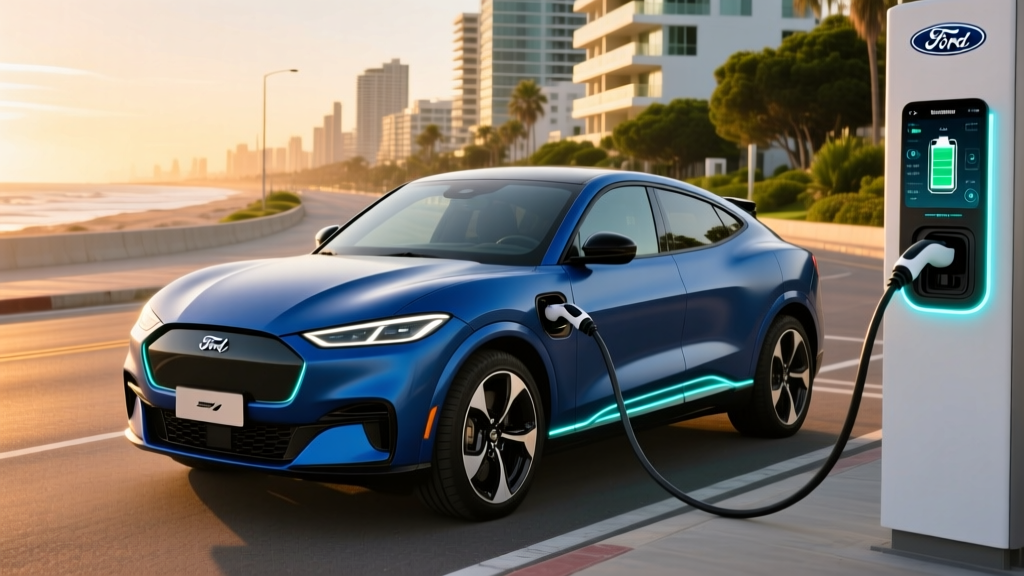
Two years after its launch, the 2024 Ford Mustang Mach-E Premium remains one of the most well-rounded electric crossovers on the used and remaining-new market. With an EPA-estimated 290 miles of range (Extended Range RWD), a usable 91 kWh NMC battery, and access to the Tesla Supercharger network via Ford's native NACS port, it solves the three biggest concerns new EV buyers raise: range, charging access, and daily livability. The Premium trim adds the features most buyers actually want — a panoramic glass roof, heated steering wheel, and Ford's BlueCruise hands-on-highway assist — without pushing into GT territory on price.
As of 2026, Ford has shifted to the refreshed 2025+ Mach-E lineup, meaning 2024 Premium models are available through certified pre-owned channels and remaining dealer inventory at meaningful discounts. If you can locate one, the value proposition is strong — especially when the federal §30D tax credit applies.
Range, Battery & Real-World Efficiency
| Configuration | EPA Range | Real-World Expectation |
|---|---|---|
| Standard Range RWD (70 kWh usable) | 250 mi | ~210–230 mi highway; ~180 mi in freezing weather |
| Extended Range RWD (91 kWh usable) | 320 mi | ~270–290 mi highway; ~230–250 mi in freezing weather |
| Extended Range AWD (91 kWh usable) | 290 mi | ~245–265 mi highway; ~210–230 mi in freezing weather |
Source: fueleconomy.gov. Real-world figures based on mixed highway/city driving at 70+ mph. Cold-weather estimates assume 20°F–32°F ambient temperatures with cabin heating active.
The 2024 Mach-E Premium uses an NMC (nickel-manganese-cobalt) lithium-ion battery pack. Ford rates the Extended Range pack at 91 kWh usable capacity (from a ~98.8 kWh gross pack), while the Standard Range delivers 70 kWh usable from a ~75.7 kWh gross. NMC chemistry offers higher energy density than LFP, which is why Ford fits these packs into the Mach-E's relatively compact floor — but it also means you should follow the 80% daily charge guideline to maximize long-term cell health. Reserve 100% charges for road trips.
Efficiency on the Extended Range RWD lands at 101 MPGe combined (33 kWh/100 mi), per the EPA. The AWD variant drops to roughly 93 MPGe combined (36 kWh/100 mi). In practical terms, expect to use about 30–34 kWh per 100 miles of mixed driving, which translates to roughly $0.04–$0.06 per mile when charging at home on a national-average $0.16/kWh residential rate.
Charging Speed: DC Fast, Level 2 & Home Setup
| Charging Level | Connector | Max Rate | Speed / Time |
|---|---|---|---|
| Level 1 (120V household) | J1772 / NACS | 1.4 kW | ~3 mi/hr added |
| Level 2 (240V home/public) | J1772 / NACS | 10.5 kW (48A onboard) | ~25–30 mi/hr; 0–100% in ~10 hr (ER) |
| DC Fast Charge | CCS1 (2024 model year) | 150 kW peak (ER) | 10–80% in ~45 min; peak rate sustained to ~55% SoC then tapers |
| Tesla Supercharger (adapter) | NACS via Ford-provided adapter | ~150 kW (adapter-limited) | Similar 10–80% timing; unlocks 15,000+ Supercharger stalls |
A critical note on the 2024 model year: these vehicles shipped with a CCS1 charge port. Ford began including a complimentary NACS adapter for Supercharger access, and by late 2024 the adapter program was well-established. If you're buying a 2024 Premium today, confirm the adapter is included or budget ~$200 for one through Ford's parts channel. Starting with the 2025 model year, Ford switched to a native NACS port — so the 2024 represents the last CCS-equipped Mach-E generation.
The 150 kW peak DC rate is the Mach-E's most common criticism versus competitors. The Hyundai Ioniq 5 peaks at 240 kW (10–80% in ~18 minutes), and the Kia EV6 matches it. Ford's charge curve holds near peak only through roughly 55% State of Charge before tapering — meaning a 10–80% session takes approximately 45 minutes at a 150+ kW stall. It's adequate for road trips with planned meal or rest stops, but it's noticeably slower than the 800V architectures from Hyundai/Kia and Porsche.
At home, the 10.5 kW onboard charger is a strong point. On a 48-amp Level 2 circuit (hardwired, 60-amp breaker), you'll add roughly 25–30 miles of range per hour, fully replenishing the Extended Range pack overnight in about 10 hours. A standard 240V/32A dryer-style outlet delivers about 7.7 kW, adding ~19 mi/hr — still sufficient for most daily commutes.
Performance & Driving Dynamics
| Spec | RWD Extended Range | AWD Extended Range |
|---|---|---|
| Horsepower | 290 hp | 346 hp |
| Torque | 317 lb-ft | 428 lb-ft |
| 0–60 mph | ~6.1 sec | ~4.8 sec |
| Drivetrain | Rear motor, RWD | Dual motor, eAWD |
| Towing Capacity | — | Up to 2,300 lb (with tow pkg) |
The Premium trim with the Extended Range AWD powertrain is the sweet spot for most buyers. The 4.8-second 0–60 time is genuinely quick for a family crossover, and the dual-motor eAWD system provides confident traction in rain and light snow. The RWD variant sacrifices a bit of all-weather capability but gains roughly 30 miles of EPA range and a lower purchase price.
Ride quality is composed and slightly firm — Ford tuned the Mach-E to live up to the "Mustang" badge, and it delivers sharper handling than most electric crossovers in this price range. The trade-off is that rough pavement transmits more into the cabin than you'd experience in a Hyundai Ioniq 5 or a Volkswagen ID.4. Road noise is well-managed at highway speeds, aided by the lack of powertrain noise and active noise cancellation on the Premium trim.
Interior, Cargo & Technology
The Mach-E Premium cabin is a step above the Select trim, with synthetic leather (ActiveX) seating, a heated steering wheel, heated front seats, a panoramic fixed glass roof, and a B&O 10-speaker audio system. The centerpiece is the 15.5-inch vertical SYNC 4A touchscreen, which runs Ford's latest infotainment software with wireless Apple CarPlay and Android Auto.
Cargo space is competitive but not class-leading:
- Behind rear seats: 29.7 cu ft
- Rear seats folded: 59.7 cu ft
- Front trunk (frunk): 4.7 cu ft — drainable, useful for wet gear or groceries
- Rear legroom: 38.1 inches
- Front headroom: 40.4 inches (slightly reduced by the glass roof)
For context, the Tesla Model Y offers 76.2 cu ft with seats folded — a significant advantage for families hauling bulky cargo. The Mach-E prioritizes a sleek roofline over maximum utility, and it shows in the numbers.
On the technology front, Ford Co-Pilot360 Active 2.0 is standard on the Premium, which includes BlueCruise — Ford's hands-free highway driving assist on pre-mapped divided highways. BlueCruise is a SAE Level 2 system: it controls steering, acceleration, and braking on qualified roads, but a driver-facing camera monitors your eyes, and you must remain attentive at all times. It is not autonomous driving. The system covers over 130,000 miles of mapped highways as of 2026 and works reliably in clear conditions, though it disengages in construction zones and heavy rain.
Pricing, Tax Credits & Ownership Cost
| Configuration | Base MSRP | Typical As-Tested | §30D Credit Eligible? |
|---|---|---|---|
| Premium RWD Standard Range | $45,995 | $47,500–$49,000 | Yes, if income/sourcing rules met |
| Premium RWD Extended Range | $51,995 | $53,500–$55,000 | Yes, if income/sourcing rules met |
| Premium AWD Extended Range | $54,995 | $56,500–$59,000 | Yes, if income/sourcing rules met |
- Vehicle MSRP cap: SUVs/crossovers must be under $80,000 — all Mach-E trims qualify.
- Buyer income cap: AGI must not exceed $150,000 (single), $225,000 (head of household), or $300,000 (joint). Check your modified AGI against IRS thresholds.
- Battery sourcing: The Mach-E's battery must meet critical-mineral and battery-component sourcing requirements that tightened in 2024. Ford confirmed US/Mexico assembly, but component sourcing varies by build date. Verify with the dealer's VIN-specific credit report.
- Point-of-sale transfer: As of 2024, you can transfer the credit to the dealer for an upfront price reduction at purchase — no need to wait until tax filing.
- Lease loophole: Leased Mach-Es may qualify for the commercial clean vehicle credit (§45W), which has no income or MSRP caps. Consult a tax professional.
Source: IRS.gov — Credits for New Clean Vehicles. Rules are subject to change; confirm eligibility for your specific VIN and tax year.
On the used market in 2026, 2024 Mach-E Premium Extended Range AWD models are listing between $32,000 and $38,000 depending on mileage and condition — a depreciation curve typical of mainstream EVs but steep enough to make CPO examples attractive. The used-EV tax credit (§25E) offers up to $4,000 (30% of sale price, capped) for qualified used EVs under $25,000 sold by dealers, though most 2024 Mach-E Premiums currently price above that threshold. As depreciation continues, some examples will cross into eligibility by late 2026 or 2027.
Warranty, Reliability & Battery Longevity
Ford covers the 2024 Mach-E with the following warranty structure:
- Bumper-to-bumper: 3 years / 36,000 miles
- Powertrain: 5 years / 60,000 miles
- High-voltage battery: 8 years / 100,000 miles (retains ≥70% of original capacity)
The 70% retention threshold over 8 years is industry-standard, matching most competitors. Ford's NMC packs have shown moderate degradation in early fleet data — typically 5–8% loss over the first 60,000 miles, which tracks with expectations for this chemistry. To maximize longevity, set your daily charge limit to 80%, avoid frequent DC fast-charging sessions when Level 2 is available, and precondition the battery in cold weather before charging.
Pros, Cons & Who Should Buy
- Sharp handling and a composed ride that earns the Mustang name
- Tesla Supercharger access via NACS adapter — massive charging network unlock
- Strong 10.5 kW Level 2 onboard charger for fast home replenishment
- BlueCruise hands-free highway assist is one of the better Level 2 systems available
- Premium trim features (glass roof, B&O audio, heated everything) justify the price step
- Drainable frunk adds genuine utility for wet or messy cargo
- Significant depreciation on 2024 models makes CPO values compelling in 2026
- 150 kW DC fast-charge peak is slow vs. Ioniq 5 (240 kW) and Model Y (~250 kW)
- Cargo volume (59.7 cu ft max) trails the Model Y (76.2 cu ft) significantly
- CCS1 port requires an adapter for Supercharger use (native NACS starts in 2025)
- Rear-seat headroom is tight for taller passengers due to the sloping roofline
- NMC battery chemistry requires 80% daily charge discipline for longevity
- Ford's SYNC 4A interface can be laggy compared to Tesla or Hyundai systems
- Choose the Mach-E Premium if: You want a sporty-driving electric crossover with Supercharger access, value premium interior features, commute 30–60 miles daily, and can charge at home. The AWD Extended Range variant is ideal for four-season climates.
- Choose the Tesla Model Y instead if: Maximum cargo space and the fastest DC charging speeds are priorities, or you prefer the Tesla software ecosystem and native Superconnector integration.
- Choose the Hyundai Ioniq 5 instead if: Ultra-fast 800V DC charging (10–80% in ~18 min) matters for your road-trip habits, or you prefer the Ioniq 5's retro-futuristic styling and more spacious rear seat.
Frequently Asked Questions
What is the real-world range of the 2024 Mach-E Premium?
The Extended Range AWD model is EPA-rated at 290 miles, but expect approximately 245–265 miles during sustained highway driving at 70+ mph, and 210–230 miles in freezing temperatures with cabin heat active. The RWD Extended Range variant is EPA-rated at 320 miles, with real-world highway range closer to 270–290 miles.
How fast does the 2024 Mach-E Premium charge?
On a DC fast charger, the Extended Range pack peaks at 150 kW, reaching 10–80% in approximately 45 minutes. The charge rate tapers significantly above 55% SoC. At home on a 240V/48A Level 2 charger, the 10.5 kW onboard charger delivers roughly 25–30 miles of range per hour, fully charging the Extended Range pack in about 10 hours.
Does the 2024 Mach-E Premium qualify for the federal EV tax credit?
It can, but eligibility depends on your income (AGI under $150K single / $300K joint), the vehicle's MSRP (under $80K — all trims qualify), and battery-component/critical-mineral sourcing requirements that vary by build date. The credit can be transferred to the dealer at point of sale for an immediate price reduction. Always verify with the dealer's VIN-specific report and consult a tax professional.
Is the 2024 Mach-E Premium worth buying in 2026 vs. newer competitors?
Yes, particularly at CPO prices ($32K–$38K for Extended Range AWD). You get Supercharger access, a premium interior, strong handling, and BlueCruise — features that still compete well. The main trade-off is slower DC charging (150 kW vs. 240+ kW on newer platforms) and less cargo space than the Model Y. If fast-charging speed and maximum utility aren't dealbreakers, the value proposition is strong.
What's the difference between the 2024 Mach-E Premium and the GT?
The GT adds a larger rear motor for 480 hp (Performance Edition), a 0–60 time of ~3.5 seconds, MagneRide adaptive dampers, and sport seats. However, it sacrifices roughly 30 miles of EPA range and commands a significantly higher price. The Premium trim offers the better balance of range, features, and value for most buyers.
Can I use Tesla Superchargers with a 2024 Mach-E?
Yes. Ford provides a CCS-to-NACS adapter (or you can purchase one) that enables access to Tesla's Supercharger network. The 2024 Mach-E was the first model year to gain this access, and it dramatically expands your fast-charging options — particularly on road trips through areas where Electrify America or EVgo coverage is sparse.